
Translated material
Group of persons without a center
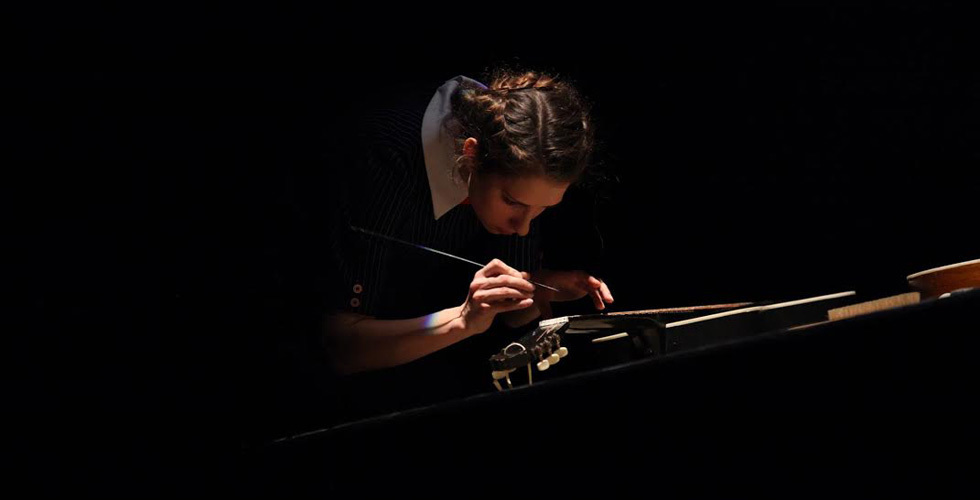
The scandal around the opening of the exhibition Ksenia Peretrukhina “Alternative attempt” , and the theater on Taganka, shoots the duplet of new projects of the “anniversary year group” - while director Semyon Aleksandrovsky, the last strokes in the play “The Presence” about the fate of Lyubimov’s “good man from Szhezan” (the premiere is scheduled for the near future on Saturday), Stadnikov issued the documentary production “The rehearsal of the orchestra”, the first public shows of which again provoked the next surge of public unrest. The strategic, albeit aloud, the goal of the “anniversary year group” is not just to draw attention to the legendary theater in the year of his fiftieth anniversary, but to make his artistic life the subject of a violent public discussion was certainly successful.
The desired, honest, in some places sniper are accurate, in some places a disarming helpless project “The rehearsal of the orchestra” is positioned as a collective composition of almost two dozen co-authors, but in fact it is a directorial debut on the big stage of the 25-year-old Andrei Stadnikov. Composing the “Orchestra rehearsal”, a graduate of VGIK, a teacher of the Moscow Art Theater School-Studio and an experienced theater documentary, for a start, he taught Taganka artists the technique of verbatim , and then he held fifty interviews with the theater’s employees-butifers, guards and a monitoring officer, the head of the ticket table and costumery. Their monologues performed by Tagan artists sitting in a dark hall among the audience and lit by local light, open the “rehearsal of the orchestra”: deeply personal confession of those who came to Taganka, as a rule, by chance - but forever. The super -unit of the performance of Stadnikov is an attempt to self -reflection, the desire on the threshold of a half -century anniversary to comprehend the real Taganka through the private stories of those who work in the theater today.
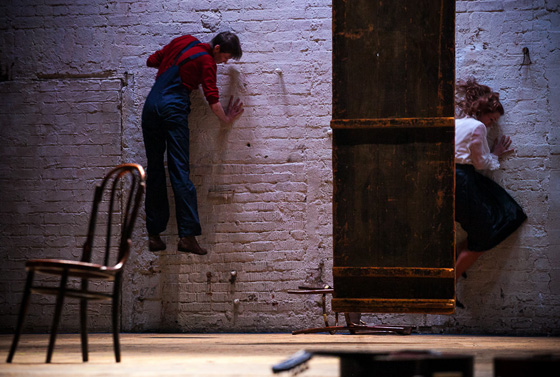 © Vasil Yaroshevich Scene from the play "The rehearsal of the orchestra"
In the polyphonic fabric of the “rehearsal of the orchestra”, woven from many independent voices, a variety of counterpointing motives stand out: the worship of Yuri Lyubimov and the longing for his strong hand, nostalgia for the wife and many years of his associate Lyubimov (in the range from “Katalin, we learned” to Katya every day, as the last), love for his native one)) The theater, admiration for his brilliant past and - in reservations, between the lines - endless fatigue and irritation (“I don’t go to the performances of my theater - how to go to them after all this? I better go to another theater, in the Moscow Art Theater Gorky ...”). Perhaps the most valuable in the “rehearsal of the orchestra”-breathing truthful intonation, the nagging different-voice of human destinies: someone, like the sisters of the Kostyumersch, went through his whole life on Taganka-and the other will not, someone is looking better and goes on free swimming. Carefully assembled and delicately presented, documentary material is not reduced by playwright and director Stadnikov to a common denominator.
The leitmotif of the performance is the phantom pain of the great past of the Taganka - not allowing to come to terms with the loss of former glory and not allowing to live on. Closer to the finale of the “Ruperations of the Orchestra” several times in a row sounds a monologue of an employee of the PR service who has worked in the theater for several years and now exclaiming with bitterness: “Where is our Dunko with a beautiful heart, who will tear him out and will cover us with the way?” Stadnikov draws a collective portrait of a modern Taganka, likened to the musicians of the orchestra, who was left without a conductor: on the one hand, is an unaccountable desire to submit to an authoritarian leader without fear and reproach, a artistic director with a capital letter, a representative of the theater fauna, on the other hand, a painful reaction to any attempt to a hermetic space of personal.
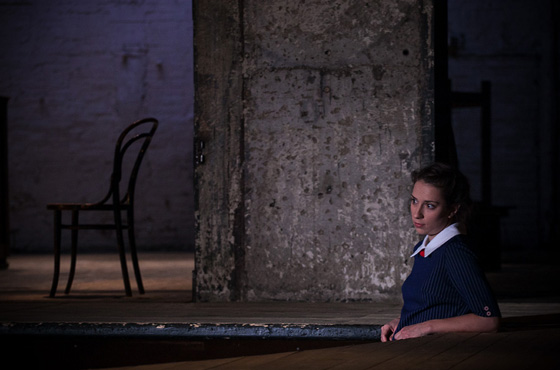 © Vasil Yaroshevich Scene from the play "The rehearsal of the orchestra"
The main thing, however, is the achievement of the second anniversary year project - not in a successful attempt to criticize today's Tagan reality, but in the therapeutic experience of artistic and human freedom, which Andrei Stadnikov and its co -authors tried to instill the theater actors. For example, the soundtracks themselves are created by the soundtrack for the performance, artists who have mastered the Aleatoric method under the guidance of composer Dmitry Vlasik. And in one of the key episodes of the “rehearsal of the orchestra”, the herds will come to the auditorium to give a fragment of the lecture by Charlie Kaufman according to scenario skills - to read a poorly set in a voice, without expression, without expression is called Presence , manifesting the freedom to be here and now, without looking at the great The past and the great guru. This freedom is that it seems that modern Taganka needs the most.