
Translated material
Rip RIA!
Why closed an effective news agency
Vladimir Putin put an end to the fate of RIA Novosti - another brainchild of the failed Medvedev “modernization” along with Skolkovo and the Supreme Arbitration Court. Many considered the agency led by Svetlana Mironyuk to the best Russian state media
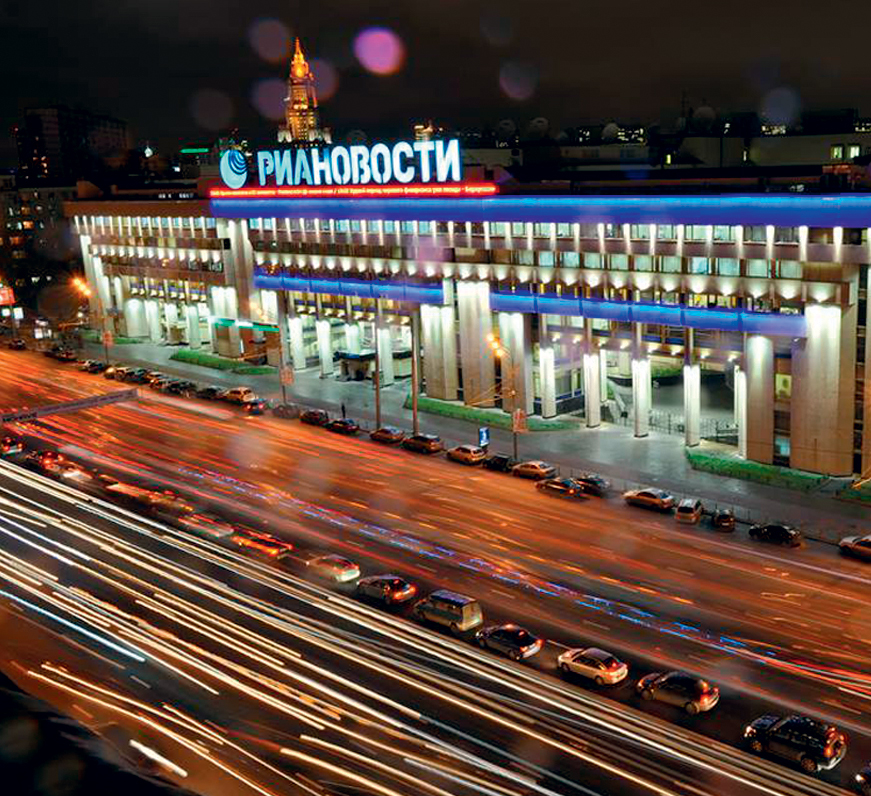
RIA building on Zubovsky Boulevard
| *Rip - REST in Peace (English) - let it rest with the world. |
Now in the place of RIA Novosti there will be an ingenuous propaganda structure - the Russian Agency Today. The goals of him are stated quite specific - the coverage of Russian state lords and public life for a foreign audience. He was headed by the Deputy General Director of VGTRK, the host of the “Vesti of the Week” Dmitry Kiselev, widely known for his call to burn the hearts of gays and the panegiric (!) Comparisons of Putin with Stalin.
Permutations
The new agency transferred all the property and constituent rights of RIA, the Russia Today television channel, as well as the Voice of Russia radio company. Russia Today with Margarita Simonyan formally was the “daughter” of RIA Novosti. But his budget was four times higher than the allocations at RIA, and the patrons of TV were different.
Over the past five years, the budget costs of RIA amounted to 15.5 billion rubles, and in just ten years - about $ 1 billion. In addition to state considy (RIA's money was allocated in a separate line in the federal budget), the agency earned itself (1.2 billion rubles last year). This money also went to the functioning of RIA.
However, the transformations affected not only structures on Zubovsky Boulevard. The same presidential decree was liquidated by the Russian Book Chamber, engaged in the maintenance of a bibliography - statistics of book business, sending books on libraries, etc. The chamber is transmitted to ITAR-TASS. Another liquidated mediaarchive is a guestrairal fund, it is transferred with all property to the VGTRK. The fund has the rights to a collection of television films created in the USSR, Mosfilm claims to some of them, and still provided his archives for everyone. Now, it turns out, the archive is at the disposal of one of the market participants.
The head of the presidential administration, Sergei Ivanov, explained the transformation with the task of saving budget funds. Apparently, ITAR-TASS transfers the functions of the main Gossmi “for internal use”. Its financing has already grown noticeably since 2012, when the agency was headed by Sergey Mikhailov, the founder of the PR agency Mikhailov and Partners, a former member of the board of Russian Railways, and in the early 1990s, the partner of the current Minister of Culture of Vladimir Medinsky for the advertising agency “I” Corporation. 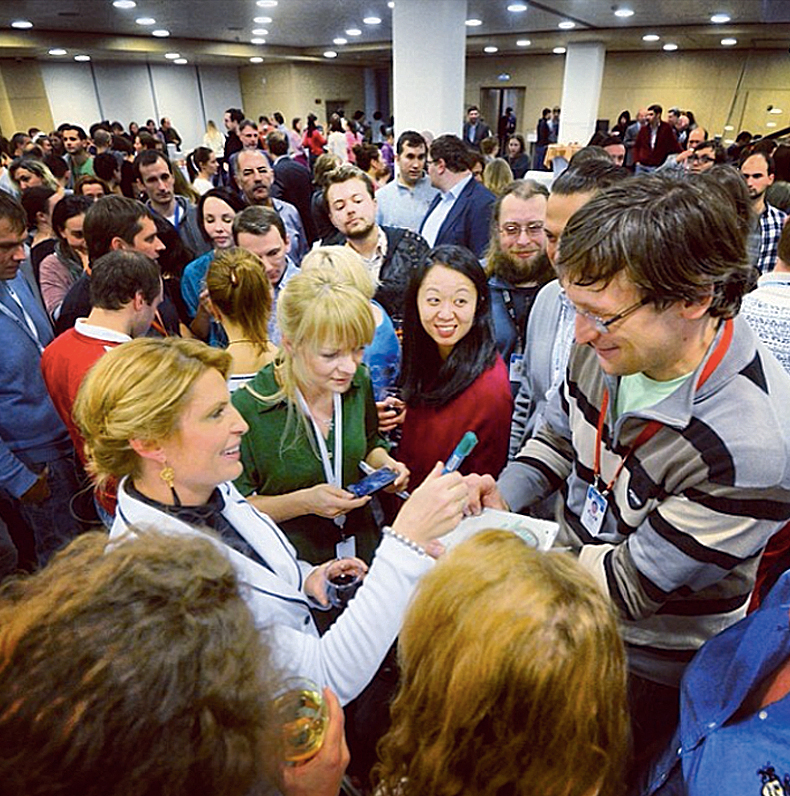
2.3 thousand people worked in RIA; Svetlana Mironyuk has been headed by the agency since 2003. RIA went to her almost Soviet state institution. But back in 2001, under Vladimir Kulstikov, RIA took a wise step, abandoning the paid spread of the news. Bottom line: the agency has become one of the most popular Russian media writing on socio-political topics.
The Internet audience of RIA (excluding subsidiaries-1–1.2 million people per day) four to six times more audience Vedomosti, Kommersant, Forbes and 15-30% more Audience Lenti.ru and Gazeta.ru. Previously, the RIA media went vigorously on social networks - only on Facebook he has more than 1.08 million subscribers. Plus, many subsidiaries-inosmi, RAPSI, Moscow News, R-Sport, Russia Today, Prime Tass, Documentary Cinema Center, Eight foreign sites, multimedia press center, etc. RIA on the organization of work has become similar to leading media holdings.
The loss of RIA should quite regret. The agency created interesting projects around itself. For example, open lectures - a month and a half ago there was a wonderful translator Viktor Golyshev, who told about the Platonov “foundation pit”. And before that - Harry Bardin, Lyudmila Ulitskaya, Konstantin Sonin and others. The open show project, within the framework of which the author’s documentary cinema was demonstrated, which has no chance of reaching mass cinemas (I recall the cinema museum, I recall).
In general, a lot of good deeds were done in RIA. The project "You are a reporter", which trained regional authors with the basics of journalism. The “social navigator”, which has collected many useful information - about the availability of cultural and sports facilities for people with disabilities, about the programs of vacation for children, centers of psychological assistance, etc. (According to Elena Alshanskaya (refuseniki.ru), RIA had a very high -quality social topic team that helped a charitable foundation in the dissemination of information.) A mass of round tables on topics important for economic policy. Medial -laboratory of Vasily Gatova, who studied the spread of information on social networks, modern media technologies. Digit is a nice project dedicated to the IT market. "
The coverage of the unpleasant for the state for RIA was not a “liberal front” and not a whim. This was part of a successful media strategy
“RIA did many things that did not allow themselves to have other state-owneds. For example, online broadcasting with the consideration of the affairs of Alexei Navalny in Kirov and from the Pussy Riot case in the Khamovnichesky Court of Moscow. Or causing an anger of Alexei Gromov on the triumphal square (see The New Times, No. 01–02 (230) of January 23, 2012).
For many in power, such actions created the feeling that RIA was conducting a strange policy: he lives on the state account and allows himself to say things that are unpleasant for the state. Most likely, this has become one of the motives for reorganization, which at once stops many agency projects.
However, the coverage of the unpleasant for the state for RIA was not a “liberal front” and not a whim. This was part of the media strategy. If the agency’s projects did not give an impression, the appearance of non -angidized, they would simply not have a demand. The same applies to news - they would simply not be read. Smart propaganda should not seem to be propaganda, but by the usual presentation of information!
Without stealing and not withdrawing money from the company (rare for FSUP!), RIA produced many interesting products on the market. And the agency spent more prudently and efficiently than many private media holdings, for example, expert, RBC, Snob. At the same time, in almost every of his projects, even in those that are outwardly similar to ordinary media, upon closer examination, “interest” and participation of the state are found. Working in the same field with private media, the state were not ordinary “clones of private projects”-they were engaged in something between journalism and propaganda. 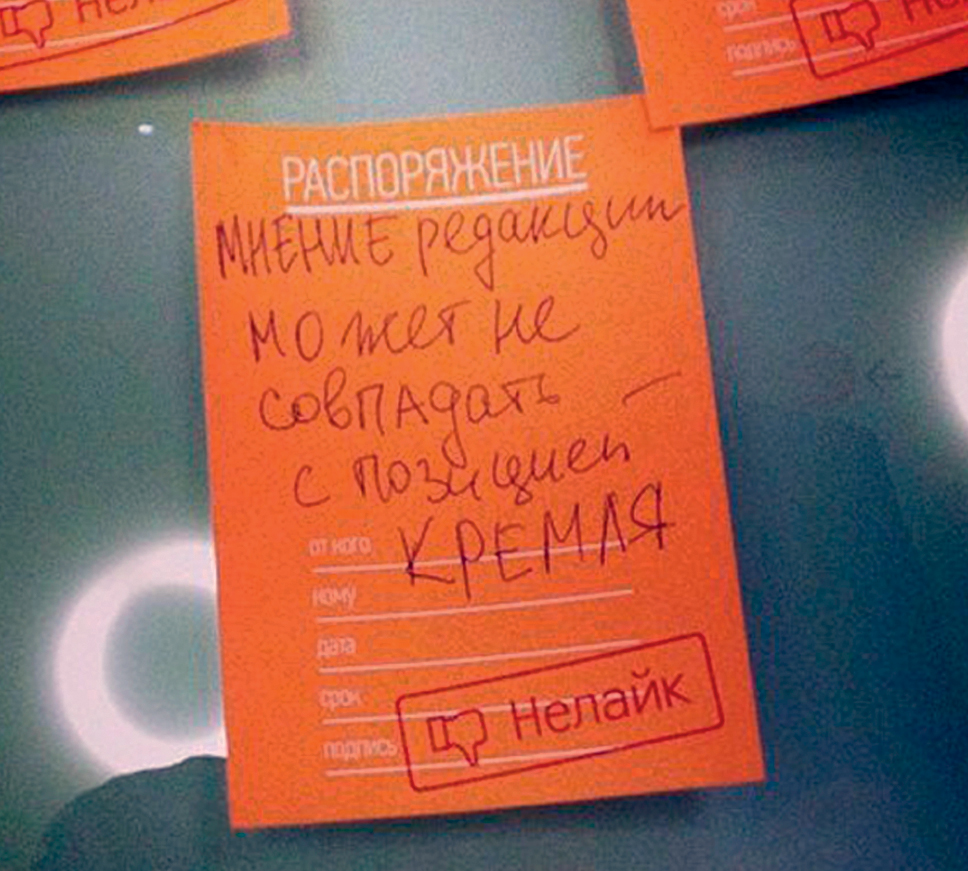
Not just "clones"
Inopressa’s private resource from the point of view of state husbands, RIA was cloned by acquiring in 2004 inosmi.ru. At this resource, at the time of writing this article, there was no, for example, the next article by Harry Kasparov about Putin or Bloomberg that Ukrainian oligarchs were disappointed in Yanukovych. But InoMmi did not forget to report the upcoming “Cold War” at the North Pole and that the Iranian State Kayhan is considered the Eurasian Union to be a real alternative to the European Union for Ukraine. Well, plus to that - a whole section for transfers about the Olympics in Sochi.
At the same time, one cannot call the policy of InoMs completely clumsy. His engagement is not obscure to the reader is not obvious: the resource translates the texts of quite respectable Die Welt, CNN, The American Interest, The Guardian, El Pais, Der Spiegel, The New York Times, etc. It's all about the selection of texts and their layout. The publication selects the theme significant from the point of view of the Kremlin and government ideologists and is relatively rarely noticing comments that are unflattering for Russia. In November 2011, one of the editors of Inorami, Grigory Okhotin, left RIA with a scandal when he was ordered not to publish negative articles about Putin and United Russia before the Duma elections.
Of course, the sophisticated reader, noticing the principles of selection of texts in InoMs, will not be a devoted visitor to this resource. But such a minority - and now in the audience in the audience is about 1.7 times higher than the opposition "aloper". The result is achieved!
A similar example is the Russian Agency for Legal and Judicial Information (RAPSI), established by RIA in 2009 on a wake of growing interest in the theme of courts and law enforcement agencies. RIA partners in this undertaking became the constitutional, supreme and senior arbitration courts. A year earlier, the best industry resource appeared - the private portal Pravo.ru (a library of legal acts, blogs of lawyers, reports from the courts, etc.). Bottom line: RAPSI, publishing mainly news, and not analytical articles and problematic materials, pavo.ru catch up with the audience.
Now feel the difference: RAPSI publishes the “examination” of the bill aimed at “stimulating the growth of patriotism in citizens of the country” (about the new rules for using the anthem and flag), and Pravo.ru is what lawyers think about the merger of the Supreme Court with the highest arbitration. In the news of RAPSI, in the first places of the statements of Putin, prosecutors, the report of Valery Zorkin. Officiaz is skillfully diluted with messages about high -profile matters, corruption, incidents, etc. As in the case of InoMs, an inattentive or inexperienced reader may think that this is real legal news. But in fact, FSUE RIA Novosti fed them with propaganda, mixed with the news. And it did it in full accordance with the Charter, in which, as one of the main goals, “propaganda support of the external and domestic policy of the Russian Federation in the framework of a single information space” is recorded.
The author of these lines had a five -month experience in RIA - in 2011, when restarting the newspaper Moscow News. It became clear quite quickly: working for the state is incompatible with an attempt to make high -quality media. When it was impossible to resist the placement of articles in the newspaper in the interests of ministries and departments, when the publication, for example, the articles of the Greenpeace employee about forest fires did not go into a print without bills (suddenly the Ministry of Emergencies will be offended?), I had to leave the publication together with colleagues. 
Dear state
Any state media do not just compete with private ones. Receiving financing at the expense of taxpayers' money, they are, by definition, they are in an uncompetitive situation. More funds were spent on RAPSI than Pravo.ru. Moreover, if the first, by definition, receives a green light in the judicial authorities, then the second does not have to wait for such a relationship. The money spent on the State Military District could not be collected in the form of taxes, to go on advertising in private media, thereby increasing the free market. The funds spent on RIA Novosti would be enough to launch 50 “Vedomosti”. Gossmi receive non -competitive support and outside the framework of the main activity. Firstly, preferential rent. Secondly, orders from ministries, state-owned companies, regional state bodies and structures friendly to the state for the creation of sites, information support of various projects, etc. For example, within the framework of one of the RIA contracts, the Strategy-2020 information support was engaged in. At the same time, the “Vedomosti” (of course, without receiving any money) was made to awaken the interest of society in the “strategy” much more. The media decisive what and how to write based on the interests of the reader are radically different from the media, which are forced to try to please the state, shareholder, friends and acquaintances of the shareholder ...
Everything that the state does is exorbitantly expensive in Russia in recent years - this also applies to the media. The average salary in RIA - according to the reports of $ 2800 - exceeds the average salary in any Moscow media (maybe, with the exception of Snob). State media are very strongly lifting earnings in the journalistic market, since they do not need to earn money. This is deformed by the entire Russian media market. Private and civilian media are replaced by state, which, in turn, reflect the interests of not the state as a whole, but the ruling group.
Ukrainian echo
The latest events in Kyiv could influence the fate of RIA. Literally on the eve of the announcement of the decree on RIA reform on the air of Russia from the Euromaidan, Ukrainian journalist Vitaliy Sedyuk shouted to the Russian broadcast: “Transfer the Oscar to the Rossiya and Dmitry Kiselev for lies and ahine in relation to Euromaidan!”
TV channels regularly fulfill their role, misinforming the Russian audience about events in Ukraine. But Ukrainian protests showed: a foreign audience of the Lonely TV channel Russia Today cannot provide the correct conclusions about the goals of Russian politics and its content. Kiselev is designed to fix this task.
How? Very simple. Talking about the events in Kyiv, Kiselev said that, supporting the protest movement, the diplomats of Poland, Sweden and Lithuania revenge for the defeat near Poltava (1709). Rave? Of course. Well, at least due to the fact that the Principality of Lithuania ceased to exist a century and a half before the battle, and the Poles fought on the side of Russia. (!) But for many viewers, such "runs" sound convincing. There is a demand for a marginal, but bright, value -colored position (against gays, Europe, America, for traditional values) in the world.
“Russia Today” will be a much less subtle propaganda tool compared to RIA Novosti. Having lost the hope of mobilizing, pulling the thinking part of the electorate to their side, the Kremlin relies on a conservative and patriotic majority. Kiselev to help! The easier and more unambiguous, the faster the audience and readers will figure out who is right.
Photos: Instagram Hungerghost, Ria-Novosti, Belkomore, Batsueva