
Translated material
Formation of the Yavi and Grozes
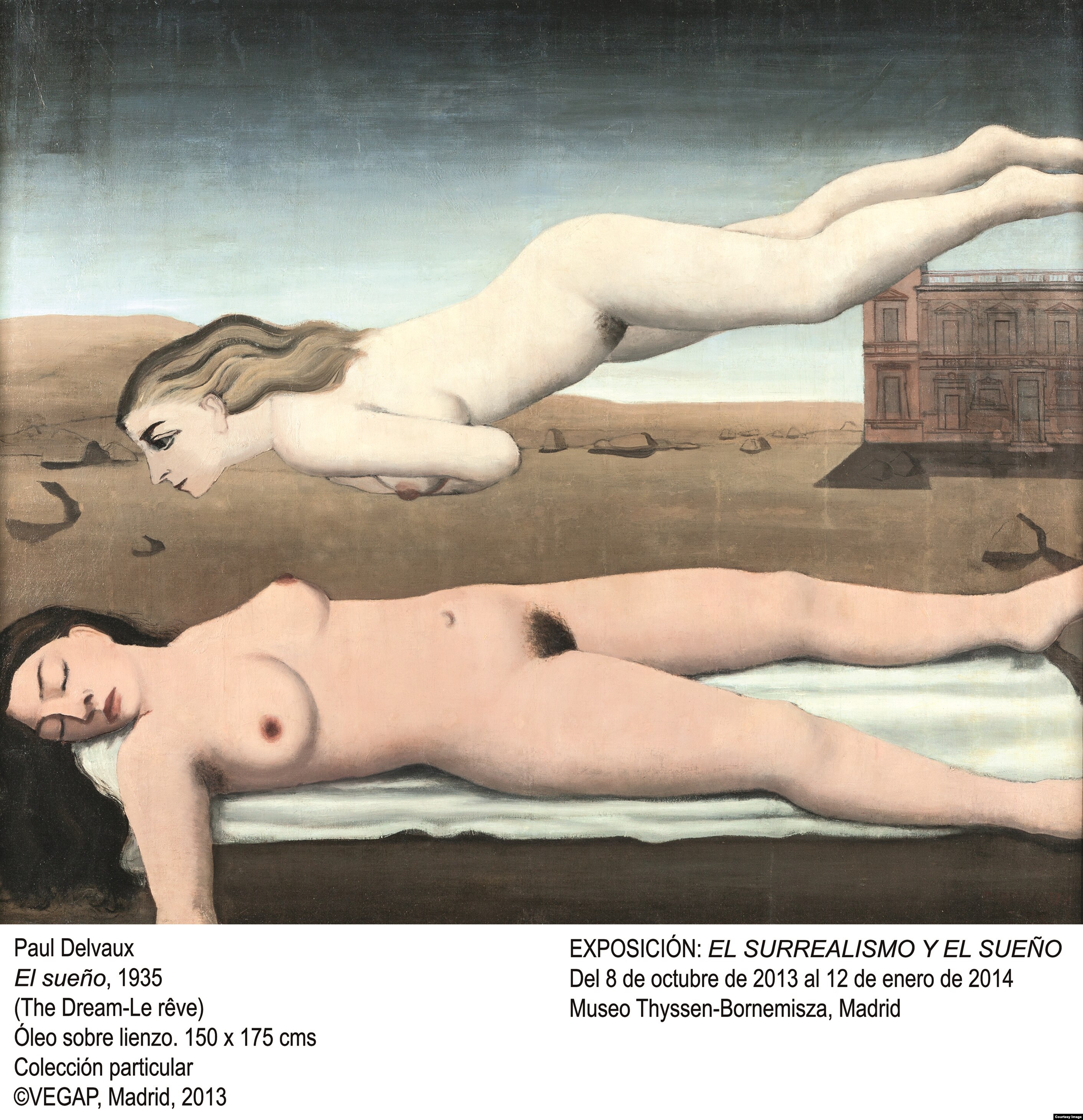
90 years of surrealism
In the Madrid Museum of Tissen-Boremis, the exhibition " Surrealism and Sleep " is held: 163 works by Salvador Dali, fields Delvo, Iva Tangi, Max Ernst, Joan Mirritt, Andre Masson, Jean Arp and other artists. This largest exhibition of surrealists has been preparing for more than four years during the entire post -war period.
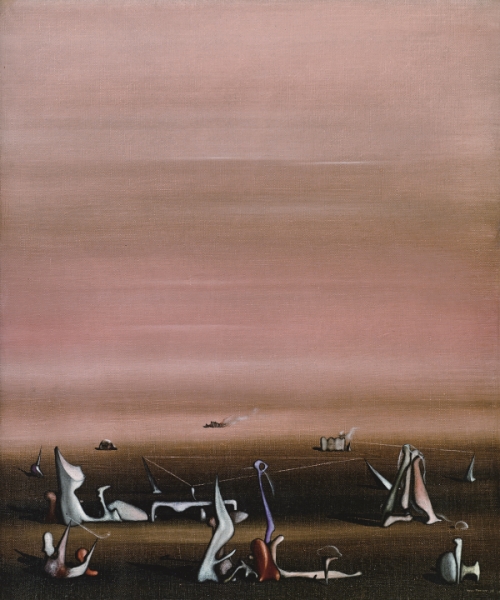
The Madrid exhibition is dedicated to the 90th anniversary of the movement of surrealism, which had a huge impact on the development of contemporary art in all its manifestations-from literature and painting to photography and cinema. The exposition is divided into eight sections demonstrating various aspects of the surreal interpretation of the world of sleep and dreams. The first section, called the "those who paved the way", includes the work of the predecessors of surrealism that influenced his aesthetics: Odilon Redon, Georgio de Kiriko, Henri Russo, Jean Granville. In two central sections - “where everything is possible” and “landscapes of another world” - the works of the field of Delvo, Iva Tangi, Leonor Finnish, Oscars Dominges, Max Ernst, Andre Massson are collected.
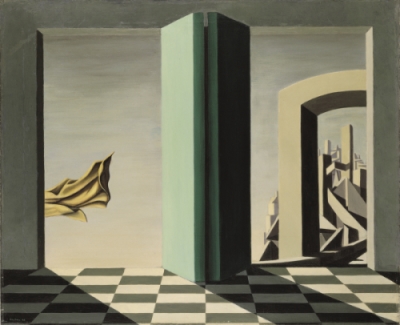
The artistic concept of the exhibition could quite accurately express the thought of the leader of the surrealistic movement of the French poet Andre Breton, who wrote in the “Manifesto of Surrealism” published in 1924: “I believe that in the future there are two seemingly realities - sleep and reality - merge into a single absolute reality, into surprise ...”. Breton's "Manifesto" became a programmatic document of the Surrealism movement. The word "dream" is made into the name of the Madrid exhibition. How should it be interpreted in the light of a surreal artistic concept? Its meaning is explained in an interview with Radio Liberty Curator of the exhibition "Surrealism and Dream" Jose Jimenez:
- The name of the exhibition is very important for understanding the whole concept of the art of surrealism. The word Dream in this name has a dual, ambivalent meaning. Like the English Dream, Spanish Sueno is simultaneously a dream, a dream, a dream, a fantasy, a chimera. Using this word, I had in mind the whole gamut of these meanings, but first of all its meaning associated with the work of the imagination.
- What place does surrealism occupy in contemporary art and how does it differ from other artistic areas?
- Its main difference is the presence in almost all types and genres of art: in literature, painting, cinema, theater, photography, music. Surrealism enriched and updated contemporary art as a whole. At the same time, he created a new type of emotional perception, the type of new perception, which are captured in modern means of information and in the modern entertainment industry. Here a parallel suggests itself with the role of romanticism in European art of the 19th century. In the twentieth century, surrealism became an act of radical renewal of artistic perception in European culture.
- In the "Manifesto of Surrealism" Andre Breton asks the question: "Can't sleep and dreams also be used in solving fundamental life problems?" Did surrealism answer for 90 years of existence to this question of its creator?
- I think that the work of the surrealists answered this question. The essence of the answer is that surrealism indicated the direction of solving the problem of not only artistic perception, but also understanding and perception of life itself. He showed that life is not only a rational concept, not only logical and material manifestations, but that the products of imagination that have no less influence on us are an integral part of real life than domestic conflicts. This discovered new horizons of freedom, its new measurements. And this is the main message of surrealism.
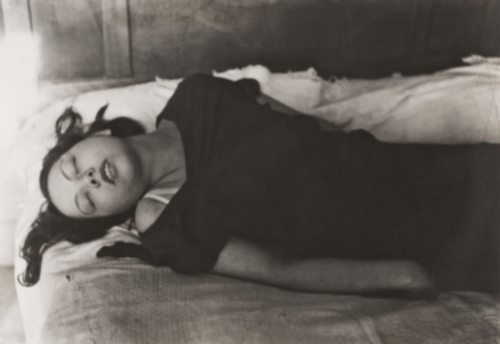
- Did Sigmund Freud the theory of sleep the theory of Sygmund's theory affected the concept of surrealism?
- It is undoubted that this theory is one of the central ideological components of the artistic concept of surrealism. However, there are a number of differences between the psychoanalytic and surrealistic theories of sleep. Freud interpreted a dream as a manifestation of mental and mental desires replaced in the subconscious and phobias. The psychoanalysis saw this symbolic manifestations of a slight neurotic disorder. For surrealism, sleep has no negative, asocial or perversive connotations. For him, wakefulness and sleep are equal and equivalent manifestations of reality.
- You entitled one of the eight thematic parts of the exhibition "on the other side of good and evil." Does this mean that the artists presented in this part of the exposition are adherents of immoralism?
- I borrowed the name of this section from Nietzsche. I wanted to say this name that surrealism recreates a world in which neither rationality nor morality prevails. Artists of this part of the exhibition do not propagate or exalt immorality. It's just that everything is possible in the world of sleep and dreams; There are no dichotomies of household reality caused by repressive social norms or moral attitudes of culture. There are no such restrictions in the world of surrealism. I perceive the name of this section rather in the poetic and philosophical meaning. This section of the exhibition is represented by such artists as Antonen Arto, Max Ernst, Salvador Dali, Leonor Finni, Dora Maar, Andre Masso. With all your desire, you will not find anything immoral in their works.
-You put up the work of 11 women artists. How significant is their role in the development of the art of surrealism?
- Once at the exhibition, the visitor enters the zone of the strongest erotic "radiation" ...
- You are absolutely right. An erotic element is one of the most important components of the artistic concept of surrealism. As you know, Freud's psychoanalytic theory is based on the manifestation of unrealized desire, lust. In the artistic system of surrealism, an erotic element is very important, which has always been at the center of theory and practice of the creators of "surrealistic reality."
- Fragments of seven surreal films are included in the exposition. What role did the movie play in the formation and development of surreal art?
- The movement of surrealism originated in 1924. It was the heyday of silent cinema. Surrealists actively participated in the development of cinema. Then Andre Breton announced that cinema is the most important "surreal secret." Surrealism cannot be imagined without a movie. At the exhibition, it occupies an equal place with painting and photography. The beginning of surreal cinema was laid by the tape of Luis Bunuel and Salvador Dali Dali's "Andaluz dog" of 1929. Then the surrealist ideas "infected" the cinematic mainstream. An example of such an influence can be found in Alfred Hitchcock "Fascinated" in 1945, demonstrated at the exhibition. Hitchcock invited Salvador Dali to create decorations for the film. This film played an important role in the canonization of the surreal approach to the nature of dreams.