Date
Author
Соломон Волков; Александр Генис
Source

Preserved copy
Translated material
Pictures from the exhibition
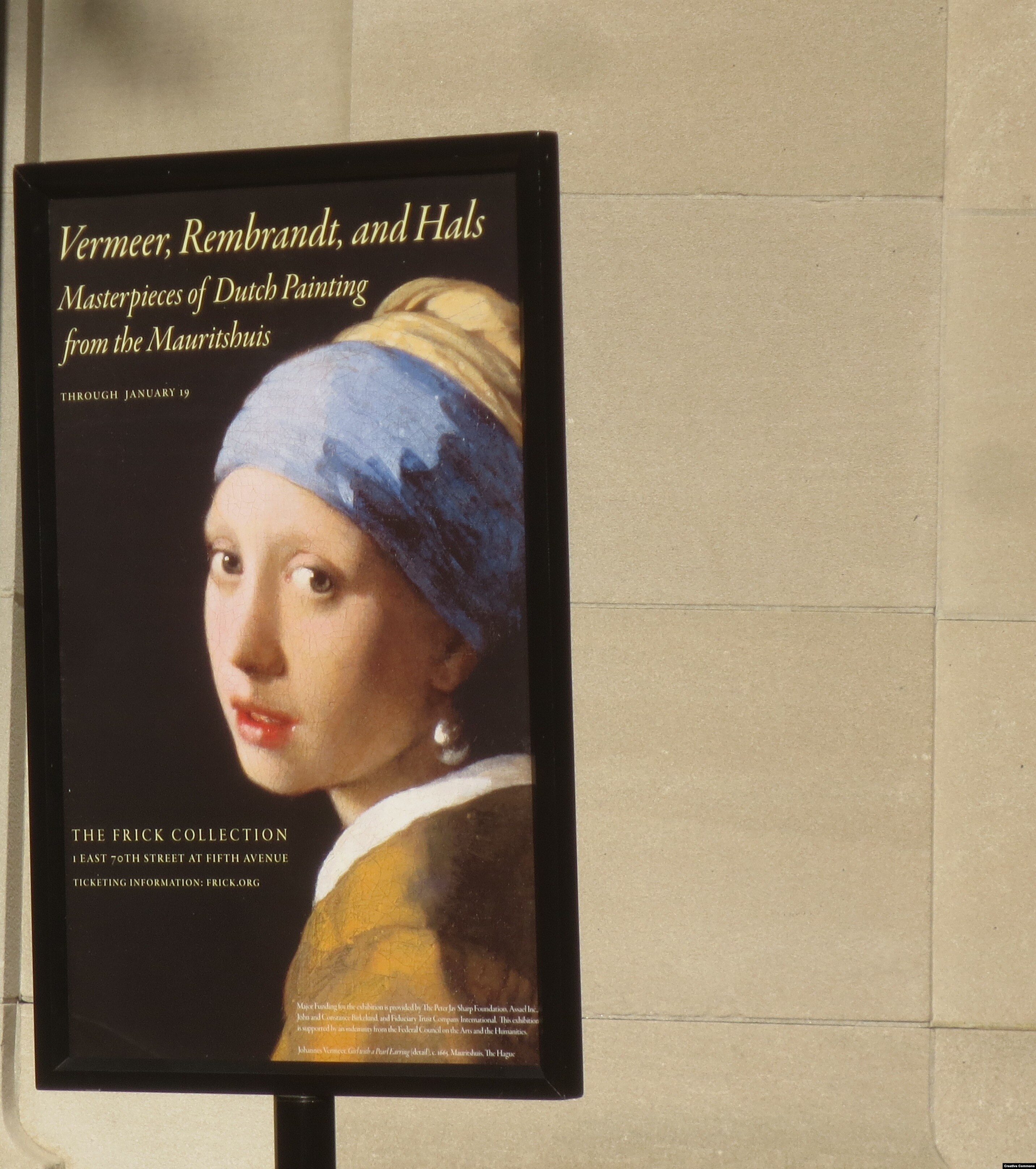
The exhibition caused such a stir that tickets were sold here as a performance - in advance, not cheap and strictly by the clock. But the spectacle came out unique. First of all, this is the Vermeerovskaya “Girl with a Pearl Earring”, the Dutch “Mona Lisa”, who became famous even more after a popular film. And of course, other masterpieces are a flight with his Garelm landscape, a wonderful bird of Fabriasius, the genre paintings of Peter de Hoch and the canvases of the two other titans of the 17th century: Hals and Rembrandt.
(Music)
Alexander Genis: The 17th century historians from helplessness call the centuries of geniuses. This century does not fit into the channel of one style, as, say, the Gothic era, or one spiritual movement, as it was with the Renaissance. The 17th century is the birthplace of great minds in various fields of art and, even more important, is science, which then laid the foundations of the new time in which we still live. However, for the approximate orientation, which is enough for the amateur, it is enough to recall that it was the era of musketeers.
For Holland, the 17th century was gold. Being at the zenith of her economic and cultural dawn, she could boast of the largest income per capita, the largest fleet, the richest Amsterdam bank, the most free press, as well as to religious, a school in every village and many thousands of artists, whose efforts were created, undoubtedly, great painting.
I must say that both America and Russia are equally obliged to this Holland. Two great cities of these countries - Petersburg and the new Amsterdam, who eventually became New York, were erected by the most advanced Dutch model for its time.
American collectors saw in their paintings the ideal of their new republic. On the Dutch canvases of the 17th century, the Americans saw the dream of the New World - the democracy of the rich. Protestant ethics, a state acquired by labor, piety without fanaticism, a love of delicious life and an unconscious beauty.
The founding fathers, of course, saw America with the second Rome. Hence the Senate and Capitol. But history ordered in its own way, offering one republic to the samples of one republic-Dutch. If no one saw the Romans, then the Dutch were at the side, in New York, who was born to the new Amsterdam and was surrounded by villages with the Dutch profile and names. In Manhattan, they honor and remember the one -legged governor Peter Styvesant. Dutch was the native language of the Eighth President Van Buren. And every donut, without which the New York breakfast does not do, is the origin of the fat Dutch cuisine.
(Music)
Alexander Genis: Today we love that old Holland, especially one of its geniuses - Vermaur. It is not for nothing that the FRIC Museum exposed his canvas in a separate hall - like an altar in the temple of art.
At the same time, the painting of Vermeur Chamber in all respects. She not only prefers the interiors, but also with comfort is located in them. All his works fit inside a small square size, say, with an old TV. Here only a close -up is allowed, allowing to make out the details. The language of the face and light, the ballet of smiles and the gesture parade. The mind reigns in his paintings. But methodological thoughtfulness is connected here with the virtuoso technique that we are used to attributing only to impressionists. Their eternal hunting for light, their taste to tactfulness, to the images, their attention to the momentary fluctuations of the air element - all this is also in Vermeur. But he has (if we cross in another hall where three Vermmer paintings belonging to Frica hang) and another: plot, story, sermon. Unlike impressionists, there is nothing accidental here-every detail says something, tells something, and most importantly, teaches something. Of course, today no one loves teaching art, but only because it has forgotten how to do this, as it should. Vermoer lived in an era when the sermon was still a favorite genre of mass art. And he owned them with unprecedented skill. This is evidenced by each of his canvas, on which didactics enters into a legitimate marriage with aesthetics.
Vermoer lived on the top with which the split of the arts began. One of the ways led the art to the impressionists further - to the abstracters who left painting without an idea. The second way led through pop art to conceptualists who left the idea without painting. Against the backdrop of these extremes, Vermaur's experience is unique. Holding on to the middle, commanded by his century, his city and his origin, Vermoer concluded the rarest in the history of world painting an equal union of mind and eyes.
(Music)
Alexander Genis: In order to love the great painting of the Netherlands, so brilliantly represented at the exhibition at the FRIC Museum, it is better to start not with large, but with the small Dutch.
Every real artist creates a thing in her image and likeness, freeing nature from the flesh. The focus is that the soul remaining on canvas does not differ from the body. In any case, among the small Dutch, to whom the rational Calvinist aesthetics allowed to write only what was visible. They believed that only this one leads to the other side of reality.
This is what small Dutch are needed for this. They share with us their national religion: the metaphysics of everyday life. Being that each thing leaves a corridor that connects being with its absence. Further, as they say, there is nowhere to go.
“But if the Dutch, then why are small ones?”
- Because in large ones, their personal and already because - Buntar - a genius embodied. For the rest, a quiet culture of a measure that gives a lesson of jubilant humility speaks.
The Dutch, which is small, helps to cope with pride, interfering with sleep, praise God and enjoy an idyll, to which both their ideal and their art are reduced.
But if the small Dutch can be loved just like that from childhood, then considerable requires a special approach, for me - literary. They are born by Russian writers, Rembrandt would be Dostoevsky, Hals - Tolstoy, and Vermoer - Chekhov.
In fact, the first loved the heartbreaking effects of chiaroscuro, which so annoyed Nabokov in "Crime and Punishment." The second illuminated his group portraits with an even light of the epic - as in the “War and the World”: 4000 characters, and you will not confuse. The painting of the third is sad, intimate, chamber, that is, indoor, like a pale but priceless orchid on the windowsill.
Speaking, otherwise: Beethoven, Verdi and Mozart ...
At the same time, they are all the Dutch, which means they can create beauty in conditions limited by faith. If the Protestant church cannot be filled with frescoes and icons, then their organ songs will take their place. If the luxury is prohibited, then vanity will find a way out in philanthropy. If you prohibit colored silk, then there will be a hundred shades of black. It was not for nothing that Rembrandt had a buying palette, and the better he wrote, the poorer it became. Even during the heyday, he, for example, did not use ultramarine, so expensive that Gothic artists kept it for the Mother of God, and Vermyr was transfigured on thrush. But the latter from savings wrote the same room, one window, one vase of Chinese porcelain and one pearl, moreover, fake, which was quite few people in his native Delpht. It was she who shines dimly in the girl’s earrings, whose portrait today has multiplied by advertising throughout the festive New York.
(Music)

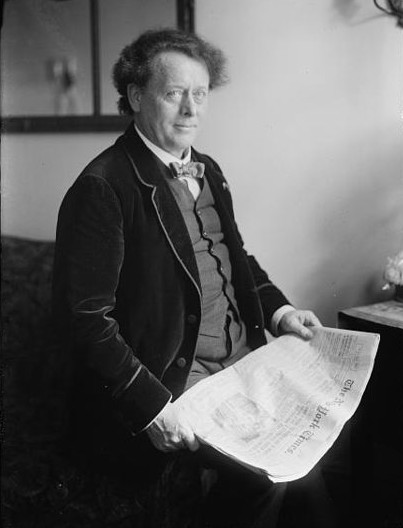
Solomon Volkov: When I thought about what a musical theme could serve as a parallel to your story about Dutch painting, I decided that, perhaps, we will talk with you about one extremely Dutch institution, in any case about the institution that is very, very proud of Holland, and it is largely a visiting card and Dutch culture, and the countries as a whole. The artists you talked about is the glorious past of Holland, this is a nostalgic topic, this is something that the Dutch can only sigh now. And the institution that I will talk about now exists and flourishes - this is the Royal Orchestra of Consetgebau. This orchestra was created in 1888, that is, it has a long very story. He became famous for real, that is, the framework of the regional, local orchestra out of the leadership of the conductor, which is not often remembered, meanwhile, has grown out, meanwhile, he was certainly a great musician. His name is Willem Mengelberg.
And now several digits, several dates that seem dry, namely: Mengelberg was born in 1871, died in 1951, he headed the Consetgebau unprecedentedly for a long time, only very few conductors headed one team for so long, he led the orchestra for almost 50 years. He left this post in 1945, and died in 1951 in Switzerland.
These are the outwardly simple, uncomplicated numbers, behind which a large tragedy is hidden. Because, as I said, Mengelberg was a great conductor, he brought this “Consetgebau” orchestra to world glory, on which “Consetgebau” remains to this day. He was one of the earliest and fiery propagandists of Mahler’s work, he combined the names of Maler and “Consetgebau”, in his performance, Mahler sounded like a great composer, and this was a tremendous merit in the time in pre -war Europe. He was Russophile in music, played Tchaikovsky with pleasure, loved this author very much and when Tchaikovsky was not so popular in Europe. Indeed, in Germany, France, Tchaikovsky was not loved. Tchaikovsky was pressed to heart in America, but not in Europe. There, it was very skeptical, and sometimes abusively spoke about his music, it was not correct enough, it was not philosophical enough. Mengelberg understood and revealed this philosophical basis of Tchaikovsky’s music. I want to show a fragment from his recording of Tchaikovsky’s serenade - this is an archive record of 1937, and you will see what you saw then in Tchaikovsky Mengelberg in 1937.
(Music)
Solomon Volkov: Then, as we know, Holland was occupied by the Nazis. And then there was a story that cost Mengelberg and his post, and his reputation, and turned into a huge tragedy for him and in a sense for Dutch musical art. Mengelberg began to cooperate with the invaders, performed under the auspices of the Germans in different European countries, expressed various considerations in printed, friendly in relation to the Nazis. In all of this, the Dutch could not forgive him, and in 1945 Mengelberg had to leave the orchestra, and he graduated from his life in the exile of a broken, broken man in Switzerland. Until now, the attitude towards him in Holland in a sense is dual. And we are constantly faced with this: how to evaluate a person who collaborated with the Nazis?
Meanwhile, as I said, he was a great musician and, as you see, he promoted the Jew Maler when it was completely unmary. He loved Russian music. And of course, he did a lot, creating this orchestra in fact. He performed Bach remarkably. Now we are accustomed to the specific, authentic bah so -called. I believe that the interpretations of Mengelberg are not authentic at all, however, they convey the essence of Bakhov’s music. Bach in his performance, his greatness appears through each note. And here I want to show such a record of the famous Bach Aria, noting that this recording was made in 1942, that is, at the time when Holland was occupied and when Mengelberg collaborated with the invaders.
(Music)
Solomon Volkov: You know, it will not be quite accurate. I performed in the building where this hall is located, but not in the hall itself. I don’t know if lectures are given there in the hall itself, because I gave a lecture, and then I talked with the current leader of Consetgebau Marisans Jansons. We were sitting with him, the Dutch journalist moderated, as they like to talk now, we talked about Shostakovich - this was during the celebration of Shostakovich's centuries in 2006. Yes, in the same building, and it was already a great honor for me. And the hall is really wonderful, the sound, the acoustics there are amazing, and the inhabitants of Amsterdam adore - this place is such a shrine, Mecca, if you like.
Alexander Genis: As you think, it’s good to listen to music, looking at the back to musicians?
Solomon Volkov: You know, this hall has some kind of special aura in which, when you enter it, there are still no musicians, not a single sound has been heard yet, and you already understand how one of my friends loved to speak in such cases that this place is prayed.
Alexander Genis: I myself in such a prayed place - I sacredly believe.
Solomon Volkov: You feel it in Carnegie-Hall, you feel in the White-Kolo Hall of the former noble assembly in the current Philharmonic in St. Petersburg.
Alexander Genis: And in Riga, in our home cathedral, it is prayed there literally.
Solomon Volkov: There are such special places, entering which, you understand that you are in the temple, in a musical church in this case.
The current leader of Consetgebau, only the sixth in the entire more than a hundred -year history, is Maris Jansons, Rigan and my fellow practitioner in the Leningrad Music School, whom I consider with a wonderful conductor, the Dutch also adore him. Recently, they came to Moscow at all when the Dutch royal couple also stayed there at the same time. This happened, if you remember, at the moment when suddenly between Russia and the Netherlands, a series of unpleasant incidents occurred. And this visit, as it were, closed the problem, what is called “ping-pob diplomacy”: music, culture is able to make something that some diplomatic moves could not do. Music tried to restore, as it seems to me, a friendly atmosphere.
Alexander Genis: Jansons helped this.
Solomon Volkov: Of course. The whole world went around these photos - Jansons with a royal couple in Moscow. It was all very pleasant to see, and the audience, criticism remained in incredible delight. This is a perfect orchestra, and Jansons, in my opinion, is very suitable for this orchestra.
Alexander Genis: What did he bring to Consetgebau?
Solomon Volkov: When they ask him that he brought a new one, he always replies that he was not going to bring anything new, for his task was to preserve this great tradition, not to worsen it. That, by the way, his predecessor, we will not give his name, just succeeded - with him the orchestra, in my opinion, went down. Maybe someone will not agree with me.
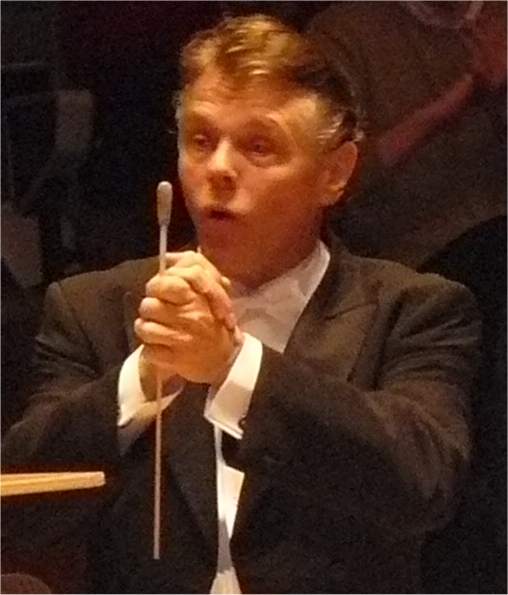
Solomon Volkov: Jansons is an amazing conductor and an amazing person. He never rude, does not rude to people, his exactingness, nevertheless, is fantastic. But it reaches the results not in the way that the Toscanini was walking, who pulled out cheap watches specially controlled for this case and began to trample them with his feet in anger. He does not need to do this at all, but he achieves his own. Jansons expanded, I think Palette of Consetgebau. At the moment, this is an orchestra that can play everything from and to, from Haydn to the modern Dutch composer Andriissen. But I want to show Malera here, exactly the composer, who was so promoted and whom he introduced into the Holland with the help of Consetgebau Mengelberg. Malera Jansons writes a full cycle with “Consetgebau” - this is an outstanding cycle, without a doubt. He supports the Malera tradition in a great way. The excerpt from the first symphony of Mahler is played by the royal “Consetgebau”, Jansons conducts.
(Music)