
Translated material
"Macbeth" without trouble
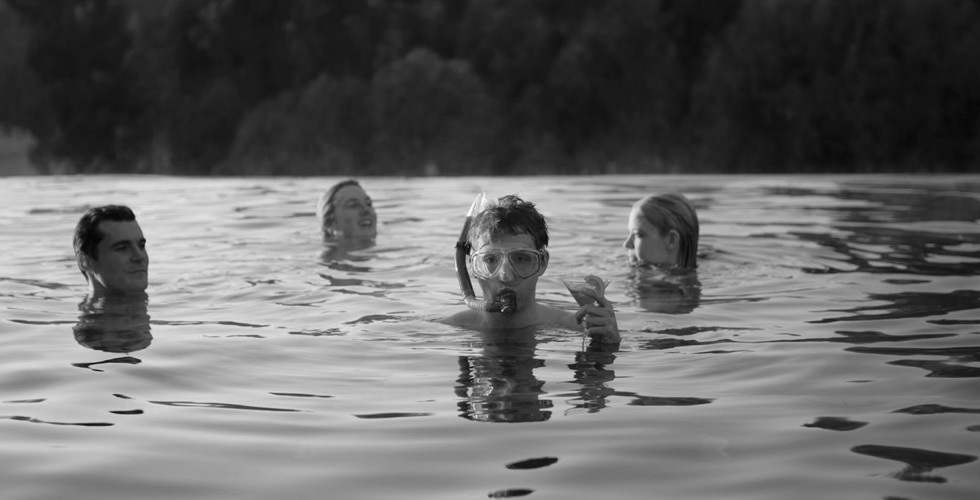
Disappointed - unlike American criticism - Joss Widon’s Romkom, “There is a lot of noise from nothing” (all the same as Shakespeare, only today, at the Party Party, and Conrad no longer a servant of Don Juan, but his mistress), Yegor Moskvitin brought several rules for the successful adaptation of Shakespeare. We are sure that they will not lose relevance in the coming year, where the “King of Lear” with Al Pacino, a thriller-breed “McBet” with Charlotte Hensbur and the almost canonical “Macbeth” with Michael Fassbender and Marion Kotiyariar, the series in the spirit of “Hamlet’s sons like Kennedy), but about the clan), and Also, the spin-off “Romeo and Juliet” “Rosalin” (about the girl that R. quit before healing J.).
Be closer to the people
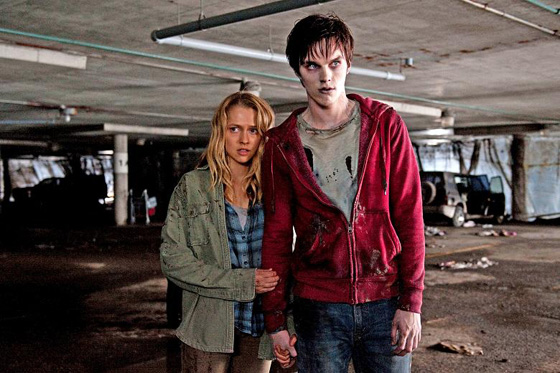 Frame from the movie "Heat of our bodies"
The famous Shakespeared Alexei Vadimovich Bartoshevich called Hamlet a universal play for any company equally appropriate for production in schools, prisons, and on warships. Shakespeare's plays are really very democratic, in them there are enough brutality, and hedonism, and frivolity, and flesh. It was normal for the Renaissance, but for some reason it is abnormal for modern cinema, where if Shakespeare, then an implacable arthouse. You can verify the erroneousness of the Snobsky approach by watching, for example, the film “Anonymous” - it is reliably and textured shown which public gathered at the beginning of the 17th century at the Globe Theater. It is no accident that the English playwright is held in high school: in order to learn his key thoughts, it is not necessary to have a couple of red diplomas.
An example of the correct film adaptation: “The warmth of our bodies” by Jonathan Livine
An example of the wrong film adaptation: “A lot of noise from nothing” Joss Widon
Protect nature
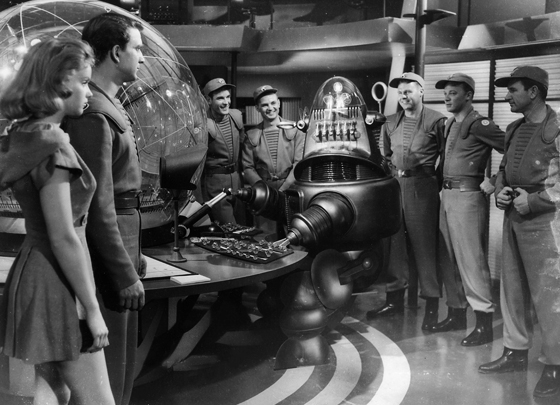 Frame from the film "Forbidden Planet"
Shakespeare's element is a full player. In Macbeth, the Birnamo forest is a war on the castle of the ultrasound king (in fact, opponents with camouflage from the branches, but Orson Wells in his adaptation of the tragedy was able to show them precisely as a forest). In the "twelfth night" heroes kills and resurrects a sea abroad. In the "storm" Prospero controls - right, storm. This important part of the Shakespearean rock was carefully kept by theater -core in the means of the theaterarians, but modern, spoiled by neorealism, the adaptors of it forget about it (the genre of tragedy, which implies the complicity of nature forces, is not very popular today). In the science fiction film “Forbidden Planet” of 1956, based on the same “storm”, the universe itself is subordinate to Prospero. But in the Coriolan, Raifa Fins against the heroes could rebel the stone jungle themselves - but either the budget was not enough for a full -fledged city war, or the importance of Fayns underestimated its importance.
An example of the correct film adaptation: “Forbidden planet” Frank Maklaud Wilcox
An example of incorrect film adaptation: "Coriolan" Raifa Fins
Possess absolute hearing
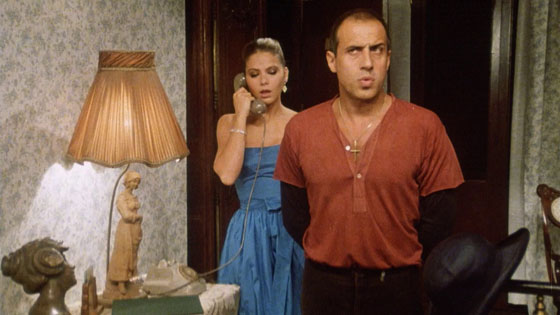 Frame from the film "Taming of the Polopetable"
Shakespeare's melody is not exhausted by verbal rhymes. He has a strict symmetry: each Merkurio has his own tibalt. The heroes of antithesis balance each other-like an imperious, strong, black Othello and trembling, fragile, white desademona. The differences of the tragic and comic are constant (just like in a modern horror). In the "Twelfth Night", the heroes literally break out of the abyss of death in order to celebrate life. Shakespeare is always dynamic, multi -figure, well -organized intrigues. In the cinema - especially if you process the dialogs and, for the sake of timing, clean in the ranks of the heroes - you can not save such magic.
An example of the correct film adaptation: “Taming of the obstinate” Franco Castellano and Giuseppe Chashchi
An example of improper film adaptation: “Caesar must die” br. Taviani
Follow the rule of "three s"
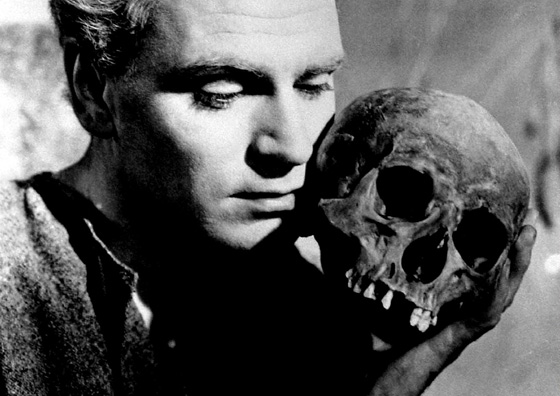 Frame from the movie "Hamlet" Lawrence Olivier
Pushkin, describing Shakespeare's method, deduced this formula: "Laughter, pity and horror are the three strings of our imagination, amazed by dramatic magic." Pity in this triad is often replaced by sympathy, and horror with fear. It turns out “three C”, necessarily present (in different proportions) in any work of the classic - both in tragedies and in comedies. The “fourth C” can be called death. She is an important hero of not only Shakespearean tragedies, but also comedies, the essence of which often comes down to overcoming death and resurrection. In this sense, the hypothesis is interesting that the “twelfth night”, where a shipwreck becomes a starting point for a new life, was written after Hamlet, and not at the same time with it. And in “A lot of noise from nothing” the slandered hero is hidden, throwing a rumor about her death. That is, death for Shakespeare is the most ordinary tool, like a hammer. Nevertheless, in comedic film adaptations, the figure with a scythe, an obligatory companion of Shakespearean fun, is often pushed into the background.
An example of the correct film adaptation: "Hamlet" Lawrence Olivier
An example of improper film adaptation: “Rosencrantz and Guildenstern Immortal” by Jordan Galland
Search for werewolf actors
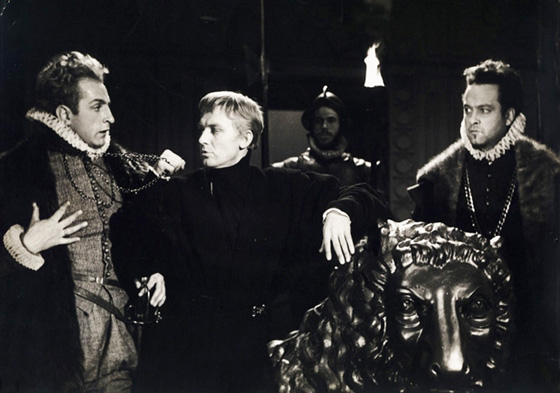 Frame from the movie "Hamlet" Grigory Kozintsev
Shakespeare's tragedy is always a catastrophe, as a result of which a new knowledge of a person opens, the hero is updated. And his comedies are the dramaturgy of a pure game, where the characters in front of his eyes change their content. Spectators must worry and enjoy the vicissitudes of the transition of heroes from one state to another. For example, in the "taming of the obstinate" Bianca, the younger sister of Katarina, at first it seems a meek and innocent, but then becomes a real Furia. Shakespeare is always clear what is good and what is bad, but the graphic clarity of the figures does not interfere with the depth of the images. Therefore, the actors have to constantly move from two -dimensional to three -dimensional, from binary to bottomless - and vice versa. Where in such a quantity to take modern film actors who are ready for rapid reincarnations - a riddle. The latest version of “A lot of noise from nothing”, although inhabited by the most plastic actors from all Widon’s films (Fillion from Svetlyachka, a crane of “Hims in the Forest”, Gregg from Avengers), in this context is an absolutely flat film.
An example of the correct film adaptation: Hamlet Grigory Kozintsev
An example of the wrong film adaptation: “Romeo + Juliet” Base Lurman
Think out loud
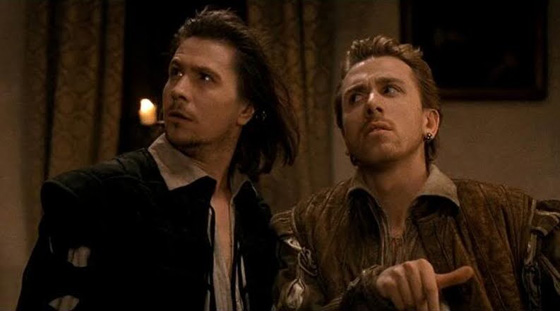 Frame from the film "Rosencrantz and Guildenstern are dead"
Shakespeare is always naked, the most interesting things with the heroes happen here when they are left alone with themselves. In the theater, to illustrate such internal work, there are organic techniques - monologues to the hall, a sharp disappearance of all actors from the stage, leaving the protagonist lonely in general space, dramatic pauses, and special remarks of the director. For example, Vampilov’s “Duck Hunt” Zilov, after an unsuccessful attempt to suicide, should lie for fifteen seconds, shuddering so that the viewer wonders whether he cries or laughs. Exactly a quarter of a minute, no more or less. In the cinema, all this is also possible - but any replica in the camera looks both comical and alienative (this is not bad for comedies, but for tragedies - a disaster). Meanwhile, the mismatch of plans and actions, will and rock is an important part of Shakespeare's drama. Good people often become criminals, and the rogues are assistants to the heroes.
An example of the correct film adaptation: “Rosencrantz and Guildenster Dead” Tom Stoppard
An example of improper film adaptation: Romeo and Juliet Carlo Carleus
Be a god of details
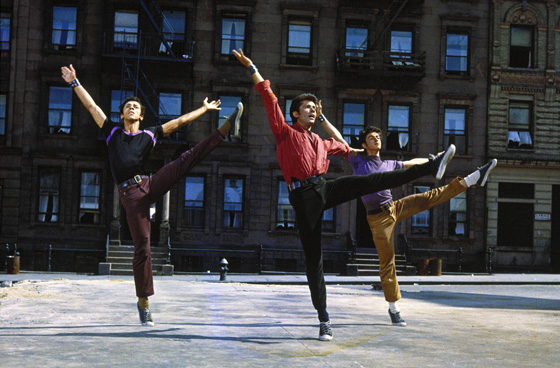 Frame from the movie "Westsaid History"
Pasternak lines “The omnipotent god of love, the omnipotent god of details” is the best characteristic of Shakespeare. Without a monologue of a burial man, without a spontaneous story, Mercutio about the queen of the night of a mab, without rich speech and ornate metaphors (“McBet’s hand is stabbed to sleep”, “We are in the book of fate on one line”) These plays would be superstructures of ancient tragedies. Cinematographers also have a choice: to remove superstructures-underlines or to create a cinema-language similar to the Shakespearean. Well, or at least come up with a new dialect for existing ones - in the end, the classic has already filmed four hundred times.
An example of the correct film adaptation: “WestSaid History” by Robert Waza and Jerome Robbins
Example of incorrect film adaptation: Hamlet Franco Dzeffirelli
Shoot as if there were no performances
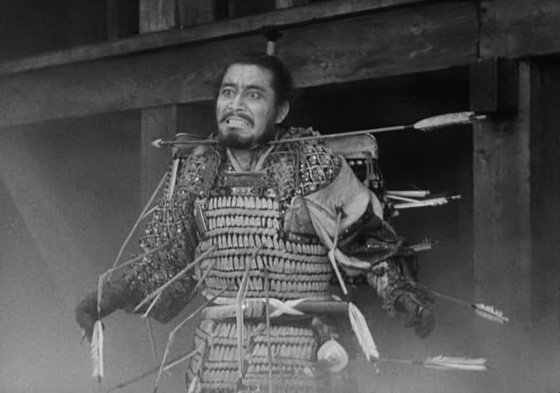 Frame from the movie "Throne in the Blood"
Remember, in Gamlet there is a performance in the play when the prince with the help of actors plays the story of the poisoning of the Duke of Gonzago before the new king? The problem of any adaptation of Shakespeare is that it is in itself a performance in the performance, the projection of the great tragedy of being. Heroes here simultaneously and are free in the expression of their will, and are figures in the game of inexplicable, higher powers. When you watch the film on Shakespeare, the characters usually do not seem to be puppets of the devil (by the way, it is characteristic that God is absent in his plays - even the god who is from the car), and twice taken by derivatives from literary heroes. For the film adaptation of Shakespeare's texts, you need a special method that would allow you to avoid theatricality or come up with it again. “Macbeth” Bela Tarra, for example, is absolutely unbearable due to its stylization for the performance: a minimum of mounting lamps, a strange interaction of the camera and heroes, theatrical intonations. At the same time, the “throne in the blood” of Akira Kurosawa brings Shakespeare with the isolationist tradition of the Japanese theater - and this union is definitely from those that consist of in heaven.
An example of the correct film adaptation: “Throne in the Blood” Akira Kurosawa, “Prospero Books” by Peter Greenai
Example of incorrect film adaptation: "Macbeth" Bela Tarra