
Translated material
How to survive stagnation?
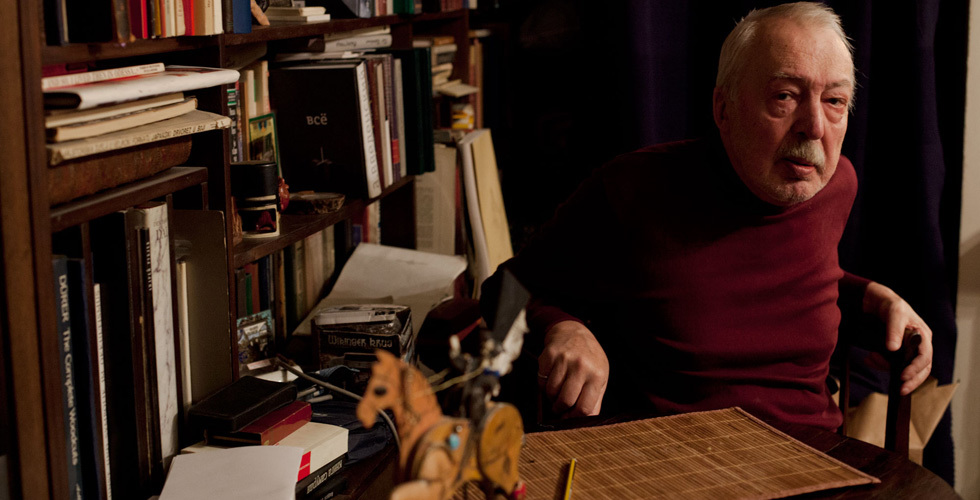
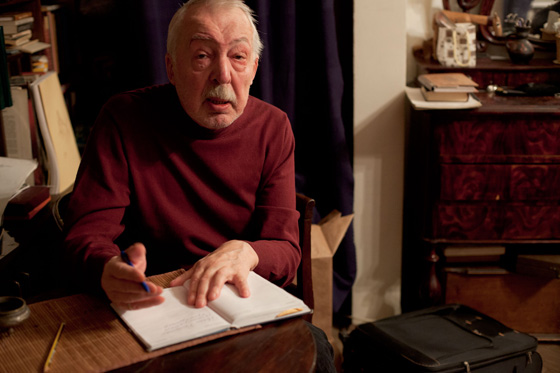
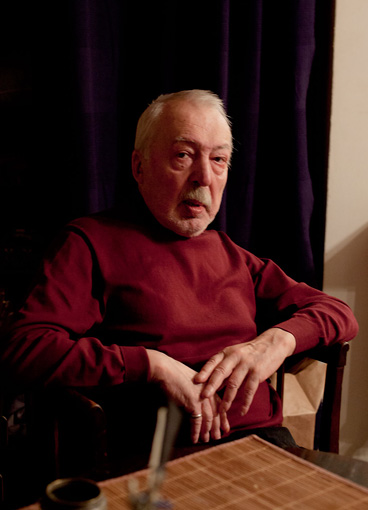
Colta.ru continues the heading "Likbez" , in which experts share with us their views on the fundamental concepts and phenomena of culture and history. The author of the Pushkin House Andrei Bitov recalls how the common people, nomenclature and writers were living in Soviet times, and also regrets the destruction of the empire.
Since I have been writing since 1956, it is important for me to say what happened.
I will say very schematically: there was an October coup, and the systematic genocide of our people went purely on a class characteristic - one class destroyed another class. It was still Ilyich, and Stalin completed the most terrible destruction of the main class of the peasantry - and the country was in the bulk of the peasant. And he managed to steel and freeze everything with a continuous guuloma. This is the “Soviet man” arose inside this. And I say this without irony, because the Soviet man, in general, lifted the country and fought, and won, and all this was, but it was already a Soviet man who was deprived of contact with the world. People did not have access to much, but nevertheless they knew something, and this air, according to which the information spread, was a kind of secret publicity. And the “voices” were listened to by people, and rumors crawled, and some even knew how to read the newspaper “Pravda”: who are listed in what sequence, what movements to the Central Committee. And by the way, then they told me that the whole department was sitting on the fact that it was precisely the Soviet newspapers that took place very rigid censorship, but somehow a lot of information came from there. It was not necessary to peep into binoculars as in Soviet films. A lot of what is happening, you can’t hide.
When, by the beginning of the 30s, all the possibilities were covered and the culture was crushed by socialist realism and this stupidity, this bubble arose, this huge zero of the Soviet people. That is, a person, on the one hand, has retained some tradition and patriarchality, on the other hand, was zeroled. And the merit of the so -called exposure of the cult is that they simply pierced zero and air came out of it. Therefore, many writers were born a lot who were hoped that they would write something, and they themselves were as dark as the rest of the society. You were ignorant and you would have thought that you were opening everything. Although this is a very necessary energy for the birth of a writer - that you write everything for the first time, for example, after 1917, after the classics. Because it was not known what was being done in the West, or was closed in a drop, and then everyone read this drop together. Suddenly, Stendhal, Rabelais, Viion, or anything, could be modern. And there was a reader who searched for a hint there, or the connection with everything with everything. They read and dug those rare writers who managed to print something in the same “New World”. In the early seventies, by the way, they slammed the "New World", Twardowski flew away. And the thaw was already frozen everywhere. Nevertheless, a quiet sapa could still be done.
A lot depends on the authorities, and it was naive to count (and at the same time everyone thought so) that they themselves, they are independent, they are free. All the same, everything was filtered. The 1970s implemented a soft form of the principle of "divide and conquer." Although everyone laughed at Brezhnev, and this was already the dignity of the past thaw, and with Nikita they acted humanly, did not shoot, but gave them to die with their death and buried in the ground, and not in the wall. And the monument over him was placed by the one on whom he stomped. This was already some kind of democrytean award.
 © Julia Ryzhenko / colta.ru
The country was huge, and waves of prohibitions and permits at different speeds and with different intensity spread through it. In Moscow there was a fairly fast reaction to an ideological atmosphere. Leningrad was lowered to a provincial level in relation to the Kremlin, not to mention the rest of Russia. In Leningrad there was a regional committee, which was always late. And in order not to be late next time, exaggerated the measures taken. If they began to beat the abstractionists in Moscow, then this was reached to Kamchatka two to three years later: they found some artist and punished.
I remember when I was already tired of stagnation, one of my friends, whose dad had a nomenclature person, said to my judgments about Leonid Ilyich: “You are wrong, sort out what will happen after him. He is still a kind person. " This phrase in me then settled then. Indeed, the Zhiguli appeared, cooperative apartments, in general, personal life began. It seems to me that there was a moment when it was possible to introduce a solid currency. 4.5 rubles. It was worth everything that I used: gasoline tank (45 liters, 10 kopecks), a kilogram of coffee, a bottle of vodka. My stable basket. And at the same time in the black market, the dollar cost 4.5 rubles. It was clear that this was a single system. And for some time the layman simply did not think about power. But when Leonid Ilyich completely became a laughing stock, there was a rumor that they would plant as jokes, and everything could not become quiet sapa.
Publishing policy and editing carried all the hardships of censorship. Although I only saw a living censor once in my life, and it was a rather interesting and peaceful date. In principle, everything was allowed at the editing level: it is possible - it is impossible. The Soviet government has always been a rather strange girl: she forbade everything, but if she allowed something, then it is already possible. That's just in this way it was possible to move: if you have something published, then you could add to this something else, even unpublished, and it could go into the book. But again selectively.
The time was useful for literature in two senses. Still, it was possible to write, and it was already more difficult to print. And it (this time) was calm. If you complained that they didn’t print, then I could say: why didn’t you write? You could write a lot more during this time than to complain. And then there was a certain shift from the thaw to stagnation. This is the transition from Samizdat to Tamizdat.
In my case, something earlier was always printed, which lost its topicality, and not the things that seemed significant to me at that time. Such delay was already the norm. But I had wonderful editors. So, there was an editor who was a kind of pilot. He understood the policy of his own publisher and the general and, if he liked the author and the book, tried to conduct it with some of his channels, give the appropriate reviewer, sign it in the absence of the most terrible boss and to conduct so quietly. I always had a slightly-a book will be released, they scold me for a while, then it becomes a base for continuation. And in 1976 I had a “ceiling” (back in the time of the thaw, we had such a thing as a “ceiling”, it concerned printing on advanced authors). Two books were published simultaneously, which collected everything that I, like Ivan Kalita, managed to accumulate in a few years - from 1960. To1976, the merit of my editors that they were able to do this. And since 1977 they stopped printing me. Moreover, I already handed over the Pushkin’s house to the west - just for safety, to be honest. I did not resist him to come out in the west, because I was tired of cutting pieces from him, but he already existed there through samizdat. And the Pushkin House itself, although in the first version, was written in the second half of the 1960s, nevertheless it was abandoned for a while. I finally returned to him in the 1970s and I remember that I said to myself the word “publicity” and has already expanded it to the level of obstruction, allowing myself all the topics. But nothing was nothing, did not pass through the sieve of editors, which reflected censorship.
 © Julia Ryzhenko / colta.ru
There was such a word "allusia." God forbid, they will find some kinds of allusions. So, the description of bad weather in the “Traveling to a Friend of Childhood” - “... The whole country is pitch, non -lethal weather” - was perceived as a hint. But I just described the real flight to Kamchatka in bad weather.
All these hypocritical ideals that were not observed by anyone were still planted. All the same, people had a lot of freedom: you can drink vodka, you can sleep with girls and be friends with friends. You can’t cancel this anymore. But it was not very possible to write about this. This is a hypocrisy: one wife, loyalty, no one drinks, no one steals, no Jewish question. That was all! But I told myself the “publicity” and declared it to myself in the Pushkin House. Then diligently, as an experienced person in our publishing wilds, I tried to accustom our publication to the existence of the novel and cut some chapters, he himself censored, for which some liberals despised me. But, in any case, I managed to publish several chapters and unite them in the same book “Days of man” of 1976. However, apparently, partly due to reproaches from the left side, how to do this with my own work, I went to ensure that the work was published in the West. The same thing happened, for example, with the “Sandro from Chegem” by Fazil Iskander: he printed the chapter as separate stories, and the whole book did not pass, especially the chapter about Stalin “The Figs of Valtasar”. But in the end, we were published in the same publishing house - “Ardis”. I remember this feeling when I received this book in 1978: it’s scary that you will be taken and applied more stringent sanctions.
The West also treated us casually - not only in finances, but also in our fate. I demanded that an English translation come out, but it was necessary to pay, and it was necessary to have time. If I were attracted to the answer, I would be in a difficult situation, because no one in the West could understand why. I did not engage in direct dissident activities, but did not accept this system almost spinning. And since I was a disorder, I spent a lot on traveling in our immense country-and I was very pleased because I saw and watched the empire in a state of pre-trial detention and wrote something about it.
 © Julia Ryzhenko / colta.ru
How did a simple person live? A simple person lived worse than difficult. Simple divided into a hidden enemy and official worker, and these are different things. It is good if people were embodied in their profession (surgeons, inventors, engineers). Again, for some reason, from the creator of the atomic bomb, sugar was obtained? Probably because the bomb has already been done, but something else is needed. It was stagger that accumulated future independence. She was in the constitution up to the department. By the way, all the first dissidents with the same hypocrisy relied on her. The Constitution never observed this independence, and dissidents demanded that this law be observed. This was such a first competent legal approach to justification, an attempt to “vaccinate from the execution”, like Mandelstam.
In the republics, I saw that you can’t scold the Kremlin, you can not scold the KGB, you can not scold the Politburo, you can not scold the Secretary General. And the rest became slowly possible. It became possible to talk about national roots, about national history, so quietly, gradually, everything accumulated, right up to the exaggerated nationalism, which never carries anything good.
It was a period of accumulation, and not just the absence, that’s the matter. Now something also accumulates, and let them not be surprised that people went to Bolotnaya. The ruler must know what he is dealing with, and be bold and responsible enough to take into account.
The people must learn to the law, because the bilateral is the abyss. If the law is not respected, then it is not respected by anyone: neither power nor the people. The authorities do not know about the presumption of innocence, and the people do not know that ignorance of the law does not exempt from responsibility. Here you have a niche in which there will always be corruption and all this rubbish. At that time, the responsibility of the person sitting on the feeder was higher. A man could lose his head, a post, he was afraid. There is always much more cowardly power than a person. A man could only cowardly when he achieved something, he wanted to or counted on something. Then, after all, this freedom of drunkenness, sexual relations-she was never violated by anyone, so the people were actually immersed in this lesson, and not in any other: everyone was fucked and drank.
 © Julia Ryzhenko / colta.ru
Honesty never left art, so he had any certain success in Soviet times. When honest art suddenly broke through, it had its own recognition, no other form of publicity existed. I was not interested in the exposure of the Soviet regime, I was already bad enough of it. I knew that she surrounds everyone and everyone knew everything about her. I was interested in the phenomenon of a person living, in particular, here. As a person lives in another world, I had no idea. Until now, I am more interested in a person as a biological creature, quite vain and shameful than a Soviet or anti -Soviet person, advanced or not advanced. I just think so naively: there are people and nonhumans, and sometimes the sharp border between them is very well marked, sometimes blurred. This is a deterioration. Availability is a deterioration.
Of course, everyone in the workshop knew each other who was able to draw, sing or write, was a workshop difference, but it was never official. Power-it will either stroke you on the head, and you will suck on some feeding trough, or it will sink on you, and you will become famous because of the scandal-this is already a thaw program. An echo immediately arose: justified, unearthly how talented, how not-it doesn’t matter, a lot depends on the authorities. I did not deal not with officials throughout my life, but once I said to one favorable official: “So I finally understood how the Soviet government avenged me.” "What?" - speaks. And I answer: "Very simple: I did not notice her, and she did not notice me." That is, this position of the moron in the zone: I did not climb into the rampage, but I wrote all my life that I am writing. To declare me, say, a difficult writer, an intellectual writer, a writer for a narrow public is also a private policy against me. I am much more affordable and understandable than announced. I wrote all my life for children, because everyone was in this enough children's condition, that is, people were incorrect, unfinished. In fact, I write popular literature. It is unpopular only because in order to begin to understand the school textbook, you need to apply brains. But in principle, this is an elementary popular literature for children, only adults. The seventies are important years, because for them it was possible to do something between the thaw and stagnation, which became unbearable.
I believe that the empire was destroyed in vain. It was possible to lose the system without destroying the country. But these “would” “if” are no longer interested in anyone. There was this country, and it existed on other grounds, which the Soviet government thought. She still adapted, lived and breathed. And the stagnation is precisely what is interesting that people seemed to be “in breath”. And at the same time there were many things besides cooperatives and “Zhiguli” - emigration arose, and it also split the society: who leaves, who does not leave. When, later, already under Gorbachev, I became an exit and eagerly went around the West, not missing any invitations, I saw one thing among our emigration: everyone stopped the country on the date when he emigrated from it. Everything, stop. But the country nevertheless lives, and somewhere it crawls, and is always crawling from the regime. Now there is a mode, which means that now it is crawling. And it crawls, you will not catch up. There are more publicity, people began to talk more freer, and you can’t return it back. Whether this served as good literature, I do not know. It was better for me. Gorbachev’s five -year plan, for which the country was ruined, was the most successful time for me. I began to print here, began to be printed there, began to receive money.
By the end of stagnation, it seemed to everyone: Leonid Ilyich would be eternal, and stagnation would be eternal. So 1985 was quite unexpected. I have been banned since 1977, and it also seemed to me that it was forever. And suddenly this light opened. But I remember one person who said that there would be changes, and called me two names. And it was they who then arose from the snuffbox.
When Gorbachev appeared, I had a wonderful dream that I had already published. I am allegedly sitting at a meeting where Gorbachev acts, the audience invited, but from people, not from the authorities. And power - especially Komsomol members - sits in lodges. Gorbachev says something that politics is supposed to, that you will not remember and understand, shed porridge, and they already drink in the lodges, these Komsomol members, the heirs, so to speak. And then I went out into the corridor. Mikhail Sergeyevich is coming (I told him about this later), and my friend greets him, Georgian. And I think: "Interestingly, will he introduce me to him or not?" And this man leads me to him and says: "Here, meet me." Mikhail Sergeyevich gives me a hand, and this is a very strange hand, because she is in an asbestos mitt, as steelmles are worn in films. And the left hand is normal. And when I hold out my hand, I think: “What is he afraid of: burn or burn yourself?” Here you have the symbolism of all this.
 © Julia Ryzhenko / colta.ru
And then, by the end of perestroika, people are tired. Laughing at Leonid Ilyich was already sad, he was replaced by more charming series about Chapaev or about the Chukchi, and the people began to laugh already regardless of politics. And I think that by that time everything had already been demolished. At first I said that no, that way to steal was just demolished and it was necessary to come up with a new one, so they came up with it. And he was demolished literally, as shoes are delayed: he slept from his feet - and that’s it.
I don't like it when they insist on the exploits of generations. I think the historical process is quite independent, and the fact that you somehow undermined it ... Well, yes, you were from this side, it turns out, not from that side. Все же заняли свои места: структурные люди все оказались распределенными, и из КГБ, и из комсомола, и все-все-все. Вся национализация произошла по линии прежних связей, а потом по линии наследования. Не знаю, есть ли какое-нибудь идеальное общество, да его и не может быть, иначе не требовалось бы государство в форме насилия. Вопрос опять же качества насилия: закон должен распространяться, быть и действовать, для этого он должен распространяться на всех, особенно на саму власть. А так все время беда, беда оттого, что закон не действует, а применяется, и применяется он понятно кем, и никакие эти структуры не могут друг друга разорвать, когда все уже друг друга столько раз заложили, продали, предали, что все повязаны уже общим компроматом, и получается опять структура, и опять структура, и опять структура. Не надо думать, что человек вообще чудесное существо — тоже формула, уже много раз мной проговоренная. Такие вещи, как власть, деньги, слава, копит весь мир, а потом это распределяется, и те, кому ничего не достается, — те народ. Недаром Солженицын в своих «Крохотках», цитируя один из псалмов, написал: «Господи, дай мне силу удержать щит, чтобы отразить славу мира». «Слава мира» — это вовсе не фанфары, а, допустим, отразил он ГУЛАГ — это и была накопленная слава. Почему на него так рассердился КГБ? Ведь тоже — не казнили, а выгнали, попугали и выгнали, чтобы не связываться. Я тогда вдруг понял, чего это они так лично сердятся. А потому, что: «Ведь это же мы все сделали, а он у нас все украл!» Это же получается, что он их ограбил, как будто это была работа — убивать людей.
Ни в коем случае не надо думать, что народ наш скот, потому что только трусящая власть могла затеять такое уничтожение народа, значит, угроза сопротивления всегда была. Просто власть накопила уже такую силу, что опережала даже кажущуюся угрозу, и потом, надо было запугать так, чтобы уже никто не высунулся. Уничтожить столько народа даром, в собственной же стране, подвергнуть ее геноциду не со стороны, а изнутри означает, что народ совсем не хотел этого. Он потом приспособился, так же как и я приспособился к чему-то, жить-то надо.
Советская власть была великолепным партнером для письма, потому что она давала простую реальность для возражения. Стоило ей только противопоставиться, и тебя уже могли записать в таланты. А когда все можно — попробуй сам скажи. А что у тебя есть сказать? Это уже сложнее. Я остался при своих идеях, тем более что мой путь уже завершается. Так долго, уже за полвека, не то что не живут, как в анекдоте, но не пишут. Я тут придумал недавно, что ни у одного порядочного русского писателя (я имею в виду классику) не было правнука, он не доживал до прадеда, даже, по-моему, Лев Толстой. А я, например, прадед уже, и это чудо. И ни у одного порядочного советского писателя не было собрания сочинений.
Recorded by Julia Ryzhenko