
Translated material
Sour? Rather - rotten
Sergey Aleksashenko - about what awaits the Russian economy
Economics-2013-from Sergey Aleksashenko 
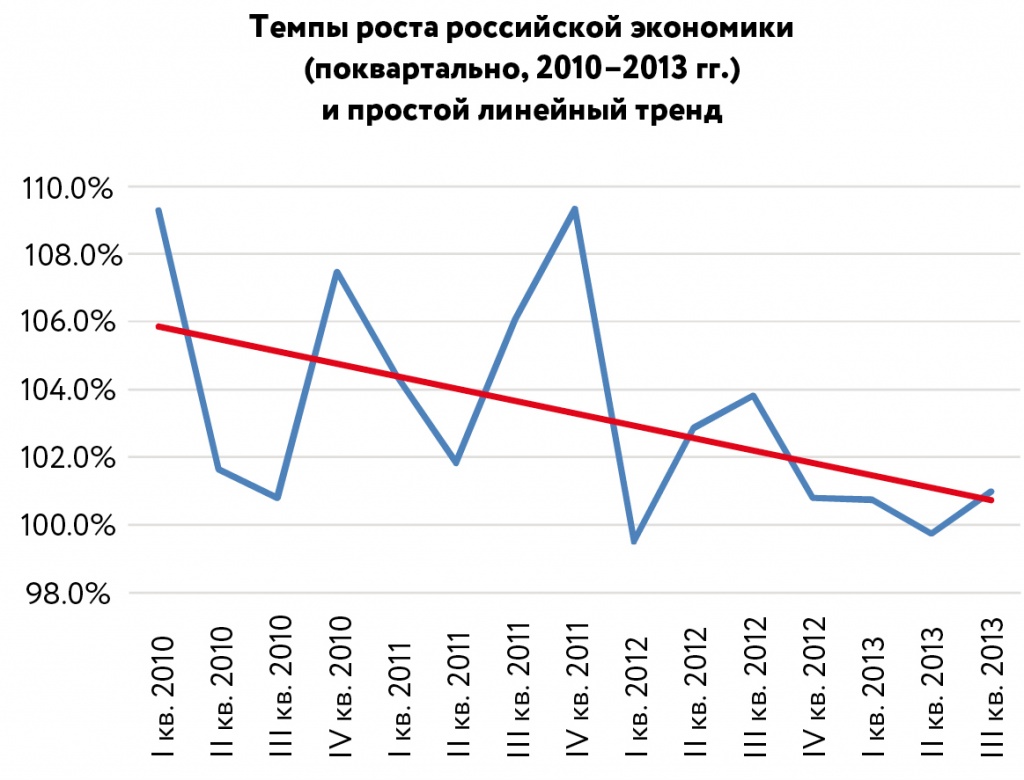
The final numbers of Rosstat will unveil only by the end of January, but his data on three quarters (a small increase in the economy in the first, the decline in the second and about 1% in the third) do not allow us to evaluate the state of our economy in terms of Prime Minister Medvedev: “sour,” he said. Rather - rotten.
Different power
| *It is possible that the situation with railway transportation is much worse. It is enough to recall the recent statement by the head of Russian Railways Yakunin on the transfer of 25% of employees to incomplete employment. If we accept that the company has no excess employment, then the reduction in working time of each fourth employee is only 20% (by one and a half hours a day) means a reduction in the volume of work by 5%. |
Here is what Rosstat says: 1.1% compared to three quarters of last year decreased the volumes of mining, by the same 1.1% - electricity production and 1.4% - construction volumes; Wholesale trade (that is, intermediary operations that always grow faster than the sphere of material production) - only ± 0.3%; The minimum growth in the transport sector was ensured by pumping hydrocarbons throughout the pipe, and railway and aviation transport showed the result worse than a year ago (minus 1–1.5%)*.
This year, three sectors provided the entire growth of the Russian economy: financial activities, real estate and healthcare operations. In the growth of health care by 4.5% by last year you can still believe: by order of the president, salaries are increasing; A lot of money was allocated throughout the country to purchase the necessary and unnecessary medical equipment (remember the story with tomographs). However, the sources of these expenses are well known: more than one and a half times, from 3.1% to 5.1% (from the wage fund), targeted taxes, deductions to compulsory medical insurance were increased.
But to believe that transactions with real estate are growing (5% by last year) is already much more difficult: the market is frankly sluggish, rental rates are slightly ahead of inflation. And really badly believe in the stormy (12% by last year) the growth of the financial sector. The financial sector - by definition - performs intermediary functions. And he can, as well as trade, grow faster than the economy as a whole. Maybe if the economy makes demand for new types of financial services, if, for example, the population begins to actively insure their lives and real estate, and farmers are a crop. But neither one nor the other was in 2013. As there were no particular success in creating an international financial center, due to which the financial sector - as in the UK, for example, could grow violently, providing intermediary services to foreigners. But even if Rosstat’s assessment is close to reality, the economy cannot grow steadily, relying only on the well -being of financiers.
Is the West to blame for everything?
The first signs of deterioration in economic dynamics became visible in mid -2012. Any economy is an inertial body. Instant changes in growth rates - in the absence of shocks (foreign economic or domestic political) - does not happen in it. In order for any positive or negative trend to gain strength that can change the overall picture of the economy, it takes time. I emphasize that this is true in both directions - both towards the deterioration of the situation, and towards its improvement.
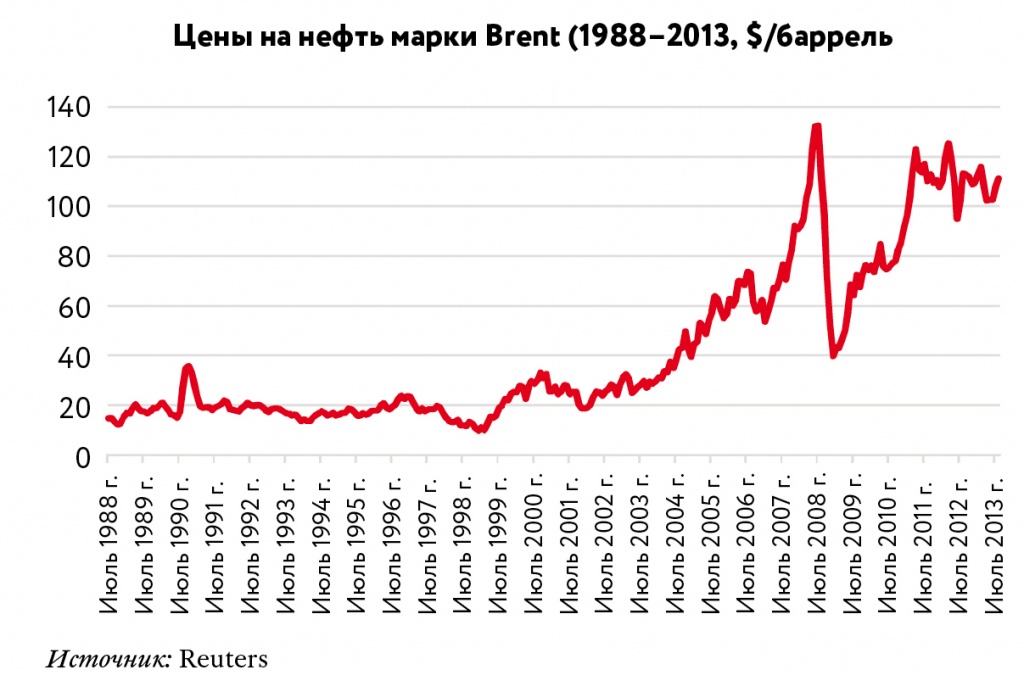
Russian political leaders like to nod to an unfavorable external environment, to the slow development of the global economy, which, according to them, is the main reason for the deterioration of the situation in Russia. However, the facts indicate the opposite: there is no deterioration of external conditions for the Russian economy. World oil prices have been holding $ 100–120 per barrel for almost four years for almost four years, and oil for the Russian economy is the most important channel for obtaining positive or negative impulses from the outside world.
The physical volumes of Russian exports, although they do not grow, are not reduced. The interest rates on Russian debts that characterize the level of anxiety of the financial community are near historical minimums. And most importantly, the mood of the world economy is becoming more positive: signals from developed countries go with a plus sign. Such signals in December were an increase in the assessment of US economy growth in the third quarter of this year to 3.6% (against 3.1% initially) and a decrease in unemployment level to 7%. Yes, the eurozone economic growth rate remains low and unstable, but remember: Europe has implemented a powerful program for reducing budget deficit in the last two years, after which it would be simply strange to expect rapid growth. But nothing similar to 2008 with its destructive financial hurricane! Yes, the growth rate of the Chinese economy slowed down to 7.8% (we would have such a slowdown), but we are talking about growth, that is, the demand for Russian raw materials in the Middle Kingdom is not reduced.
| *"But we need to say directly: the main causes of slowdown are not external, but an internal character." President’s message to the Federal Assembly, December 12, 2013 |
The reasons for the slowdown in the Russian economy - and here it is impossible to disagree with President Putin* - obviously, they lie inside the country and far beyond the competence of ministers of the economy and finance.
Threats
In principle, the country can maintain sustainable economic development at those low growth rates (1-2% per year) that are observed in Russia today. Only in this case, in this country, a budget policy cannot exist in a rapid increase in any category of expenses-it does not matter if it is completely meaningless from the point of view of future defense costs, which, in fact, are a deduction of national wealth, or completely justified by the expenses for raising salaries to doctors and teachers, since the future of the country is impossible without significant investments in human capital. The buildup of budget expenditures in the context of the unspent economy (and therefore, non -taxing tax revenues) is possible only by increasing the level of taxation or by reducing expenses under other articles.
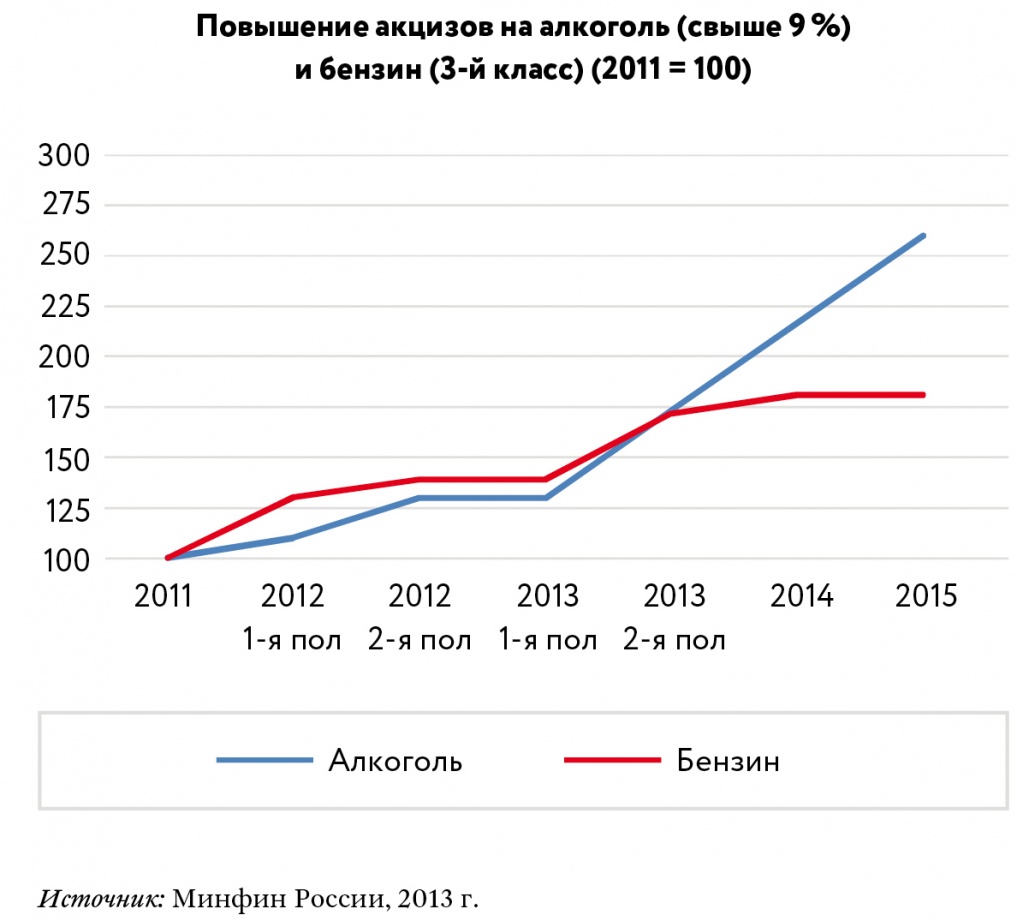
The Russian authorities, of course, are trying to increase taxes: remember continuously growing excise taxes on gasoline and alcohol or constantly delayed, but only because of the inability to create a single real estate cadastre, real estate tax. On the one hand, taxes that are not supporting elements of the entire budget structure increase. (Real estate tax could become a reliable basis for local self-government, but, judging by the last message of the President, the Federal Assembly, local self-government will be significantly reformed before it can receive any funds from this tax).
On the other hand, the increase in taxes on the population with more than is compensated by a decrease in the receipt of taxes for production and export of oil. So, the transition to low customs duties for export of oil products (the so -called “60–66” scheme) gave the oil industry about 400 billion rubles per year. Partly reducing these taxes is objectively necessary (without discussing the scale of the decrease in this case) to compensate for the growing costs associated with the development of new deposits, which are much smaller in scale than the current ones and are located in more remote and inaccessible areas. Or to stimulate the modernization of oil refineries. But to a large extent, this decrease in budget revenues is a fee for the foreign policy ambitions of the Russian leadership. After all, the total reduction in oil and gas prices for Belarus and Armenia (more than $ 7 billion per year), and now for Ukraine ($ 5-6 billion per year only by reducing gas prices) only formally “fall on the shoulders” of Gazprom and oil companies. In fact, they are not felt in any way a decrease in export duties, this is a direct decrease in federal budget revenues.
"
The reasons for the slowdown in the Russian economy are within the country and far beyond the competence of ministers of the economy and finance
"
Well, if the government cannot increase taxes, then expenses under other articles of the budget are going on to finance priority areas under the knife. First of all, investments. However, judging by the latest estimates of the Ministry of Finance, soon even such steps will not be able to help: the gap between the promises contained in the famous May decrees of Putin, and the possibilities of the unspiting economy will expand quickly. The technology used in 2012-2013 by the Government to transfer the financial promises for the following years led to the fact that in 2017–2020, the Ministry of Finance will not have enough 2–2.5 trillion rubles annually to fulfill promises. And this is only in the federal budget! In addition, do not forget: for this period the next presidential election falls out, in which a bunch of new populist obligations will inevitably spy of the party of the party authority (regardless of his surname).
Freely falling ruble
And another important economic trend, which, like a slowdown in the economy, has been formed for a long time, but it came out only in 2013: eating (once again) of the oil pillow and the transition of the Russian ruble to the phase of permanent weakening.
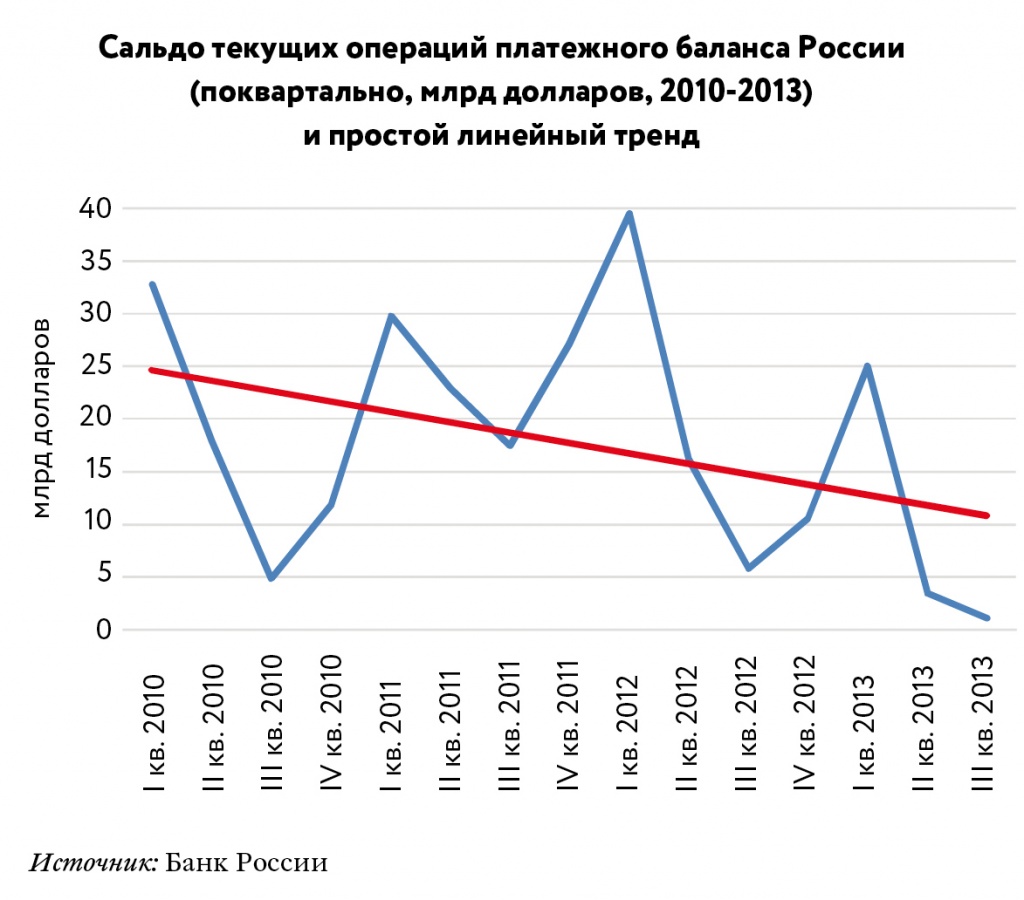
Russia is a country that has constantly lived with a positive balance of current payment balance. In fact, there is nothing terrible in the negative balance, just the country in this case should be able to constantly attract foreign loans and investments in order to level the payment balance. Russia, alas, has not yet become such a country. As a result, in recent history it was a few months, when this balance became negative and each time after this the ruble was sharply cheaper.
In principle, central banks can maintain the balance of payment balance due to their currency reserves - in fact, this is the purpose of their (reserves) purpose. But such a policy is permissible at a very limited time interval, as a rule, during sharp shocks in foreign markets. But even this may not give a result. Remember how in the fall of 2008 the Bank of Russia tried to hold the ruble from devaluation, selling tens of billions of dollars a month against the background of falling oil prices. How it all ended is well known.
Since May 30 of this year, the Bank of Russia daily (with the exception of only eight days at the end of October) sold currency from its reserves: from $ 13 million to $ 400 million per day. In total, almost $ 24 billion was sold during this time.
A good scenario for 2014: economic growth by 2–2.5%, inflation - 4.5–5%, and the devaluation of the ruble will limit 10%. Bad scenario: lack of growth, inflation - 5.5–6.5% and ruble devaluation by 20%
"
At first glance, you think-some $ 24 billion in six months, only 6% of the Bank of Russia’s own reserves (out of $ 525 billion, $ 175 billion belongs to the Ministry of Finance, that is, the Bank of Russia owned approximately $ 350 billion). But, firstly, the Bank of Russia is unlikely to agree to spend all $ 350 billion. According to the IMF standards, a critical currency reserves are a three -month import of import of goods and services, and normal - six -month, that is, $ 220 billion. Thus, “free” for foreign exchange interventions from the Bank of Russia - about $ 130 billion. But is it worth it to spend? It seems that these efforts of the Bank of Russia strongly resemble the fight against the flow of wind, beating in the face.
If the level of oil prices in the world does not change significantly, then the account of current operations in Russia can become stable already by the second quarter of 2014 and, according to the results of the year, is about $ 15 billion. Upon maintaining the outflow of capital at the level of this year ($ 60 billion) to maintain the balance of payment balance, the Bank of Russia will have to sell $ 75 billion from its currency reserves and this is already a lot, it is already much, this Considering that free reserves are $ 130 billion. In addition, having spent about $ 24 billion in six months, the Bank of Russia allowed a weakening of the ruble exchange rate to the bivalyut basket for about 2.5 rubles/BVK. It turns out approximately 1:10 - devaluation per 1 ruble when reducing reserves by $ 10 billion. If such a ratio is preserved, then over the next year the ruble will have to devalize for 7.5 rubles/BVK (20% in relation to the current cost of the bivalyst basket). In other words, on the horizon - a currency crisis.
And the crisis is long -playing: only due to foreign exchange interventions and devaluations, the ruble will not become stable even in the medium term. A couple of years will pass, import volumes will recover and ... another devaluation.
It is impossible to get a stable payment balance without a structural change in the economy, which, in turn, is impossible without changing the relationship of power and business, without the reform of the judicial system, without the restoration of a normally functioning system of protection of property rights-all that is called simply: improving the investment climate.
Forecasts
In short, the future does not inspire. A good scenario for 2014 is that the economy will grow by 2–2.5%, inflation will be 4.5–5%, and the ruble devaluation will limit 10%. A bad scenario - lack of growth, inflation at the current level (5.5–6.5%) and ruble devaluation by 20%.
But it's not even about these dry numbers. And not even that economic growth in Russia is lags behind the growth of the world economy and, therefore, the role of Russia in the world will decline. By 2014, Russia came up with a unique combination of negative economic “components” - low, on the verge of stagnation, growth and high inflation by modern standards - which threatens the transition to stagflation, which is poorly obtained even in developed countries, with a much more attractive investment climate and a real -working system of protection of property rights.
Photo: Vladimir Smirnov/ITAR-TASS