
Translated material
Moscow-1980 Sochi-2014
What is common between two Olympiads
The Winter Olympiad at the Tropical Resort will become the main event of the coming months. Olympic fire will light up at the Fisht stadium on February 7, but it is already clear that the discovery will not do without a scandal. The heads of the already seven states, among them the presidents of Germany, France, the USA, said that these days they have “other plans”. Sochi-2014 more and more resemble Moscow-1980 when, after the Soviet troops entered the Afghanistan, the Summer Olympics in the capital of the USSR was boycotted by 63 countries, and 14 teams performed under the flags of the IOC. However, the coincidences between the two Olympiads do not end there
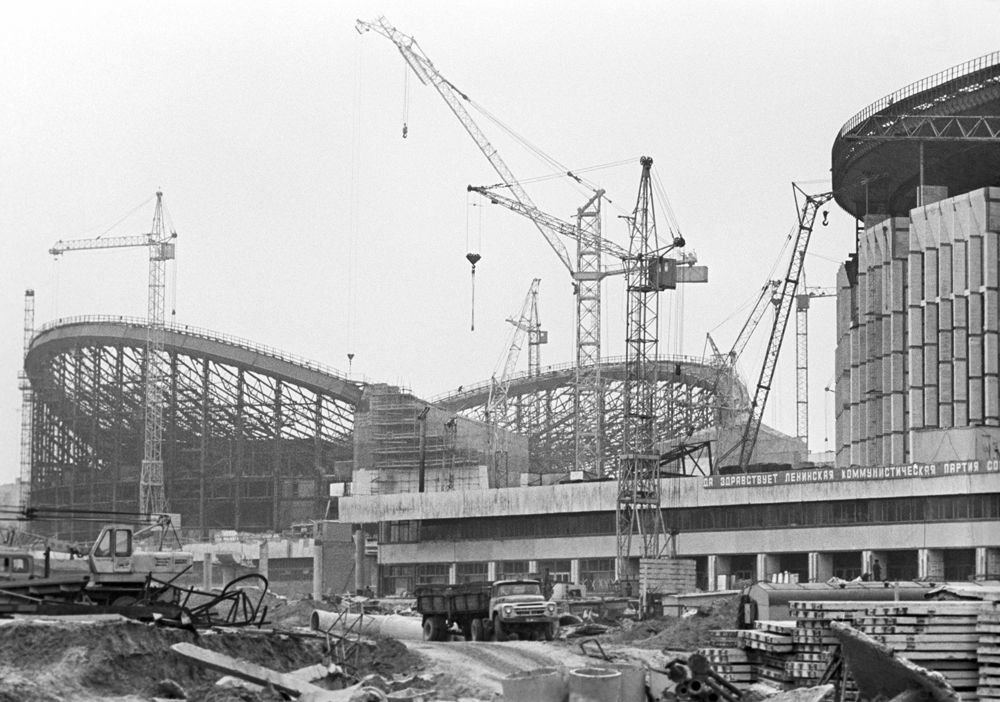
Construction of the Olympic swimming pool. Moscow, March 1979
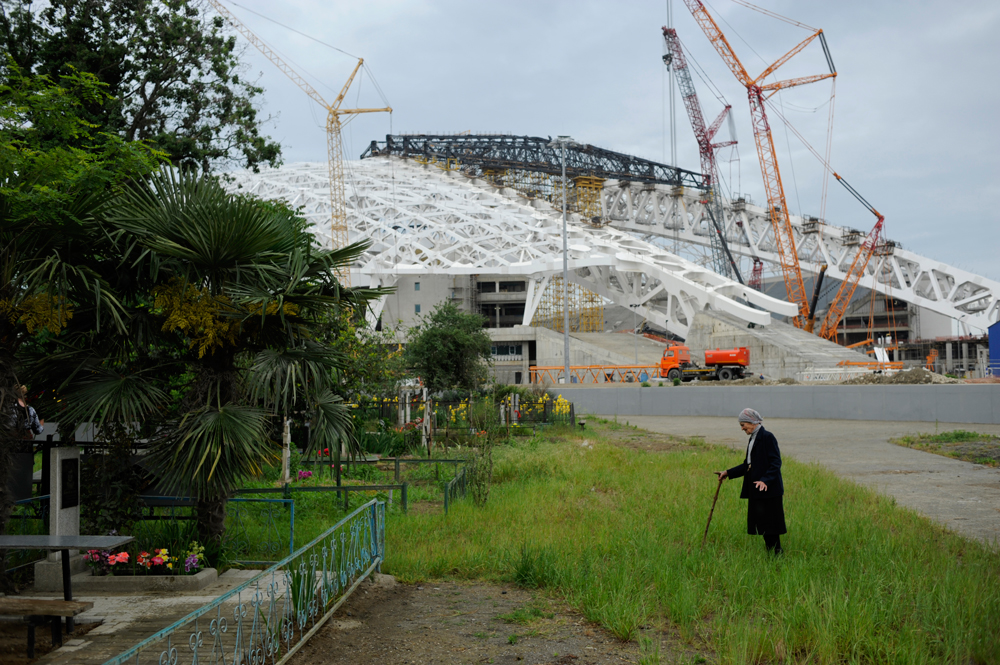
The construction of the stadium near the city cemetery. Sochi, April 2013
“It somehow happened in such a way that we decided to hold the Sports Limpiad in the USSR,” wrote the general secretary of the Central Committee of the CPSU Leonid Brezhnev in a note to his colleagues in the Politburo in 1975, shortly after the USSR received the right to hold the summer Olympics-1980. - This event of tremendous money is worth. Perhaps we should reconsider this question <...> some comrades suggested that there is an opportunity to refuse <...> Paying some small contribution in the form of a fine, ”the document said. Indeed, if the first figures voiced by the organizing committee amounted to 356.5 million rubles, in total, up to 2 billion rubles, or $ 400 million at the Black Market rate, were spent on the construction of Olympic facilities. For comparison: 1984 summer games in Los Angeles cost the United States $ 250 million.
According to various estimates, the current Olympiad in Sochi already got up at $ 50 billion, although it was originally planned to spend $ 12 billion. Whether Vladimir Putin thought about the abolition of the event for financial reasons - it is impossible to say, but it seems, it is unlikely. Actually, on this, the cardinal differences between the two Olympiads end. In 1980, there was a scandal related to the introduction of troops into Afghanistan, in 2014-a scandal with the homophobic law, in 1980-theft and stormmimism and in 2014-the same thing, the 1980 Olympiad became the propaganda of the Soviet system, the 2014 Olympics-Putin's Russia.
Multi -building
The pluses are also common. A lot was built for the summer Olympiad in the USSR: stadiums in Moscow, Kyiv, Minsk and Leningrad (all the main competitions were held in Moscow, a football tournament, except Moscow, held in Leningrad, Kyiv and Minsk), a television tower in Tallinn (there were sailing competitions here) and the second “sports” building of the Ostankino television center, Sheremetevo and Sheremetievo Airport and Sheremetievo Airport and Sheremetievo and Sheremetievo The press center on Zubovsky Boulevard, which today is located RIA Novosti, as well as many hotels, including the Cosmos and Izmailovo hotel. “Ostankino was such an antediluvian technique that it was scary to say,” recalls journalist Valery Vinokurov, in those days the observer of the Football weekly, “and the new building has equipped many studios on Olympic technology.”
Sochi-2014 were also built from the idea of creating infrastructure. Here they launched a high -speed train that connects the airport, the center of Sochi, the Olympic Park and Krasnaya Polyana; They completed the construction of the Adler airport, built a new railway station in Adler, as well as new interchanges, hotels, hospitals and even libraries. The main Olympic objects will be submitted by February. Most hotels have already been commissioned both in the Imereti lowland and in the Rosa Khutor ski center, the territory of the Olympic village is landscaped 2,200 people, test competitions were held in the Hockey Palace (12 thousand places), the Kerling Center of the Ice Cubes (3 thousand seats), and the seats), and Hockey Ice Arena “Work” (7 thousand seats), in the Palace of Winter Sports “Iceberg” (12 thousand seats) and at the ridge “Adler-Arena” (8 thousand places). The construction of the fisht (40 thousand seats), which lagged out most of the stadium (40 thousand places), which lagged over the opening and closing of the Olympiad will be coming to an end. Before many hotels at the Estatiad ski resort were completed, but they practically ended with sports facilities in the mountains: a complex for jumping up the Russian Hills (7500 seats), a complex for skiing and biathlon "Laura" (capacity 7500 + 7500 places) and the center of the sanctuary "Sanctors" (5 thousand. places).
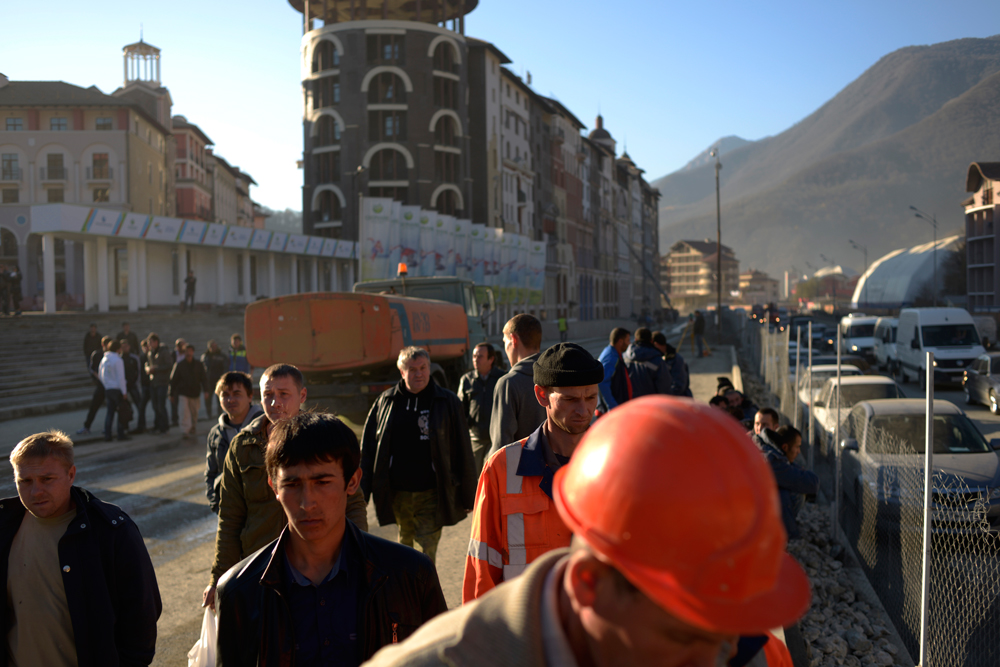
Many hotels in an estosad, most likely, will not have time to pass by on February and curtain an advertisement. December 20, 2013
Communism in a separate city
By arriving in Sochi, you get to Babylon - they build almost on every corner: roads, interchanges, hotels and apartment buildings, completely elite and with the corresponding names: “Triumph”, “Royal Park” (70–100 thousand rubles per square meter, which is slightly higher than in the secondary market, where a meter costs 60 thousand). Local realtors say that the market is close to saturation - and many houses are empty. All this is in varying degrees of readiness: somewhere they just dug a pit, somewhere it remains to connect escalators and let the tenants into the non-combined retail premises of new stations. Everywhere dust, dirt, construction equipment, crowds of workers and kilometers of posters with Olympic symbols. However, the feeling that Sochi was stuck halfway from bastard Russia to the new world does not leave. For example, in a new Adler airport, taxi drivers are immediately pounced on you, desperately awarding that they have no alternatives, although a comfortable Aeroexpress “Swallow” departs from the airport, a ticket to Sochi costs only 54 rubles. At the railway station, arrogant police officers check their passports: “Teachings,” explain. The farther from the Olympics, the closer to real life: at the exit from the monumental Stalin Sochi station, you are already faced with the usual grandmothers offering rooms in hiring and broken overflowing buses standing in endless traffic jams. “To the Kurortny Prospekt? I give you advice: after payment you go on foot! " - Jokes a minibus driver with a characteristic Armenian accent.
The streets of the ribs due to the replacement of communications, at the intersections are new traffic lights that give the team in the afterlife: “Stop”, “Go”; Underground pedestrian crossings and squares are repaired, and it is here noticeable how quickly everything changes. Here, Navaginskaya Street, behind the Sochi Tsum, was dug so that it was possible to pass only along a wooden flooring, but after a couple of days it turned into an ideal one - laid out with tiles - a boulevard with planted palmas in the middle. Sochi do not have time to be surprised: in the so many years the building of the seaport, fashionable stores suddenly opened: Louis Vuitton, Gucci and, of course, Bosco Sport. “I don’t know who will be stuck here,” says Igor lingeringly, a waiter from the local coffee house, who came to Sochi from Omsk a couple of years ago.
Looking at how surprise Igor looks at expensive boutiques, you involuntarily recall the reading about Moscow-1980. That Olympiad was remembered primarily by communism that had come for a couple of months. In order not to scare foreign guests with empty shelves, unprecedented products were urgently brought to the Olympic cities - Moscow, Leningrad, Tallinn: Finnish jams and conflies of Jalostaja, Valio butter and sausages. The USSR citizens learned what yogurt was and first tried Phantu and Pepsi-Cola. After the Olympiad, sausage and yogurts disappeared again. What will happen to Sochi boutiques is still unclear.
"
“It somehow happened in such a way that we decided to conduct the sports-Kilimpiad in the USSR,” wrote the general secretary of the Central Committee of the CPSU Leonid Brezhnev. ”
"
Among the Nev Times surveyed, opinions about the Olympics were divided. Some praised the infrastructure created from scratch, others noted that the city did not need the majority of constructed objects at all, the others said that they were tired of living in dust, with fan shutdown of light and water, and roads and interchanges are so poorly that they are flooded with any rain. “Since Soviet times, there were stormwoods from which the water went to sea, now everyone was dug up, they didn’t make new storms, so we buy swamp rubber boots,” a resident of Sochi Oksana told The New Times. “We have no light and hot water in Matsest for a week, the apartment is temperature +8, there is no gas either, we sleep in clothes.” They are also said about increasing food prices, they were especially risen in price: they were previously provided by the Russian state farm, in the place of which stadiums are now in the Imeret Lowland. The question that unites all Sochians today: what will happen after - after February 23, Olympic fire will be extinguished and athletes will be parted home? Moscow sports facilities still serve: the Olympic sports complex, a bicycle track in Krylatsky, the stadiums of Luzhniki and Dynamo are filled with spectators at concerts and sports events. But the future of Sochi objects is in question. “They can repeat the fate of the Olympic structures of Sarajevo and Athens, which no one uses and which slowly destroy,” said politician Boris Nemtsov.
You can't roll back - you won't go
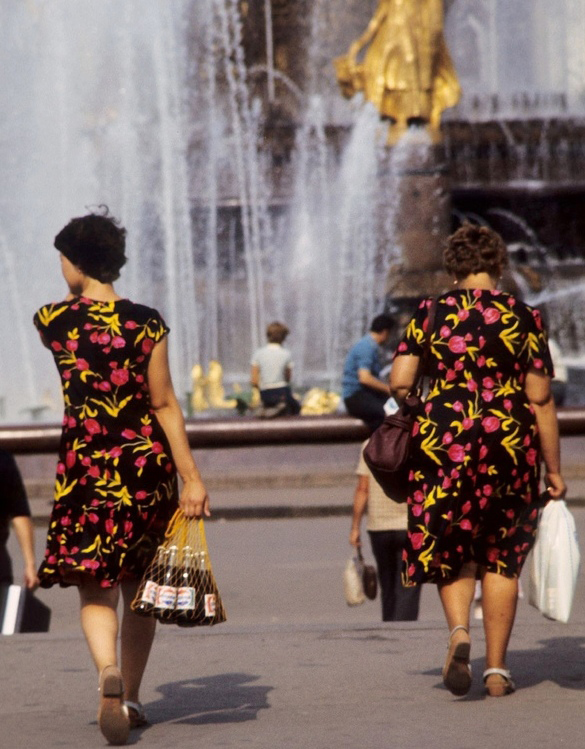 |
| Foreign new items appeared in Soviet strips. Moscow, VDNH, 1980 |
One of the reasons for the multiple increase in the estimate of the Moscow Summer Olympics-1980 was almost uncontrolled theft. The engineer who wished to remain unnamed to the reconstruction of the Luzhniki stadium told The New Times that they stole not so much money as building materials: “A huge black market of materials stolen from the Olympic construction projects was formed. Those who could, took out by dump trucks, who could not - by brick. " “Yes, even during the games, cases of theft were constantly noted,” journalist Vinokurov confirms. -One foreign athlete during a training stole personal things: clothes, there is something else there. He says: "How so, right there the police are everywhere!" And the police are not people? They themselves stole. " A curious incident occurred on a bicycle track in Krylatsky: special paint was brought to mark the tracks from England, but they did not manage to apply it, part of it has mysteriously evaporated. I had to ask the British help. On the same track, dozens of meters of carpet coating disappeared right during the competition. “I friends from the USSR sports committee told me that they had whole warehouses littered with fur coats, caviar, vodka,” says Vinokurov, “this is all to work with the judges, it was necessary to ensure victory.” Under -government gifts also did not return to the bins of the homeland at all.
The spirit of construction-2013 differs only in scale. According to Boris Nemtsov, 50-60% of the $ 50 billion were stolen. These figures are indirectly confirmed by the contractors who worked at the Olympic construction site, with whom the New Times managed to talk, and if millions of contracts were paid in offshores, then to everything that was smaller than 6-12% in banks throughout the country and throughout the country were transported in suitcases. “Such corruption led to the fact that the non -professionals were built,” Emelian, an employee who worked at the Olympic facilities of the construction company, explained to the magazine. “Normal firms refused the contracts because they understood: projects, primary documentation and estimates were made on the knee, besides, such kickbacks were laid there ... Well, 30% would have been ready for this-Russia, but 70% of the rollback is too much.” As a result, firms were often taken up for projects without special work experience that broke out the deadlines, so there were no doubts through the entire construction of experts - would they have time?
The same doubts tormented by Soviet officials. “It is concerned that the Ministry of Environment (Ministry of Medium Engineering, which ensured and the production of nuclear ammunitions established by the USSR for 1976, is concerned, 2.5 million rubles for construction and installation work on Dynamo Olympic facilities as of June S.G. Not a single ruble has been mastered, ”said Lieutenant General Peter Bogdanov, the chairman of the Central Council of Dynamo, Chairman of the Central Council of Dynamo. Similar notes were written throughout the entire construction period and almost all facilities.
Ignatius Novikov, Chairman of the Olympiad Organizing Committee, part-time deputy chairman of the USSR Council of Ministers, considered the lack of personnel to the main problem. “At the facilities, the construction of which is carried out by organizations of the Moscow Regional Executive Committee, there are only 9.07 thousand people, while 29 thousand are missing at the construction sites of the Ministry of Energy and other ministries,” he wrote in 1977. There were 6 thousand additional workers from the plants and factories in Moscow, but they began to fade massively due to hard schedule. Sending nothing to the Olympic construction sites of demobilized soldiers: out of 25 thousand recruited demobilizes, only 8 thousand were left to work. Visitors from the regions often did not fit the level of qualification, there were not enough tools, equipment and building materials. The situation for the USSR is standard: in almost every major city in the country there were several long -term construction. Only now there were specific deadlines before the Olympic builders. Disruptions of plans led to the fact that they were in a whip and not counting the money, as, indeed, in Sochi.
Today's Olympic builders and their bosses seem to have sighed calmly: all sports facilities and most of the unsportsmen are almost ready. True, their quality raises questions. “When they built the skating stadium, it almost fell apart, they were looking for who could urgently do something so that everything would not collapse,” Emelyan says. - The FIST stadium was originally planned to be a sliding dome, but the dome of the dome had a gap of one and a half meters, so they decided not to open it. And with everything, such a "practitioner". (It was not possible to confirm the information with The New Times: the press service of the Olympic Committee on the Smaching Couple was not heard and offered to contact Olympstroy, in which the editorial office was ignored.) Boris, the owner of the transport company in Sochi, complement the picture. “We served a commission from Moscow in June, I myself drove them to the facilities. He opened up and said that he had two children who really wanted to go to the Olympics, but after this audit he would not let them in: "Only through my corpse."
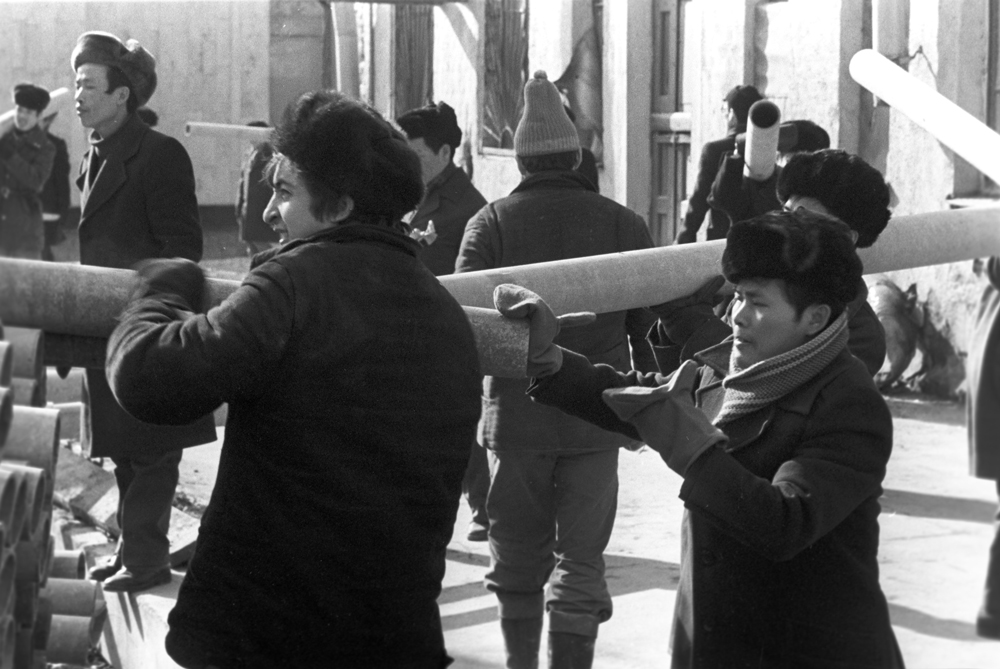
The construction of the press center building on Zubovsky Boulevard, 4. In the USSR, the problem with the lack of workers was also solved at the expense of migrant workers: then from Vietnam. Moscow, April 1979
The personnel decide everything
In Sochi, it has recently been not so easy to meet Sochi. So, the waiter Igor is not the only visiting in his coffee shop: "We have owners from Novosibirsk, and half of the staff, like me, from Omsk." One problem: registration. According to the decree of Vladimir Putin, nonresident citizens who come to Sochi during the games should register within three days. “The district police officer came to us and asked us to evict our tenants until April,” Adler's pensioner Maria Sergeevna told The New Times. - He, however, did not show any official papers, said that if we do not evict, then we will regret it. We have been shooting an Armenian family for ten years, how will we drive them away? ” If earlier temporary registration for Russian citizens in Sochi could be made for 1 thousand rubles (although it is free by law), now, as the civil activist Natalya Kalinovskaya told The New Times, the size of the bribe has increased to 6 thousand.
During the Olympics there will be restrictions on cars with numbers from other regions. For cars bringing products to the city, you will need to get special permits, and from all the rest the police will remove license plates. “Familiar police officers told me that they were given even local cars for any offense to send them to the parking lot to go less,” said the owner of a mini-hotel in Adler Alexander, “what should I do with business?” I need to feed guests every day, but I can’t put large refrigeration units. ”
“When they built a skating stadium, it almost fell apart, they were looking for who could urgently do something so that everything would not collapse”
"
In the evidence of unnecessary elements, the Russian authorities again only repeat the experience of their Soviet colleagues. “In 1980, Moscow was empty,” says Vinokurov. - All homeless people were removed from the streets, the children were left in the camps (in Sochi, students and students will also extend the holidays. - The New Times), Moscow was closed from all nonresident that did not work at the Olympic facilities. My son was then 14 years old, and he could go to matches with me only because I had accreditation. ” However, the children and homeless people were not at all the main enemies of state security. The renowned reports of the KGB indicate the danger of provocations by the Crimean Tatars (they fought for the right to return to the Crimea, from where Comrade Stalin expelled them) and emigrated Jews from the USSR, who tried, bought tickets for competitions, to come to Moscow. “6 thousand foreigners, which is a danger from the point of view of the possible implementation of hostile shares, is closed to our country,” the document entitled “On the Basic Parts to Ensure Security during the Preparation and Conducting Games of the XXII Olympiad of 1980” dated May 20, 1980.
Особое внимание было уделено «душевнобольным лицам», под которыми подразумевались диссиденты. Всем им было предписано выехать за 101-й км. «Я всю Олимпиаду провела на даче, мне сказали, что, если я только попытаюсь пересечь МКАД, меня тут же арестуют», — вспоминает Валерия Новодворская. В 2013 году диссидентов не выселяют, но вводят «паспорт болельщика», без которого сотрудники правоохранительных органов могут депортировать из Сочи даже граждан России. К тотальному контролю полиция готовится заранее: паспорта проверяют на каждом углу люди в форме и в штатском. «Почему вы, Борис Аркадьевич, без формы, — спросил корреспондент The New Times человека в обычной зимней куртке с удостоверением майора юстиции, подошедшего у нового адлерского вокзала с просьбой показать документы. — А потому что я к вам в форме не смогу незаметно подойти. Вот у вас часы на руке есть? No? And this is important. Why? Ну вот когда мы вас задержим, тогда и объясним, почему». А Олег, сотрудник Центробанка из Краснодара, приехавший в Сочи в командировку, рассказал The New Times, что его автобус несколько раз останавливали, пассажиров обыскивали, а его даже заставили один раз раздеться до трусов, учинив форменный допрос — что он забыл в Сочи. «Я уверен, что мне, к примеру, никакого паспорта болельщика не дадут, — говорит Борис Немцов, сам сочинец, пару лет назад пытавшийся избраться мэром города. — Там людей-то на Играх не будет, там на стадионах будут сидеть сотрудники спецслужб, РЖД и Сбербанка». Все ровно как 33 года назад. «В Москву на Игры организованно приезжали автобусы с предприятий из других городов, по которым распространялись билеты, — вспоминает Винокуров, — я уверен, что там в каждой группе были сотрудники КГБ».
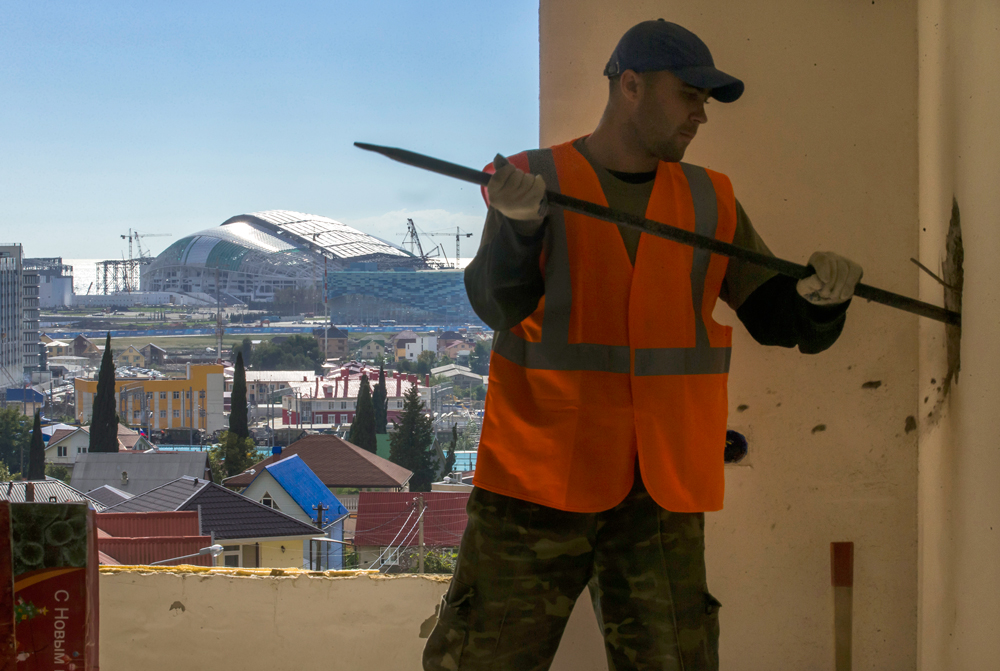
Имеретинская низменность. По разным оценкам, до 70% рабочих на олимпийской стройке были приезжими из Центральной Азии, Молдовы и Украины. October 2013
Сделал дело — гуляй смело
От мигрантов в Сочи начали избавляться еще в июне, притом что на сочинской стройке работали в основном приезжие из Таджикистана, Узбекистана, Молдовы и Украины. По данным ГК «Олимпстрой», в 2013 году здесь работало 76 тыс. человек, причем иностранцев было только 16 тыс. Однако Семен Симонов, координатор правозащитного центра «Мемориал» в Сочи, с этими цифрами не согласен: «Большая часть мигрантов была не оформлена. Если взять статистику сочинского УФМС, то получится, что на стройках, связанных с Олимпиадой, работало до 50 тыс. иностранцев». Жили либо в вагончиках (причем если вагончик был рассчитан на двоих, селили туда человек восемь — просто ставили многоярусные кровати), либо прямо на недостроенных объектах. «В селе Веселое, где «Олимпстрой» возводил жилье для волонтеров, рабочие жили в недостроенных зданиях по 20–30 человек в комнате, — рассказывает Симонов. — Ни удобств, ни коммуникаций. Еду им готовили местные из деревни». 12 июня на объекте прошла первая облава полиции: из 160 задержанных работников половина была депортирована. Интересно, что мигрантам так и не успели заплатить, впрочем, и до депортаций многие рабочие получали зарплату первые пару месяцев, потом какое-то время работали бесплатно, довольствуясь обещаниями бригадиров, а потом увольнялись, так и не дождавшись денег.
После того как иностранцев в Сочи стало меньше, на работу стали набирать граждан России, в основном из Чечни и Дагестана, хотя раньше, по словам Симонова, спецслужбы запретили застройщикам брать на работу кавказцев. Платить им при этом нужно в два раза больше: если рабочие из Центральной Азии были согласны трудиться за 20–25 тыс. рублей в месяц, то россияне стоят как минимум вдвое дороже. Впрочем, выходцам с Кавказа здесь все равно не сладко, они не могут показаться в городе без того, чтобы у них не проверили документы или даже задержали — просто так, для профилактики. «Несколько чеченцев задержали прямо на выходе из моего офиса, — рассказывает Семен Симонов. — Я пошел к отделению полиции, мне навстречу полицейский с пачкой паспортов в руках. Я спрашиваю его, в чем дело, он отвечает, что у него указание — задерживать всех лиц узбекской и кавказской национальности». Приезжих обычно держат в отделении пару дней, мотивируя это тем, что они похожи на находящихся в розыске, а потом отпускают.
Было бы, впрочем, ошибкой думать, что денег не платят только мигрантам. Россияне сталкиваются с теми же проблемами. Так, к примеру, коллектив ЗАО «Кьютек», строившего гостиницы в поселке Малый Ахун, зарплату не получает с июля, хотя работать они прекратили только в начале октября. В компании работало семь инженеров и около ста рабочих. Ведущий инженер производственного отдела Роберт Кесьян, 23-летний сочинец, пришедший на олимпийскую стройку сразу после института, написал о ситуации в своем блоге, обратился в «Мемориал». «Мне угрожали, просили прекратить мою бурную деятельность, предлагали решить вопрос со мной лично». Самое обидное, по словам Роберта, то, что после того как они подняли шум, на них обрушилась волна критики: «Писали, что я получаю деньги за то, чтобы писать гадости про нашу Олимпиаду, а вся история с зарплатами придумана».
На Олимпе
«Русские сезоны», — написано на современном многоэтажном отеле из стекла и бетона в Имеретинской низменности. Здесь наводят последние штрихи, чтобы сдать стадионы и гостиницы и завесить баннерами всё, что не успеют облагородить. Прямо под «Русскими сезонами» поселок Таврический, вернее, то, что от него осталось. Большая часть поселка застроена выросшими как грибы после дождя мини-отелями, частными виллами или 4–5-этажными многоквартирными домами (70 тыс. рублей за метр). По соседству — деревянные бараки, двор между которыми напоминает декорации к фильму ужасов: ржавые покосившиеся качели скрипят на ветру, пожухлые деревца обступили остов старой «Волги», все это покрыто толстым слоем строительной пыли. Рядом с подъездом стоит Галина — молодая симпатичная женщина с коляской. «Как живем? — отвечает она на вопрос корреспондента The New Times. — Резиновые сапоги надеваем, чтобы из этого ужаса выходить. Скорая помощь и такси к нам не приезжают, до школы идти через стройку». Галина зарабатывает тем, что готовит еду для рабочих: «Салаты, котлеты, супы варю». Она с готовностью показывает свою квартиру: в темных сырых комнатах повсюду от стен отстают обои, центральное отопление не работает, а электричество отключают по нескольку раз на дню, так что от обогревателей тоже мало толку: «Обещали нас переселить, — говорит Галина, — но пока вот только забором обнесли».
До моря от Таврического рукой подать, только вот прямого пути теперь нет: через территорию олимпийских объектов пока не пройти. Приходится объезжать на машине через Малый Ахун. Вдоль всей Имеретинской низменности от смотрящей на море гостиницы «Рэдиссон» до Олимпийской деревни протянулся выложенный разноцветной плиткой бульвар с велосипедной дорожкой и непрерывной лентой деревянной скамейки. Бригадир Карен, стоящий неподалеку от окруженного кранами стадиона «Фишт» и наблюдающий с сигаретой в зубах за разъезжающими по пляжу самосвалами, на похвалу корреспондента The New Times отвечает нервно: «Хорошо, говорите? Что ж хорошего?! Раньше тут пляж был песочный, широченный, весь Сочи сюда ездил загорать!» Теперь от пляжа осталась лишь полоса гальки, сходящая на нет по мере приближения к Олимпийской деревне.
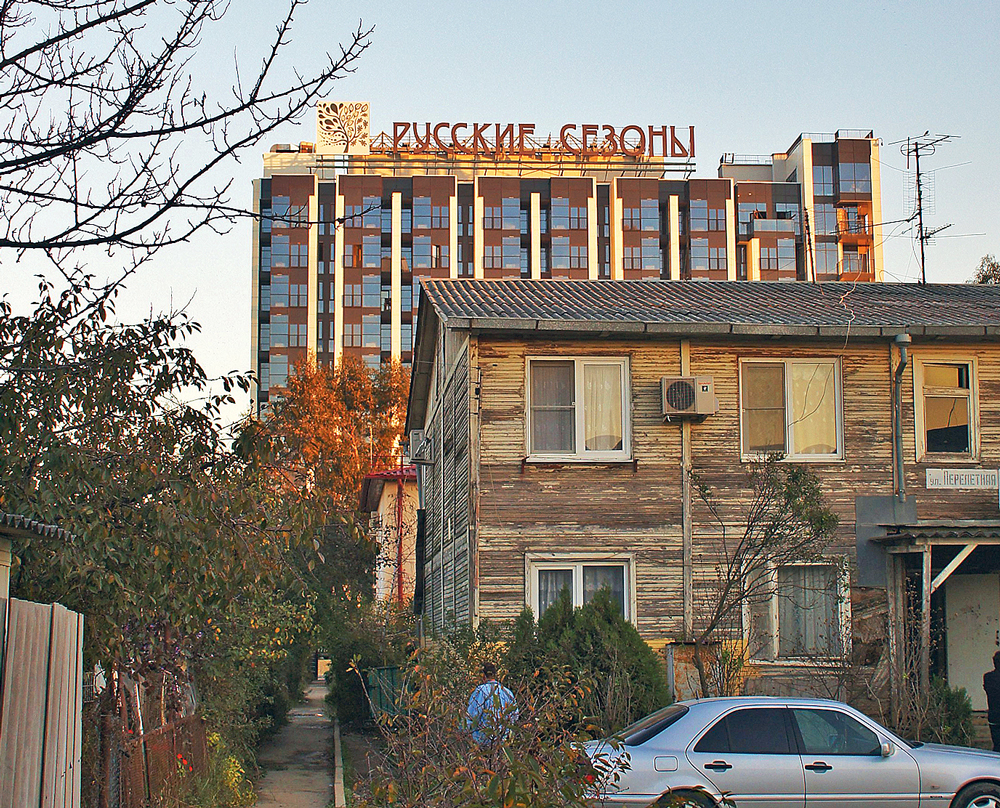
Посреди олимпийской стройки до сих пор можно найти нерасселенные бараки, просто огороженные забором. Имеретинская низменность, село Таврическое, декабрь 2013 г.
Пыльная жизнь
Если ехать в горы на «Ласточке» или на машине по новой трассе, то справа перед первым туннелем промелькнут крыши села Ахштырь. Здесь всё серо: серые осенние листья на деревьях, серая хурма на голых ветках, серые дома, серый воздух, в котором пыли, кажется, больше, чем кислорода. Раньше главным недостатком Ахштыря был транспорт: до ближайшего автобуса надо было идти минут 20, переходя реку Мзымту по висячему мосту, который регулярно сносило во время паводков. Сочинская администрация обещала построить съезд с новой трассы, но обещания так и не выполнила. Старую дорогу при этом уничтожили, построив взамен тропинку в обход железнодорожных путей, которая ведет к тому же навесному мосту, только в обход. «Я внучку раньше за пять минут довозил до моста, — говорит житель деревни Погос Антонян, — сейчас ей надо пешком идти около часа».
Разговор с Погосом происходит под мерный стук дробящих камень машин: это на склоне горы над деревней подрядчик РЖД ОАО «Бамстроймеханизация» добывает для олимпийских строек гравий. Они-то и накрыли деревню пыльным облаком, от которого, по словам Погоса, даже одежда в шкафах за пару дней покрывается толстым белым слоем. Карьер всего в 400 метрах от крайнего дома, работы там не прекращаются ни на минуту, грузовики со щебнем с грохотом ездят круглые сутки через центр деревни. Жители писали письма в администрацию, перекрывали дорогу на карьеры, но все без толку. «Пахомов (Анатолий Пахомов, глава города Сочи. — The New Times) пообещал только, что решит вопрос с водой, — говорит Погос, — у нас от тряски и грузовиков вода ушла изо всех колодцев. Теперь вот приезжает цистерна». Самое страшное, по словам Погоса, то, что карьеры не закроют и после Олимпиады.
«Хорошо, говорите? Что ж хорошего?! Раньше тут пляж был песочный, широченный, весь Сочи сюда ездил загорать!»
"
Впрочем, если в деревнях на олимпийской орбите к переменам относятся негативно, то в Красной Поляне им рады. Из будто сошедшего с открытки, похожего на Карловы Вары, курорта «Роза Хутор» с современными отелями, многоярусными парковками и даже ратушей до собственно поселка Красная Поляна можно доехать на автобусе. Небольшая деревушка, где асфальт лежал лишь на двух центральных улицах, а по всем остальным в оттепель было не пройти из-за грязи, напоминает сейчас Макондо времен банановых плантаций из «Ста лет одиночества» Габриэля Гарсиа Маркеса. В автобусе одновременно говорят на турецком, сербском, польском и греческом, а также чуть не на всех языках бывшего Союза. Асфальт лежит теперь на всех улицах, тротуары во многих местах выложены плиткой, а голые зимние газоны покрыты чем-то синевато-зеленым, из чего, по уверениям местных жителей, скоро должна вырасти трава. На месте деревянных домов выросли все те же мини-отели или виллы в «новом русском» стиле с башенками и декоративными бойницами. Коренных краснополянцев на улице встретить практически невозможно, в основном здесь разномастные рабочие с объектов в соседнем Эстосадке. Марина, воспитательница детского сада, рассказала корреспонденту The New Times, что если раньше краснополянцы зимой сдавали жилье туристам, а летом продавали мед, вино и фрукты, то теперь чуть не весь поселок живет от сдачи комнат рабочим. Компании застройщики платят за комнату по 1000 рублей в день. У самой Марины сдавать нечего, приходится крутиться на скромную зарплату воспитательницы, а цены на продукты, по ее словам, выросли значительно. «В саду работать некому, текучка кадров, — говорит Марина, — многие приезжают, устраиваются, получают разрешение на работу, а потом уходят на стройку». Вообще же Марина хоть и говорит с грустью, что раньше Красная Поляна была уютным тихим местом, но в целом довольна: в домах появились газ и канализация, в город стало ездить удобнее. «Электричку еще не видели, завтра поедем смотреть», — смущенно говорит она.
Хвалили Олимпиаду и в местной библиотеке, перестроенной по олимпийской программе. «Тут с 1924 года была изба-читальня, — объяснила The New Times директор централизованной библиотечной сети Венера Багринцева, — сначала решили просто подремонтировать старое здание, но обвалилась кровля, и стало понятно, что легче построить новое. Теперь у нас тут не только книги, но и компьютеры, интернет». Помимо библиотеки в Красной Поляне отремонтировали школу и больницу, а также построили новый жилой дом для врачей.
Здесь, впрочем, тоже все задаются вопросом — что будет после. Кто-то не теряет оптимизма: «У рабочих контракты до 2020 года, будем им жилье сдавать», — сказал The New Times краснополянец Сергей; другие отмечают, что зимы стали теплее, так что не факт, что на склонах будет снег. Артур и Елена, приехавшие в Красную Поляну из Еревана еще 20 лет назад, подыскивают более спокойное место для жительства. «Раньше земля копейки стоила, теперь полтора миллиона за сотку. Продадим все на фиг, — говорит Артур. — А то ваши лыжники уедут, а нам в этой пыли так и жить».
...Когда главы семи государств — президенты США, Германии, Польши, Литвы, Эстонии, Франции и премьер-министр Бельгии — отказались приехать на открытие Олимпиады в Сочи, и стало понятно, что в перспективе этот список может расшириться, это, возможно, сыграло свою роль в главной сенсации уходящего года — помиловании Михаила Ходорковского.
фотографии: Михаил Мордасов, РИА Новости, Thomas Peter/Reuters, Надежда Капоне, Игорь Уткин/ИТАР-ТАСС,