
Translated material
Human rights activist Joseph Zisels - about Jews and "Freedom"
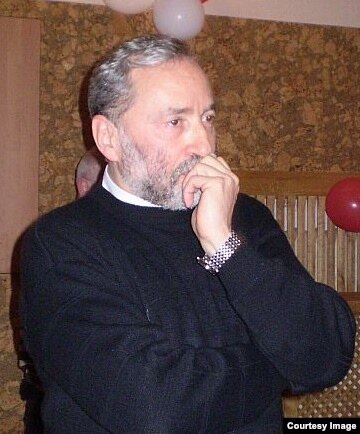
- Maidan as a phenomenon should be perceived in different aspects. The Maidan as an effective form of protest appeared back in 2004, this form of protest was not found immediately, it took three years of “Ukraine without kuchma” shares. This format for the search for adequate Ukrainian identity by protest, therefore, became a consequence of the movement to the "orange revolution". In 2004, the Maidan won for several weeks, because this format turned out to be unexpected for the authorities. And now, when a new occasion arose, when society has accumulated a fairly large potential of frustration for three years of Viktor Yanukovych’s stay at the president, the Maidan arose again. It has now begun with what ended in 2004.
I consider the new stage of the Maidan as another step to the growth of civil self -awareness, in the development of Ukrainian civil society. It is not so important to me than this stage will end, because I perceive current events only as a link in the process of growing up Ukrainian society. As for the specific stage of the Maidan, its main goal is the transformation and modernization of Ukraine. One of the most important stages of this section of the path is 2015, the presidential election. If everything in the country is more or less normal, then the peak of protest should come for this period. And now we see one of the preparatory stages. The athlete goes to training in order to go to the competition at the peak of forms. It is not so important than this stage will end, this Maidan-it will resolve or will exist in some form further. It is important that at the right time, at the key moment it works as an effective means of protest.
- What was the main pathos of your participation and your performance on the Maidan ?
- I am not a new person in these processes. I performed in 2004 on the Maidan with similar calls. It was important for me to convey to the society a mess of a person who has a dissident biography. I know the history of interethnic relations, I participated in many projects to educate tolerance in society. It is necessary to convey a message to national communities or to the national minorities of Ukraine - that a well -known point in the history of Diaspass (orientation to central power, its perception as the only defender) may not always work positively for the future of the national communities themselves. Because in this case we are not talking about a political choice, but about the choice of civilizational, about choosing the future for children, for the grandchildren of all citizens of Ukraine, including national minorities. At the same time, my message was addressed to Ukrainians because the Maidan is clearly a pronounced Ukrainian character. It is important that Ukrainians pay attention to national minorities, because about 20% of the country's population (this is about 10 million people) are national minorities. These people are full -fledged citizens of Ukraine, national communities have been living here for hundreds of years. Nevertheless, in active public processes of the Maidan type, national communities are involved in a minimum way. Opposition parties should pay attention to the life of national minorities, to their anxiety, to their problems, to their image of the future.
- One of the main driving forces of the Maidan is the Freedom Party , whose activists and leaders are distinguished by a rather sharp nationalist and anti -Semitic rhetoric. Are you not embarrassed by such allies speaking with one scene with you?
- The driving power of the Maidan is not opposition parties and, moreover, not the weakest of the Opposition Parties, which entered the parliament, the Freedom party. The driving force of the Maidan is citizens of Ukraine. Hundreds of thousands of citizens took to the central streets of Kyiv; Neither "freedom", nor even all opposition parties combined are capable of collecting such rallies. Maidan is a self -organizing system. Opposition parties did not bring people to the Maidan, they joined the national movement. They want to fence the energy of the square, stand nearby so that the reflection of the glory of the Maidan falls on them. The Maidan has no leader. Maidan is about 40 public organizations, various civilian groups. This is the Civil Society of Ukraine. Therefore, the message of your question, it seems to me, is not entirely correct. The opposition may behave actively on the stage of the Maidan, but just “freedom” is the least active in this regard. Vitaly Klitschko and Party "Batkivshchyna" party with Arseniy Yatsenyuk and Yulia Tymoshenko, at the head - more solid, more influential forces on the Maidan.
Now about the ideology of "Freedom". In Western countries, in recent years, a consensus of legal and levocentric parties in relation to the right -wing parties, a kind of "sanitary cordon" in relation to their regard, existed for a long time. However, recently the situation has changed: as a result of the economic crisis in Western countries, some right -wing parties have entered the ruling coalitions. This is Norway, Slovakia, Poland. In Ukraine, in the post -Soviet space, such a "sanitary cordon" does not work at all. I am considering the coalition of three right -wing parties in Ukraine (although I do not like “freedom” as a party) a factor that needs to be reckoned with. "Freedom" gained 10.5% of the votes, entered the parliament, became a participant in the opposition coalition. I consider this situation as a phenomenon similar to the "Popular Front" during the Second World War in France: the Communists, Social Democrats, Monarchists, Anarchists, and a variety of forces united against the common enemy.
The main problem of Ukraine is not “freedom”, although “freedom” really represents some intra -Ukrainian problem. The main problem is power, it is corruption in power, it is an attempt to plant authoritarian and, as the dispersal of the Maidan showed, even a totalitarian way of governing the country. In this confrontation with the authorities, the opposition united. As soon as the problem of power is resolved, as soon as the first non -violent elections are held, then the time will come to deal with their “right” and with their “left”. Now we are all allies against a very strong enemy.
- The fact that among the allies are open anti -Semites does not bother you? Say, the Center for Simon Vizenthal included the leaders of "Freedom" in the top ten main anti -Semites.
- I am familiar with the activities of the Wizenthal Center, I am well known to the head of the Jerusalem branch of this organization Efraim Zuroff, who introduced the names of Oleg Tyagnibok and Igor Miroshnichenko in the “top ten”. In the last decade, Efraim Zuroff frequented to Moscow, and I do not consider an objective picture he painted. I think that in the world there are a lot of much more anti -Semitic personalities than Tyagnibok, and much more anti -Semitic parties than “freedom”. I deal with this issue professionally, we ordered a great sociological study on this subject. In the practice of "Freedom", indeed, there are anti-Semitic elements, and we have been tracking them for more than 20 years, from the time when this party was also called the Social-National Party of Ukraine. Anti -Semitic rhetoric is becoming smaller and less. For example, out of 37 deputies of the Verkhovna Rada from the Freedom party, only six or seven people over these 20 years allowed themselves to be anti -Semitic statements.
There is nothing directly anti -Semitic in the Freedom program, there is nothing directly directly than Ksenofobsky, although there are indirect xenophobic elements in this program. From the rostrum of the parliament, the deputies of "Freedom" did not utter a single one - I emphasize! - Not a single anti -Semitic statement, in contrast to the deputies of the Yobbik party in Hungary or from the deputies of the Party "Attack" in Bulgaria.
Is there such a political science definition as an anti -Semitic party that can be susceptible to "freedom"? "Freedom" is a radical nationalist party; I think here is the right name. She pursues a number of goals in her struggle, and the ratings of these goals need to be found out in a separate study. For example, the power of Ukraine is one of the main goals, maybe even the most important for “freedom”. Russian power is another important goal . Homophobia is a very important goal. Migrantophobia is a much less important goal, since in Ukraine this problem is not an important cultural and ideological characteristic of society. The Communists are an important goal for "freedom", like collaborators, that is, people who collaborate with the authorities and with "pro -Russian power" in Ukraine. And finally, Jews; I think that the Jews among the goals of the struggle of “freedom” are in the last or penultimate place, and the fight against Jews is not the goal of “freedom” as an organization, but the goal of only some representatives of “freedom”. "Freedom" is not a homogeneous party, it is an unhealthy stable party, and we take it into account. I am largely distanced by "freedom". But, for example, on the day when I performed on the Maidan, about 40 people - priests of different faiths, two American senators, representatives of civil society, leaders of opposition forces, poets, writers, and so on, performed from the rostrum. Well, I am silent?
- No, this is your right, no doubt. My task is to ask questions, and you give competent answers to them. You mentioned as one of the most important tasks of the Maidan to the struggle for the formation of civil society, called the Maidan a school of citizenship and tolerance. The Maidan in a month of its existence increased the level of tolerance in Ukrainian society, what do you think?
- The level of tolerance of the Maidan is the level of tolerance of the best, most European part of Ukrainian society. Maidan is a reflection of society, and not society is a reflection of the Maidan. The bright manifestation of the Maidan and its tolerance is the ability to extinguish the provocations that the authorities tried to organize. The authorities are clearly not enough radicalism in society, it is trying to oversee radicalism with provocations in order to get a reason to use force, to introduce a state of emergency. But the Maidan so far copes with this and extinguishes provocations in the bud, although there were dangerous moments - I mean the dismantling of the monument to Lenin or the capture of the city hall. But in general, the Maidan makes society more tolerant, and the best part of the Ukrainian society makes the Maidan himself tolerant, ”said Joseph Zisels, chairman of the Association of Jewish Organizations and Communities of Ukraine .
Fragment of the final issue of the Freedom Time program
-
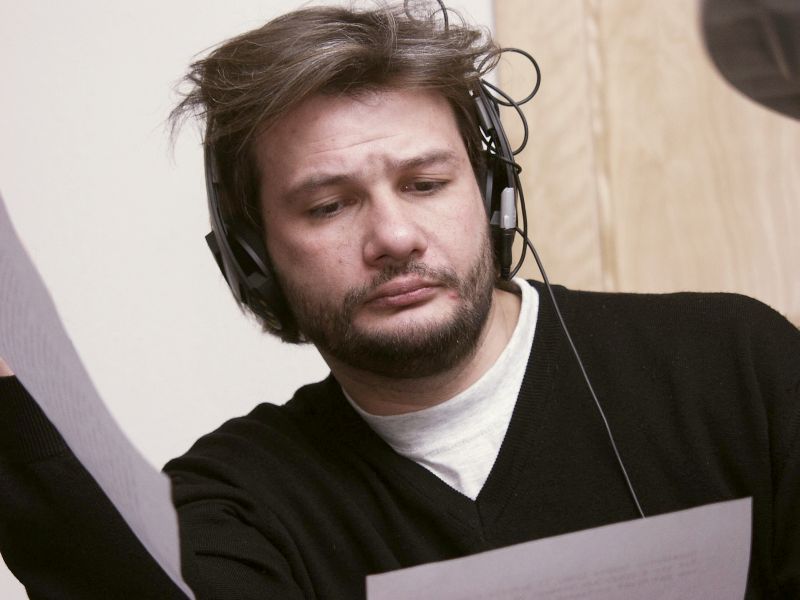

Andrey Shary
I.O. Regional Director of Radio Free Europe/Radio Liberty for Russian -Sound Content
Andrey Shary on Facebook
Sharya@rferl.org