
Translated material
Reform in quotation marks
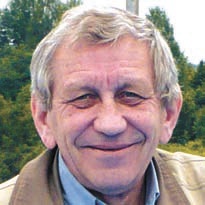 The TRV-hobby continues to publish the answers of the “refuseniks”-members of the Academy of Sciences, who declared their disagreement to join the new “RAS” if the law is adopted in the form in which it was introduced in the first reading [1-2]. This is an interview - with a doct. physical mat. sciences, member of the Russian Federation, G.N.S., head. Department of Physics of solid -state nanostructures, acting Head of the Department of Physics of the Solid Body of the Physical Institute. P.N. Lebedeva RAS Nikolai Sybeldin .
- You were one of the first members of the Russian Academy of Sciences, who announced your rejection of the declared reform of science, signed a statement that you would not join the new academy if the old is liquidated. How do you look at what happened now? Has Basha changed the point of view of reform? Would the other 74 signatures be ready to abandon the “mandates” or now this step would be useless?
- First of all, the word "reform" must be taken in quotation marks. This is not reform. The purpose of this “reform” is the liquidation of the oldest, most effective scientific institution in Russia. For those who understand how we organized science, what role plays in scientific life and what contribution the Russian Academy of Sciences makes in scientific and technological development is quite obvious: this “reform” is the defeat of science, first of all, fundamental science in the country, the path to nowhere. The great power, “pouting the cheeks” before, uncontrollably turns into a third world country.
Pseudo -reformers, referring to foreign experience and deliberately distorting the true state of affairs in Russian science, say the opposite - they say, the launched transformations will lead to its development. But this only indicates their superficial, very primitive ideas of both various forms of organization of scientific research abroad, and about today's Russian scientific potential and true causes that do not allow it to fully realize its development. Monkey, and without critical understanding and analysis of applicability to domestic realities, is the main approach of the intellectual service of the existing ruling regime to solve a variety of problems of the country's life.
A lightning -fast special operation to adopt the Law on Reform of the Russian Academy of Sciences was carried out in an insulting form for a scientific community, unacceptable in a civilized society, and was accompanied by a slanderous campaign in the proceedings of the media. Signing the “statement of the 74th”, we not only expressed a categorical rejection of the draft law, but also (although this is not in the text of this) our outrage with a neglect of the scientific community and reluctance to reckon with its opinion.
The July 1 club formed by refuseniks played, in my opinion, a significant role in the consolidation and self -organization of the scientific community, discussing accumulated problems, developing plans and organizing joint actions, resistance to the adoption of the law, etc. This work continues, of course, taking into account the changed situation.
My opinion, as well as the opinion of the vast majority of researchers about the essence of the law and its destructive consequences, has not changed over the past time. Although formally the situation is now different from the one that was at the time of signing the “statement of the 74th,” the wounds are not liquidated, and we do not need to join the reorganized academy, we became automatically its members. Therefore, now we can only talk about the exit from the new-half-wound.
Today, such a step seems to be quite meaningless in the sense that it is unlikely to be able to influence anything. I think that I will make the final decision on this score after the first general meeting of the reorganized wounds and the approval of its charter. As for other signatures, I can’t say anything here; We signed the previous statement without saying a word, and now everyone will make a decision on their own.
- What do you think about the final version of the bill signed by Putin? Do you think the tactics chosen by the fort, on the one hand, and protesting scientists, on the other, are correct?
- The main final version of the law is no better than the first. The oldest scientific institution of the country has been destroyed, which made the main contribution to the development of fundamental science in Russia. The destructive consequences of this step can be irreversible. Moreover, disorganized not only wounds, but both agricultural and medical academy. The demagogical statements of the authorities about the post-stupid bloom of science are deprived of any reason.
Fortov chose the tactics familiar to the Ranovsky leadership “building a fragile trust in trust” to save science. In my opinion, this position is doomed in advance. This confirms the experience of agreements on various issues with the Ministry of Education and Science and the Government over the past decade (in fact, RAS has always been on the occasion and achieved only mitigation of bossy initiatives), which ended with a government bill.
Putin's decision has already been made. Apparently, only the extremely strict position of the president and the Presidium of the Russian Academy of Sciences could influence him. The leadership of the Russian Academy of Sciences did not develop this position. The leadership of the regional branches of the Russian Academy of Sciences acted more decisively. During the negotiations, Putin with his inherent unceremoniousness at least twice (only in a large way twice) shamelessly Fortov “pouted”, so we could not save science, and we received what we now have. But, as they say, "everyone imagines himself a strategist ..."

The scientific community, of course, was activated and did a lot in order to prevent the adoption of the law, but, it seems, not all. The self -organization of the scientific community was significant in the August conference. The Academic Trade Union first took an active tough position and announced various mass shares up to strikes, etc. However, the matter did not go further and numerous letters of protest. A lot of street shares were carried out, but they were not massive enough, in any case, in Moscow (if less than 10 thousand participants, the authorities do not pay attention). Employees of Moscow Academic Institutes could support the protest more actively. Apparently, the old Soviet spell is still acting “if only there was no war”, which has now transformed into “if only it didn’t get worse”, and here they are still “orange revolutions”, then 1917 is scared.
What surprised me was the almost complete absence of any reaction from the “masters of culture”. Are all these “rulers of the thoughts”, “engineers of human souls”, etc. Do not understand that the Academy of Sciences is an integral part of the entire Russian culture? Or is it all indifferent to everyone? And finally, I wonder where the Communists went with their promise to demand the resignation of the government?
- What would you expect from Fano? We hear completely different opinions - from the pragmatic from the lips of academician Khokhlov that the law has been adopted, we must work, to the protest, it is necessary to protect every institute, etc. What do you think to do correctly in order to preserve the living islands of science in Russia?
- Fano is a new monster, essentially a parallel Ministry of Science. It is not yet clear how the fano will interact with the “Club of Scientists” (New RAS), and what will be the division of labor between Fano and the Ministry of Education and Science. I'm afraid that we will be under a double (or maybe even triple) press. If Fano and his leader were really independent, listened and heard scientists, put the interests of science, etc., then the “devil” could not have been so terrible. But the fano is built into the “vertical”, and its leadership will fulfill the tasks set by “reformers”.
In addition, the qualifications of most officials are extremely low. It is not difficult to verify this by going to the site, for example, the Ministry of Education and Science, and having familiarized himself with the trackable lists of the leadership. In the country, real professionalism, knowledge and experience ceased to be valued. Therefore, one should not be surprised that the missiles do not take off, the planes fall, military warehouses explode, in the Moscow metro - constant accidents, etc. Management in various fields is increasingly passing into the hands of officials who call themselves “effective managers”, but do not have proper qualifications and guided by their own interests. Therefore, I do not expect anything good from Fano.
I do not see fundamental contradictions between the position of academician Khokhlov and the scientific community. The law has been adopted, and you really need to work. What I do not agree with is with the dashing statement of Alexei Remo-Vich that half of researchers can be reduced. He probably proceeded from the fact that the salary should be doubled. I consider this approach absolutely unacceptable and even vicious.
First of all, the country's leadership should decide which science (by volume for the initial estimation) is needed by Russia to occupy a worthy place among civilized states, and on the basis of this to finance science in volumes that are commensurate with financing in other developed countries.
Now we have about 660 thousand scientists and 4650 organizations in our country, where they are engaged in science. The number of scientists is about 0.46%of the country's population (in the USA - 0.44%, in Japan - 0.55%, in the EU - 0.26%). I note that in the Russian Academy of Sciences, because of which the entire fuss, less than 50 thousand scientists and about 440 scientific institutions. But reductions are expected precisely in the Russian Academy of Sciences.
Moreover, as the deputy recently stated. The Minister of Square, the assessment of activity will be carried out on the basis of the so -called “map of science” (it is difficult to imagine a more absurd and unprofessional information system). That is, officials intend to give assessments to everyone and everyone, not looking up from the chair. Therefore, the protection of each institute, each laboratory, each employee based on professional expert assessments is not a protest, but a vital necessity.
And about how to “preserve the living islands of science”: I think that we have much more living than islands. In any case, in the area that is well known to me, the physics of condensed media.
First of all, it is necessary to carry out an honest, uncorneled, not focused on the tastes and preferences of the Ministry of Education and Science inventory of the entire scientific economy based on a professional examination. At the same time, the primary goal of this work should not be a reduction in the staff, but the identification and elimination of the reasons that prevent scientists from fully realizing their capabilities. This process is not fast, but it must be carried out.
The second is modern scientific and technological equipment. When I hear officials' claims against researchers about low indicators, I recall a children's joke, which we told each other either in kindergarten or in the 1-2 grades of the school. The commission, inspecting a crazy house, found that patients were jumping into an empty pool. It turned out that they were promised to pour water into the pool when they learn to dive.
Without diminishing the importance of theoretical research, it should be recalled, first of all, the Ministry of Education and Science, that all the natural sciences, as well as technical applications, are based on experimental results. Over the past 20 years, experimental technology has made a significant leap forward, the performance of scientific labor has significantly increased. But all this passed by most of our scientific groups. Modern scientific equipment is expensive. But no collective use centers can solve the problem here, since they are mainly focused on standard measurements. A researcher must conduct basic research at his workplace. And if you want to conduct experiments of the advanced level, then the equipment used should be under them and “imprisoned”. Another thing is that the equipment must be used effectively.
The third is the consolidation of youth and the salary. The opinion imposed by officials that the "old people" do not give the way to young people is far -fetched. There is no one to free up. The problem is solved by increasing the salary and the possibility of attracting nonresident employees. In Moscow, the salary of young employees should begin with about 2 thousand dollars (such a salary solves the issue with rented housing and allows the family to acquire) and significantly increase as qualifications grow (the prospect should be visible).
The fourth is a significant reduction in the bureaucratic load, which is especially growing if you are “lucky” to contact the Ministry of Education and Science, as well as the elimination of various administrative and legislative barriers (customs, etc.). In parallel, it is possible to gradually introduce a division into a permanent and temporary state, a postdrod system, etc., making appropriate changes to the legislative framework. At the same time, the volumes of financing of grants should be greatly increased so that with this money you can take the employee to work.
- Meanwhile, reforms are also held in the system of scientific certification. The tank conducted a survey about whether it is worth getting away from two scientific degrees, but go to one. What would you think of the need to abandon the usual system and the transition to a single -stage one?
- One- or two-stage system, on the one hand, is a tribute to tradition, and on the other, each of these two systems of scientific degrees is built into the corresponding general system of organization of science and education in a certain way. In my opinion, we are traditionally closer to the European two -stage system.
The requirements for candidate and doctoral dissertations are completely different, different goals of their protection and the possibilities that are opened before the scientist after receiving the appropriate degree. A candidate dissertation is a training work and at the same time the first step in science. Protecting it, a researcher proves that he is able to work independently. The defense of the doctoral - recognition by colleagues of a certain contribution of the dissertation to science. In addition, the possession of one degree or another allows you to apply for appropriate positions.
I heard two objections against our two -stage system. Some candidates of sciences do not like the name "candidate". There is nothing easier - let's replace it with PhD, leaving the Doctor of Sciences behind the doctors. The second objection is that the doctor’s writing takes too much time. It seems to me that at present, when almost no one reads the dissertations, besides opponents, doctorals must be defended by a report (they say that such a decision has already been made). But for candidate dissertations, I would save the current requirements for the volume of labor. Otherwise, I am for us to have two degrees in our country.
- How do you perceive the state policy in science and in education as a whole? What is the total traffic vector? What, in your opinion, are the main goals of the reformers?
- The state policy is murderous both for science and education, including the school, and in the field of education of the population. According to the VTsIOM survey conducted in February 2011, 32% of Russians are sure that the sun rotates around the Earth! Is it possible to imagine such a thing 10-15 years ago?!
As I already said, answering the first question, the basis of this policy is the monkey without a deep analysis of foreign experience. Superficial attributes are adopted without the necessary radical restructuring of the entire system. I will not talk about higher education, referring to the excellent analytical article in the journal "Expert" [3] professor of the Department of Theoretical Physics of Perm University and the Department of Physics of the University of Luisville (USA) Viktor Henner, who has been teaching in America for 15 years in America, and the other in Perm. His conclusions about the fall of the level of education are disappointing: "The point of non -return is very close, many believe that it has already been passed." The same with science. Affirming that abroad all science is concentrated in universities, the “reformers” are greatly cunning.
On the other hand, in most domestic universities and universities there are no modern science (maybe there are separate “islands” in some places). The exception is Moscow State University, which is self -sufficient, and several more universities and large universities, which are closely cooperating with academic institutions and leading scientific organizations of some other departments. Meanwhile, huge funds for the development of science are pumped into universities. No one will turn to say that the universities should not give money, since everyone knew their difficult situation before these injections.
At the same time, everyone perfectly understood that the efficiency from such injections would be small. In order to get a sustainable development of science at the modern level, it takes several decades. Now the Ministry of Education and Science, apparently, realized that this direction of the development of science has failed. And, as always, the scam began in manipulating quantitative indicators and postscribes.
Smart reformers in transformations strive to develop the strengths, and to make weak effective. Someone likes it or not, but we had the scientific potential of the Russian Academy of Sciences, and weakest-not enough the close connection of science and education. So it was necessary to close universities and universities to the Russian Academy of Sciences and other scientific centers, introducing the system that has shown its effectiveness, worked out for decades in the Moscow Physics and several other well -known universities.
However, one of the main goals of the "reformers" was the destruction of the Russian Academy of Sciences. For the sake of this, they gradually destroy the Phystech system that enjoyed world fame, pouring significant funds into the MFTI and thus weakening the role of the basic departments on which this system is based, and therefore the influx of young specialists into the institutes of the Russian Academy of Sciences.
Готовя «реформу» РАН, господа ливановы уже много лет пытаются внушить российскому обществу, что все самые сильные и востребованные ученые уехали из страны, а в России остались только те, кто никому не нужен. На мой взгляд, это самая заурядная ложь, Уехали и сильные, и слабые, и все, кто хотел уехать. В то же время, в стране осталось значительное число блестящих и активно работающих ученых, вклад которых в мировую науку трудно переоценить.
Говорят, что господин Медведев как-то сказал, что нам не надо столько наших ученых: понадобятся — купим за границей. И покупают. Огромные деньги, затраченные на так называемые мегагранты, как минимум с не меньшей пользой могли бы пойти на поддержку и оснащение активно работающих российских научных групп. Тем более что многие, если не большинство из оставшихся в стране ученых, успели поработать в зарубежных лабораториях и хорошо понимают, как там делается наука.
Принятый закон о «реформе» РАН поставил точку в политике Минобрнауки по отношению к Академии, проводившейся в последнее десятилетие. Все эти годы, несмотря на сильно улучшившееся финансовое положение страны, РАН продолжали держать на голодном пайке. Особое недоумение научных сотрудников вызывали итоги различных конкурсов, проводившихся Минобрнауки. Многочисленные факты говорят о том, что многие «конкурсы» на самом деле конкурсами не являлись: «победители» отбирались и назначались, а не определялись. Мне кажется, что в результате Минобрнауки полностью лишилось доверия научного сообщества.
И последний вопрос о «целях реформаторов». Здесь скорее надо говорить не о целях, а об их мотивах. И их несколько:
- непомерные амбиции интеллектуальной обслуги власти, рассматривавшей РАН как конкурента в экспертно-консультативной деятельности на высшем уровне, и ее желание получить монополию на истину в последней инстанции;
- стремление «ТД-2» (М.В. Ковальчук) [4] и его окружения установить монополию в научной сфере; монополию для науки более опасную, чем устроенная Трофимом Денисовичем, поскольку последний ограничился только биологией и сельским хозяйством, а современный пытается «наложить лапу» на всю науку;
- РАН — слишком демократичная организация и поэтому плохо встраивается во властную «вертикаль»; чиновники всех мастей уже давно ни с кем не считаются, а к Академии еще с советских времен было принято относиться с уважением;
- имущество РАН многим не дает спать спокойно;
- до «реформаторов» наконец дошло, что при честной конкуренции вузам еще долго тянуться за РАН, и это может вызвать у власть имущих сомнение в их компетентности.
Возможно, есть еще и другие причины.
Prepared by Natalia Demina
- Заявление с отказом вступать в «новую» РАН от 1 июля 2013 года
http://polit.ru/article/2013/07/02/open_letter/ - Ответы ученых читайте в ТрВ-Наука, №№ 140, 141, 142 и 143
- http://expert.ru/expert/2013/39/zachem-amerike-stolko-fizikov/?n=171
- Классификация М.Б. Фейгельмана и Г.А. Цирлиной http://disser-graf.livejournal.com/9490.html