
Translated material
10 problems of foreign students
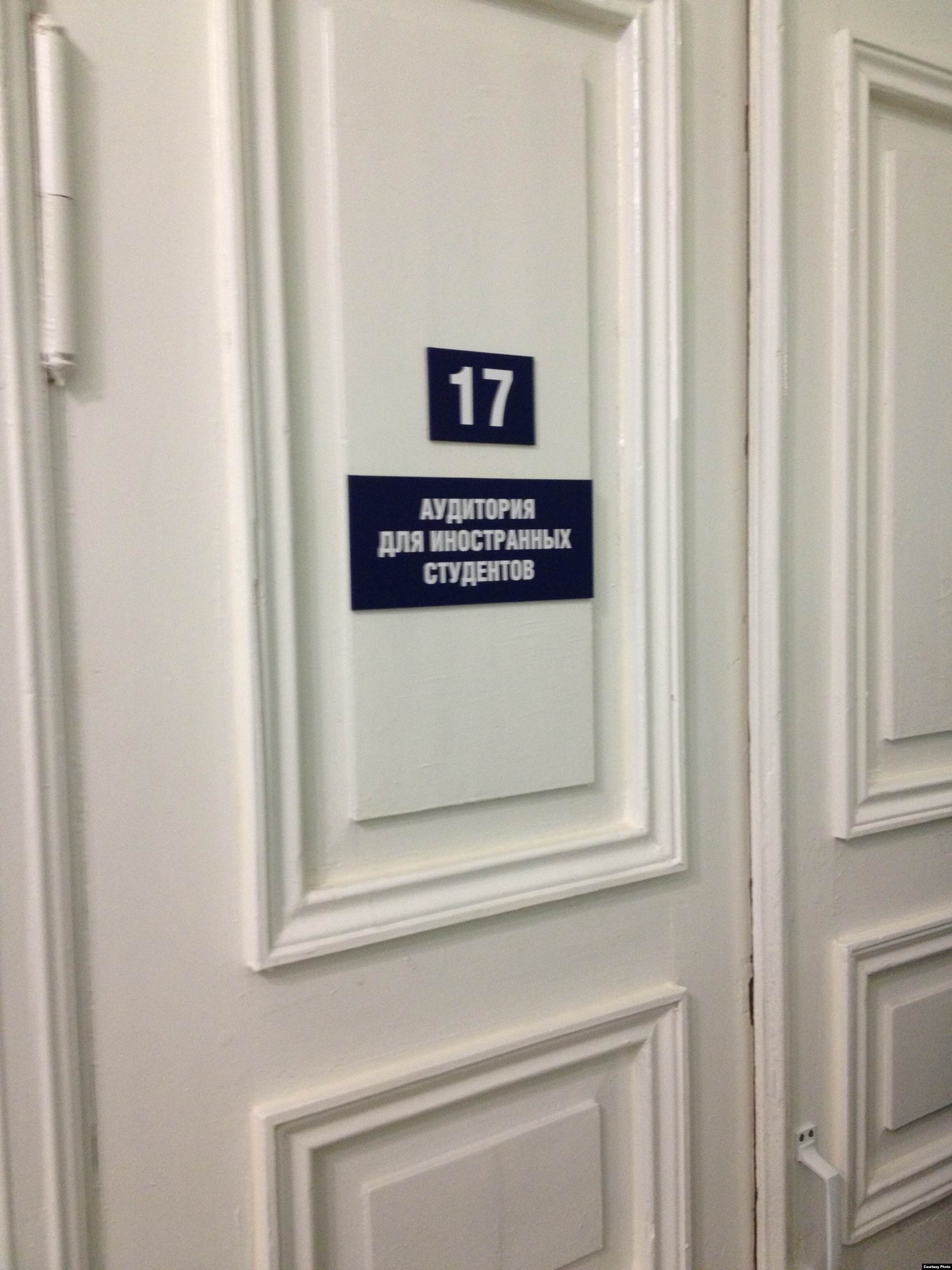
Here are a few of the most important.
1. "What adaptation in Russia can we talk about if I do not own obscene vocabulary?" - A student from the Czech Republic.
The main problem in the adaptation of foreign students is the language barrier. Of course, gradually they begin to understand Russian speech and get used to talking about them that is not true for them and difficult to study the Russian language. But the task of mastering its “informal tools” and due to this, it is unlikely to be decided to adapt to the social and cultural environment.
2. “The Russians practically do not communicate with us, only when they need something: help to study, write off, etc. We always help, and they continue to behave as if we are unfamiliar ” - a student from Vietnam.
In Vietnam, successful schoolchildren are paid for training abroad, primarily in Russia. At the same time, they must continue to study well and confirm that public funds are not spent in vain. Vietnamese students are bona fide students. Study in the first place, sleep in the second. Russian fellow students use this, greatly facilitating their lives. It is customary to help others with the Vietnamese, only those to whom they helped are treated as if, and communication is limited to such help.
3. “We cannot go through practice. If we study in Russia, we pay for training, why can we not have a practice or work? ” - Student from Nigeria.
The essence of the problem is the imperfection of legislation: most often, students come to study in Russia on a short -term educational visa. Officially, they do not have the right to get a job. Particularly entrepreneurial foreigners work in a cafe, for friends and acquaintances, perform at parties.
4. “What especially annoys me in Russia is that they behave like in kindergarten. After 12 a.m., you cannot leave the hostel. I am 22 years old, I am an adult, and I know that it’s good for me. And this is my problem! " - A student from Germany.
In Russia, this is a kind of concern, and, of course, a bureaucratic system with a countless number of rules for all occasions. Just this is the freedom -loving soul of a foreigner and protest.
5. “It is very difficult for me to plan my time when I do not know the schedule of public transport” - a student from Germany.
It is no secret that the Germans are punctual people, responsible and attentive to little things. There are a lot of jokes on this subject. So in Tomsk, oddly enough, students from Germany complain that it is difficult to be on time when there is such an unpredictable factor as a bus, and even Russian production. It seems surprising to them that the driver can repair the bus stalling at the traffic light with a hammer without getting up from the chair.
6. "Three days before the couple, it was canceled without warning in advance" - students from Germany
In Europe, university students (and most schoolchildren) are used to being issued a schedule for the whole year. If any changes are foreseen, they are reported in advance.
7. “There are no tablets with the route at stops. Sometimes there is no stop at all ” - a student from France.
It is so difficult for foreign students to adapt in Russia. The insufficient number of identification marks exacerbate the situation that would help to get used to and navigate in an unfamiliar, unusual and not always friendly environment.
8. “There are very few fruits here, you don’t even have a papaya ...” - a student from Vietnam.
9. “To get a job, you need to collect a lot of papers here ... You, the Russians, have been accepted” - a student from Vietnam.
10. “When I was going to Siberia, I thought I was only going to study because it’s very cold and I don’t need good party clothes ... and when I Arrived Here, I Realized ... that I NEED MORE! ... ” - a student from Italy.
But, despite all the problems and inconvenience, everyone finds something for himself in Tomsk: a prestigious education in his native country, an exciting journey, extreme experience, and is satisfied.