
Translated material
Russian legislation can become a priority in Transnistria
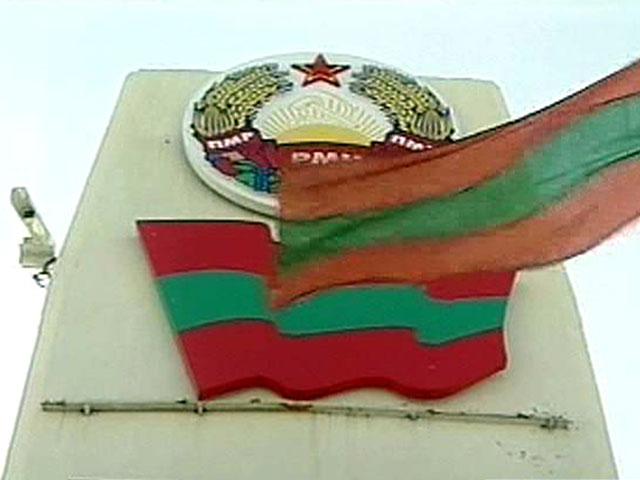
The Supreme Council of Transnistria in the first reading approved the bill introducing the effect of Russian federal legislation on the territory of the unrecognized republic. 30 deputies voted for the required minimum of 29 votes. If the document is approved, Russian laws in the PMR will be priority, and its own legislative acts will become "suboffer". The explanatory note to the bill states that the spread of Russian laws on Transnistria is an indispensable component of the PMR inner life, taking into account the will of the people "for subsequent free joining to Russia."
"The Transnistrians have high hopes to the new law. Firstly, it confirms the national idea of an unrecognized republic to develop statehood with Russia. And secondly, today is the only only thing that can contrast the unrecognized republic with a foreign policy of Moldova on rapprochement with Romania," the Russian newspaper legislative initiative comments.
According to the publication, by the second reading by a special decree of the President of Transnistria, an interdepartmental commission for the preparation of the Constitutional Law from representatives of all state authorities should be formed. Experts will have to overcome a number of difficulties: at present, the PMR and the Russian Federation differ significantly budget levels, and the Transnistria is also a unitary state, and Russia is federal. The presence in the Transnistria of the President, the Commander -in -Chief and his own army will be in question.
Currently, the inclusion of Russian legislation in the Transnistrian legal system is supposed to be carried out in three stages: first to introduce norms that do not need cardinal processing, then - legislation in the field of economics, and only after that - laws relating to the authorities.
"For many years, we have already harmonized Transnistrian legislation with the Russian in order to once again confirm our commitment to the Russian Federation and our desire to join Russia. This law in the future can give confidence in our people that we are not standing on the spot on rapprochement with Russia. And if we are able to be guided by the state’s federal legislation, then only one step will remain before joining and recognizing Transnistrian Moldavian Republic, ”said the deputy of the Supreme Council of the PMR, representative of the Committee on Legislation, law enforcement agencies and the protection of the rights and freedoms of citizens Galina Antyufeeva.
According to the parliamentarian, more than 150 thousand Russian citizens live on the territory of Transnistria, many people call themselves Russians, despite the formal lack of citizenship, and every family has at least one person who is a citizen of the Russian Federation. “Our people connect all aspirations and hopes only with Russia,” Antyufeeva assured.
The President of Transnistria, Yevgeny Shevchuk, submitted to the Supreme Council of the PMR the draft constitutional law, which involves the application on the territory of the Transnistria of the Federal Law of the Russian Federation, on December 4, recalls the REGNUM . Shortly before the vote, the Deputy Minister of Foreign Ministers of the PMR Igor Shornikov, in his speech at a round table in the problems of rapprochement of Russian and Transnistrian legislation, expressed the opinion that "direct implementation of Russian legislation in the PMR is accelerated integration in the Russian Federation."
Chisinau claims provocation, in Moscow they expect the socio-economic development of the PMR
In Chisinau, the results of the voting of the Supreme Council of the PMR were regarded as a provocation. “In any case, we will come to a situation where the status of this region will be determined by the law established by Chisinau authorities. The law will clearly and clearly establish both legal requirements and the limits of autonomy,” Publika.md quoted the opinion of the leader of the Liberal Democratic Party faction in the Moldavian Parliament of Moldavia.
“This is impossible to evaluate otherwise as a provocation, and there are no other interests in this separatist region, except to prevent our path to Europe,” said Anna Gutsu, deputy of the liberal reformers. And Yevgeny Karpov, Deputy Prime Minister of Moldova, recalled that "some time ago the Ministry of Foreign Affairs of Moldova sent an oral note - to find out the position of Russia and find out its assessment of the actions and initiatives that appear on the left bank of the Dniester."
The Moldavian political analyst at OAZ Nanta believes that Moscow, Moscow, who is interested in the "annexation of part of the territory of the Republic of Moldova" and the inhibition of the process of signing an agreement on the Association with the EU, is worth in the left bank of the Dnieper. At the same time, political scientist Andrei Safonov admits that the initiative of the President of Transnistria Evgeny Shevchuk was an improvisation that was not agreed with Moscow.
On the eve of the vote in the Transnistrian parliament, a meeting of members of the Presidium of the Supreme Council with Dmitry Loskutov, assistant deputy prime minister of the Russian Federation, special representative of the President of the Russian Federation in the Transnistria Dmitry Rogozin and an employee of the Presidential Administration, Maxim Polyakov, took place. As the Tirass agency carefully writes, the meeting discussed the issues of cooperation between the legislative bodies of Russia and the PMR, interaction in the fields of education and economics, as well as the prospects for the application of Russian legislation in Transnistria. "We believe that the further interaction of the two states will give a new impetus to the socio -economic development of Transnistria," Loskutov said following the results of the meeting.
Recall that Transnistria proclaimed independence from Moldova in the early 1990s of the twentieth century. The flared armed conflict was discontinued after the intervention of Russian troops, the peacekeeping mission in the region continues to this day. Tiraspol managed to de facto maintain independence from Chisinau, but there was no international recognition of Transnistria.