Date
Author
Александр Генис; Соломон Волков
Source

Preserved copy
Translated material
New York Almanac
Solomon, the last transfer of the year, as always, is devoted to the summarizing of the results. Let's start.
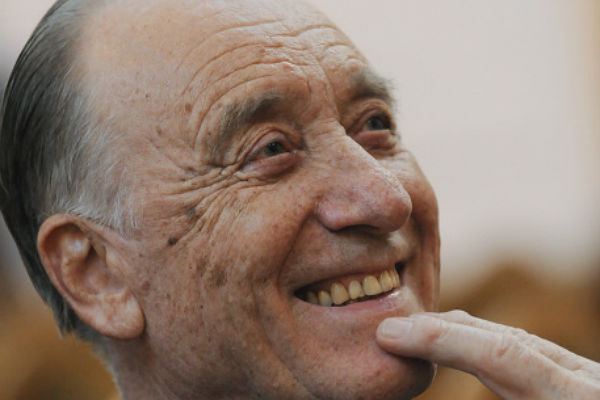
Solomon Volkov: Our first heading is a musician of the year. You know, I would like to make a musician a man who passed away recently, composer Sir John Tavern, for many reasons. Firstly, of course, his early departure. I believe that if a person died at the age of 69, he is my peer, Tavener was born in 1944, then this is an early departure. We all knew that he was sick, that he had a sore heart, everyone hoped that he was overcome by the disease. He overcame the condition many times when he was in a coma, in the most terrible situations, somehow he got out, because it was a man that was an amazing inner energy. I was lucky to know him. We began to correspond with Sir John Taverns when he wrote “Requiem” to the words of Anna Akhmatova. Not everyone knows that Tavener was Orthodox, he accepted Orthodoxy in 1977.
Alexander Genis: This is an amazing episode in his life. He is from a very old family. There was such an organist John Taverner, somewhere the letter “p” disappeared - this is his ancestor, in the 16th century the musician was like that. In general, he is Scottish roots, according to religion, they are all Presbyterians, he has nothing to do with Orthodoxy. He has always been a very spiritualist man, he always sought spirituality.
Solomon Volkov: gravitated to Catholicism.
Alexander Genis: Once he walked along London and accidentally entered the Russian Orthodox Church. “I did not know anything about Orthodoxy,” Tavener said, “I just felt at home.” This is an extremely unusual episode in the life of an English composer, and a very English composer. Tavener himself said that this is very good and important, because he brought to the English culture what was definitely not there.
Solomon Volkov: Absolutely fair words. Moreover, his spiritual mentor was the famous Anthony Surozhsky, with whom he had confidential conversations for many years. He told me about Anthony Surozhsky with such reverence that behind these stories the image of an unusually insightful and bright person stood up. Under his leadership, and Tavener emphasized that he not only did not introduce him, did not call him to Orthodoxy, but also discouraged him in every possible way from this. And on the contrary, Taverns attracted. He began to write music to specific texts of religious, always with an Orthodox shade. Moreover, Greece became his second homeland, where he had a large house, where he settled. It was due to the fact that in Greece the Orthodox tradition is so strong.
Alexander Genis: At the same time, Tavener was an ecumenical person, because he was very hotly interested in oriental practices, of course, Zen Buddhism, of course, by Taoism.
Solomon Volkov: Even Muslim traditions.
Alexander Genis: Sufism. But also the music of the North American Indians, in which he found the same alternative spirituality. You know, when we are talking about such things, some sarcasm, some irony, distrust appear. One friend of mine calls all these people “REARICH”. There is something in this, of course, and “New Age” causes skepticism. But music is another matter. I wanted to ask you: how is it that? Imagine, for example, spiritual poems. Well, who writes spiritual poems today? In the 18th century they wrote. In any case, I can’t imagine. True, Averintsev wrote spiritual poems, but I prefer his articles. And spiritual music still exists, moreover, it, in my opinion, is experiencing heyday. It seems to me that it is in this area that spiritualism has been preserved and flourishes precisely in our, 21st century.
Solomon Volkov: I completely agree with you and add another significant thing, it seems to me, namely: I believe that at the moment, some countries have lucky, I think, these countries have such national votes in the field of classical music, I call them national bards. By the word “bard” we mean a person who sings ballads for a guitar or rocker.
Alexander Genis: Not necessarily, Shakespeare is also a bard.
Solomon Volkov: But in this case, I mean this role of the national bard precisely in the field of classical music. I attribute to such people Arva Pyart in Estonia, Giya Kancheli in Georgia, Peters Vasks in Latvia, Tigran Mansuryan in Armenia, in Russia this is Rodion Shchedrin for me, and in England I consider this kind of national bard, a national voice, a musical representative of the nation in music, if it was, in my deep conviction, Sir John Tavener.
Moreover, one can even note the point when everyone in England understood it. Namely: Tavener became close to Prince Charles - he was his big fan. And when Princess Diana died in 1997, the funeral was planned, it is clear that it was very carefully prepared and discussed, I know it because I at one time had to participate in Akhmatova’s funeral as a musical component. I know how people, tips gather, everything is discussed, every detail. And here it was a matter of national importance. Prince Charles asked Taverns that his so -called “song for Athena”, which he composed earlier, sounded at the funeral of Diana. This opus was dedicated to his familiar Greek girl named Athena, so this is not an ancient Greek goddess. Tavener composed this work in 1993, and the funeral was in 1997. Prince Charles knew this music, she was very close to him, and he also considered it that Diana was also very close. As we recall, the funeral was broadcast to the whole world, therefore, when Tavern's music sounded, he instantly became a world -famous composer. And in this capacity, of course, he became a representative of England on the international musical stage, thus becoming her bard. Although he was actually so before this event. I also have such an observation that it is not always a country that has such a national bard, understands this. He understands the elite, but the people as a whole prefer more traditional folklore forms of a completely different kind, while they have such a voice.
Alexander Genis: I accidentally saw the statistics today, according to which, when the “war and the world” appeared, the most popular book was “The Tale of Vanka Cain” - this was a lobby that was about a hundred times more popular than Tolstoy.
Solomon Volkov: approximately the same situation. The works of Taverns, he himself perceived them, of course, as religious music mainly. He spoke of them as “icons in sounds” - this is a very interesting and accurate, I think, definition. We can now recall Taener as a musician of the year. “Song for Athena” will sound now, the one who glorified him to the whole world.
(Music: http://www.youtube.com/watch?v=ITDW7U9ZZIA )
Alexander Genis: And now the premiere of the year.
Solomon Volkov: For me, of course, such was the production of Rodion Shchedrin in the Mariinsky Theater, which we have already mentioned now, to the plot of Leskova’s left -handed people. Moreover, the libretto was written by Shchedrin himself, he brilliantly does such things, starting with his opera “Dead Souls”, remarkable at one time in the Bolshoi Theater and also recently renewed with great success in the Mariinsky Theater.
“Left -handed”, in my opinion, is what is called, a masterpiece of Shchedrin. Because the plot of “left -handed people” is already painfully fits under the Shchedrin talent. Shchedrin generally engaged in Leskov separately, he has a number of very important works on forest topics and he has a special attitude towards him. Here, it seems to me, he enters into such an underlying controversy with Shostakovich, who voiced Leskov in his opera “Lady Macbeth of Mtsenskaya Uyezd” and grabbed not what attracts Shchedrin in Leskov. He grabbed the tragic and satirical, Shcherdrin is also tragic and satirical, but there is also some kind of piercing note of the lyrical, which may have Schostakovich, although Lady Macbeth is a great opera. In “Left”, it seems to me that there is an autobiographical theme, very important for Shchedrin - this is the topic of non -recognition of the prophet in his fatherland, the artist’s non -recognition in his fatherland, because what the left -handed person does not need anyone, everyone rejects. And only when he dies, people understand that this craftsman did.
Alexander Genis: You know, Solomon, I am the very idea of writing an opera on the text of “Leftsha” a few crazy - this is a very daring plan. Because “left -handed” is not a plot, “left -handed” is a language. A brilliant work written in a completely non -existing language. But the opera is built on the plot, on the plot, in the opera, the language is not important, but the situation, what is happening. How to convey in music this specially invented language. The “left -handed” is a brilliant and funny thing, but it can only be quoted, it cannot be transferred to another plan. How can this be done?
Solomon Volkov: The fact of the matter is that Shchedrin took the theme of “left-handed people” and revealed it in an amazing and very touching way. I believe that this opera will have a very long and happy life. Because all the layers came together here - a tragedy, a requiem, a satire, a buffoonery, a folklore stream, some parody moments, all together, everything merged into an amazing whole. And there was a successful production, of course, this opera will have a very glorious future. A fragment from “left-handed” will sound here, I took it from a compact disc, which the author kindly sent me, it does not yet exist in a commercial form for sale. Here we first show this exclusive fragment.
(Music)
Alexander Genis: Well, now the musical book of the year.
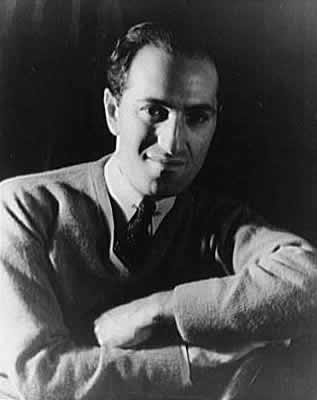
Alexander Genis: There is a curious situation. The fact is that Gershvin never seemed such an important composer in his life. After all, America has always been, for many years, in any case, a second-year country, she always tried to catch up with Europe. And every time she walked along the European path, secondary works of art were obtained, regardless of the topic.
Well, say, when did the national American poet appear? It would seem Longfello. What could be more American than “Gayavata”, a poem where it is about the Indians. But in fact, it is purely European poetry. No wonder all the first American poets sang the Solovyov, who were not in America at all.
So when did American literature appear? When did she speak in her own language, who had nothing to do with the European one? She was born with Mark Twain. It was not for nothing that hemindia said: until Huck Finn appeared, there was no American literature.
The same with painting. No matter how I love the 19th century American painting, it never went beyond the imitation of European painting. When did American painting appear real? It is difficult to say, but, probably, it really thundered for abstraction, when something was unusual and unexpected in America-abstract expressionism. Jackson Pollak, for example, is certainly original, or Andy Warhol on the other hand, but in any case, this is that which did not repeat the European Zada.
The same with music. In my opinion, American music began with Gershvin. It is in this music that we hear something American, folklore, something so folk. Although there are great doubts about this. It is known that Gershvin studied the music of African-Americans on barrier islands in Carolina, where there is an extremely peculiar African-American culture, they once grown rice, and there were many Africans who knew how to do this in Africa, so very bright African roots in musical culture were preserved. All this is good, but then it turned out that Gershvin studied these musical traditions after he wrote “Porgi and Bess”.
Solomon Volkov: You actually formulated the main idea, the main idea of the book that I want to talk about now. The book is called “On my way” - this is a quote from “Porga and Bess”, and talks about the production, about the premiere of Gershvin’s opera “Porgy and Bess”. Yes, around this opera critical copies broke a lot, I still found opinions about this opera when I moved to the United States. Thus, Harold Schounberg, a leading musical critic of that time, was published in New York Times, and thus possessing tremendous influence. He did not consider the “Porgi and Bess” the opera, he considered this work to be a musical and believed that it should be placed as a musical.
Alexander Genis: So transfer to the floor below.
Solomon Volkov: Reduce in the rank, so to speak. But since then, of course, a lot of water has flowed, and “Porgie and Bess” is increasingly called a canonical work for the American musical tradition. My good American acquaintance Joseph Khorovitz wrote this book, he specializes in the history of classical music in America. In each of its new work, attention focuses on some kind of forgotten figure, which thus again embeds in the history of classical music in America. The second hero in this book, in addition to George Gershvin, or maybe in a sense, is the main one, since for the first time it is so interesting and described in detail, the theatrical and film director, who was called Ruben Mamulyan. He was born in 1897 in Tiflis, by last name it is clear that he was an Armenian. By the way, Aram Khachaturian, another famous Armenian who was also born in Tiflis.
Alexander Genis: Like Parajanov.
Solomon Volkov: Mamulyan died in 1987 by all a forgotten person. This is a person of a tragic fate.
Alexander Genis: It is especially insulting that he was shot from the film, which really became famous. It was Cleopatra, he was not allowed to finish this film.
Solomon Volkov: He was a very scandalous, stubborn person who badly got along with managers, with producers. He was kicked out not only from Cleopatra, which, of course, would glorify him in an incredible way, he was kicked out with another my favorite film called Laura. Remember, the story of a portrait, disappeared by a woman and so on. This is an amazing classic “Nuar film”, and Mamulian also began there. Nevertheless, there are at least two Mamularovsky films that people do not remember what he did. The first is “Dr. Jekil and Mr. Hyde” of 1931.
Alexander Genis: I watched this film relatively recently, and I must tell you that current horror films should learn how it is done. Of course, I recall the Cabinet of Dr. Caligari - this is the same expressionist technique, but made in its own way and absolutely amazingly.
Solomon Volkov: It is believed that this is the best adaptation of Stevensen's story.
Alexander Genis: And there was their unprecedented amount, and one was at the very beginning of the cinema, literally the third or fourth film.
Solomon Volkov: Another film, no less famous for another reason, and no one also recalls Mamulyan - this is the “Queen of Christina” with Greta Garbo. This is one of the classic films Greta Garbo. You see, in the cinema, important merits, and in the theater, in addition to the theater premiere of Porga and Bess in 1935, he was also famous as the director of the classic American musicals “Oklahoma” and “Carousel”. But Joe Horovitz focuses on the work of Mamulyan and proves there in a very reasoned way that Mamulyan played a decisive role in what direction and how the plot and the Porga and Bess scenario was cast in the end. That is, here the work of Mamulyan went far beyond what the invited theater director was doing: he came, he was handed a certain material, he put it and was, as they say in such cases, such. Mamulyan took an active part in the creation of “Porga and Bess”. And this book by Joseph Khorvevets restores his role. You said a very correct thing about the expressionist aesthetics of Mamulyan. Khorovitz, when he plunged into the study of the biography of Mamulyan, who, in addition to the fact that he was a scandalist and a very difficult person in communication, he also intentionally confused his biography. In particular, he hid one important fact, namely, that he was a theatrical school in his youth in Russia with two such famous theater directors as Marjanov and Vakhtangs.
Alexander Genis: I just thought: how rarely it happens when the director changes the work so much that it is perceived through it, and not through the author. And the best example of this is “Princess Turandot”.
Solomon Volkov: You see, the aesthetics of Mamulian, which he used in full and in the production, and as you completely noticed, in the film “Dr. Jekyl and Mr. Hyde” - this was the expressionist aesthetics of Vakhtangov.
Alexander Genis: It is characteristic of America: no matter what you smoke, necessarily Russian roots. Gershvin, where did he come from? From Brooklyn from Russian parents. And here we are talking about Mamulyan, who, of course, grew up at the Russian theater of that very bright, acute period.
Соломон Волков: Причем, заметьте, насколько тогда это было интернациональным явлением. Русский театр: режиссер Марджанов, режиссер Вахтангов, Мамулян.
Александр Генис: Это все была имперская культура.
Соломон Волков: Это все были пришельцы с окраин, которые так развернулись в столицах...
Александр Генис: ... что и Америка тоже стала окраиной той самой культурой.
Соломон Волков: Так что эту книгу, которую очень хорошо встретила пресса, восторженные рецензии появились и в “Вашингтон Пост”, и в “Уолл-Стрит Джорнэл”, стала событием года. В качестве музыкальной иллюстрации я хочу показать фрагмент импровизации на тему “Порги и Бесс”, посмотрите, как эта опера внедрилась в американскую музыкальную культуру.
(Music)
Александр Генис: И последняя рубрика нашего Альманаха.
Соломон Волков: Последней рубрикой я предлагаю сделать в этом году фестиваль года, каковым является фестиваль “Белый свет” в Нью-Йорке.
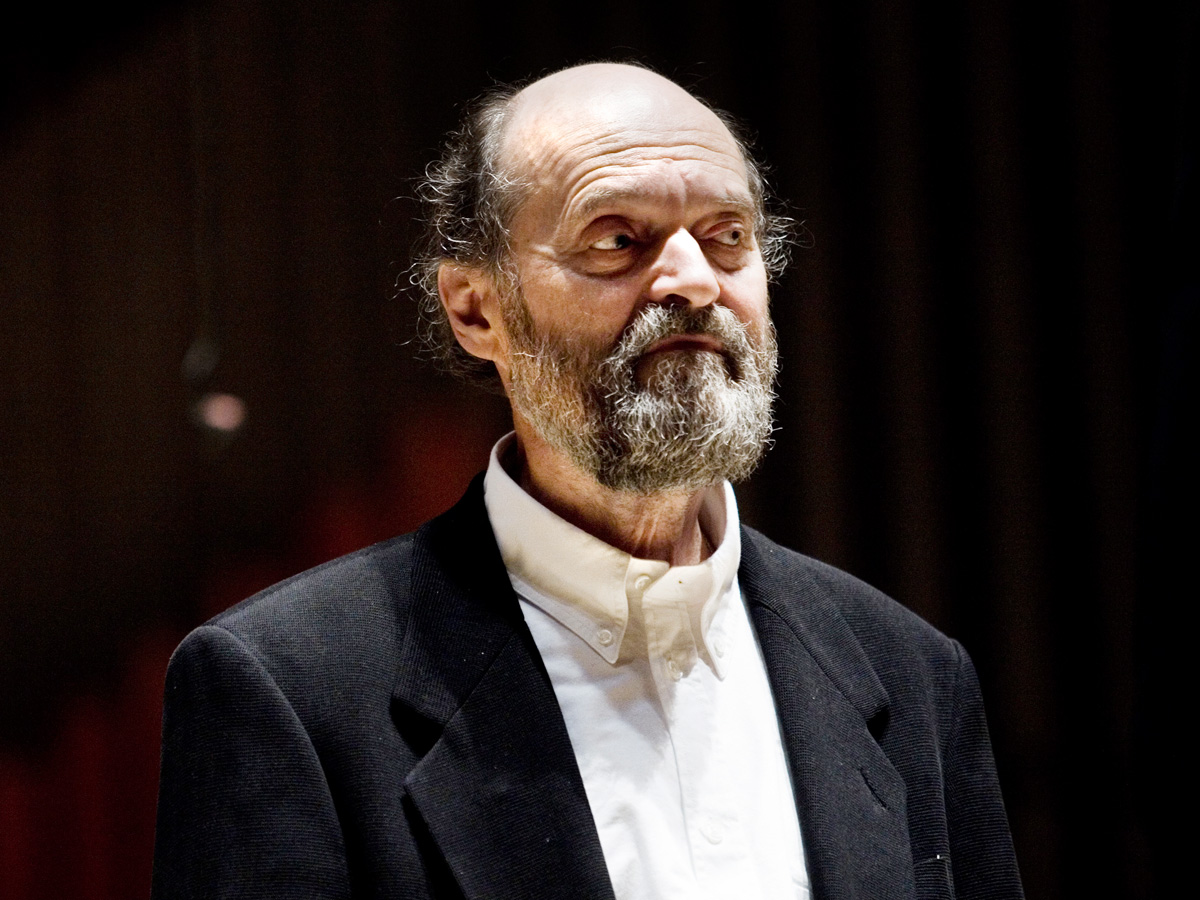
Александр Генис: Это название, конечно, требует пояснения. Дело в том, что фестиваль “Белый свет” появился недавно и названием ему послужил тезис Арво Пярта, который высказал, по-моему, очень глубокую мысль. Он сказал: “Белый свет соединяет в себе все цвета сразу. Для того, чтобы их разделить, нужна призма. Музыка - это и есть призма, которая разделяет белый свет на отдельные цвета”. Идея так понравилась устроителям, что они сделали ее девизом фестиваля, ставшего регулярным. Он оказался одним из самых интересных, особенно в конце года, ибо все тут связано с трогательной и тихой музыкой. Мне кажется, что у этого фестиваля умиротворенное настроение.
Соломон Волков: Вообще творчество Пярта стало неотъемлемой частью нью-йоркской музыкальной сцены. Мы сегодня говорили о музыкальных голосах нации и говорили о том, что Пярт является таковым для Эстонии. Интересно, что его с Тавенером тоже связывает то, что и Тавенер, и Пярт - православные, при этом являясь голосами своей нации. One does not interfere with the other.
Соломон Волков: Их часто воспринимают как некую единую группу. На самом деле, как всегда в таких случаях, никто из них не хотел и не любил, чтобы его представляли членом группы.
Александр Генис: Каждый хочет быть индивидуальностью.
Соломон Волков: Но какое-то общее явление, которое называется “минимализм святости”, этот лейбл, как сейчас говорят и в России тоже, за этой группой композиторов закрепился. Сочинение Пярта, которое прозвучало на прошедшем фестивале “Белый свет”, оно основано на тексте из Евангелии от Иоанна, на знаменитой фразе “В начале было слово”, оно так и называется “В начале”. Я хочу показать фрагмент из этого сочинения, которое на фестивале прозвучало в исполнении симфонического оркестра из Эстонии и камерного филармонического хора из Эстонии, которым дирижировал Ярве.
Александр Генис: Пусть на этой ноте мы простимся с 2013 годом.
(Music)