
Translated material
Is it worth it to be afraid of coursra?

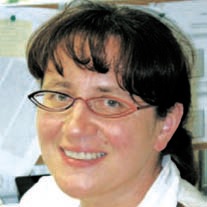 Biologist Ruslan Radchuk , a researcher at the Department of Molecular Genetics of the Institute of Genetics of Cultural Plants (Hatersleben, Germany) talks about his experience in the passage of the Writing in the Sciences course and reflects on whether the complete replacement for online courses threatens traditional education.
Once, in Frendalend (either Facebook, or a “living magazine”), a link to the online course of Writing in the Sciences [1] proposed by Stanford University flashed. I have long looked at online courses: I studied announcements on Coursera, asked the advice of “experienced”, read reviews. According to analysts, the future of online courses ranges from “this will be our everything” to “they will completely destroy normal education”.
Several acquired acquaintances admitted that they were recorded on such distance learning courses, and more than once and not at a time. But at the same time they did not graduate. Analysts agree with this [2]: similar courses ends only from 5% to 27%, depending on age, education and type of course. The courses are most participants from the United States, India and Russia. And regardless of the country of origin, education and age, gender bias is always observed. Women are much less common in such online courses than men: approximately 12% versus 88%. What is not a reason for feminist research?
First immersion
Armed with such statistics and evaluating the time necessary for the course, decided to take a chance and consider the phenomenon close. I bring to your attention a direct report from the scene-the passage of the online course Writing in the Sciences, which is already completing the other day. I’ll tell you a little about the features of the course, as well as some secrets of writing scientific articles. The last topic is important, necessary in the light of the latest events [3] especially relevant.
In general, the course turned out to be much easier than I imagined, but also much more informative than expected. I seriously tuned in a daily two -hour extracurricular work. In fact, it took me approximately half the time: the lectures are interesting and quite short (on average 20 minutes), and the tests are simple (just a test of the fact that the lecture was really listened to). I had to tinker with homework and control essays a little. Although, if you carefully listen to lectures, there were no problems either.
Lecturer Kristin Sainani told us about a number of simple rules that can make an article more understandable for the reviewer (and thereby increase the chances of publication), as well as expand the circle of potential readers (by default it is believed that the scientist wants to be read by his article). Of course, scientists with experience are unlikely to take out something new for themselves, but for beginners the information is very important.
A little grammar
The most important rule: the article is written when there is something to write about. If there is material, then it must be expressed briefly and accessible. A whole lecture is devoted to the methods of ruthless reduction of paragraphs, sentences and words. The principles are simple: to remove meaningless phrases, reduce semantic repetitions, use a variety of verbs.
The verbs stopped in more detail. The passive form is now not in fashion [4]. The classic impersonal “was shown (demonstrated, described)”, as it were, shakes important information about who showed (demonstrated, described) and transfers personal responsibility to the background. It sounds much better "we opened", "Ivanov with co -authors proved." Although the passive form of the verb is not completely expelled - she was taken to a modest corner in materials and methods: "3 liters of alcohol were used for disinfection."
Excessive introductory words are condemned (as well as some adverbs, unions and interjections): “Nevertheless”, “however”, “what is characteristic”, “actually”, “moreover”, “again”, “again”, “besides”, “by the way”, etc. They can still not be used, since the meaning in such sentences is poorly recognized. Moreover, in fact, abuse of introductory words, by the way,, among other things, also indicates a reduced literary ingenuity, as an option, the author of the author, as in this paragraph, for example.
Section on the structure of an article that you can not read
Most classic natural science publications have a rather conservative form: introduction, results, materials and methods, discussion. There are several variations when materials and methods are taken into additional materials or combined with results. In addition to publications of experimental work, there are also different types of reviews, letters to the editor and reviews of criticism. To each of them, the editors of the magazines put forward any specific requirements that should be listened to. For example, letters to the editorial office for some article should be written no later than a few months after publication. Later you will simply not understand. I can’t say anything about the specific features of mathematical, philosophical articles or works on theoretical physics, because it is simply not in the know.
About procrastination1, perfectionism and "road map"
For those who read before this section, I have a little comfort and good news. When writing scientific articles by procrastination, you suffer not only you, but also many others. I know only a few “legends” when a person sat down and wrote an article in a day. The lecturer in the courses offered her option how to stretch pleasure and go through the most unpleasant period faster. According to her, the outdated classical scheme looks like this: the author creates a new page in Word, writes the first sentence ... Then he urgently needs a link to a certain article. He opens Pubmed and searches. It turns out that the subscription has already ended, therefore it is looking for other available places. On the way, he finds a couple of interesting articles and one new on the topic ... After about three hours, he prepares a line. He looks at this proposal - the deplorable result of many hours of effort - and goes to Facebook.
How to deal with it? Now there will be a magical recipe. Writing an article should be divided into three periods. Preparation (70%of efforts and time), actually writing (10%) and editing (20%). Preparation is something like writing a “road map”, a file with a raw structure of the article. There you can make quotes from suitable articles on the topic, the necessary statistics from literature approximately in the order in which all this will then be displayed in the article, as well as drawings and tables. The order can be constantly changed, bringing it closer to the desired. The text can be long and clumsy, but there you need to collect everything mandatory and important for writing - from the names of reagents and devices to results and literary sources.
Then you can proceed to the spelling itself. This must be done quickly, not succumbing to the attacks of perfectionism and procrastination. This is not the most pleasant period of work, so it should be reduced to a minimum. After the article is written in black, you can proceed to edit. Here you can already release the will of the internal perfectionist and allow him to ruthlessly reduce the article, reformulate proposals and be sure to re -read the article aloud. With such a simple technique, most errors can be identified. Then it would be good to give the article to read the article first to relatives and relatives, and then to the enemies. The former will tell you where it is already clear, and the second ones are still incomprehensible.
Something about the morals of editors and reviewers
Experience shows that lazy reviewers do not read the complex sentences to the end. If it is important that the article is read with pleasure, then try to write suggestions shorter. If the proposal is long, then you can use punctuation marks - commas, brackets and dash - so as to attract the attention of the reader (reviewer), or vice versa. Please note that in the previous sentence, information in brackets is recognized as secondary, and dash, which is allocated on both sides, as especially important.
The editor of the magazine looks primarily at compliance with the formal rules that are registered in the magazine itself. If the rules are not observed, the editor thinks approximately the following: what can we expect from an article whose author did not even bother to read the rules? And where do reviewers look? They first look at the theses, and then at the drawings. Reviewers with high experience revealed a correlation: if the drawings are problematic, then the article will most likely also raise questions. Drawings and tables are the history of the article. They should be clear without text, the tables are not overloaded, everything is signed in its place.
Submission of an article to the journal. I will not delve into unnecessary jungle, this is the topic of a completely different conversation. I will only give out encouraging information for beginners (experienced and so in the course). The article in the magazine can simply be “accepted”, “accept with minimal editors”, “reject with the right to reboot” and completely “reject”. So, the category of “rejecting the right to repays” is not the end of the world at all, but still good news. This must be understood as follows: your article is in principle ready to accept.
Voice of conscience
Before I move on to the final part, I will allow myself to turn to the painful and unpleasant topic of plagiarism. This is a problem not only of the local Academy of Sciences, it is a global problem of galactic scale, which is also a question of the Writing in the Sciences courses. A third of all the received essays contained signs of rough plagiarism. This is despite the fact that the participants were explained what plagiarism was, they warned that it was not good, and threatened with sanctions. The presence of such an amount of plagiarism after all explanations is poorly explained by ignorance of the rules, but I still remind you again what plagiarism is.
A plagiarism is considered someone else's text issued for its own, including individual sentences. Plagiarism is also considered slightly alternated other people's offers without reference to the author. The problem of plagiarism is not only ethical. The scientist’s duty is charged with the detection and description of something fundamentally new. If this is not new, but only a slightly altered old, then why write?! Recently, many magazines themselves drive the articles coming to them through anti -plagiarism programs, keep this in mind.
To be, or not to be
And in conclusion, a modest own opinion based on experience in participating in the Massive Open Online Course. I am not quite a beginner in the topic of Writing in the Sciences, so the content for me was simple, but interesting. By effort, this is comparable to evening viewing of the sitcom. It requires some diligence, but the system is built in such a way that once a week you need to undergo control tests, this disciplines. The course suggested active forum communication of participants, including with the participation of the lecturer. Alas, this is not for me. I ignored the forum, and the lecturer, apparently, too.
In general, online courses as a hobby in order to improve qualifications, erudition, or simply from craving for new knowledge, I highly recommend. I strongly doubt that this thing can ruin a traditional education. And I also doubt that she can completely replace it.
- https://class.stanford.edu/courses/medicine/sciwrite/fall2013/
- KizilCec, RF, Piech, C., & Schneider, E. (2013). Deconsting disengagagement: Analyzing Learner SubpopoPulations in Massive Open Online Counses Lak'13 Leuven, Belgium - www.stanford.edu/~cpiech/bio/papers/deconstingdisengagagement.pdf
- Fano requested from academic institutes plans for three years - http://ria.ru/science/2013111/976120489.html
- Writing for a Nature Journal - www.nature.com/authors/author_resources/!

1 Exprices (English ProcraStination (delay, deposit), from lat. Procrastinatus: pro- (instead of, ahead) and Crastinus (tomorrow))- a concept in psychology, denoting a tendency to constant "laying off for later" of unpleasant thoughts and affairs.