
Translated material
Under the cap
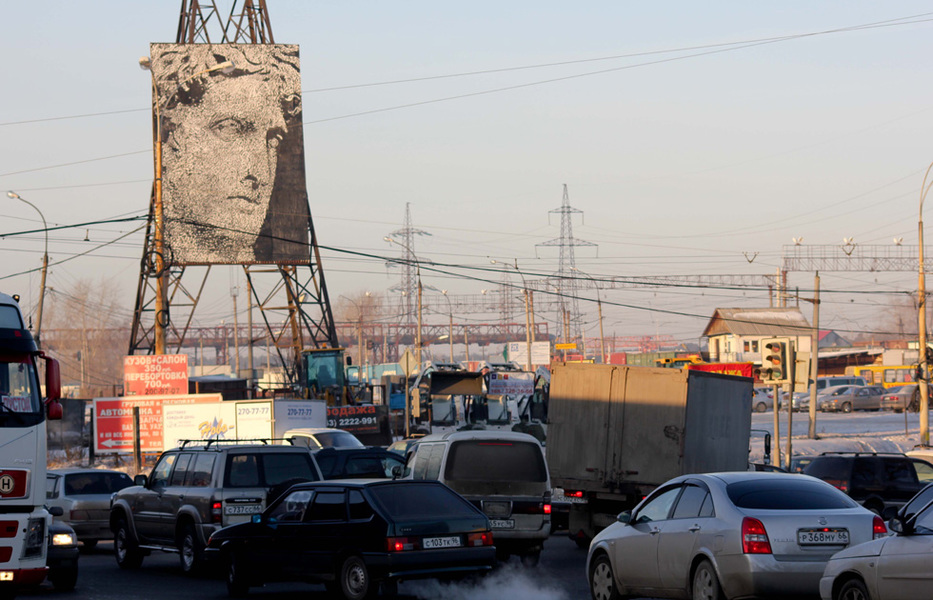
The generation, which is now born after the collapse of the USSR, which is now entering adulthood, has many hopes. Children of the Yeltsin democracy, who did not absorb the fear of a repressive state with mother’s milk, will probably be able to give a second wind of a bony political and public life in Russia. And in fact - timid sprouts of the new began to appear in different parts of the country. But are all social activists equally useful? I drove around Russia, visiting the most noticeable points of growth of civil consciousness, and discovered strange: they all originate from the same source.
Yekaterinburg: From unauthorized protest-to housing and communal services
The post-industry landscapes of Yekaterinburg with dilapidated panel high-rise buildings of workers and abandoned industrial zones to the horizon seemed to be created as a platform for street art. Such cities in the West gave the best examples of contemporary art. It is no coincidence that it is Yushburg, as it is lovingly called here, is considered the capital of street art in the Russian Federation. The essence of the street art is that the artist who can become any rebel, without asking for the permission of the authorities, invades the space of city streets occupied by advertising corporations and draws his message there, which hundreds of citizens will then see. This is the art of poor suburbs, as a rule, charged with a social or political protest: at least it developed in the USA and Europe. The concrete jungle of Yekaterinburg gave many interesting artists - those very young and fearless, born not in the USSR.
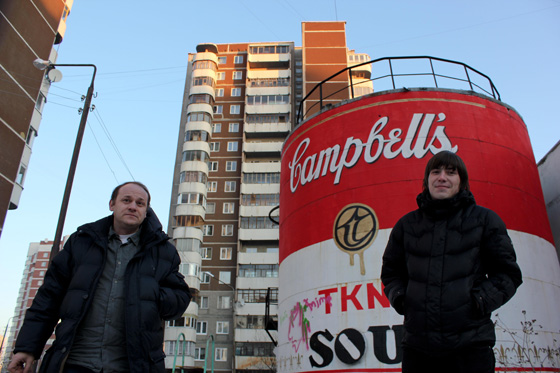 © Egor Putilov Yekaterinburg
So, in December 2011, in the wake of protests against falsifications in the elections to the State Duma of the Russian Federation, a granite ball in the fountain opposite the regional government was wrapped in the giant wrapper of the Chupa-Chups with the inscription “Tu Governing. Suck. " A little earlier, on the night of Easter 2011, opposite the local analogue of the XXS-a stencil of the famous statue of Jesus from Rio de Janeiro, which shows the faki entering the temple, built from the zero of the state-paths temple from scratch. Such mockery over the feelings of believers on the night of the great holiday could not pass with impunity, and a real hunt was declared for the anonymous art group “Evil”.
“The FSB Colonel came to us and asked to tell us what I know about the“ evil ”. Well, I told you, ”Evgeny Fateev, director of the art agency and part-time, the head of the Yekaterinburg Street Art, admits in a conversation with me. The former successful businessman who, in his own words, opened branches throughout Russia, since 2010 began to engage in street art in Yekaterinburg. The reasons for such a sharp turn in the quarry Eugene cannot explain and refer to a middle -aged crisis. The 40-year-old Fateev outwardly does not really look like a counter-cultural character, rather an average hand official. Fateev chose the role of the moderator of the Yekaterinburg underground. As the director of the art agency, he met with groups operating in the Urals and organized the Stenography Street Art festival, and then established contacts with curators of the Gallery of Modern Art throughout Russia and the press. “I can send someone to exhibit Helman, for example,” he says. And I can not send it - it is heard in subtext. Fateev spends a lot of personal resources, without receiving any financial return from his unusual hobby. Ascetic?
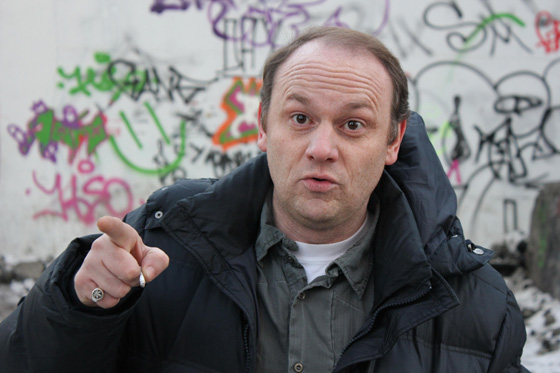 © Egor Putilov Evgeny Fateev
Then, in April 2011, the FSB found “evil” and did educational work. The head and brain of the group soon afterwards ended up in the army, and the only member of the “evil” Sasha politics was “not so interesting” to work. ” “Yes, yes,” the Fateev strokes in the conversation, “politics is boring. Who needs it? Street art is love, these are positive emotions. ” In the wake of positive emotions, tanks in the yards of high -rise buildings of one of the sleeping outskirts of the city were painted under condensed milk and under canned tomato soup. “It's like a Warhol! The district administration went to meet us. We generally have good cooperation with them. We are now the city hall and the president’s representative office began to help, ”comments Fateev.
For several years, this inconspicuous person concentrated in his hands all the threads of management once the rebellious Yekaterinburg Street Art, determining the boundaries of the permissible: who is interesting and will go to be exhibited to Helman and who will go to the FSB. Fateev does not just moderate the independent art - he acts as the mentor of young artists, in essence of adolescents, on the rights of a senior comrade and giving advice: this, about love, will go, and this, with Putin, is banal. The result of this effective management is obvious-over the past two years in Yekaterinburg, not a single noticeable action of political street art has occurred.
Cheboksary: constrained by one chain
The sleepy Volga town is one of many of the same in the European part of Russia. In the fall of 2010, the “Hubspace Knot / Hubspace ” was opened here in the building of the former telephone station-a creative space for young people. Inside, the “hub” looks quite “creative”: interesting large-format photos, a ping-pong table, and, perhaps, a classic of such places-a red English telephone booth and a British flag. On the inexperienced residents of Cheboksar, the “Communications Knot” makes a strong impression.
We are talking with Ivan Yarmoshchuk - the author and head of this project. “ Hubspace is a place where you can just come after studying, watch an unusual film, meet interesting people. We will organize concerts, public lectures, exhibitions, film screenings, anything. Hubspace is an open space, ”says Ivan. However, it soon turns out that the space is not open to everyone: political discussions (surprise, surprise!), Musical groups with a clearly expressed political position and negativism are not welcome. It seems even good - who likes the "negativity"?
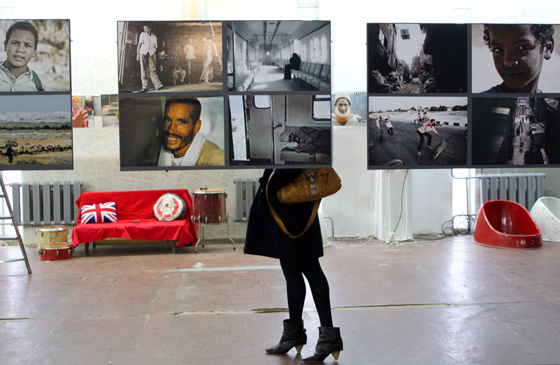 © Egor Putilov Cheboksary
However, the positive here is a very special, tortured, Timurovsky sense, characteristic of the near -infected organizations. The exhibited photographs dedicated to Russia show some ideal world: a crop drowning in the sun, splashing in the river among the sunny bunnies of children smiling mothers in city parks. “And you will post, say, an exhibition of a photo showing dying villages, crumbling Khrushchevs or there is a rehabilitation center for drug addicts, so as not to be completely negative?” - I am interested in Ivan. “Well, depending on what will happen there ...” he answers uncertainly.
As in Yekaterinburg, the financial side of the enterprise, despite many questions, remained unclear. Although it is obvious that only the heating of a large building, not counting other utility bills, costs a significant amount every month, Ivan fogly referred to some sponsorship from a sympathetic socially responsible business. And, as in Yekaterinburg, the project monopolized culture and non -format among young people, teaching it a curved perception of reality: among hipster ottomans and beautifully arranged lamps, as if a knock of boots is heard - we will teach you how to love your homeland! Hubspace is deservedly popular among the target group - in the evening here not to push through the youth. Among her, I can hardly catch a representative of the older generation - of those who still have an antidote in the blood: “You know, I am here at all by chance, to meet a friend. I usually don’t go here - too often here are officials from the government and ourselves on stage. ”
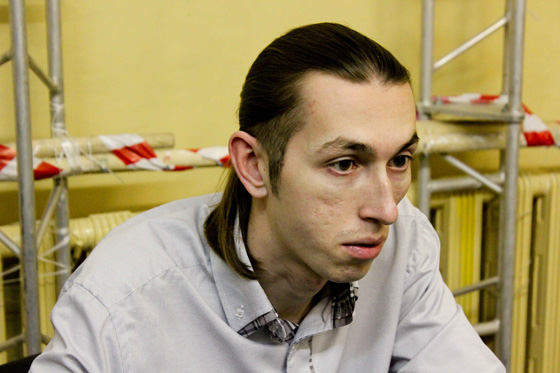 © Egor Putilov Ivan Yarmoshchuk
The light in the room goes out, and the show of the film “Life in one day” begins, mounted from the short clips of the life of people around the world laid out on the Yu T Ube : light, easy to perceive arthouse in the format of this place - on a par with iPad and red English telephone booth. “Well, I have to go,” Yarmoshchuk concludes an interview, “you need to go to a meeting with the governor of the Saratov region. He became interested in our experience and wants something the same at home. "
Kaliningrad: On Urbanics and Urbanists
Urbanics is becoming a new meaning of life for middle -class youth in Russia, and Kaliningrad was no exception. We are talking with Maxim Mikhailov - one of the activists of the group “Save the paving stones!”. The theme of the paving stones became a sign for Kaliningrad rich in it and united a creative class around the idea of its preservation. Gradually, the group began to have a more urban orientation. Maxim claims that he is not the leader of the group and she does not have a leader at all - "to avoid undemocraticity." However, this does not cancel the fact that negotiations with the authorities on behalf of the group and meeting with journalists are conducting it - apparently, this is the local version of sovereign democracy.
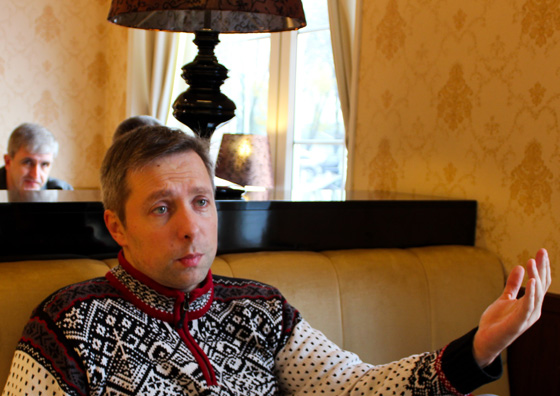 © Egor Putilov Maxim Mikhailov
The biography of Maxim is very similar to the life path of Evgeny Fateev from Yekaterinburg: a successful businessman at forty, who suddenly became someone else in the middle of his career-in this case, an urbanist. “We are not fighting with the administration, we cooperate with her,” he says. -Sometimes we begin the attack against some company-developer, and the city hall thanks to us receives a more profitable position in the negotiations. They can say, referring to us - now, look, the public rebels against your project - and get more favorable conditions. ” "Um ... that is, do you accept orders from the authorities to nightmare businesses?" - I almost breaks away from my tongue, but I renounce, recalling that the interview is not finished yet. I ask instead: “Is there a risk that your group can be used to falsify a public discussion - they say, look, this building must be demolished, social activists do not mind?” "No, what are you!" - Mikhailov says confidently. Exactly as in Yekaterinburg and in Cheboksary, the Maxim group saddled its sector of social activity, occupying a monopoly position in it. Now in Kaliningrad, Urbanists and defenders of antiquity in the eyes of the press and inhabitants - this is the group “We will save the paving stones!”. The politician is observed, a public discussion on issues of local importance has a place to be.
- Do you maintain contacts with urbanists in other cities?
- Yes, we invited other urbanists to the Baltic Artek.
- What is it?
- Well, this is such a rally ... like Seliger ...
The Baltic Artek is the annual rally of the Nashists and the “patriotic forces” of the Kaliningrad region, the holding of which is financed by the regional budget. The stay in the camp, free for participants, includes accommodation, food and cultural program - all at the expense of Kaliningrad taxpayers. The question of what the group of urbanists is in opposition to the authorities is doing in the opposition to the authorities remained open.
“Politics is boring. Who needs it? Street art is love, these are positive emotions. ”
Urbanic movements arose as out of magic in many cities of Russia-in a strange coincidence, an increase in interest in urbanism began immediately after mass demonstrations of December 2011. The strategy of small affairs was quite openly advanced by the movement of “ours” a couple of years ago. Its essence is to bring down the intensity of protest and involve young people in solving “issues of local significance”, captivating it with the intricacies of the political struggle of municipal deputies, the problems of installing shops and asphalting of driveways. In large cities, groups like Kaliningradskaya “We will save the paving stones!”, Monopolizing the theme of urbanism and led by Maxim Mikhailov. Creatured bloggers began to escalate Saspens, intimidating the public with the horrors of the urban environment in Russia and thereby creating a request for activities to improve it. The trap worked, and the most active youth reached out into pre -prepared networks, obediently calculating passenger flows, making appeals to the municipal authorities and feeling themselves involved in small affairs and great changes.
In the famous cartoon "Yellow Submarine", the occupiers-worlds ( Blue Meanies ) went among paralyzed people and threw stones on them as soon as someone began to recover. The public space in modern Russia looks very similar to - among the icy deserts broken into clear squares here and there, former successful businessmen under forty stick out. Hopes for a new non-fright generation of the 90s are, it seems, in vain: in any case, now it seems that he does not need free democratic elections, the fight against corruption or the rule of law. The main thing is that the tile on the sidewalk is laid correctly.