
Translated material
Short course: Modal jazz
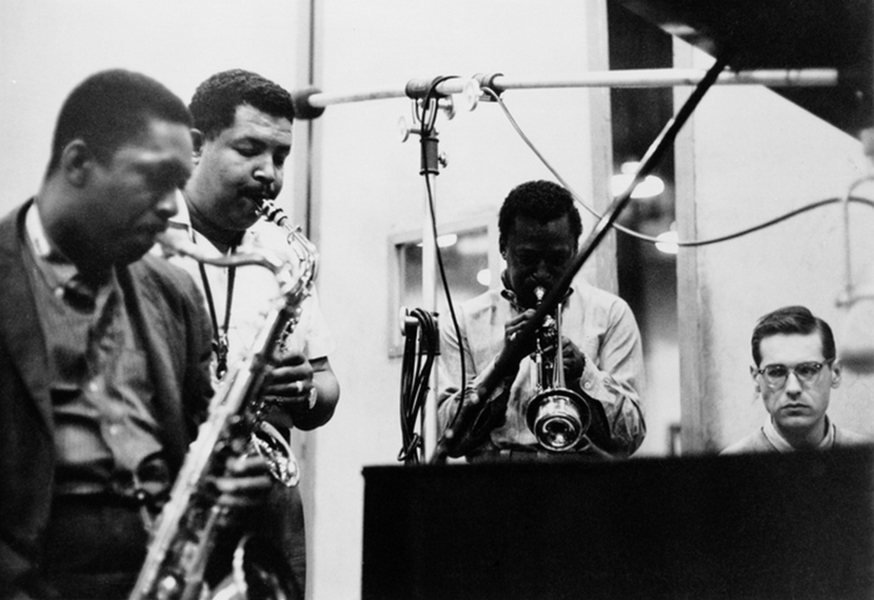
Colta.ru continues the encyclopedic series about the history of jazz: famous jazzmen intelligibly explain key concepts and phenomena from the history of the musical direction that changed the 20th century. We are talking about the period from 1940 to the 1970s-about jazz, which is commonly called "modern", or Modern Jazz.
1950-1960s. Modal jazz
A logical continuation of the experiments of the boers on the emancipation of jazz harmony for the freedom of improvisation was the rejection of the standard logic of the sequence of chords, which did not allow the solo improvisers to sound in a new way. This was done by enhancing the palm (horizontal) function in improvisation and weakening the role of a harmonic grid. The theoretical substantiation of this transition was the book “Lydian Chromatic Concept of the Tonal Organization” of the composer and pianist George Russell, published in 1953. After the period of the Hard-Bope of the 1950s, Miles Davis began to look for new means to emancip improvisation. For the first time , Russell's ideas were used by Davis in the Milestones composition in 1958. In 1959, several of the most significant albums in the history of jazz came out at once: “ Kind of Blue ” Milesa Davis, “ Time O UT ” quartet Dave Brubek, “ Giant Steps " John Coltrain, " Portraits in Jazz » Bill Evans, " Mingus AH UM " Charles Mingus, " The Shape of Jazz to C OME » Coleman Ornetta. Subsequently, " Kind of Blue ” has become the most successful album of that year. It is still considered the best -selling album in the history of jazz and one of the most influential albums in the history of music. In the record " Kind of Blue ” was attended by many stars of the then jazz - John Coltrain, Cenboll Educerly, Jimmy Cobb, Paul Charters, Bill Evans. In his subsequent albums of the 1960s, John Coltrain developed a hand approach even further towards free improvisation. Modal jazz is the line that separates modern jazz from the avant -garde.
George Russian- "Ezz-Thtics"
Roman Stolar
Pianist, composer
It is generally accepted that the book “The Lydian Chromatic Concept of the Tonal Organization” of the composer and arranger George Russell announced the beginning of a new era in the history of jazz - the transition from tonality to modality, i.e. To the palmity. Strictly speaking, this is not entirely true. Rather, in the work of Russell, for the first time published in 1953, we are talking about a new approach to building a melodic line of improvisation on top of the harmonic structure of the topic. This novelty consisted in the fact that instead of the Ionian Lada (so more correctly, the sound recruitment of the well -known Major) the author of the concept focused the reader's attention in Ladia Lada. At the same time, the naturalness of this approach was justified by the fact that the Lydian Lad is the only seven -speed natural way that can be obtained by constructing a series of acoustically pure quint from the main step in tonality. This makes it possible to beat the Tonic Septakkord in improvisation by the Lydian Lada - especially since the sounds of this septakkord are the components of the Lydian (like Ionian, however) Lada. Transforming the Lydian Lad in accordance with the harmonious structures that have already been established in jazz, Russell introduced several more frets into jazz everyday life, not used in a jazz game. Now the study of these frets is necessarily in authoritative educational institutions around the world.
Modal jazz is the line that separates modern jazz from the avant -garde.
From the height of today, when jazz music has expanded its boundaries almost to infinity, the limited theory of George Russell is visible: modern improvisers use in their solo the Ladov much more complex than the derivatives of the Lydian Lada. In addition, the very idea of a certain natural acoustic superiority of one fret over the others looks like a stretch; Once I witnessed the conversation of the two teachers of Berkeley, one of whom, with a smile, told another about his student, who tried to get all the frets from the very unstable diatonic fret-Ladkrian. The attempt of Russell looks somewhat naive to apply the Lydian concept to the analysis of classical works - for example, Bach's preludes. Nevertheless, one cannot but admit that the work of George Russell made a significant contribution to the formation of the theory of improvisation as a science (especially since it did not exist in the 50s as such, and now it was clearly not sufficiently formed) and the dawns and Miles Lewis, and even the Japanese composer-innovator, were not accidentally enthusiastic about the work of the Russell. Takemitsa.
Miles Davis - "Milestones"
Miles Davis & John Coltrane - "So What"
German Lukyanov
Trubach, flogelhornist, ensemble "Cadans"
“Kind of Blue” stands somewhat away from all the works of Miles Davis. This is a very big historical success - to collect such people at such a time that they create such a collective product. When they sent a capsule with the achievements of mankind to the moon, they put the album “Kind of Blue” there.
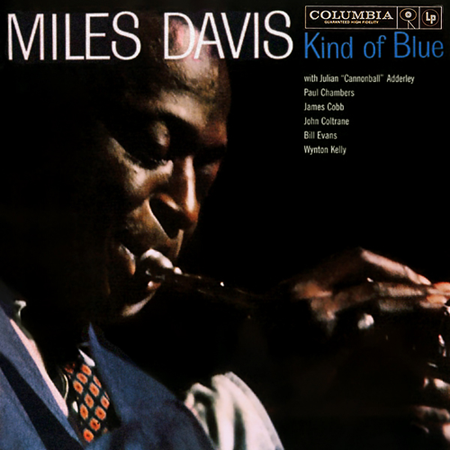
Modal jazz is a style that arose after many funds have already been exhausted. “So w ha” is a composition written in a revolutionary way. There are only two frets, chords wander in parallel to these palm sounds. Previously, it never occurred to anyone that it was possible to improvise according to such a scheme. In modal jazz, Lad dictates a harmonic construction. At the same time, the pianist’s game does not fully correspond to what the soloist does at this time: everyone is free within the framework of this fret.
Miles Davis - " Flamenco Sketches"
John Coltrane - "Love Supreme"
saxophonist
The idea of a modal jazz is that you have only one harmonic center. The harmonic content from which you start is much easier, but this gives you greater freedom for improvisation and using various tonalities on top of the main one. In other words, you deploy improvisation and move from one tonality to another - it was before, but the difference is that now you are more free to choose tonalities, not limited to the logic of the sequence of chords (as it was in Bibep or on Giant Steps " ).
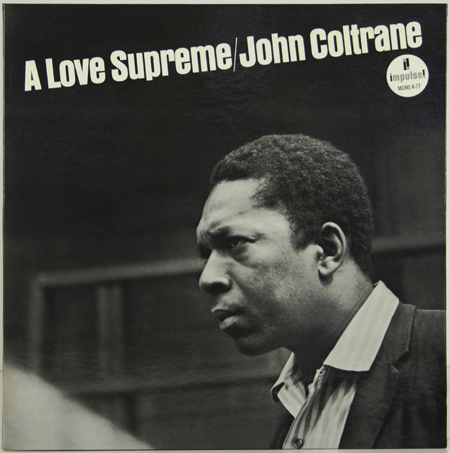
“ Love SUPREME ” - a brilliant album. It is incredible how much it is felt as a single work from beginning to end - to a greater extent than any other jazz album.
John Coltrane - "Impressions"
Andrey Razin
Pianist, Trio "Second approximation"
Bill Evans-of course, a “European” musician, romantic, brilliant lyricist, “white” thought-minded musician, his game is opposite to the game of Garner, Teitum, Peterson; His swing is in aggressive, his phrasing is unique. Traces of the influence of Evans can be found in pianists such as Kit Jarret, Brad Melldau. The role of Bill Evans in the creation of the disc “ Kind of Blue » Milesa Davis, who opened the era of Ladovy jazz.
It was in the Bill of Evans Trio that shock and double bass turned from “accompanists” into independent, full -fledged partners with their personal statements.
Having done so much in music, becoming the largest figure of piano jazz, Bill Evans, alas, passed away very early-at the 52nd year of life. One of Bill Evans’s favorite albums is “ Affinity ” with Tuts Tilemans, released in 1979. Infinitely soulful lyricism, the thoughtfulness of the intonation of the highest sample, harmonic “spices” - this can be discussed for a long time.
Bill Evans Trio & Toots Thielemans - "Body & Soul"
To be continued.