
Translated material
The road to happiness
The amendments proposed by the State Duma to the Town Planning Code may deprive the people of the right to decide where and when new pipelines, power lines and communication lines appear to their eyes
The amendments proposed by the State Duma to the Town Planning Code may deprive the people of the right to decide where and when new pipelines, power lines and communication lines appear to their eyes
Do you think your country site belongs to you? Do you think your garden is your inviolable property? It seems to you that the park that you see from the window will delight your look until old age?
If the amendments to the Town Planning Code made to the State Duma on December 31, 2013 will be adopted, then all of the above statements will become more than dubious. The lines of power lines will be drawn over your houses without even asking your opinion, and along the border of your site they will suddenly lay a paid road from Beijing to Paris. The bill implies a rejection of public hearings in the construction of the so -called linear facilities - railway and roads, pipelines, power lines, communication lines, etc.
Well, why, in fact, to discuss with the people, where they will lay the road for his good? Why make progress dependent on the town interests of unconscious citizens? Is it not better to leave the “competent authorities” to decide where to lay oil-out-wiring, and then put the population before the fact?
The Public Chamber of the Russian Federation appointed on February 4 a public discussion of amendments in Art. 46 of the Town Planning Code of the Russian Federation, which deprive the inhabitants of the right to vote. Some members of the chamber suggest that the amendments violate even the constitutional rights of citizens. This question is not at all private. The vector of development of the country for many years ahead largely depends on decisions on laying roads, power lines, pipelines today. These are blood veins of the modern economy, on the configuration of which it depends on to whom it serves: the people or a handful of the elect who sell resources abroad.
Here is a visual example: the border transition of Pokrovka - Loguhe in God forgotten Mogochinsky district of the Trans -Baikal Territory. On May 1, the New Gazeta last year already wrote about how the Chinese company Sin Ban (the Russian pseudonym - CPC “Polar”) falsified the results of public hearings on the creation of a cellulose plant in the village of Amazar. The hearings showed the failure of the project, but did not affect their blessings in all state authorities. The Chinese side, in order to maximize the profit, is also necessary to create a new transport corridor from the Russian Federation to the PRC, since only a hundred kilometers from the Amazar to the Chinese MOHE.
In the last century, Governor Geniatulin has already achieved the opening of a transition here for the “needs of the forest industry”. The transition point was seasonal, worked only in winter, and was intended for the export of wood obtained by Sosna LLC (the daughter of the infamous “Trans -Baikal Investment Company”). Then, hordes of lumberjacks poured into the new gap from China to Russia, and a round forest swam in the opposite direction by an avalanche. In 2002, an agreement was concluded as a “fig leaf” covering the robbery with the province of Haleunjiang on the creation of pulp production in the Amazar. While the transition was working regularly, this project remained on paper. The transition in Pokrovka was almost uncontrolled by forestry companies and was closed with a scandal by 2008, because Too obviously contributed to the plunder of forest resources without any benefit to the economy. And by 2012, the overall export of forest to China from Transbaikalia in all transitions has catastrophically reduced due to the exhaustion of an easily accessible forest -raised base. Residents and organizations of the Forest Territory hardly provide themselves with construction wood. At the Space, Transbaikal forests look like a patchwork blanket due to fires and felling. To the south of the Amur and Arguni, the same taiga in China was much less affected by fires, and the cutting there are now strictly prohibited, but four natural reserves stretched along the border with Russia.
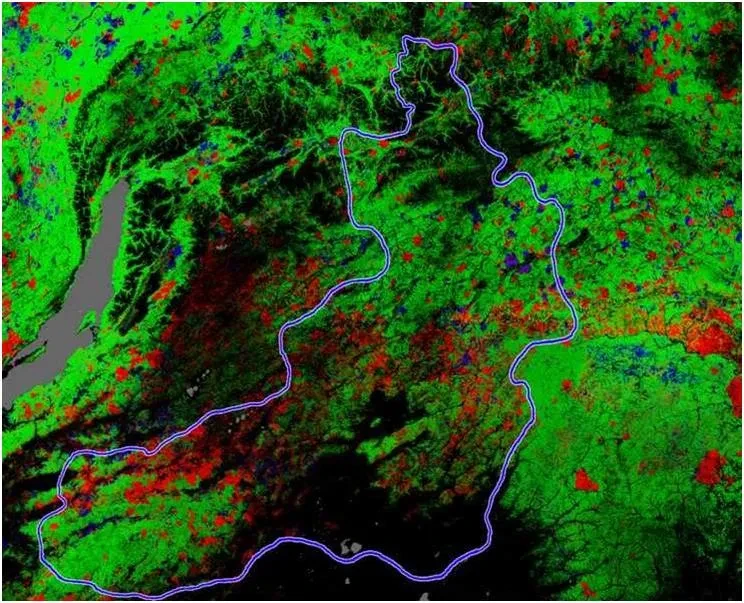
Photo: Olegkorsun. The blue line - the boundaries of the Trans -Baikal Territory, black - steppes, green - forest, red areas that have experienced delete over the past 10 years. In the lower right corner - China.
But remote areas, such as Krasnochika in the West and Mogochinsky in the East, where there were a forest room, which would live in the Transbaikalia. In these corners, the forest rental of Chinese and Russian companies associated with them over the past 5 years has only expanded and strengthened, and now it owns 40% of the nearby forest areas of the region right along the border in three regions in the east of the region. In the Mogochinsky district, there are more than 800 thousand hectares on such rent. The inhabitants of the Amazar who heating the houses with firewood cannot get divided for drinkering firewood-there are simply no free areas around the village.
All this time, the Chinese side and their Russian partners are actively advancing the project “Development of the customs crossing” - the lines of the real road - branches from the Amur federal highway, with the bridge over the Amur River and even with the railway line to China. The justification of this scheme explicitly says that the road will pay off only if, in addition to cellulose, another 1 million cubic meters of timber and wood will be exported annually. At the hearing on the cellulose plant, local residents expressed many fears related to the consequences of the creation of the plant and the new tract to China. The main of them is the complete loss of competitiveness for any Russian business independent of the Chinese side in border areas. People are also worried that the construction of the bridge across the Amur and the Pokrovka road - Amazar, the creation of a large Chinese enclave in the village of Amazar and the placement of thousands of Chinese lumberjacks in the taiga in several regions of the region will lead to a sharp deterioration in their living conditions. The old -timers of the Amazar will simply become guests on their land.
In the summer of 2013, the local Mogochinsky people were inspired by the hearing that on the requirement of the Polyarlar CPC to promote the opening of the transition of the acting governor Transbaikalia publicly invited Chinese representatives to at least provide income for Russian railways, and not to bridge a new road. But joy did not last long. In January, a letter of the already full governor of the Trans-Baikal Territory Konstantin Ilkovsky in the name of the head of the Federal Customs Service of the Russian Federation Andrei Belleninov leaked to the Chita press: “In order to avoid work on the implementation of the Amazar Central Bank, the Government of the Trans-Baikal Territory appealed to the Government of the Russian Federation with a petition for the temporary opening of the Pokrovka-LoguE checkpoint in the 2014 season in 2014 years. In 2014, LLC “CPC Polar” plans to import up to 25 thousand tons of cargo from China to Russia, including materials for the construction of a pulp plant and large -sized equipment intended for the production of cellulose. Part of the cargo (about 2 thousand tons) is represented by oversized equipment, the transportation of which is possible only with special cars, which, because of their dimensions, cannot cross the border in any of the current automobile checkpoints of the Trans -Baikal Territory, ” the document says. According to the Trans -Baikal Minister of International Cooperation, Baira Galsanov, to speed up the case Konstantin Ilkovsky, also sent such letters with a request to support the petition of the Trans -Baikal Territory to the Rosgravka, the Border Service of the FSB of Russia, Rosselkhoznadzor, Rospotrebnadzor, the Ministry of Regional Development of Russia and the Ministry of Industry and Trade of Russia ...
The reasons for the urgent opening of the transition in the letter are the strangest ones. On the border with Transbaikalia is the largest road and railway transition of Manchuria-Zabaikalsk in China, through which millions of tons of various cargoes were delivered annually. In addition, between our two countries there are another 20 border crossings for every taste, including the ability to deliver cargo along the Amur River. In order to doubt that it is the transition of Loguhae - Pokrovka, and even divided by the river, which is absolutely necessary for the delivery of oversized high -tech cargoes, it is enough to look at the hibar of the customs post, lonely standing on the shore of the Amur or once along this road. Local Amazar drivers, before going to Pokrovka, always ask friends in a border detachment or nearest hunting bickens, whether the road is going through today ... But, in Russia, where there is nothing more permanent than temporary, there are probably other good reasons for the “temporary” opening of the transition.
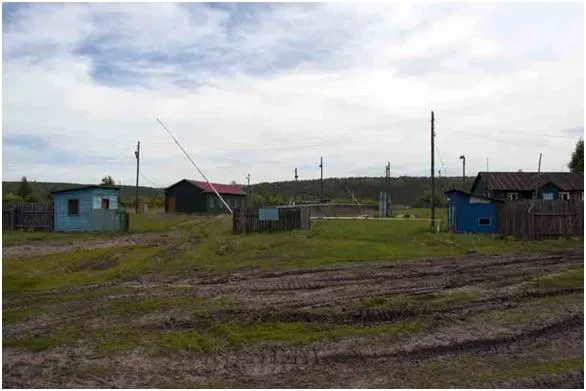
Photo: Olegkorsun. The border transition of Pokrovka - Loguhe - is the best place to transport oversized technological equipment?
The new owners of border forests (both Russian and Chinese) sleep and see when this straight road will open in order to start exporting unprocessed wood to China. For several years, almost none of the tenants invested a penny in the development of its processing in Russian territory. One low -power show -off robotic line for wood processing was built on the Polyarlar CDC, but it is not really operated. At least 10,000 cubic meters of wood previously prepared in the territory of the CPC are rotted. The cellulose plant itself is unknown when it enters operation, and it’s not at all the fact that its construction is not only a cover for the start of a forest robbery. This is the case in Primorye, who had previously entered this slippery path. Primorsky and Amazar projects are related to belonging to the “priority projects of cooperation in the field of forestry”, which from the Government of the Russian Federation are laid by many benefits and exhortations. Here is a quote from the report on an audit conducted by Rosleskhoz: “According to the investment project of OJSC Primorsklesprom, plants for the production of lumber in the village of Svetlai and the Olga Plant and the production plant for glued timber in the village. Chuguevka is built, at the same time, the products are not made on them, the obligations to create jobs are not fulfilled, while most (85%) of the wood prepared in 2011 was directed at export in an unprocessed form ... ”.
It was much more difficult to destroy the forests while the customs transition was closed. As soon as it opens, it immediately risks turning into a Pandora's box. Transbaikalia will lose the last sections of a real taiga, and the local population will lose traditional nature management, as well as confidence in the future. While the road is not built and the gap is not pierced, the cellulose plant during the export of products by rail can still be profitable, and there is no export of wood by the district by Russian roads. Thus, reviving customs on Pokrovka, the Government of the Russian Federation will open a channel for the export of wood from the region with terrible deletion to the most forest province of China.
The amendments proposed to the Town Planning Code make the entire population of the country with dumb hostages of the linear infrastructure projects similar to the Amazar.
A number of experts have already expressed concerns that in the absence of hearings and real accounting of the opinions of residents, the number of direct clashes between local and construction companies like that was in the Khimkinsky and Tsagov forests will increase sharply.
The Amazar experience fully confirms these fears. The village administration, actively supporting all the Chinese undertakings, in the summer of 2013, quiet Sapa issued another illegal permission to extract gravel and sand to patch the "Chinese" road Amazar-Pokrovka. But this time, a place under the quarry was determined on the slope of a beautiful hill towering above the village. The ordinary residents did not endure this time, they went across Chinese tractors and stood a live shield for several hours, until the employees of the Polar CPC did not get out. Now, if the amendments will apparently have to replicate such an experience in the scale of the entire Russian state.
Amazar - Pokrovka - Beijing