
Translated material
The aftertaste of eternity: Claudio Abbado died
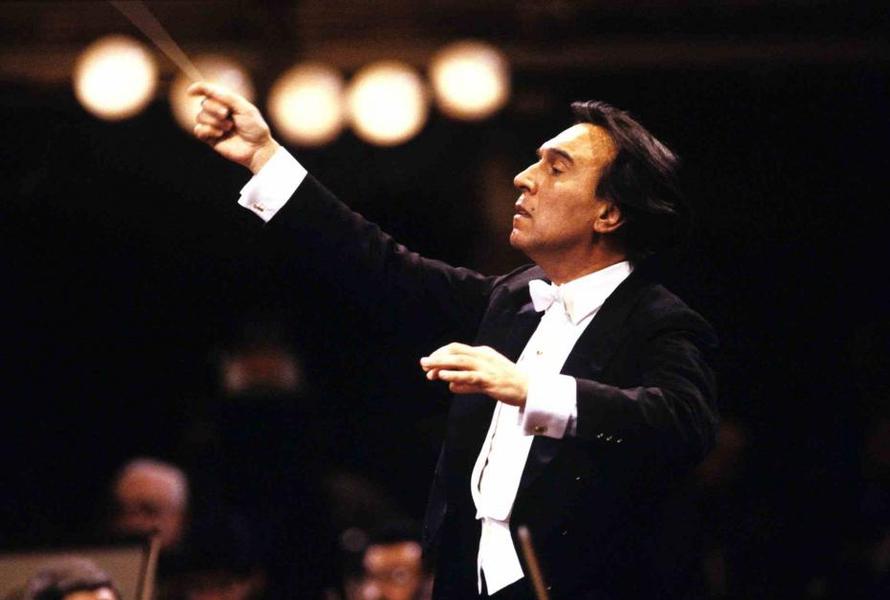
All large obituary are written, the maestro colleagues have already responded with mournful and bright words , and Wikipedia closed the bracket (1933-2014) in an article on Claudio Abbado.
Abbado, like Karayan, Gorovitsa, Menukhin and Richter, lingered for a long time at the threshold of eternity, continuing to lead a completely intense dialogue with the listener, but as if not from here. He became transparent. This is a special property that cancel all claims to how new and dynamic his late reading of Mahler or Beethoven are, whether they are consistent with authentic trends, and there are a concept there. This dialogue is hardly converted into an audio format, therefore, therefore, all mourning ones are posting videos that at least somehow create the effect of presence. Most often it is adhaiitto from the fifth maler marked Sehr Langsam . Very slow.
But at first they did not believe him. The diagnosis of many critics and colleagues in the late 90s was not at all the enlightenment of Abbado, but indifference and apathy. They preferred to hint or talk about this on the sidelines, since the maestro did not make secrets from the oncological disease with which he lived for more than ten years. Somehow, not to the court at the turn of the century, the nobility of the economical conducting gesture, and the unwillingness to enter into any of the intense musical discussions of that time, were also nobility.
In his posthumous halo, Abbado is seen by one of the last knights without fear and reproach, whose achievements are undeniable, and a career, which is entirely from the most status positions, is cloudless. Meanwhile, there was almost always a battle around him, and sometimes persecution. I remember very well the embarrassed faces of the Berlin Philharmonic, who, at a press conference in Moscow, admitted that the maestro was just “eaten” because of the disagreement about whether the great orchestra should take part in the cross -over project with the The Scorpions group.
Once in the student years, Abbado, along with Zubin Meta, sat in the Basy group Vienna Singverein , only to watch Karayan’s conducting technique. And this strange rhyme accompanied Claudio Abbado at least three times. At first he became the main conductor La Scala immediately after Karayan in 1968, then in a short two years he was “ate” by the Vienna opera, just as she had a quarrel with Karayan. And finally, after the death of his great predecessor, he decided to lead the orchestra of the Berlin Philharmonic.
The Abbado era in La Scala is completely unfinished masterpieces and equally bright and private scandals. Despite the fact that his contract was extended twice in 1972 and 1978, he resigned several times due to pressure from the authorities and Klaki. His “Balu Masquerade” whistled deafeningly, critics fell on Don Carlos for the choice of singers and directing Luke Ronconi, his attempts to play modern composers, such as Luigi Nono or Luigi Manzoni, greeted the resistance of opera loggionicity.
And at the same time, his Verdievsky Macbeth and Simon Bokkanigra in the production of Strelra, Don Carlos in directing Ronconi and Rossini Cinderella - the golden era of La Scala , and so far many of these scores have not played better, but has not proposed a new approach either.
On these videos there is a completely different abbudo, no less noble, but at the same time passionate, mad, with some always alarmed, looking for a look and half-open mouth. Is it really not his death to make Italians start and publish all this in decent quality, and not from Japanese video tapes?
During his short rule in the Vienna StaatSoper, Maestro also managed to do a lot, offering the Austrians of an elegant Mozart, inspired berg and very non -trivial Wagner and Mussorgsky. “Wotzek”, “LoEngrin” with Placido Domingo and “Khovanshchina” is on official videos, but Don Juan on Wiener Festwochen in the production of Luke Bondi, and did not bother to officially publish, although, in my opinion, this is one of the strongest and most modern productions of Mozart's opera.
It is curious that even the Internet itself, when entering the Abbado search line, immediately offers to see the obituary of two more maestro, Carlos Kleiber and Carlo Maria Jullini, two great recluse, who are related to the rare nobility of interpretations and passionate love for the opera. The difference is probably only that, in contrast to Jullini and Kleiber, Abbado did not give up under the onslaught of intrigue and aggressive musical marketing, did not become a hermit, but, despite all his departments from the great theaters and Philharmonic, continued to create new orchestras, festivals, generals, inside of which the atmosphere could have developed and developed, which is now so so. The lucky ones who heard him with the Lucerne festival orchestra, with the Malera Youth or at the Berlin meetings, admire. Skipping in an interview, without entering into polemics about holy and not holy art, Maeststrot Abbado, it seems, managed to leave not only definitions and the aftertaste of conversation with eternity in memory of himself, but also a kind of musical “places of power”, equidistant from the painful reflection of old orchestras on traditions and from the rebellious exaltations of new ones musical guru. And, it seems, it is there that what has already begun to form, which will someday be called the daily musical culture of the 21st century.
Et lux perpetua luteat eis ...