
Translated material
Senegal authorities liberated the trawler "Oleg Naydenov"
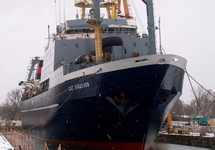
Senegal authorities released the detained Russian trawler Oleg Naydenov. This was reported by RIA Novosti with reference to the executive director of the shipowner, the Murmansk company "Phoenix" Yuri Parsheva. According to him, the ship is preparing to exit the Dakar port.
The trawler received permission to exit the port for fishing. “We are waiting for the pilot and the tug,” Parshev said. He did not report whether the shipowner was going to file court claims for compensation for damage caused by the downtime of the trawler.
On Tuesday, Parshev reported thatthe ship was continuing , although by oral agreement of the Russian and Senegal sides, the trawler was supposed to go to sea on Monday. He emphasized that the accusations by Senegal were never brought. According to the shipowner, every day of downtime in the Senegal Port brings a loss of one million rubles.
On January 17, the Phoenix company contributed for the release of the vessel a bail of one million dollars . Alexander Savelyev, head of the Center for Public Relations of Rosrybolovstvo, said then that the ship was obliged to free, and the question of the guilt of the team in illegal fishing should be decided in court.
Between Oleg Naydenov, Vadim Mantorov said in his letter to Rosrybolovstvo that the ship was damaged in the port of Dakar. According to Mantorov, the Senegal fishing ship, making a maneuver during towing, fell on the feed of the Russian trawler. After that, a dent of 60 × 47 centimeters with an arrow of deflection of 50 millimeters appeared on the Oleg Naydenov housing.
Earlier on the same day it was reported that the Senegal parliament decided to free the Russian trawler, but the Minister of Ecology Haidar Al-Ali Mahlit with the execution of this decision.
The fishing vessel"Oleg Naydenov" has been in custody since January 4 . The Senegal military detained him, accusing him of illegal fishing. During the detention, according to the Russian side, the military applied force. Representatives of Russia rejected the accusations of the Senegal and called the detention of the vessel the economic war .