
Translated material
"Memory is a fiction"
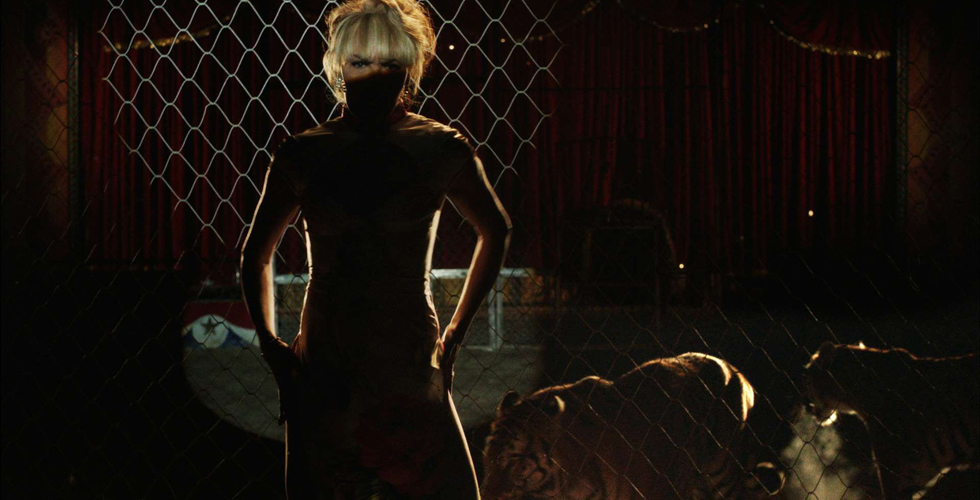
The film of the Portuguese directors of Zhoao Rui Herra and Matyo and Joao Pedru Rodrighesh “The last time I saw the Macau” became the chamber festival hit of the last year-a quiet, lyrical traveler, going beyond the narrow framework of Quir-Kino, to which the work of this duet usually gravitates. This is a portrait of the city (the faces of a protagonist-storyteller, like people of other characters, we do not see), which is a thing of the past along with his colonial history. The plot here seems to be a collage, a post -fact of a video found from the fragments of the found video that accidentally fell into the lens of the digital camera of street scenes and strange artifacts (for example, a mysterious bird cage, which serves as macguffin here). The sources of these personnel - and their inspiration - the directors are told by Natalya Serebryakova.
- Not all viewers are delighted with the film "The Last Time I saw Macau."
Joao Rui Herra da mat: This is probably because it is difficult to give this film a definition. Is he artistic? Documentary? Both? Why is the face of the main character not visible? What is inside the bird cage? The absence of answers confuses the viewer. But the movie is a space for experiments, do not you think?
- Maybe all this fluidity because the film was born from your memories? After all, the story in the film is from your face.
Yes, Mata: You are right, this film arose from memories. I was born in Mozambique, but moved to China, Macau, where I spent my childhood. It was there that I learned to speak Canton and English, it was there that I saw my first films - Hong Kong, Japanese and from communist China. I had the opportunity to travel throughout Asia, and these trips strongly influenced me. I have not been to Macau for thirty years, and when Joao and I Pedru Rodrigash completed our film “To die as a man”, they simply did not know what to do next.
Joao Pedru Rodrighesh: Then we decided to go to Macau to make a film.
- After all, you were going to make a documentary and even received money for it as a documentary.
Yes, Mata: Well, we had the idea of shooting a documentary about memories - my childhood and memoirs of Rodrigiga about a place where he had never been, but saw in many American and Asian films. The place that he knew about from literature or my stories - and I gave him a lot for those twenty years that we are together. Although the memories are always true, they are subject to aberrations, distortion and need pronouncing. Memories are a fiction. We went to Macau, given all this.
Rodrighesh: Yes, the film was shot with the money allocated for a documentary project - that is, there was less money than they would be given to the artistic one. But we really believe that this is a documentary movie about an imaginary place that exists in our minds.
Yes, Mata: Or in the space of cinema ... Although this is a real city!
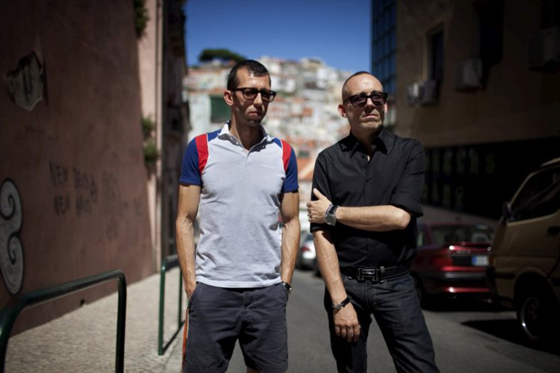 © Pedro Cunha Joao Pedru Rodrighesh and Joao Rui Herra da mat
-Is there any connection between your film and tape von Sternberg “Macau”?
Rodrighesh: “Macau” was shot in 1951 at RKO in the USA. According to the plot, the action takes place in Macau, but in fact, only a few frames were shot in a real city. Basically, everything was shot at the film studio, in the scenery that partially recreated Macau. We had the idea to do something at the same time similar and the opposite: we tried to recreate Macau from real landscapes, but atypical for Macau, and even the types of other cities of China and Portugal.
Yes, Mata: And all these different frames of heterogeneous places created their meaning through installation, sound and narrative.
- Candy - a fictional character?
Yes, Mata: Candy is as fictional as a fictional in our film is Macau. She is the embodiment of the image of Jane Russell from the film Sternberg, an Ommage of a forgotten Hollywood diva, who died just during the filming of our film.
Rodrigiges: And this is also the Quir-star Sinda Krasn, with whom I worked in “die like a man” and whom we admire.
Yes Mata: And Kandy Darling, superstar Andy Warhol. We also had it in mind.
- Why don't you show the faces of the protagonist?
Rodrigiges: We believe that all the characters of the film are similar to ghosts pursuing Macau. As we have already said, memory is a fiction. Therefore, even real objects, such as real family photos of Herra and mats, are fiction.
Yes, Mata: Even if they are not a fake.
Rodrighesh: But this is not important.
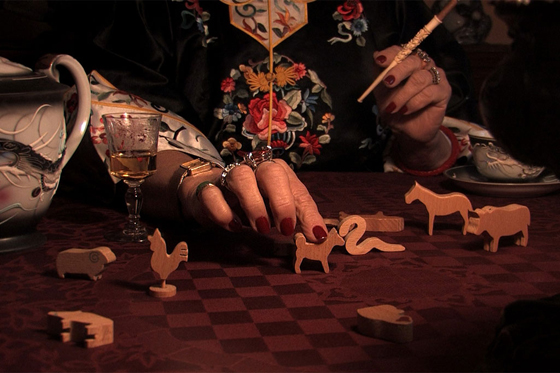 © Blackmaria
- Old photos very often appear in your films ...
Yes, Mata: As someone said once, photography is information about the past that we are currently receiving. In the same way, memories are a reflection of our past experience on our current personality. Photos can serve as an archive of memory, and if you look at them, you can activate memories. These are photographs of long ghosts.
- So what is Macau for you?
Yes, Mata: Macau is a completely unique place. Chinese territory, which was under the control of the Portuguese administration from the middle of the 16th century to the end of 1999. One of the last European colonies in Asia. The alloy of aesthetic, cultural, architectural, technological and religious traditions of China and Portugal. In Macau, gambling has been legal games since 1850, game tourism is the largest source of city income. Casino visitors are mainly new rich Chinese from the mainland and from Hong Kong. By 2006, Macau Macau was ahead of Las Vegas, and today the Casino Macau has more than five times more than five times. Casino owners strive to make their establishments unique, and this uniqueness manifests itself in tasteless and very strange architecture
Rodrighesh: Macau is just a fairy tale with an incredible cinematic potential.
- Architecture in your film is also a hero?
Yes, Mata: As we have already said, Macau is a place of meeting of the East and West, a symbol of peaceful cultural pluralism in the modern era. Macau architecture is the oldest, most complete and rich European architectural heritage in China, and untouched.
Rodrighesh: Architecture can very much affect human behavior. We always pay attention to architecture in our films.
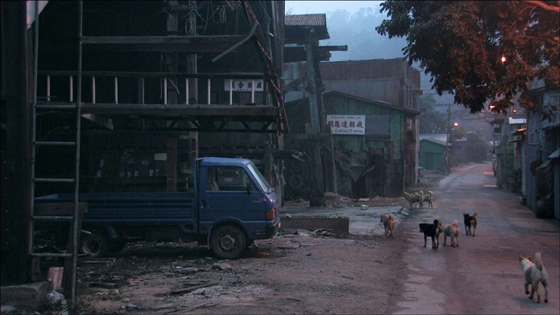 © Blackmaria
- Then tell us about the house in which you lived in Macau in childhood. Does he appear in the frame?
Yes, Mata: Yes, my old house (Moorish barracks) appears in our film. His presence, as it were, retains the documentary of the initial project. In one of the first frames of Macau von Sternberg, we also see this building - the Sternberg film opens with documentary introduction to city landscapes.
Rodrigiges: Noting the old house of Herra and Mata in Sternberg’s film is not easy, he was shot from afar, and he was not involved in the plot in any way. We ourselves noticed it only after multiple viewing.
Yes, Mata: Meanwhile, my old house is now an important monument in Macau. It is included in the UNESCO World Heritage List. These are neoclassical Mauritan barracks, built in 1874. The Italian architect Kassuto was instructed to design a building in the Mauritan style to place an Indian regiment that arrived in Macau from Goa in order to strengthen the local police. Benced on a granite platform, at first it was called Quartel Dos Mouros . Now in it is the Macau Maritime Administration. This is where I spent my childhood. These were the happiest days of my life.
- You did not accidentally remember the films of Chris Marker when you made your cinema?
Rodrigiges: When you play so much with memory, time and space, it is difficult not to think about Chris Marker.
- And you do not think "the last time I saw Macau" by noir?
Rodrigiga: We believe that this is a film that eats from Noir films, but also from many other genres or stylistic forms, such as musicals, films about war, science fiction, experimental cinema, injury ... However, we more want to think that it feeds on our imagination.
- Almost all your last films are one way or another about Asia ...
Rodrigiges: Asia ... Japan, China, Macau pursue us. As if someone had a spell.
Yes Mata: In fact, not all our last films about Asia. In 2012, I took off the short film “How the Flame rose”, this is my directorial debut, and Joao Pedru is “Morning of St. Anthony Day”. And these films are not about Asia. And the "king of the king" too!
Rodrighesh: But we are returning this year to Macau to shoot the Hotel Central, our joint directorial work. And I am preparing my next solo project "Ornithologist", which will be removed in the north of Portugal.