
Translated material
"What are you, bastard, climbed to us?"
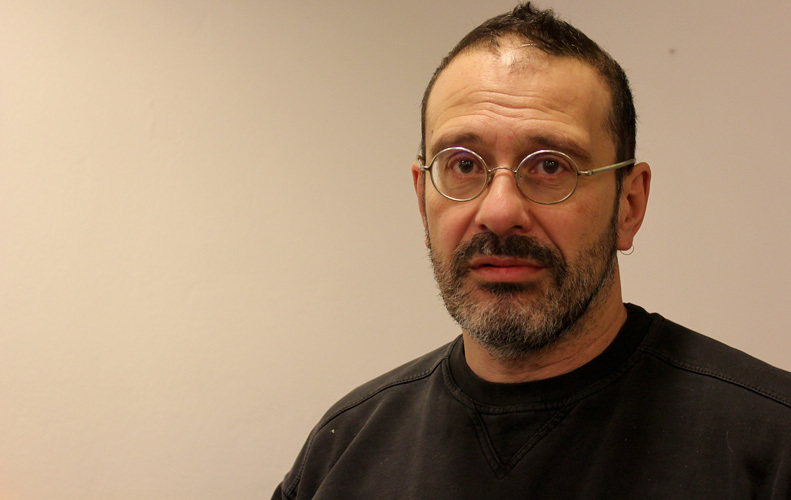
Egor Putilov met in Stockholm with the Swedish activist Greenpeace, who spent 3 months in the Russian prison in the Arctic Sunrise, the son of Soviet dissident Dmitry Litvinov.
- To get into prison with its criminal hierarchies, “omitted”, violence and other infernal horror of the lower Russia is one of the worst things for the Russian intelligentsia. You are essentially a foreigner who, most of the conscious life, lived outside the Russian Federation. How did you go into this Russian prison life?
-When we arrived in the Murmansk pre-trial detention center, we were taken out of the autozak and I saw all this at once-the old building, the gray sky, the bars everywhere and the man in the dazzling blue camouflage, which calmly says in a friendly one: “Now this is your home,” the first feeling was: finally I will see it all myself! Since childhood, I heard about the Russian prison, spent the early years in exile, the whole environment-dissidents ( Dmitry’s great-grandfather fought with the royal regime, was the People’s Commissar of Foreign Affairs in the 30s, my grandfather was sitting under Stalin, his father was in exile for participating in the actions of dissidents against the introduction of Soviet troops into Czechoslovakia in 1968.-Ed. ). But this euphoria quickly passed when I realized that I was here for a long time. There were generally constantly emotional slides-up and down.
I was most afraid of two things - that the cameras would be crowded and that there will be this parach in the center of the camera. But I was brought into a 4-seater camera where two guys were sitting. There was a normal closed toilet. Like everyone, I probably also read these books, which should be done in the camera: I went in, threw things on the shk and introduce myself - I am Dmitry Pavlovich Litvinov, Article 227 Part 3. They look at me in fright - we know Article 228, we know 229, and what is 227? I say - piracy. Sasha - He sat for the heavy bodily - he rushed to the window and shouts: "We have a greenhouse!" Then they called me-Dimon Pirate.
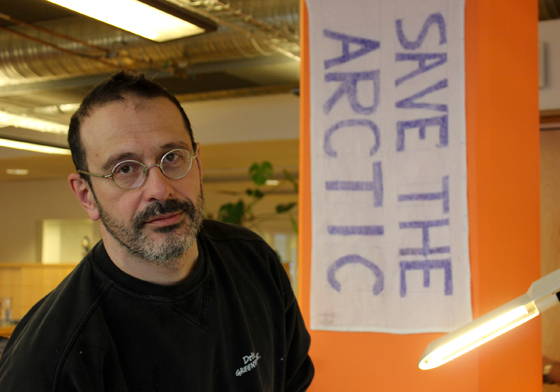 © Egor Putilov
“But there were probably common cameras?”
- Yes, sure. There were both general and overpopulated. We were not planted in common. We still had a certain privileged attitude from the authorities. Already in St. Petersburg, before the very release, we were brought to freshly painted cells, where there were specially selected non -smokers and English -speaking prisoners. Well, in Murmansk it was just an ordinary pre -trial detention center with slightly better conditions.
- What kind of people were sitting with you in Murmansk?
- From the most different layers of society. In prison, it is important not who you were and what you did at large, but how you behave in prison. It generally seems to me that the society in prison is more humane and is more logical than society at freedom. In jail, everything is built on solidarity. The basis of life there is a “road”, a system of ropes for transmitting messages - “Malyav”. The ropes are thrown through the windows along the outer wall from the camera to the camera, so each camera is necessary in this. And it is very important to have an independent source of information. Messages received through the “road” are divided into personal “little ones” and “course” (from the phrase “keep up with”), addressed to the entire population of the prison. So, the first “exchange rate” that we received from the watches was addressed to Greenpeisovites and began with the words “Welcome”. Well, there were hostel rules, for example, that the violence of prisoners in relation to each other is unacceptable, rude treatment is unacceptable, etc. In general, the correct tone was very important. The coursework themselves were composed of seemingly thieves' language, but at the same time very ornate and with polite forms, for example, one began as follows: “I hope that this little one will find you in good health. An hour is a decent joy. ” I really did not learn to use this language ...
I was most afraid of two things - that the cameras would be crowded and that there will be this parach in the center of the camera.
-There were some conflicts with other prisoners?
- I remember such a case. Every day there is a right to an hourly walk in a prison courtyard, and the courtyard is divided into several small squares, so when we went out, I immediately shouted: “Sunrise!” - And we began to shout through the walls with our colleagues. At the same time, other prisoners tried to scream in Russian. We scream in English, they are in Russian. Nothing can be heard, and one of them begins to swear irritably. I ask him: "Who is this?" - And he answered me: "Who are you?" This is generally a violation of etiquette - I was the first to ask, so he must answer.
- How did you know that?
-Yes, there it is quickly that you somehow understand how it works. Well, I answer him: Dimon-Pirate, 423 (this is the camera number). And he begins to call me obscenities, to call a hole and so on - well, already completely impermissible things. And then it is heard from another courtyard: “Do you talk to the prisoner? Dimon, write to him in the camera with such and such in the evening. ” This look intervened. I say, they say, oh well, it's okay, we will solve everything ourselves. “No,” they say, “write, we have it so.” This prisoner then, on transportation through my cellmate, Sashka almost asked for forgiveness on his knees.
Aue in prison is a cry that the guard really does not like (decryption is a prison criminal unity. - Ed. ). It can be both a call to the rebellion, or simply the designation of this prison community. And then, in this courtyard, I first felt like a truly part of this community.
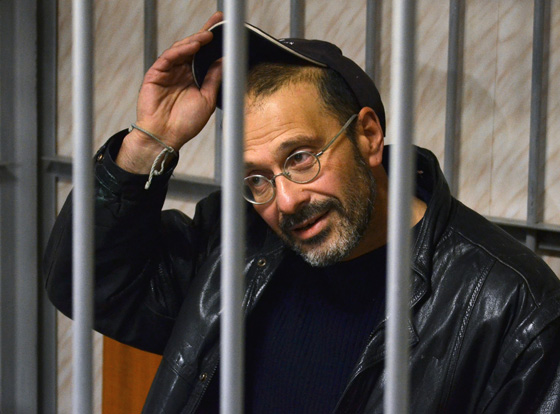 © Maxim Zharavin / Kommersant Dmitry Litvinov during a meeting of the Lenin Court of Murmansk
- Does this prison hierarchy still exist?
- Well, yes, there are boiler huts where the look sitting. They are privileged, because we had a “black” prison. There are huts for informers (“wool”), separate huts for “roosters”, separate - for former law enforcement officials. Well, the bulk is just “people”, most first -day. Those who look essentially decide who to sit in in which cells.
- But what about the administration?
- Well, what about the administration? They do not need murder in the cell, so they translate where necessary.
- As far as I understand, it was such an outcome of the action that has become a shock for you. When she had already come to an end, you were probably mentally in Stockholm with your family, they made plans - and suddenly ended up in the Murmansk pre -trial detention center with obscure prospects ...
- Yes, sure. In fact, when the ship came to Murmansk, we were told the border guards to the question of what things to take ashore with them, that it was not for long, three or four hours maximum. We had one activist who has a thyroid, she needs to constantly drink medicines. She was advised just in case to take a maximum for a day of tablets. And somehow we were all convinced that they would interview us, hold a couple of hours and let us go. But then I figured it out - this is Friday, that is, it is quite possible that we will stay there until Monday, and decided to collect things to the maximum. I also thought that I would look stupid - we’re going for a couple of hours, and I am with a soured. Then it turned out that I acted very correctly. Well, we arrived, and we began to drive us around the offices, and these adults in costumes began to tell us: we will hold you a couple of days in a pre -trial detention center, and then we will extend the term for two months to judge for piracy - and this is from 10 to 15 years in prison. That's when I realized that these people were not joking, I started to tie a fist in my stomach. He never untied until we were released. I was still normal relative to me, but for my colleagues, most of whom were very young, were not in Russia and were not going there, it was, of course, in a shock.
“I hope that this little one will find you in good health. An hour is a decent joy. ”
Lawyers told us not to sign anything and not testify, and I tried to find out from the investigator what exactly was charged with us. And he, Alexander Alexandrovich was his name, shouts to me: "You will testify ??" I say that I must first understand what exactly they blame me for. He screams in response: "Come on the testimony or be silent!"
- How did the interrogations go?
- There were very few interrogations. The most painful part was moving to them: everyone was put in these auto -zats, in narrow iron glasses, where it was not to move. And they could ride like that for three hours. In our experience, it was the closest to the concept of “torture”. And when they arrived, everything was polite. Formalities took place for a long time, read the rights, and then it was time to go back. That is, there was no feeling that they were actually interested in finding something. Once I tell this to Alexander Alexandrovich: let's go without a protocol, here I am understandable, but we have a girl from Argentina, Camilla. She generally left for the first time in her life, to work as a sailor. Well, which of it is a pirate? Do you believe it yourself? He asks: "I, in your opinion, are an adequate person?" I answer: yes, quite. "Well, here's the answer." "Well, why are you participating in this?" - I continue. "We are just pawns ..."
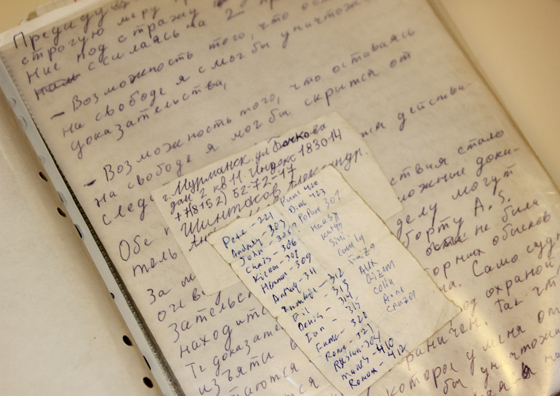 © Egor Putilov folder with petitions, distribution of Greenpeace activists by cameras in the Murmansk pre -trial detention center
- And what questions were remembered?
- Well, for example, they asked: “Tell us how you planned the armed capture of the platform by an organized group by prior conspiracy at night.” But we refused to testify on the basis of Article 51 of the Constitution of the Russian Federation.
-Was there some pressure?
-Yes, especially for me for some reason. Once I was taken out of the camera and brought to another. There was a table, chairs and a portrait of Putin on the wall. Well, two Ephesians. I don't know who they really are. They introduced themselves: "We are competent authorities." I to them: "What is your competence?" And they: "What do you do not understand, or what?" Then they began to offer to speak without a protocol, saying why I do not give testimony. What should I answer a few questions, and my conditions in prison will improve a lot. “I am quite happy with the conditions,” I answered them. It was a mistake. The next day, in the cell - Shmon, in my pockets found draft letters to the family in English and took it - we will translate, we will return. Well, of course, no one returned anything. I began to complain, and I was sent to a punishment cell for three days - for trying to send messages bypassing the established order.
"How is the story unfair to the Gestapo!"
And the punishment cell is a very unpleasant thing. It's like if you are locked in the toilet, and you are sitting there. There is a toilet and a bed, which in the afternoon is riveted to the castle to the wall. And you go there from the wall to the wall, you count up to 300, put a dash. 12 dashes - an hour. On the second day, I am called to the head of the pre -trial detention center Popov. This is a completely crazy type, by the way. His first words: "Well, what, Dimon, did you read the" Faust "Goethe?" And then he carries him for an hour - and he throws from how he respects my relatives, to "what you, Padla, climbed to us?" The most remembered his expression: "How is the story of unfair to the Gestapo!" When this says the head of the pre -trial detention center, which has almost unlimited power over you, these words sound especially significant. And now an hour later they lead me back to the punishment cell. I just managed to exhale and relax, as they call me again. And another hour. In the end, he asks: "Well, to translate you from the cache?" “Well, let's,” I say. “On, sign that you have no complaints and admit guilt. And we will put the number yesterday. ” I was really afraid of this person, so I signed everything without question. He often called me to such conversations-somehow I liked him. Well, or vice versa.
- And it was possible to refuse from this and ask to take it back to the camera?
- Well, it was possible to try, of course, but what will happen later ... And then after the Kardzer I am going to meet with a lawyer, and in the corridor those two Ephesians, as it were, accidentally go: “And who is this with us? Litvinov? Well, let's go with us. ” And instead of a lawyer, I get to them. Another camera is already, but Putin is still hanging on the wall. Everything was already tough here: “Well, what, bitch, will you complain? You will sit in the cabster for 10 years! " I then wrote a complaint to the Investigative Committee with a request to protect me from visits by incomprehensible people. SK replied that he did not know who they are.
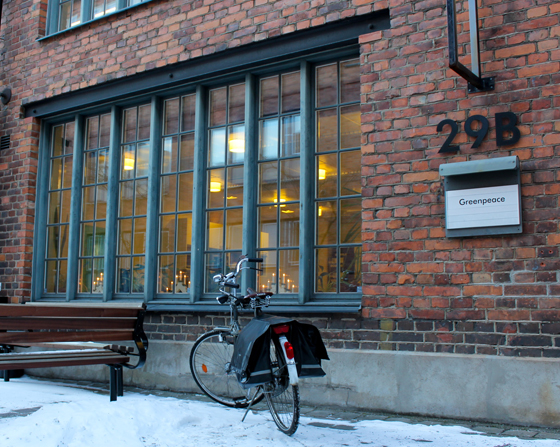 © Egor Putilov Greenpeace in Stockholm
- You are a citizen of Sweden and the USA. How do you evaluate the work of consulates to pull you out of prison?
- They helped a lot, yes. But pulling out is not their task, it is rather the task of the Mids.
-In Russia, there was an impression that there was no consolidated strict position of the West, which would allow all this to stop at the beginning.
- The position was actually. The Netherlands performed very actively - both at the legal level, through the International Tribunal on Sea Law, and on political. Merkel directly called Putin about this, although there were no German citizens among the arrested activists. Brazil even suspended negotiations on the supply of military equipment from Russia before the permission of this situation.
- Why were the USA silently?
- It seems to me that the public sounding of their position would be counterproductive. This would simply help Russian propaganda in her efforts to convince the Russians that we are American agents and there is America behind everything. In fact, there was serious pressure on Putin about this. Through the Swiss, I learned that if we had not been released before the end of the year, then more stringent measures were already offered. By and large, after all, this whole story was designed exclusively for the domestic consumer in Russia.
- Yes, the scandal turned out to be pretty. Who, in your opinion, resolved the question of the arrest of the group and the tough version of the response from the power structures?
- I definitely can’t say this, but rumors came that the decision was made at the very top - at a meeting of Putin with Miller and the director of the FSB.
When the judge has an already printed decision before the meeting - well, this is something.
- Will you return to Russia in the future and in what capacity?
- This time I did not go to the Russian Federation - they brought me there forcibly (laughs). Here, even the migration service, I sent a decision to refuse to initiate an administrative case on the fact of illegally crossing the border of the Russian Federation. That is, look - we were first abducted in international waters, forcibly took us to the Russian Federation, and then generously forgave that we broke the border! But in general, they are unlikely to let me go there now. They gave us an amnesty, but this is a complete bark, it is just an amnesty in the composition of hooliganism. In fact, the investigation continues, that is, they can bring new accusations - in terrorism, banditry, black magic - and theoretically put on the wanted list through Interpol. I don't know what else they can blame. But if they are allowed, then, of course, there are still a lot of things to do in the sense of ecology.
-Are any new actions planned against Prirazlomnaya?
- I can't exclude it.
- You often visit Russia, while you grew up and formed in the West. In your opinion, a person from the outside - what has changed in Russia in recent years?
- Over the years, I see great bitterness in society and the bitterness of power. In which direction this will develop - it is difficult for me to say, I'm not an expert. I want to hope that the situation will return to the greater tolerance of people to each other. And nevertheless, I was struck by the level of lack of justice in Russia: when the judge has an already printed decision before the meeting-well, this is something.
- What was your last impression of the Russian Federation?
- When we already crossed the border of Russia with Finland, we had to present papers on the departure of border guards. And this woman reads our papers, decisions, where the whole story is described. Reads for a long time, frowns. And then he says: “You do not have to be proud of what you did. What are you doing in America? " I answer her: "We are doing." “Well, go there! Why are you all going to us? " - viciously throws goodbye. Then there was already a Finnish border. There, of course, there was a much more warm welcome.