
Translated material
Irina Sandomirskaya: "The blockade was a powerful biopolitical training ground for testing power technologies"
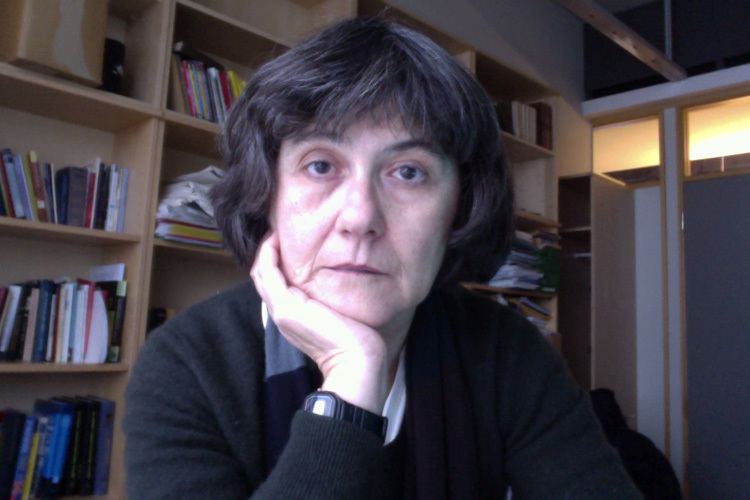
In December 2013, for the book “Blocade in the Word”, the philosopher and cultural historian Irina Sandomirskaya was awarded the Andrei Bely prize in the nomination “Humanitarian Research”. Denis Larionov talked with Sandomirskaya about her scientific biography, the study of the blockade and the current situation in the humanities.
- Between the two points of your brief biography on Wikipedia a rather large time gap: in 1991, you defended a candidate dissertation at the Institute of Linguistics, and today you are a professor at the Center for the Baltic and Eastern European studies of the University of Serodern in Sweden. And what was, so to speak, in the interval: how did your scientific interests change from 1991 to 1996, when the book “I want to call my movie” came out?
- My scientific interests changed towards their loss. I then became interested in feminism, read a lot of feminist authors and, together with a colleague, tried to collect artists and writing women under the banners of female solidarity. Pretty unsuccessfully, however.
We organized three exhibitions then - two in Moscow, one in Sweden, but this last was already at the end of our Union. They worked for a long time on the publication of the journal "Post -Talitarian feminist criticism" under the name "Idioma". As a result of many delightful, but, in general, unnecessary adventures, he came out with one number in America thanks to the efforts of feminists from New York, and the second number in Moscow, but without my participation. I then deserted from the movement.
But at the same time, I continued to engage in the seminar at the institute, we had an excellent group, we all friends and wrote about phraseology and culture, invented new ways of describing and invented dictionaries. So between the 91st and 96th years I lived between these two forms-not that science, but intellectual activism: a dictionary and a magazine. Then, against the backdrop of the rapid transformations of Soviet education, for some reason, new searches expressed themselves mainly in the scripture of dictionaries and the publication of magazines.
In graduate school, I was engaged in linguistic semantics, science in the spirit of Anglo -Saxon analytical philosophy. It was a very sophisticated metaphysics, in which Wittgenstein interfered with quotes from Marxism-Leninism. And in the interpretation of the semantics there was something even Kabbalistic. We searched (and, of course, found) in idiots and phraseological combinations some completely different, in a new way of genuine reality and tradition; They had to be taken out of the metaphor and formally explicated in a vocabulary article. One such vocabulary article a few years later I grew up in a whole book ( “Book of the Motherland” ).
In short, instead of science, I had a critical tool in my hands, which I still learn and learn to use. Well, then the late Natalia Nikitichna Kozlova called with her to work on the manuscript of the deceased Evgenia Grigoryevna Kiseleva. Here, a completely different school began for me. Here, witty metaphysics could no longer do.
- What happened to you, as with a scientist, later, when you turned to texts from the study of “anthropological documents”, where the mechanisms of normalization and ruthless editing are not so obvious - first of all, I mean the book “Blocade in a word”?
- Natalia Kozlova opened and described an anthropological document as an object of study, she belongs to both priority and honor, and I was in her students and apprentices. She learned from her a lot, for example, to read the naive writer Kiselev in the same harness, say, with Vaginov and, say, with Burdier. Enrich them with each other. I did not abandon anthropological documents, but quite the opposite: I learned to read any text anthropologically as documentation. For example, the work of Stalin "Marxism and Linguistics issues." Or monographs of the blind man of the writer, scientist and teacher O.I. Skorokomnaya. Or the aphatic poems of the struggle of the hungry death of the Oberius.
All Soviet culture is a culture of editing and rewriting, it was in these techniques that Soviet civilization found itself, it was in them that the avant -garde experiments, such as installation or removal.
Yes, in that long-standing work, from which in the book “I want to name the movie” there were a dozen pages in the appendix, this picture was somehow opened: cruelty, ruthlessness, the radicality of a gesture of normalization. For considerations of beauty, understandability and style. Unlimited violence of arbitrariness of the editing norms over the living life of the written word, over his body. Almost elusive replacements, the editor turns the manuscript of an illiterate cleaning lady from Chaos of Judea into a masterpiece of documentary prose in the spirit of Novomir Realism, completing the transformation and the cleaning lady into a completely oligatural character of the reading-renounced socialist novel. The editor rewrites the author to his own - unwritten - novel. Unclean, mythical violence (Benjamin would say), extreme arbitrariness, albeit in a “vegetarian” vein, exclusively light touch, minimal strokes.
But not only Kiselev. All Soviet culture is a culture of editing and rewriting, it was in these techniques that Soviet civilization found itself, it was in them that the avant -garde experiments, such as installation or removal. This is a writing, consisting of processing, replacing the originals as unnecessary - and is it possible to consider the original that he produced himself a censoring, editing writer, conducting endless trade with an internal censor? Such is all Soviet culture - as a monument of writing, as a style, as a movement, as a body of texts. It is in the editorial, and not the author’s itself, the canon is embodied in the reality of the text.
Lydia Ginzburg in great detail, very accurately described the technique of censorship of the preservative letter (hack) and its evolution with the finale in lethal dystrophy. Subtle coercions are summarized and formed in the blockade: a word that drives its own consequences - it is a blockade. Survival (hack) in the blockade is possible, and even resistance to some extent, but, as Polina Barskova very correctly remarked in her review of my book , it gives rise to monsters. So in this book - “Blockade in the Word” - as you completely correctly noticed, the mechanisms of standardization are not obvious, but its consequences are more than obvious, it is quite apocalyptic.
- In recent years (ten years for sure), the theme of the Leningrad blockade has been intensified: not only in scientific texts, but also in artistic ones. In addition, the example of the barskova, which is engaged in the blockade as a poet and as a scientist, is widely known. What is the reason for such a broad interest in 2000-2010? In what relations is he with the Soviet tradition of the conversation about the blockade? And with the experience of foreign Slavicism engaged in this problem?
- The blockade is too much, and you can’t explain everything. But for people reading and writing people there is something in it that is no longer anywhere and in nothing else. It was a great, unprecedented political, linguistic and intellectual experiment, in which he participated and for which the whole city with all its population took martyrdom. Everyone who kept a diary became a witness to both the court of history and the Last Judgment. Now, when these diaries are finally printed, we are all readers, scientists, poets - as if we were present at the removal of the fifth press. The blockade Leningrad is our common abyss and an inexperienced bourgeois, this is black fire on black flame, and everyone who touches it, a poet is either a historian or a Western Slavist, or you, questioning, whoever is - everyone is burning. And they will burn until in relation to the besieged Leningrad with its raped history and forbidden memory will not triumph, sorry for pathos, historical justice.
The blockade was also a powerful landfill for testing power technologies, a biopolitical training ground. I never penetrated the ideology so deeply and deadly into the very origins of life, never the authorities filled life so exhaustively full, from edge to edge. Michelle Foucault discovered the essence of biopolitics for us: this is the technique of dominance in the modernity society, which displaces the political subject from the political process, replacing the policy of administrative manipulations, and citizens - statistical units and masses of the population. Such a process is described by Hannah Arendt in Vita Activa : the crowding out of the new era of political dialogue in the era of the administration of economic need. In the Leningrad blockade, these trends are embodied in the reality of the everyday dystrophic existence of the faceless, nameless, barely living “blockade man”, the human unit “H”. Georgio Agamben saw the culmination of power technologies of the new time in Auschwitz and called it tanatopolitics. The Stalinist technologies of the authorities did not have the distribution of death as their direct task, but were called upon to ensure the integrity of the blockade from the breakthrough from the inside. They (technologies) manipulated, on the contrary, by survival, revolutionaryly combining a police terror with administrative measures to regulate and distribute a dystrophic “minimum life” among the civilian population. These methods would be appropriate to call tanatoburoprice. We do not comprehend neither the breadth nor the depths of this social invention of the Stalin regime, we do not understand its consequences and we do not know, either we should treat this, or how to talk about it at all. Actually, this is the reason for the interest that you are asking about. People are looking for a language whose means at least somehow it would be possible to process the experience of the blockade, at least in the second, third, fourth generation.
It is not necessary to think that the blockade is over: on the contrary, it brought political dividends to the Soviet system, and now it is used to steer dough, and not only symbolic.
At the same time, we are numb, watching how in recent years the blockade is turned into a successful intra- and foreign policy brand. The blockade becomes the subject of national pride and a means of collective self -affirmation. Like the war, like the Gulag. They boast of the blockade, a trumpet of the whole world, that “we didn’t worry about it”, “the Russian people will endure everything”, “a great trouble is” and in general “our gulag/Leningrad is more than their Aushwitz”. It is not necessary to think that the blockade is over: on the contrary, it brought political dividends to the Soviet system, and now it is used to steer dough, and not only symbolic. Not to mention the redistribution of values, when the hungry changed, for example, a cabinet of ancient books on a bag of millet.
Nobody has yet removed and canceled the blockade yet. The blockade essentially remains the internal form of the Russian, and its symptoms all the time appear through all this rather nauseous sugar and fat, which is smeared with its (Russia) surface. So the features of a dying and non -language dystrophy dying in the features of today's subject. The subject seems to be full, and drunk, and his nose is in tobacco, and he has the most gulag - and in the speeches all the same dystrophic diarrhea and all the same dystrophic madness as in actions, in the views.
And this applies not only to Russia. With unprecedented strength and everywhere in the world of neoliberal globalization, the principle of blockade economy triumphs: "To whom is war and to whom the mother is dear." In this aphorism , in nu is also the whole economy, sociology and culture of Russian capitalism.
-Everyone who opens your book is unlikely to lay it down, not reading it to the end: not least due to a dizzying style. What are the foundations of such a whimsical speech freed from academism? Or is she, what is called, "found you herself"?
- I am not trying to circle my heads, but dizziness sometimes happens when you build critical distances and prospects. This can be done analytically: to analyze your own position inside you created, in interaction with your material, a small discourse universe. This is called Self-Referentiality . You explicitly set the reference point: this is me, here I stand, from here I look, I see this and that, I assume that my vision is limited by this and that, I propose to adjust the shortcomings of vision so and and such. So I wrote a “Book of the Motherland”: I just described what I was doing, the operation for the operation, presented the entire apparatus, which was. And you can do it somehow differently. It so happened in the “blockade in the word”: to clash among themselves, incomparable, impossible for comparison, and follow the conversation that suddenly arises between them, read one through the lens of another, third, fourth, create an anachronisms and consider no general biography texts as mutual translations. Write how to read, read how to experiment: essays - this is the same experience, experiment.
But this case requires discipline. Not the discipline of the system, but the discipline of self -critical sequence. And the readiness for dizziness and the crisis, for that matter: where is criticism, there is a crisis. Moreover, this is not the noble and exalted crisis that falls out to the poet, because it is not the work of creativity, not a letter of zero degree without an object, addressee and purpose. Rather, this is the work of the translation. Benjamin described it as follows: you stand on the edge of the forest and throw pebbles into the thicket, listening to the echo. It seems to be unpretentious. I read something somewhere, and then write what you actually read there. But this is the difficulty: do not attract. It’s hard to read, and write too.
- A little strange question. If the task of writing some text was faced with Ami, on the problems similar with what you talked about above, but dedicated to the literature of the last twenty years - what prosaic and/or poetic texts would you refer (and why)?
- This is a difficult question for me, it is not for me to answer it - I don’t know so much the literature of recent years as to have a judgment about it. This is due to how I read: I get stuck on every word, and reading a long text (novel, for example) turns into a truly Sisyphus labor. I am more occupied not so much by the literary process as the state of the social language, and we have already talked about this: I see in it the symptoms of blockade dystrophy in all their diversity. Especially in commercial products, in which, as Lydia Ginzburg spoke, words spread in words and cannot stop. Symptoms - or even rather techniques, because it is difficult to make a difference between criticism and the clinic. Despite the fact that our life is oversaturated with verbaliousness, the public language, it seems to me, is in a state of deep aphasia. And therefore, this literature is interesting for me, whether it is poetry or prose (although still more poetry, it is more economical and strict to itself), which is busy with the study of this strange state of public aphasia caused by the overproduction of speech. Employed by a critical study, and not a creative experiment, as it was a hundred years ago, that is, re -reading what is already, and not by the creation of what has never happened. It seems to me that the writer should now have an ear, not a language. But this is generally without me everyone knows.
- One of the main characters of your book “ Blockade in the Word” is Walter Benjamin, whose human and cultural profile is represented, as it seemed to me, very accurately. Is it that Benjamin and his philosophical experience, inseparable from the historical context and his personal temperament, are of particular importance for two (or more?) Generations of post -Soviet intellectuals?
- Walter Benjamin is a very special intellectual, and I am very glad that he finds his reader in Russia. For all the complexity, its intellectual style is greater than any other European one is suitable for Russian traditions, and the categorical apparatus invented by it, it seems to me, allows you to see something in Russia that through other Western glasses or it is not visible at all, or does not seem significant. Eye-ALMAZ: Analytical clarity and uncomplicity of vision with ideology, but at the same time combined with tact, with collecting care, with “gentle empiricism” (expression of Goethe) in relation to the detail. That is exactly how, clearly and gently, he described, in particular, Moscow in the diary of 1926-1927; Its observations are an endless resource for a variety of generalizations and comparisons.
For example, regarding the revolution. For Benjamin, the phenomenon of the Russian revolution, like its death, is a phenomenon not Russian, not Soviet, or even European, but world history; He considers world history as a shiller, as a moment of Weltgericht , of that infinitely remote, but undoubtedly upcoming global court day, when each instance of the past, each without a single exception, will appear in the entirety of historical consciousness.
That is, his understanding of what he called “Moscow” was not a country, not comparative historical, not geopolitical, not ethnographic, but was due exclusively by the role of (Russian) revolution in world history, the place of Moscow in the messianic time. Такой у него странный исторический и диалектический материализм, на всех пунктах он настаивал и их отстаивал. Приехав в реальную Москву, он думал там найти и описать мировую историю на ее революционном переломе — но вместо этого обнаружил Клондайк, где все без исключения денно и нощно заняты добыванием власти. Узнаваемая картина. Примечателен, однако, следующий шаг, последовавший за этим открытием: Беньямин отказывается от поисков революции вовне, в реальном времени и пространстве реальной Москвы, и вместо этого задается вопросом о том, что есть революционного в форме его собственной работы и есть ли вообще. Для меня это наиболее внятное определение критической теории: вопрошание о революционности в форме собственной работы. Во-первых, не чьей-то, а собственной работы. Во-вторых, в ее форме, а не в содержании. То есть задать, например, русский вопрос «что делать?» или «кто виноват?» и даже найти ответ на такой вопрос — слишком мало, чтобы считаться теорией и критикой.
Меня больше занимает не столько литературный процесс, сколько состояние общественного языка: я вижу в нем симптомы блокадной дистрофии во всем их разнообразии.
Беньямин — это уникальный случай теоретической и критической последовательности при необъятной широте интересов и знаний. Также и пример принципиальности и бесстрашия. Он строил свою политическую теорию и философию языка из негативной теологии, а не из науки, а философскую критику — из литературной традиции, а не из философской системы. Это интеллектуальный стиль, близкий российской культуре философствования. Равно близка российской интеллектуальной культуре и его философия истории, в которой мессианство сочетается с совершенно оригинальным пониманием исторического материализма, а также и философия языка, который он исследует в качестве внутренней формы истории. Это все нам понятно, хоть и написано довольно замысловато.
То, что радикально отличает Беньямина и что, мне кажется, важно для нас сейчас, когда на смену дисциплинированной «методом» сталинской метафизике пришли в самых разнообразных формах новые метафизические мечтания и новые попытки дисциплинировать, — в этих обстоятельствах у него следует учиться последовательности и самокритичности мысли, интеллектуальной честности и уважению к принципам. Человек слабый и неустроенный, он умел не продаваться и не поддаваться, а наоборот: следовал в «форме работы», как он сам говорил, «ритму собственных убеждений». Не поддаваясь, в то же время и в собственных убеждениях стремился слушать ритм и не искал твердокаменной цельности.
— Какие линии современной междисциплинарной науки кажутся вам сегодня важными и необходимыми? Какие книги российских и зарубежных ученых — о которых, быть может, было бы полезно узнать отечественному читателю — привлекли в аше внимание?
— Мне кажется сомнительным сочетание «междисциплинарного» с «наукой»: по-моему, одно из двух. На Западе говорят о междисциплинарных исследованиях, тем самым открещиваясь от научных принципов объективности, позитивности, воспроизводимости результата и т.д. Зачастую это приводит к полной беспринципности, с чем борются, осваивая постструктуралистские критические методологии, такие, как, например, феминистскую теорию, или деконструкцию, или социальный конструктивизм, культивируя ту самую саморефлексивность, о которой я уже упоминала.
Вообще в области гуманитарных и общественных исследований я давно уже не вижу никаких (моно)дисциплинарных направлений, может, их и не было никогда. Но зато были научные институции — кафедры, отделы, профессуры — и существовали соответствующие институциональные политики, а также жанры академического письма и корпусы текстов, диктовавшие дисциплинарные нормы: как писать, что писать, кого цитировать. Сейчас этого в основном, наверное, уже нет, и поэтому «на местах» возникает бесконечное разнообразие разновидностей «меж-».
Любое направление междисциплинарности тоже обусловлено институционально, конечно: достаточно вспомнить, что сама идея междисциплинарного исследования принадлежит эпохе холодной войны и воплотилась сначала в послевоенных практиках в американских университетах. Так, на междисциплинарном семинаре в MIT в дискуссиях лингвистов, антропологов и математиков родилась кибернетика, а в центрах advanced studies , которые создавались в противовес дисциплинарной раздробленности традиционной структуры, стали заниматься региональными исследованиями, или area studies . На сегодняшний день эти последние переварили в своих недрах дисциплины, связанные с преподаванием национальных языков и литератур, в том числе русистику и славистику, не обогатив при этом свою память знанием всех богатств, которые эти дисциплины выработали за двести (в общей сложности) лет своего существования. То есть междисциплинарность влечет за собой не только свободу, но и большие потери знания, на этот счет не надо заблуждаться.
Вообще же направление междисциплинарности зависит от того, как вы формулируете проблему и как конструируете категории для анализа, аппарат. То есть здесь проще, чем в дисциплине, «следовать ритму убеждений» — но тогда надо иметь «убеждения», а это уже сложнее. Нельзя, работая междисциплинарно, при этом придерживаться дисциплинарной этики. Дисциплинарная компетенция высокомерна и судит безапелляционно, что научно, а что ненаучно. Междисциплинарность — это прежде всего широта и готовность понять иную точку зрения, но это также и собственная, можно сказать — политическая, позиция в отношении истины, готовность отвечать за свои суждения самостоятельно и осознавать ее (истины) значимость, не ограничиваясь научной ценностью установленного факта.
Ели вы спрашиваете меня о том, чего, как мне кажется, не хватает в российском интеллектуальном обороте, тогда, я бы сказала, не хватает именно беньяминовской темы: темы суда истории, так сказать. Огромная и мучительная дискуссия об истории и памяти, стартовавшая в Европе после войны, об исторической справедливости, о политике в отношении «использования прошлого», о вине, предательстве, свидетельствовании и о работе траура — вся феноменологическая, историческая, политологическая, социологическая, антропологическая, психоаналитическая тематика, связанная в основном с историей Холокоста и с хронотопом концлагеря, все то, что на Западе в свое время назвали континентальной философией, в своей основе имеющей исторический опыт, в отличие от спекулятивной аналитической философии, — все это в России присутствует, но как-то вне соотнесенности с собственным историческим опытом. Люди не узнают себя, читая, например, Жака Деррида, хотя он писал про нас, про людей, которым не довелось погибнуть ни в Освенциме, ни на Колыме, ни в Ленинграде, ни где-нибудь в песке моздокском в сороковые-роковые. И которые родились в тени, отбрасываемой этими всеми названиями, и теперь как-то должны в этой тени жить. Неузнавание себя и непризнание этой тени — при том что исторический опыт в наличии, даже в избытке, и до сих пор не имеет языка для своего выражения, как мы это видели на примере ленинградской блокады. А история сталинизма в отечественной историографии — например, история войны и ГУЛАГа — научно изучена уже вдоль и поперек и насчитывает тысячи томов и заглавий, но остается при этом узкодисциплинарной проблематикой, не превращаясь в такую интеллектуальную и этическую проблему, которая касалась бы всех без исключения и была бы этической точкой отсчета тоже для всех.
Российский читатель не обделен информацией. В России напечатано, как мне кажется, практически все, что входит в круг академического чтения западного гуманитария, и западные теоретики очень охотно приезжают в Россию с лекциями и гастролями. Тексты есть — вопрос, что с ними делать и зачем их читать.
— Какими сюжетами в ы занимаетесь сегодня? Другими словами, каковы в аши творческие планы?
— Я бы хотела написать что-нибудь нетрудное и веселое, чтобы с улыбкой и без зубной боли в сердце. Только не знаю — как.