
Translated material
Ruble, where are you rushing?
Sergey Aleksashenko - About what is happening in the foreign exchange market
Former Deputy Chairman of the Central Bank of Russia, an investment banker and professor of the Higher School - about what is happening on the currency market and why
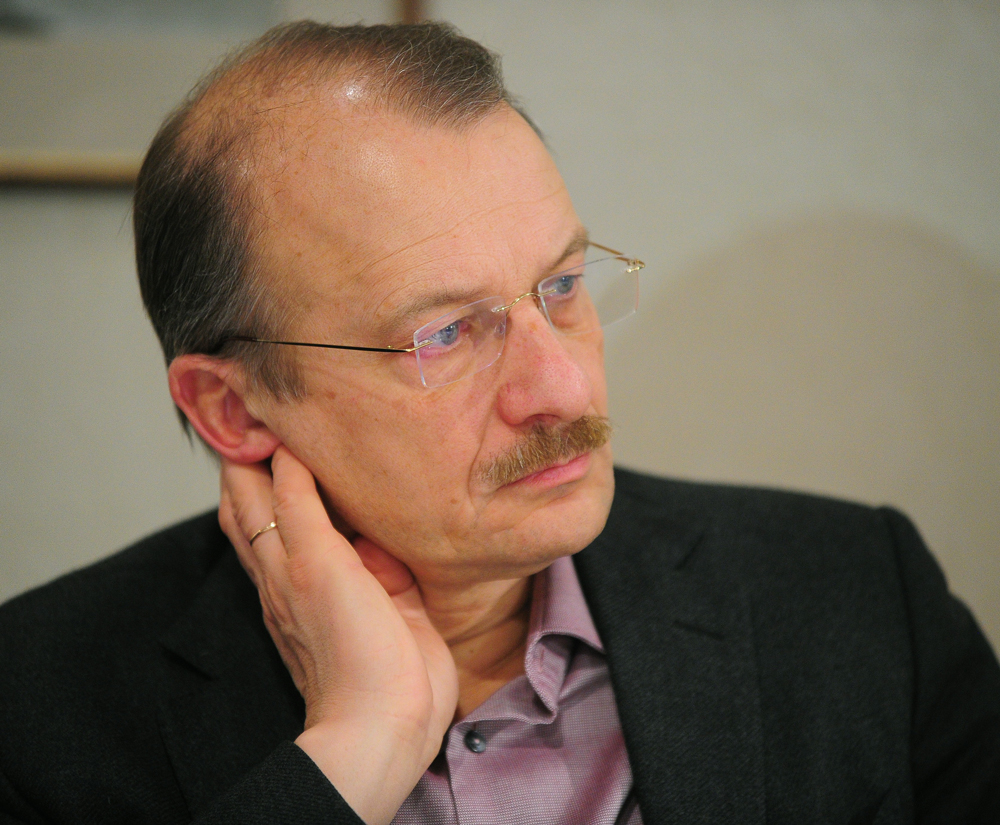
Sergey Aleksashenko, Director of Macroeconomic Research, NRU HSE, invited researcher Georgetown University, Washington, USA
| *The New Times No. 43-44 dated 12/25/2013 |
What is happening with the ruble in January recalls both August 1998 and January 2009-black dates in the history of the last 15 years. Since the beginning of the year, the ruble has fallen into a dollar by almost 8%, which is about 150% per annum. If you theoretically extend the January fall in the ruble until the end of the year, then by January 2015 the dollar will cost (scary to think !!!) more than 80 rubles. The general reasons for the weakening of the ruble is a deterioration in the state of the payment balance, which was written in detail about the New Times in December*, no fundamental changes have occurred here. But there are several tactical points that can help predict the near future.
Central Bank and ruble
The first, and most importantly: the logic of the actions of the Bank of Russia is completely incomprehensible. All documents and speeches of its leaders say that currency interventions will be used to prevent sharp fluctuations in the ruble exchange rate. Obviously, now - it is such a situation that is largely the result of the loss of investors' appetite to developing economies. It would seem that it was at such a moment that the Bank of Russia could spend a couple of tens of billions of dollars (the volume of its own currency reserves of the Central Bank exceeds $ 320 billion) and not warm up devaluation expectations in the economy. After all, he spent, starting in May last year, $ 30 billion on completely meaningless and useless daily interventions? But no, you won’t wait: in January 2014, the Central Bank sells as much as in the summer and in the fall-$ 200 million or occasionally 400 million per day and not a penny more. Here, on January 28 they tried to act more radically: they sold about $ 1.2 billion and ... in the bushes, as if scared, and on January 29 - $ 400 million again.
Second: to buy currency from the Central Bank, banks need rubles that they receive ... on credit from the same Central Bank. The situation that we saw, which we saw in the fall of 2008-in the winter of 2009: with one hand, the Bank of Russia gives banks loans at 7.5% per annum, the other-devaluates the ruble for 6% in three weeks. In order not to earn on this, you need to be very stupid or lazy. Other central banks in such a situation or interest rate are increased, or the volume of loans provided is limited. The Turkish lyre, for example, over the past three months, has fallen in price by 18%to the dollar, leading the devaluation rating of the main developing economies. It was worth the central bank of this country to raise the main interest rate from 4.25% to 10%, as a reversal occurred on the market. But the Turks are not a decree for us, right?
"
The ruble can “lose weight” by 15–20% during this year, that is, up to 37.5–39 rubles. for $ 1 and 52–54 rubles. for € 1-at the end of 2014
"
Third: January is a month traditionally difficult for the ruble, the demand for currency at this time always exceeds the proposal. But to replace the January, as you know, come on February, when there are more currencies, and there is March and April, when the currency proposal traditionally exceeds the demand for it. Therefore, my short -term forecast is as follows: if the Bank of Russia does not make stupid things, then the ruble exchange rate should soon calm down and, perhaps, even roll back a little.
Fourth: normalization of the ruble exchange rate in the short term in no way cancel my long -term forecast - the ruble rate at the current level of oil prices is doomed to constant devaluation. Today's analysis suggests that the ruble can “lose weight” by 15–20% during this year, that is, up to 37.5–39 rubles./$ And 52–54 rubles/euro - at the end of 2014 (at the current exchange rate/$ = 1.365).
Why Euro?
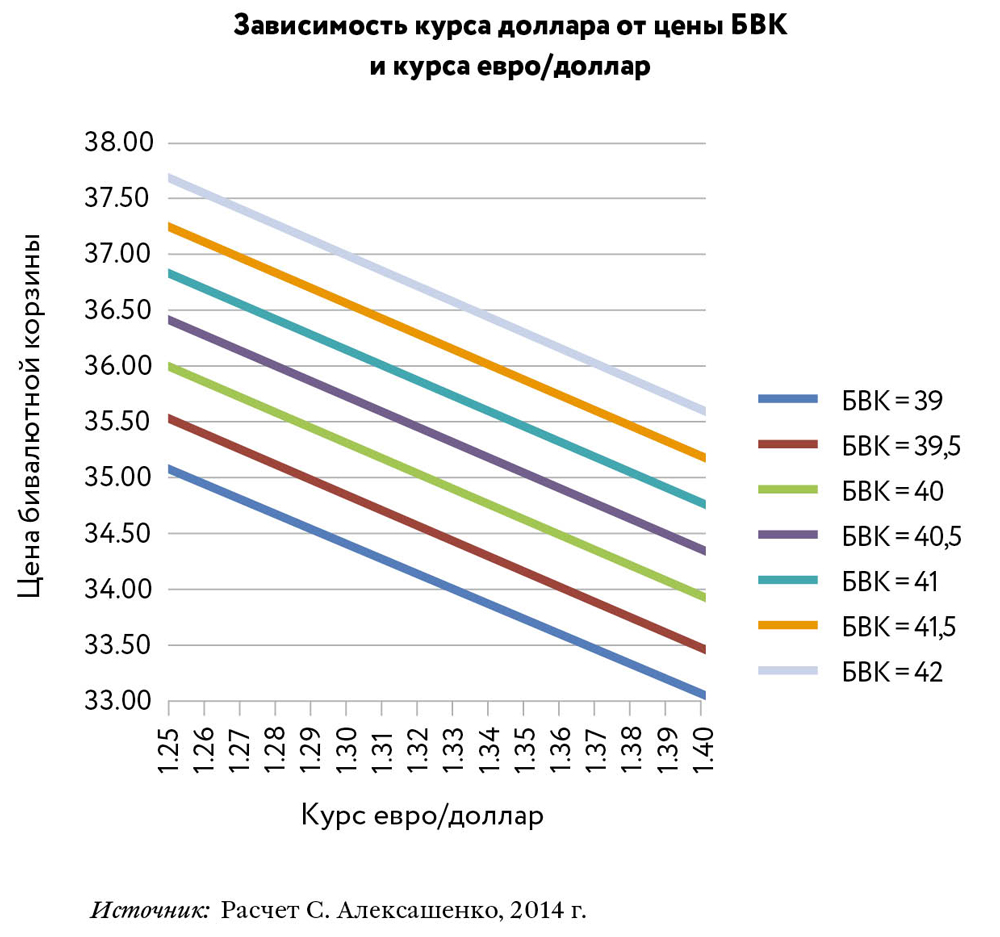
The ruble has fallen especially strongly in relation to the euro. The course of the European currency beats historical records, jumping for 48 rubles, and “green” costs quite “decent” 35 rubles. (The most expensive dollar was February 19, 2009 - 36.43 rubles). The fact is that the Bank of Russia has been regulating the ruble exchange rate for many years in relation to the so -called “bivalyut basket” (BVK), which consists of an American dollar by 55%, and 45% of the euro. Thus, the dollar in Russia depends not only on the “will and desire” of the Central Bank, but also on the ratio of the euro/dollar rate. So, at the price of a BVK of 41 rubles and the euro/dollar year = 1.25, $ 1 will cost 36.85 rubles, and at the euro/dollar = 1.4 - 34.74 rubles (see schedule on the right). In December-January, the euro/dollar steadily holds on a very high historical level (1.35–1.38), which makes the euro more expensive currency for Russians.

Others are crying too
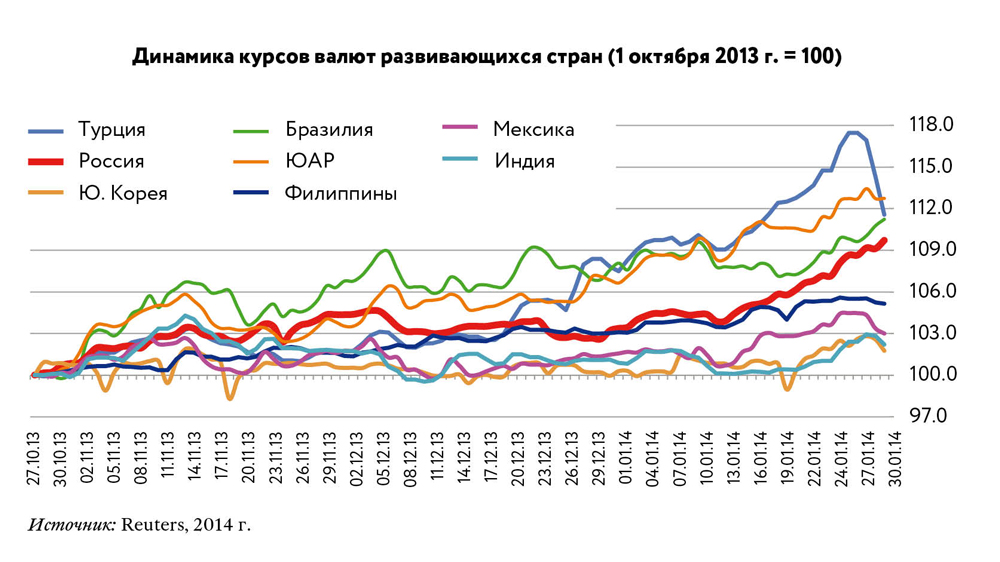
Problems with the course of national currency today are not only in Russia: look at Turkey, Brazil, South Africa. As can be seen from the schedule below, many currencies have weakened during this time, and outwardly, the weakening of the Russian ruble during this time at 9% of the dollar does not look so dramatic. On the other hand, in developing countries such as India, South Korea, Philippines, Mexico, the behavior of the national currency course is much less alarming, although the situation in Russia is clearly no worse for the main macroeconomic indicators than they are.

Traps
A decrease in the growth rate of the Russian economy fits into the overall picture of the world. Let's say the situation in the same Argentina, Turkey or India looks worse: there the threat of a crisis is no longer hypothetical. An excess confirmation of this was the Gaidar Forum and a statement made there Prime Minister Dmitry Medvedev that Russia can fall into a trap of medium income (Middle Income Trap). In this subject, in recent months, in recent months, quite often sounded from the lips of those experts who actively cooperate with the government, as an attempt to explain why neither the authorities nor society can no longer count on maintaining the trend of sustainable growth in the population’s incomes, which was the dominant of the first decade of the reign of Vladimir Putin. In fact, the statement of the Russian prime minister became a recognition that the Russian authorities are not going to change anything either in the economy or in the organization of socio-political life.
This term-a medium-sized income trap-appeared in economic theory relatively recently, in the work of the Economists of the World Bank of Jill and Khomi Haras "Renaissance in Southeast Asia: ideas for economic growth." In 2012, the World Bank experts in the China-2030 report built a classic relatively simple-but everything brilliant is simply-a schedule (see the page below), which showed that in 50 years by 2008 only 13 out of 101 countries that fell into the category of average income in 1960 managed to make a breakthrough into a group of high income countries.
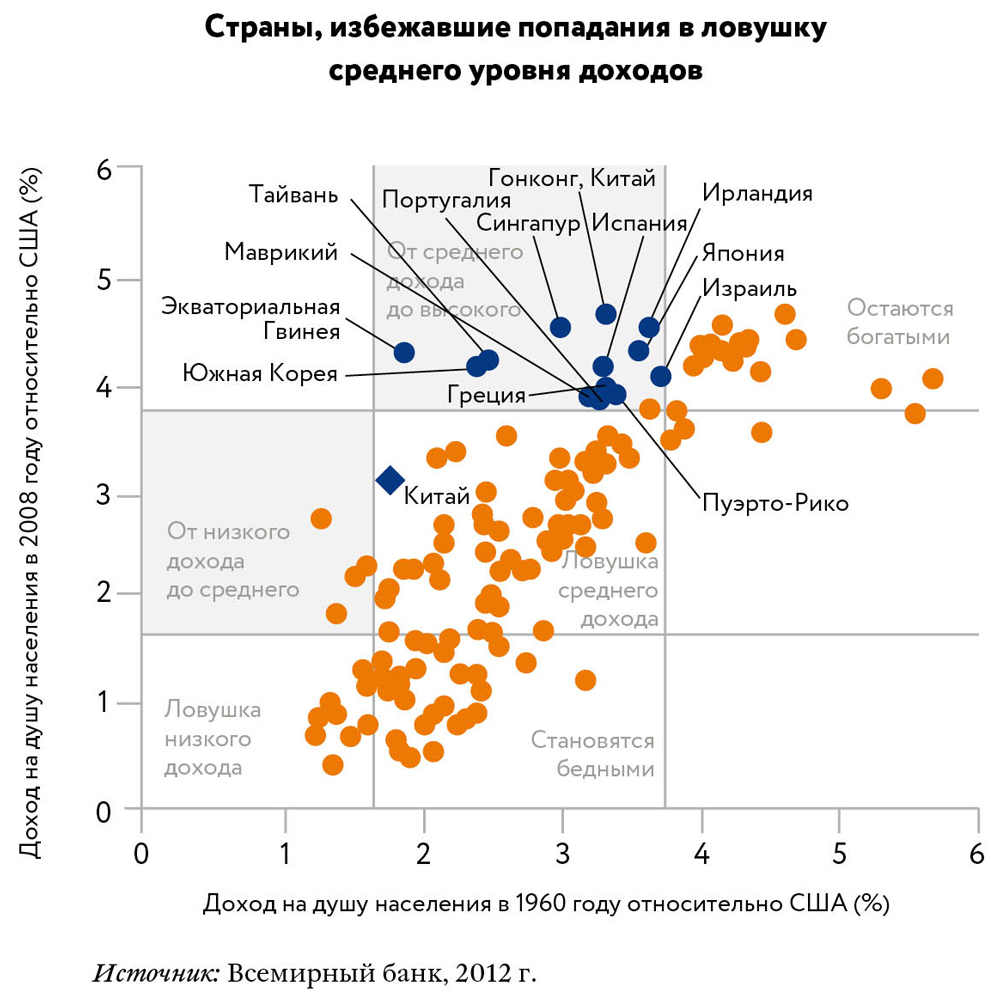

The authors of the study showed that the transition from the category of “poor” countries to the category of average in terms of income is much simpler and most of the countries that enter the path of industrialization. This allows, in fairly short historical terms, to use the free resources of the labor force moving from the village to the city in more productive sectors. However, in the future, the increase in income levels in most countries decreased sharply, and they did not manage to reduce the gap with rich countries.
It was possible to break into the "High League" for those who invested money in infrastructure and education; who reformed the labor market and strengthened the protection of property rights; Who opened their economies with foreign capital and contributed to an increase in the level of competition. In a word, those who were ready to go to serious reforms, which often broke the prevailing public and political structures, caused the discontent of the national business. But the resulting “prize” - the rapid growth of population incomes - more than paid for these costs for politicians.
In a word, there is no historically objective inevitability in such a trap; Recipes for overcoming it are well clear. Just the current Russian government is not ready to use them. What Prime Minister Medvedev said directly.
What is good for General Motors ...
... That's good for America. Russia has its own General Motors, which is called AvtoVAZ. This, perhaps, the largest Russian enterprise (not counting the raw materials) can serve as a good leading indicator of the situation in the Russian economy. The specifics and scale of the enterprise - the full assembly cycle and hundreds of adjaches - manufacturers of components - are such that any slowdown or acceleration of the work of the Togliatti conveyor instantly affects the growth rate of Russian industry and, therefore, the whole economy. This effect was clearly visible in May 1998, when the working week at AvtoVAZ was reduced four times - industry instantly fell at the peak. The opposite effect showed itself in November of the same 1998, when, due to the devaluation of the ruble, the cost of the Lada fell in dollar terms and the demand for them sharply grew-the Russian industry began rapid growth, although the financial sector was still smoking in ruins. Similar episodes were in the summer of 2002, and, of course, in the crisis of 2008-2009.
And then the results of 2013 were summed up: the number of cars sold was almost 535 thousand pieces, which is 12% less than a year earlier. Of course, the removal of outdated models (“classics” and “Lada-Samara”) had a certain effect, but a decrease in customer demand was a much more important factor. The New Year for the auto giant begins with bad news - more than 10% of the reduction of employees at the enterprise has been announced, which means that they do not see any positive signals from the economy in Togliatti. However, who sees them at all today?

Sergey Dubinin, Chairman of the Supervisory Board of VTB
Changing the ruble exchange rate to the dollar and the euro is associated with a change in payment balance. We have a current payment balance, which was almost zero by the end of 2013. Previously, there was an excess, a positive balance, when more was exported by export than was bought for imports. Last year, the net export of capital was about $ 60 billion.
As a result, demand for the ruble falls, and for foreign currency is growing. This is a market economy.
The fundamental basis of the fall of the ruble is the low competitiveness of products, which we offer both the international and domestic market.
I do not think that the ruble will fall below. There will be the so -called “rebounds”, when the panic buying of foreign currency leads to the fact that the ruble is in short supply and its course is strengthened. And the Central Bank supports the course to avoid further panic.

Oleg Vyugin, Chairman of the Board of Directors MDM Bank
This year, the ruble was supposed to weaken for objective reasons: both in relation to the dollar and in relation to the euro-depending on the cross-course-about 10 %to maintain the stability of the payment balance. But in January, the script has changed, now the authorities themselves provoked the fall of the ruble. The Central Bank said that he would not support the ruble, although now it still supports it. The Minister of Finance said that the Ministry of Finance was going to purchase currency from the market for $ 6 billion to replenish the reserve fund. In fact, the speculators untied their hands. So, the ruble can be dropped by 20%and 30%. True, then he will still bounce back after some time.

Maxim Osadchiy, Head of the Analytical Department of the Bank of Corporate Financing
From January 1 to January 29, the Central Bank was forced to expand the boundaries of the currency corridor 18 times, and the accumulated volume of interventions amounted to $ 4.9 billion.
Everyone was waiting for the decision of the Fed. It corresponded to the market expectations: the bond redemption program was reduced by $ 10 billion, to $ 65 billion monthly. But this decision generated further strong pressure on the currencies of developing countries, including the ruble. Nevertheless, I expect that the collapsible devaluation of the ruble will be short enough, because there is no serious macroeconomic foundation under this phenomenon. Previous such episodes were associated with crises: Russian 2008-2009, Greek autumn 2011, Cyprus 2013. Now there is no crisis that would generate the outflow of capital from developing countries. But when the ruble passes the turning point, it is difficult to say enough.
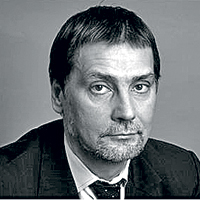
Evgeny Gavrilenkov, chief economist Sberbank CIB
There are several reasons why the ruble weakens. If we talk about the last days, then this was a change in the global conjuncture, a change in the behavior of global investors. Korean currency, Brazilian, Indian - all weakened. These are external factors. If we look a little further, then internal factors are added to external factors: the activity of the Central Bank to saturate the liquidity system, the large scale of financing of banks - only last year, funding of banks increased by 60%. As a rule, this money goes to the foreign exchange market.
Photo: Vladimir Smirnov/ITAR-TASS