
Translated material
Three ridds of Otara Ioseliani
The life and films of the eternal non -conformist
The author of Listopada and the Favorites of the Moon, which turned 80 on February 2, is one of the most famous filmmakers in the world, who are considered to be their post -Soviet space
 | Films of Otar Ioseliani 1966 - Listopad 1970 - the singing thrush 1976 - pastoral 1984 - the favorite of the moon 1989 - and the light of 1992 - hunting for butterflies 1996 - robbers. Chapter VII 1999 - Truth in the fault of 2002 - Monday Monday 2006 - Gardens in the fall of 2010 - Chantrapa |
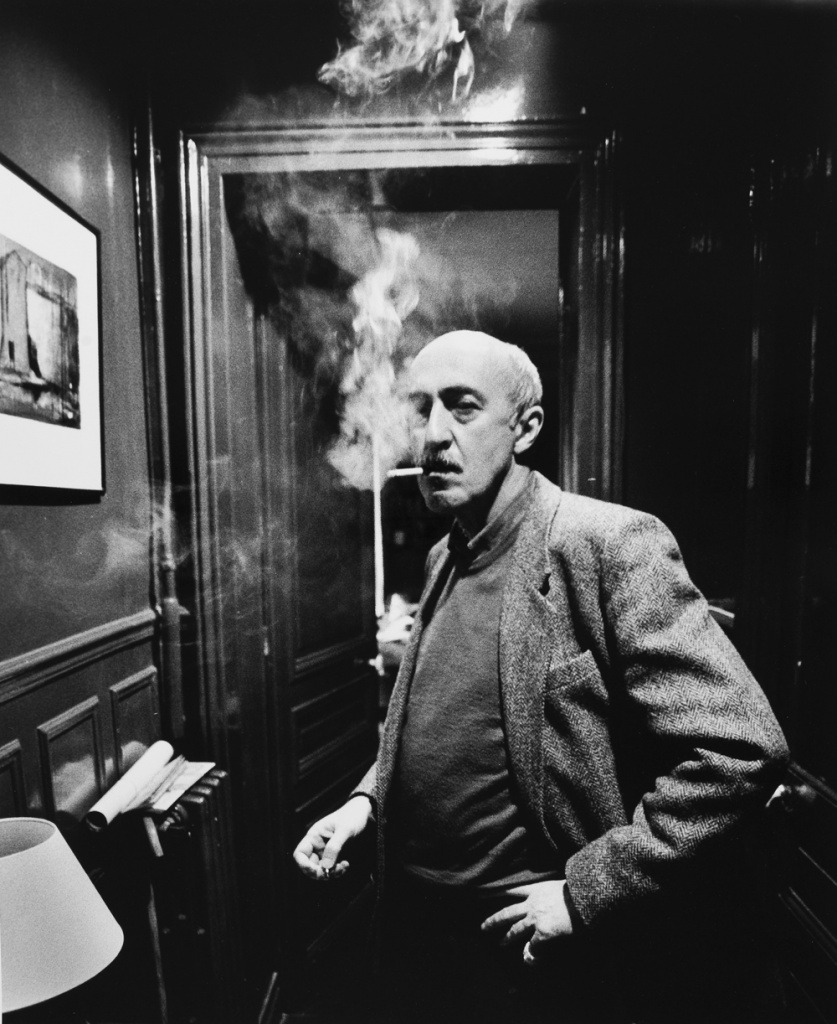
| Otar Ioseliani - artist, intellectual, aristocrat, hooligan ... Paris, 1990 |
There are few of them, there were even fewer such directors, and after the death of Alexei German: Muratov, Sokurov, Konchalovsky and Mikhalkov. Moreover, it was Joseliani who is a symbol of the Soviet intelligentsia. And also the most mysterious person from all the mentioned kinemeters.
Creative emigration
At least three puzzles are associated with Joseliani's personality. We will not give them away. We will approach them gradually. The first: how he managed, having moved at the turn of the 1980s from Georgia to France, leaving, as he himself said, from censorship (although the Georgia-Film studio, thanks to the relative liberalism of Shevardnadze, was less than other studios of the USSR, as a result of which the galaxy of unique Georgian directors arose in the 60s and 80s, and the Georgian cinema became world for a moment phenomenon) - how is he, in the most deaf years, managed not to become in the USSR Persona non grata?
There were fewer emigrants among filmmakers than among writers. But still they appeared. In particular, directors Boris Frumin and Mikhail Kalik, actors Oleg Vidov and Savely Kramarov, Andrey Tarkovsky, after all. Their films immediately fell under the ban. Actors (the same Kramarov, who was the master of the episode) often simply cut out of copies - and the film continued to show.
What are emigrants? Andrei Konchalovsky did not officially emigrate anywhere. But he was the first of ours who began to direct in Hollywood. As a result, even his name, although he was the son of the author of the Soviet anthem, stopped pronouncing in the USSR. He was rehabilitated only in perestroika, in 1988, when at the then Odessa Odessa Festival “Golden Duke” they arranged a retrospective of his at that time Hollywood films from Mary's Beloved Mary, 1987. In order not to tease geese, films were demonstrated after midnight.
How, then, Joseliani got a job? His first full-length French film “The Favorites of the Moon” calmly went to our rental right in the year of creation, in 1984, in the year of Chernenko and party attacks on the rock movement driven underground. Although in this film about the cycle of the life of Parisian marginals, prostitutes unthinkable for Soviet times actively acted, the word itself was then considered almost obscene.
Why wasn't the creative emigrant Joseliani in the USSR? Probably because he always knew how to “build” the authorities, whether it was the Soviet communist or bourgeois hapy. He was cunning, hard, angry. He is lying. He is certainly a player. He knows how to seek his own - and at the same time not to change himself. We will return to this.
"
Why did Joseliani not be pursued in the USSR? Probably because he always knew how to “build” any bosses
"
The joker is involuntarily
To suppress Joseliani, almost hypnotize the authorities and his dreams, about his love for artistic hooliganism testified to Ivan Dykhovichny at one time. Here are the tales once heard from him.
Bayka No. 1. Dykhovichny in the early 80s shot one of his first short shifts, which the masters praised, but the film ministry-Goskino-laid on the shelf. Which of his debut work is we are talking about - now you can’t understand.
Joseliani calls:
- Vanya, I want to see.
- But where, Otar Davidovich? The film was arrested by Goskino.
- So, there we'll look there tomorrow.
In the morning they are found at Goskino near the then metro stations Pushkinskaya and Gorky, at the regime institution, like a military factory.
“You, most importantly, boldly follow me,” says the Dislovic Ioseliani.
Calmly passively passes through the checkpoint of the ministry (guards, hypnotized by its aristocratic appearance, and do not think of demanding certificates-instantly do under the visor). The captive, from horror (according to his own story), dropping his eyes, follow him quietly. Further, Ioseliani is not sent somewhere, but to the reception of Ermash-the then omnipotent owner of Goskino, in front of which all filmmakers slave. Joseliani nods a secretary, whose face is impressed by bewilderment, turning into servility (she does not know who this person is, but understands that he has the right), and enters the personal cinema hall of Yermash, where decisions were made to take paintings or their obstruction. There he removes the phone of a special phone connecting with the movie archive, and says: “Do you have such and such a film by Ivan Dykhovichny? Bring him here, we will watch him. ” According to his memoirs, the most captive was struck by the fact that after illegal viewing, he and Ioseliani did not wash off from the hall, like small shkodniki, but remained in it. Turning on the light and imposingly collapsing in the leather command chair, Joseliani made a detailed analysis of the picture. After that, they with a capture slowly left the cinema hall Yermash, the reception room of Ermash, and then Goskino.
Baika No. 2 from Dykhovichny: visiting the largest bosses in Goskino, Joseliani certainly went along the road to Eliseevsky located near Eliseevsky, bought a couple of bottles of white, dry Vasisubani, tore off the labels and lids, plugged the bottles with traffic jams twisted from the newspapers, and presented the authorities with the words: “Mom asked to pass it. Homemade ". Then the bosses told him: “Yes! Do not find such wine in stores! "
Number intellectual
Nevertheless, it was the cynic and the hooligan of Joseliani, if we talk about filmmakers, who became a symbol of the Soviet intellectual for educated audience - thanks to his cult film of 1970, the singing thrush lived. He is about the young Tbilisi guy, the most modest of the musicians of the symphony orchestra (plays drums and has a glory of a gap), whose true talent is that he is the soul of companies and a responsive friend. Of course, in the 1970s, this hero was perceived as a kind of unconscious oppositionist-even if I did not build (they would have to make a movie about the system, wait!), But lifestyle. As a person who is trying to be free, to live not like everyone else, not as it should, alternatively. It was clear that there was no place in society to such people - what is the final of the "singing thrush". It is clear that Joseliani himself always personified this hero.
Meanwhile, he has always been different. Here is the second mystery of Joseliani: why did he make the most intelligent (and very intelligent) films in the USSR, while not corresponding to the image of the classical intellectual? Another bike is known - according to my colleague Andrei Plakhov. When in the late 90s, Joseliani came to Riga to the then fashionable (alas, sinking on the fly) the Arsenal film festival and the sensual ladies took him out at a press conference by sobs about his incomparable intelligence, he, immigrants, besieged them (which he besieged: forced to faint), uttering a microphone “received a tunnel in the microphone in Sochi in the ass of E ... a worker. "
The most sophisticated director of the post -Soviet cinema Otar Ioseliani, whose intelligence reminds of Antonioni, and aristocracy - of Visconti, in fact, Yernik, Zabiyak, a drinking companion (which he admits more than once, emphasizing that he prefers good vodka to Georgian guilt) and a lover of women. Familiar filmmakers talked about those gulbies-tours that he arranged for them in European cities.
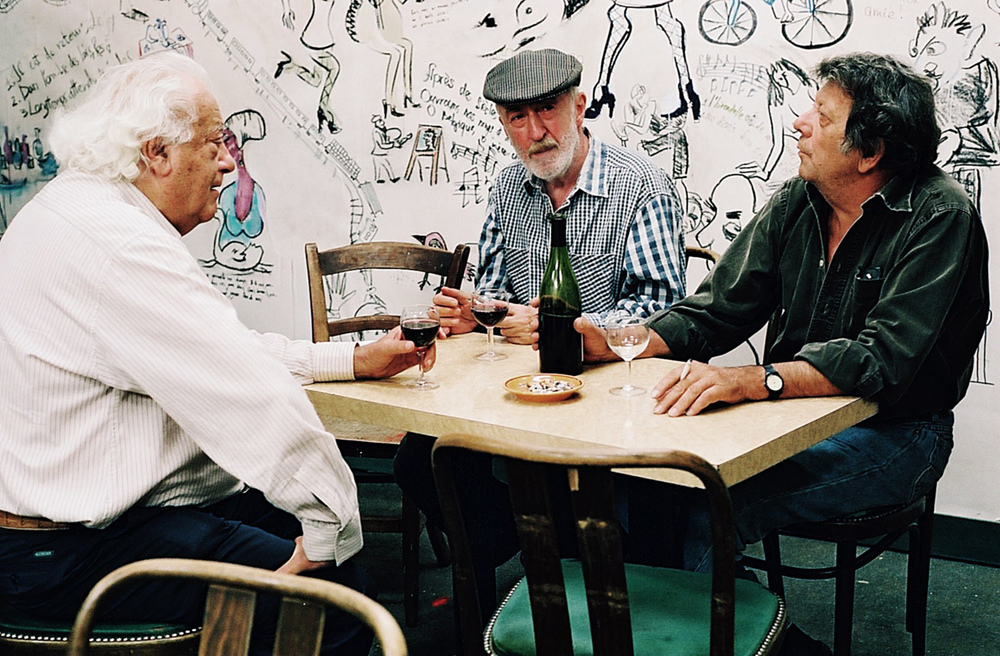
Otar Ioseliani (in the center) in the film "Gardens in the fall"
Eternal non -conformist
The third mystery of Joseliani is his universal, certainly few of any of the successful creative people is characteristic of non -conformism. Joseliani managed not to integrate into the Soviet system - although he shot three significant films with her money: “Listopad”, “The Singing Drozd” and “Pastoral” lived. But then he managed not to integrate into the bourgeois system, although he instantly became one of the most successful directors of France, receiving the three second prizes (special Grand Prix of the jury) at the Festival in Venice (for the “favorites of the Moon”, “And the Light” and “Robbers. Chapter VII”), as well as the prize for directing festival in Berlin for the morning for the morning for the morning Monday ".
Working in the framework of both hostile political and economic systems, Joseliani always managed to shoot only what he needed, not the authorities. At the same time, he equally hated both systems, considering them as one - as an enemy. And he watered them in his films with all possible sarcasm.
It’s still time to move on to the work of Joseliani to designate its main directions. In the actor’s actions, three ideological stages can be distinguished - no matter how strange the word “ideology” sounds next to the surname Joseliani. The first of them is Georgian, subtly anti -Soviet. About the other two - further.
Hatred of the bourgeoisie
The second stage of Joseliani, begun by his very first French film “The Favorites of the Moon”, but in fact started, long before - the same “Singing Drozd”, can be equally called anti -bourgeois and anti -epipheis. It gradually became clear that Joseliani loves the outgoing nature-all kinds of raised marginals from representatives of the African tribes (“and became light”) to French old women (“Baby hunting”) and all kinds of drunks, but hate nouveau riche-from Japanese to Georgian and new Russians. The ideological addictions of Joseliani probably would not have allowed himself to generalize if he, who always ignored politics, suddenly did not make his first and last film in the genre of frank and evil political satire-“Robbers. Chapter VII ". The action is thrown into Georgia of the Middle Ages, then in the Stalin 1930s, then in modernity. Actors are the same. The medieval prince is in the modern way a homeless person. The film turned out to be polemic in relation to the symbol of perestroika - the “repentance” of Tengiz Abuladze. “Repentance” was yearning for the good old Georgia, a cultural country, which in the 1930s suddenly occupied strangers, some Beria, who rebelled from hell, called for finding the way to the temple. Joseliani proves that in the Middle Ages, and in the 1930s and in the 1990s there are always black rules. The whole story is a bloody cretinism.
"
“Repentance” yearned for the good old Georgia, Joseliani proves that in the Middle Ages, and in the 1930s and in the 1990s there are always rules
"
Summing up personal results
But once in his life, succumbing to political emotions, Joseliani soon went into his senses again. In the literal sense of the word. He did not make a film from 1999 to 2006, but I have a whole trilogy, which summed up his work and his life: “Truth is in fault”, “Monday morning” and “Gardens in the fall”. There are feminist films - Joseliani made fundamentally masculine: the trilogy about what is longing, afraid of what a man who has reached a critical age believes. At the same time, having been playing over himself: in all films, Joseliani brought himself in parody images of artists and/or aristocrats, mocking the image that stuck to him over many years. Or maybe not mocking, maybe the spilling in this image of the same tears invisible to the world.
The main message of the trilogy is that a man, or rather, a man is the center of the universe. The man was born to be free. The main and only duty of a man is fidelity to friends. A man (cheers Pirosmani!) Should spend life in feasts, chants and drinking. The “Truth in Wine” ends with the fact that the billionaire, who portrays Joseliani, drains from his castle, who is simultaneously a golden cage to hug with closers, drink and sing songs.
Two other films of the undeclared trilogy, with all the abundance of hilarious episodes, however, more sad. They demonstrate that there really is no way out. Of course, it is possible, but only for a while (which is akin to binge). Then you have to return to the previous routine. “Mond of Monday” (good name: after Sunday, Monday comes again) Someone called the film hopeless. “What do you want? - answered Joseliani. “We know that all the same, all this will not end in anything good.” What exactly all this (our life) ends, he showed in the "gardens in the fall." "Autumn" in the film is autumn men. The film is about the fact that this is how life passes. The prolon has joyful old people with excitement and optimism with which women make shopping, they choose coffins on sale. The prologue seems to be not connected with the rest of the film. But only it seems as if not connected. Concluding the trilogy about the fate of a free man, Joseliani could not help but come to the topic of death.
Photos: Bruno de Mon/Roger Viollet Agency, Everett Collection