
Translated material
Witch from hairy
The appearance of this text in the "Media" section may seem strange. Here we still usually write about what is being done in electronic and print media-and what they do with them. The essentially ethnographic essay on Marina Akhmedova about the inhabitants of the Carpathian village of Volosyanka is more suitable for the magazine. For the magazine he was intended - and even in one illustrated publication was announced - but in the end, several editions rejected it. Why? Read and try to understand. From our point of view, this is quite a case for the media section.
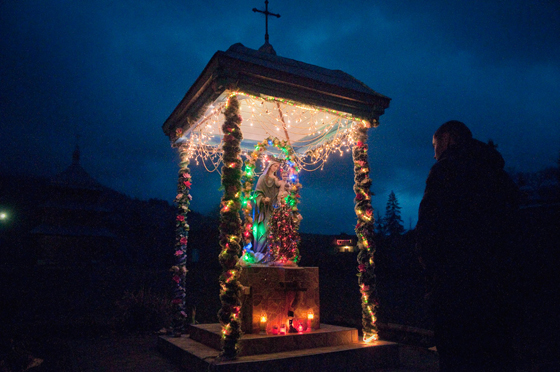
Outside at the gates of the church, they sway heavily in the pre-said wind of the panel-the yellow-blue Ukrainian and black-red flags of the UPA. And the first parishioners from darkness are met by the white statue of the Virgin Mary, twisted by playing garlands. Behind her - through the fence, through the slush, through the hillock - a cemetery. Lastwaters lit on his graves last night - red, yellow, blue. From here they are clearly visible. Having stood opposite the Virgin, having prayed briefly, or maybe asking about something-after all, they say, wishes come true-silent men and women who are late at the beginning of the service, approach the main church entrance.
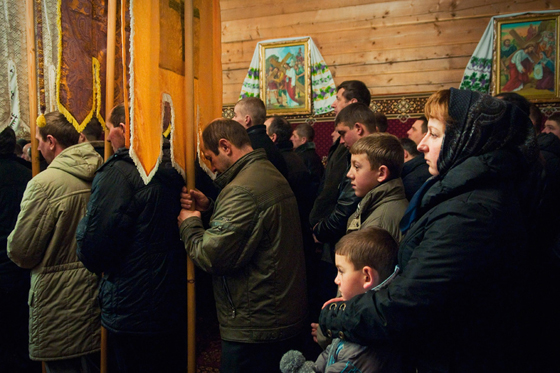
-Maria Prech-i-sta, the king of the breed-ila,-voices fill the close space of the village church. It is divided into two halves. Men are on the right, on the left are women. Rights over their heads are rushing banners embroidered with a cross and surface. Between men and women - a passage rolled with a red carpet. The lamps in the panicadile burn brightly, the sides of Christmas tree toys on the Christmas tree sparkle, and under it - a nativity scene. From its straw roof, the yellow star pours light on a newborn Jesus, cut out of a piece of wood. Iconostases are golden. Do not push through in the church, it is clogged to the very door.
Inside, a woman in a scarf tied to a chin is heavily squeezed inside. Slowly knelt in the middle of the aisle. Having clenched his hands on his stomach, moves thin lips. Her eyebrows are frowning. She stands on her knees for a long time, at times squinting, sneakily looks at the royal gates. She seems to laid out to God her story that happened in the end year. Then he nods his head, as if she had just concluded an agreement with God for the next year. The words often jump out of the choir - “kings”, “give”, “heaven”.
 © Oksana Yushko and Arthur Bondar
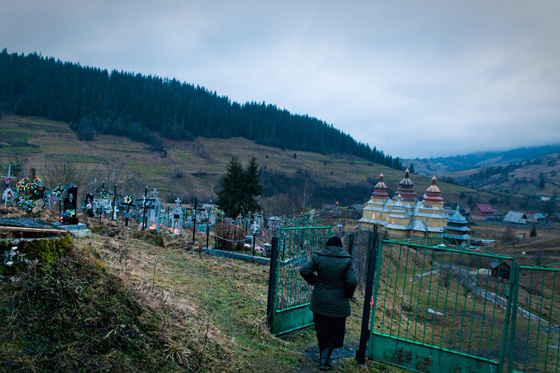
Dark clouds descend from the sky, and a dense fog rises from the mountains. In the middle they meet. Through the narrow gap between them a strip of shining dawn is squeamish, but it quickly dug it. Crums crowns. At the very beginning of the cemetery - where the hillock is just starting to climb up, - a ugly schisma is a stump. It can be seen that the tree was cut when it had been gathered for many years. But the stump has not died, the stump has grown thin hands-entities, which now reaches for the sky. And the grave plates still circle the haze. Flowing lamps flicker from it. Their flames twitch, go out, why it seems: it rushes, not wanting to go back, the souls of the dead, according to the beliefs, flew out of the graves last night - before Christmas to taste the dinner left on the tables in every house.
A dark figure is shown. She moves from the depths of the cemetery. Reaches a wooden house in one window. Old crosses are leaned against his black side. So after a large cleaning lean rake, shovels and braids. The door of the house is ajar. But who wants to look into the dark gap at this hour? The figure equals with the house, passes it and leaves the cemetery, returning to the church.
The drunk mountains surround the hairline, on which a low forest rises. At another time of the day, an embroidered rushnik or krynka, turned upside down, would ask him. But now, at dawn, when raven croaks, the forest, in which the rebels hid in the dugouts half a century ago, seems unfriendly.
Suddenly the gap in the sky expands. The light peeps out of it, illuminating the gingerbread dome of the church. The tombstones gain outlines. The time of the dead is coming to an end. Only one cross on the pedestal continues to collect blackness around itself. His transverse crossbar with carved ends resembles epaulettes on the general of the general, who came to life that night before the Christmas time and now does not want to go back, where the extinguishing lights go.
 © Oksana Yushko and Arthur Bondar
- Christ is born! - nods Pan Roman to neighbors, met on the way from the church.
- Slavima him! - those respond.
The house of Pan is close - from the church across the road and to the right. Pan immediately goes to the barn. There are two humble cows in the stall. The floors are cleaned, a broom has just walked along them. Pan lays food in a nursery.
“Oh, Divchina walked in mushrooms, I lost my Gaya in green ... In the green Gaia glory-ila,” he sings lingeringly, but does not pull on high notes. Pan switches to songs that the rebels once sang.
And in the house in a large room, a table has already been set-and a sweet sneaker of buckwheat porridge with honey, nuts and raisins, and borsch with ears, and cutlets, and cabbage rolls with potatoes, and mushrooms-salty white, slippery, and cheese-from under their cow, and still all-a lot. At the table is the family of Pan Roman (wife and daughter) and guests. Opening a post that began on the twenty -eight of November, Pan raises the first stack - for Ukraine, for the Maidan and for integration with Europe. Everyone gets up, clinks.
Pan drinks two more glasses of moonshine, his tongue is untied, and words about the Muscovites, about St. Petersburg in which the son of Pan lives, and about the most beautiful mystics of this city, jump from it.
- Is there a sorcerer or sorcerer in a hairy, pan, pan? I ask.
Pan Roman sets the stack. The guests look at each other.
“No,” answers Pan Roman. - NEMAE ... then Buv is one ...
Pan Roman tells the story of how several years ago he drove cows through the village, and one village grandfather came out of his hut on the porch. He beckoned with his hand, saying: "Pan Roman, PIDI SUDI." Pan Roman and came up. Grandfather began to call into the hut - to taste moonshine. “Not,” Pan Roman denied, but his grandfather called everything - persistently. Pan agreed. And the truth is that he should drink the trips, like his conversation is in a completely different way, and his tongue is unleashed, and the pan itself becomes different-the trips are rosquitim, that is, relaxed. But that time, the pan drank only a couple of glasses of Dedov moonshine, and he became dead. Pan Roman fell where he stood. And when he woke up and went back with the cows, met a neighbor along the road. He says to him: “He found someone to drink. It is known - that sorcerer, and his moonshine is conspired. ”
- Can you go to this sorcerer? I ask. - Look at him?
“No,” Pan Roman brushes away. “Vin died ... And the Bula is still a sorceress,” he mixes Russian words with Ukrainian, “so I let it go.”
“Can you look at her?” I ask.
“No,” Pan Roman shakes his head. - Vaughn died ... And Buv is still DID ...
-Is he alive?
- NEMAE. He died.
-Is there anyone alive?
Pan Roman runs in a chair, sniffs into the red mustache, looks at the guests.
- E. Tilki is terrible. It will pass, the eye of Swim is looking, and all - a considerable cake of milk.
“And they also say,” the young guest says quietly in Russian, “she wears the eggs under the arm of the crow - six months until the chicks hatch.” From this, their strength is large. And also tagging. So he will look with his eye, rinses with his finger - “Well, having a voy voy at me!”.
- Does she live in a hairy?
“That,” nods Pan Roman.
- Can you lead me to her?
“Oh ni,” Pan Roman is afraid, looking at each other with his wife and daughter. - All the village is trying to go around that hut.
“Can you even show me her house?”
“Ni,” Pan Roman categorically declares. “I’ll show you, and Moich does not have milk,” the pan will be blurred, probably recalling his humble cows, who, when the owner sings them about the bitter forest share of lads from the UPA, wave their tails and listen carefully, like diligent students in the lesson.
 © Oksana Yushko and Arthur Bondar
Pan Roman goes to the church - the one that stands right in the cemetery, and not the one in which the Christmas service was going on this morning. Around all the same rolled mountains, but amused in daylight. The fog has gone. And the mountains changed the color-to yellow-green and light brown. The villagers say that the snow was densely covered the Carpathians a week ago, and as they were floating, the grass immediately looked from the ground - juicy, green, as if she did not stop growing even under the snow.
“They told me, when the Tatars came, the Church there is Bula,” Pan Roman shows to the sloping mountain, to which both the cemetery and both churches stand with their backs. - They burned the stench that church. People were flocked, the priest was zais. PIDYAVSI brought Sudy and the bathhouse.
- Is the bath a dome?
- That, that dome. And then the stench moved around the village, people were captured. And all the people did not quarrel. The stench was set up here. According to the beliefs, if the Vitir brought Xuda, then the priest of the Ice. That was Tysyach Chotirist nineties Rick.
Father Anatoly comes out of the altar, and with him two more, one of them is the village headman of Luke. Wide, chubby, cap on the head.
“Mark,” the priest shrugs his hands. He is young, loaded, on it the priest's hat.
“I am closed,” says Luke about the chain that remained in the hairline after the Mongol raid and as a memory of him. - Here they steal in the church. They closed from the thieves. They came. The last time they tried to open the door. Could not.
- And who is stealing in the village here? I ask.
“Muscovites,” the men look at each other and puff up their cheeks.
“That joke,” says the priest. - We do not have them to take the church.
“That vague birds,” says Luka. - Our hands would immediately hit.
“We have good,” says Father Anatoly. “You can ask people for a dates just like that, and give a stench.” Tse is not naivety. The stench was also born like that. Although the stench and dozen are categorical. Dobes people, you think, ct? Take everything, me all? People of Dobri - Ts Ti, hto pratsuy. Grace is similar to the water - God pours it on you, and you must enjoy it yourself.
There are many embroidered banners in the church, bright towels gently remove the icons and seemed to be hung here so that the accepting grace could wipe his wet face with them. The floor is covered with homespun paths. The floorboards sag under the foot. The church is cut - it is noticeable.
“Ah, when I go to the zverkva, the soul of the mini troha will be worn,” says Pan Roman, touching his chest. - A mine is surrendered, God is a dad for us. We go here yak to the house, ask for a papa, dope, be affection. Okay ... I'll tell you my Taemnitza. Secret-in Russian. Mini Bulo is a gip of rock, if my squad died. In Russian-my wife. Ts such an imprint - on the soul of Meni.
- How often do you remember her?
- Why, I remember ... Especially when the Christmas time.
Pan leaves the church. It stands on the hillock, looking around the surroundings. It smells in the spring.
“Oh Russian land, with which you are not endowed with beauty - wide plains, deep lakes, rich flora,” the pan recites.
- Is it said about the land that Ukraine is now? I clarify.
- Right. She was the Poles, Austro-Hungarians. I will show the graves since the First World War. Inon, where birch trees,-going down from the hill, he shows towards the new church. There are two birches and a lamppost behind the new fence. - Three mass graves, - the more pan Roman says, the more often he uses Russian words.
- And who killed them?
- Yak who?! Russians. And our lads were then on the side of the Austro-appropriate. And in the fourteenth year, a hundred years ago, an Austrian general was killed here, ”he says, and I turn on to a black cross. - There is a village of Golovetskoy, where there was the greatest battle. On the one hand, Russian troops, on the other, is Austro-jar. The Austro-Hungarians treated us kindly, and the Poles negatively. They called us cattle and creatures.
“And they also say,” the young guest says quietly in Russian, “she wears the eggs under the arm of the crow - for six months, until the chicks hatch. From this, their strength is large. ”
- But, it seems, Ukraine still has a great relationship with Poland now. Isn't it?
- We just want to have such a power - possible, European, where the rights and liberties recorded in the Constitution would be respected.
“But, Pan, tell me,” I move to him and, turning to the black-red flag, begin to speak in a whisper, “because the UPA cut out the Poles, and this is the truth that nothing can change ...
“It was all,” the pantry of the mustache, the pan answers. - The confrontation was ...
“But to come to a strange house and rip off the stomachs to its owners is not a confrontation.”
- And our liberators of Berlin, what did they do there? - asks the pan. - One word "war" in itself speaks of horrors. It all depends on the inner world of a person - he strokes himself on his chest. “Everything is stuck here,” Pan leads me to the entrance to the church, where Christmas psalms sang this morning. - And I myself do not know how you can kill the people. Where can this be accommodated here?
In the church, he stands in front of tall icons written in oil paints, saying: “Myststa ...” And saying, the pan moves one step to the right, and then the Mother of God winks from a small icon. Pan takes even to the right, and here she from a woman with a baby in her arms reincarnates a girl with a living heart in her hands, and a tree that looks like a grenade grows from her heart. Pan Roman takes a step to the left - the icon is again the Virgin. Only one thing remains unchanged - wherever the pan moved, the eyes from the icon look directly at him. But then it’s not a miracle, then the innovation is a three -dimensional icon.
Staring on a bridge, the log railing of which are covered with yellow moss, the pan stops.
“When my spouse died, I could sleep and sink to the bottom,” he says. - I often went into the forest, sit there alone, pay, listen to the fontanel, I will cheer up the trochi and I understand that I have to live on. And so in the hairy and drinking are there, but they do not get drunk, because the priest is and the church is strong. There are few people, everyone knows you, the influence of the great neighbors and relatives. Once they will tell you: “What have you done? Howhand you are not ashamed? " Here, in the hairy, the hard work of people is large, thoroughly, I’ll say even like that. Friendship between people and friendship.
- Pan, well, maybe then you will tell me by friendship where the sorceress lives?
- Neither! - Clutching, Pan runs running through a bridge, under which a dried stream.
The trees in front of the house where the pan is in a hurry, painted with fresh lime. Behind gray picket fence, new grass is turning green. Handing hands in the pockets of the trousers, the pan climbs the stairs. The steps are stone, but still sagging.
- Christ is born! - He says joyfully, when a massive door opens on his knock and a complete woman in round galoshes comes out. Earrings shine in her ears - golden droplets.
- Slavima him! - she answers, letting Pan in the canopy.
It’s dark in the hallway, it smells underground. In the corner, firewood is neatly folded. The walls are hung with graters, corses, potted lids. At the very top - a sieve, not cleaned from flour, but below - a red heating pad.
“Our hut is one hundred and thirty scoops,” the hostess says in a chant. - That's for sure, then for sure. Then my hut chopped my hut.
The house is cut from logs cut in half. In the canopy, they look round. Judging by their width, sawn trees were even more years old than this hut.
- Here is a such castle, no one will come to our hut.
“Reasonably vigorously,” the pan agrees, taking up the iron tongue of the castle and throwing it on a wooden tickle.
“My dadders tried,” the woman says rather. - We hated a commune. They poverted us in a poverty. Take off! - shouts the hostess before launching us into the room. Pan obediently rests.
- That is, your great -grandfather was wealthy? I ask.
“That, Kurkul,” she answers, putting me into the room on the right. - For that, Muscovy was stuffed to prison, he was pits. For that we hate Muscovites.
“One hundred and twenty families from the hairy was taken to Siberia,” Pan Roman assent. - From the neighboring village of Rozhanka, all were taken out, not a single soul was left.
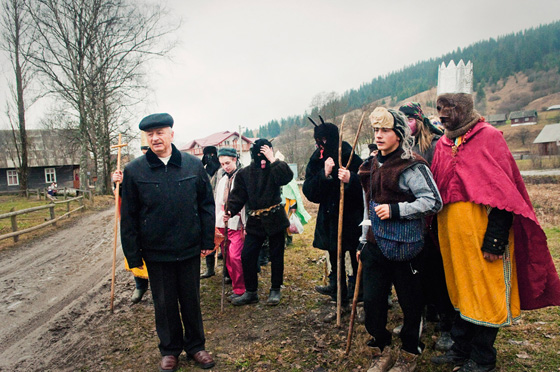 © Oksana Yushko and Arthur Bondar
We pass into the room. You might think that she had left her a hundred years ago and since then no one has entered it. There is a white sideboard in the corner, its shelves are laid with napkins. At the other wall is a wooden bed and a shifonier with such a muddy mirror that it seems - it is covered with a fog of the past, only everyone sees his sad phantoms in it.
- And who are Muscovites? I ask.
“Those who wanted a commune here,” the hostess answers. - That was the Lenin idea. We hate them with Dazha, ”she repeats,“ but they had doused for a long time.
- It turns out that there is no more Muscovite? - I suggest.
- Oh, I don't want to talk for politics! “She runs into another room, and Pan Roman, on the contrary, enters the room, so that, scratching the mustache and twisting his finger towards the mirror, significantly pronounce:“ We have nothing against the Russians. ”
In another room (and there are two of them in the house), a dilapidated granny sits near the bleached stove. A clean blue apron hugs her dried body. Blue eyes are surprised to look at one point, and you might think that their phantoms are sailing in front of her. With her hand, she tenaciously holds onto the iron corner of the stove, as if afraid - the phantoms will tear it off and take it with them. On the head is a yellow scarf, from under which something bright raspberry flows on a white parchment forehead.
“That's not a storm,” says the hostess. - then I lubricated my mother’s whore. She has an old age.
Kilim hangs on a bleached wall, black and white photos within the framework are hanging on top. On one - a woman with two black braids, her throat is captured by threads of pearls. Judging by her clothes, the house was built for her. Under the carpet, a bed, covered with a dark woolen blanket, is on top of it an old sheepskin coat lies on top, twisted with white sheepskin. In the corner is a wooden washbasin with an aluminum pelvis. The sewing machine is covered with a transparent tulle. В этой комнате так сильно пахнет подземельем, что кажется — внизу, под ногами, в погребе до сих пор прячутся повстанцы УПА.
— А у вас среди родни повстанцев не было? I ask.
— Были, — отвечает она. — Одну мою титку выслали за то, что повстанцем была.
— А погреб у вас в доме есть?
- Eat. Where are you from?
— Я из Москвы…
— Ах-ха-ха, — закатывается хозяйка. — Ну ничего, ничего, — успокаивает меня. — Россияне — тоже люди. А Путин — чрезвычайно мудра людина. Так он за свою державу робит. А що, разве вы погано живете? Я не была в России, но що я хотела сказати… — нараспев продолжает она.
— Подождите, — перебиваю ее, — дайте я спрошу. А если западные украинцы нас так не любят, зачем они в таких количествах переезжают в Москву?
— Ну так я москалей дуже не люблю, я к вам и не еду, тут у себя працую. Смотри, какой ремонт я в хате зробила сама.
— А вы помните, как ваших родственников высылали в Сибирь? — спрашиваю старушку.
Она встает. Складывает руки на груди и начинает плакать, заставляя меня пожалеть о вопросе.
— Так страшно было? — с сочувствием интересуется пан Роман.
— Да що я можу сказати, — сквозь слезы говорит та. — Я ж забуваю все. Ничего не помню. Паскуда баба теперь. Паскуда…
— Бог любит тех, кто прaцуэ, — говорит хозяйка, стоя на пороге. — Мы умеем працювати. Нация у нас такая, в крови так. Бог всих любит, но тех, кто працуэ, — особливо.
— Вы думаете, ваша семья сохранила бы свое добро, не раскулачь ее коммунисты?
— Тут один Господь знает. Мы починали з нуля. Хочу тильки сказати — нам дуже погано было жити, коли мы працювали в колхозе.
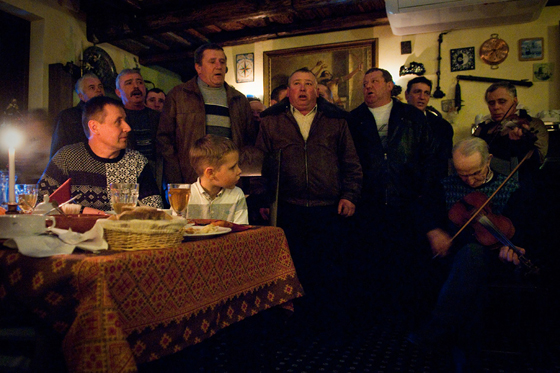 © Оксана Юшко и Артур Бондарь
У речки пан Роман останавливается и вдыхает зимний воздух, наполненный весной.
— С детинства природу люблю, — вздыхает он, почти окончательно переходя на русский. — Дуже люблю, когда пташка спивает и кукушка кукукает. Характер у меня такой — мягкий, отзывчивый. На все реагирую — кто погано про меня скажет, так я потом замучаюсь. Не люблю поганых, злостных людей, люблю честных, добрых, не вульгарных, — он мечтательно смотрит в тихие воды речки.
— Пан Роман, — толкаю его локтем в бок. — Ну, может, вы мне все-таки скажете, где колдунья живет?
- Oh! — вздрагивает пан, выходя из созерцательного состояния. — Ни! — сунув руки в карманы, бежит по мосту и останавливается только на противоположном берегу, где в кустах притаилась куча мусора. Оторвавшись от нее, но зацепившись за ветку куста, белый пакет, надувшись, колышется на воде.
— Кто загадил? — строго спрашивает речку пан Роман. — Москали приехали и загадили! Хе-хе, — добавляет, чтобы обозначить: то была шутка. — У меня нема такой думки, что россияне — це враги мои, — добавляет он.
Пан идет по зеленому лужку. Справа от него — церковь. В лицо ему смотрит желтая гора, на которой сидит светлый комок тумана. А направляется он к дому с блестящей металлической крышей. Там у дверей уже ждет его маленький седенький дед с веселыми глазами.
— Христос народився! — возвещает пан Роман.
— Славимо его! — подобравшись, отвечает дед и спрашивает: — А вы кто?
— Москали, — говорю я, и дед радостно потирает руки. — А вы — бандеровец?
— Не-е, я нейтральный, — отвечает дед.
Он садится за стол, берясь за его край так же, как в старом доме бабка держалась за печку. На столе стоят развесистый дидух и хлебный каравай.
— Когда мы были под Польшей, — начинает дед по-русски, блестя глазами из-под густых бровей, — нельзя было Святки справлять. И здороваться — «Христос народився!» — тоже было нельзя. С поляками надо было здороваться только по-польски — «Нахбенти похвалены Иисус Хресты!». Если ты встречал жандарма на улице и он спрашивал — «Кто ты?», а ты отвечал — «Я поляк», то сразу получал в морду. Если б сказал, что украинец, получил бы сильнее. Правильно было говорить — «Я польский обыватель», то есть подданный их. А в тридцать восьмом у нас был священник один, по имени Волошин Августин, он организовал украинцев против венгров. Но там были предатели в руководстве, и всех этих повстанцев побили. Живыми заставили копать себе ямы и убивали — всех. Есть ж такая украинская песня про это — «Ой ци чули тай вы браття, як боролось Закарпаття...» — качает головой дед, а любитель повстанческих песен пан Роман в такт мурлычет в усы. — А в тридцать девятом, — продолжает дед, — польско-немецкая война. Под командованием Гитлера напали на Польшу, то было первого… ага, сентября, тогда дети в школу шли. Та война длилась всего двадцать одни сутки. А мне в то время было девять лет, я в домотканых штанах босый бегал. И, значит, шел я туда, где коровы паслись. А люди все шли в Славское — это в восьми километрах отсюда. Но не знали, кто туда придет — немцы или русские. А между селами — Тухлей и Славским — связные были на лошадях. Старые люди шли, и я к ним прицепился — тату на войну ушел польско-немецкую, а я остался безоглядный. Пришли в Славское, и тут сообщили, что немцы едут. Мы смотрим — заезжают на трехколесных мотоциклах. Трибунку такую маленькую сделали. Немец сказал: «Тут… тут… тут… дойч нет. Тут будет русска коммуна». Это уже у Сталина с Гитлером согласовано будет. А русские только через неделю пришли, в ночь. Рано мы встали, а село все оцеплено, русские в таких, знаете, буденовках, уже окопы копают. Так что после школы я пошел солдат смотреть. А они меня попросили: «Принеси нам картошки». А я не знал, что такое картошка. Я такого слова не слышал.
 © Оксана Юшко и Артур Бондарь
— По-украински картошка — бульба, — вставляет пан Роман.
— А там был солдат с Восточной Украины, он мне говорит: «Хлопчик, это бульба, бульба». Я пошел домой — «Мама, солдаты бульбы просят». Мама набрала два ведра, намыла в речке. Мы вынесли им эту бульбу. Старший командир спрашивает: «Отец курит?». Хотел махорки ему насыпать. «Не», — отвечаю. Тогда они собрали мне копейки — «Привезут вам русские конфеты, купишь себе конфет». С тридцать девятого по сорок первый год они у нас и простояли. Местные называли их «москалями». А хлопцы, которые немного грамотные, они бежали в сорок втором году за границу — в Венгрию, а оттуда — в Германию и в Америку. Богато их у нас утекло. А в сорок первом уже колхоз организовали. Было так — или колхоз, или тюрьма. А те семьи, откуда хлопцы поутекали, они как изменники были. Пятого мая сорок первого года их выслали в Сибирь, а летом уже началась война. Русские войска отступили в сторону Австрии, и сюда пришла немецкая власть. По сорок четвертый год тут были немцы. Некоторых они наказали повешением.
— За коммунистические идеи, — дополняет пан Роман.
— А они были коммунистами? I ask.
— Они были украинцами, — отвечает дед. — В сорок четвертом в конце сентября пришли русские.
— Местные работали на немцев?
— На немцев не работал никто.
— А бандеровцы, — вставляет пан Роман, — были против всех — москалей, немцев и поляков.
— Не много ли они на себя взвалили? — интересуюсь я.
— Повстанческий дух на Волыни был масштабный, — отвечает пан Роман.
— А было тут еще такое, — спешит рассказать дед. — Получилось как? Немцы отступили, а русские зашли через ту гору, — машет на гору за окном. — На одноколке — три солдата и офицер. И, получается, ехали сюда, вниз, той дорогой. А тут остатки венгерской армии в это время кур жарили. Венгры дуже любят кур есть. И смотрели они на своих кур, как раз в ту сторону. Их было двенадцать человек с пулеметом. Русские заехали, тут их и постреляли — чуть ниже церкви. Тут рядом могила их. А офицер был ранен, он — на лошадь и ускакал. Вот так венгры наших из-за кур и постреляли.
— В смысле наших? — делаю движение рукой к себе.
— Наших, — подтверждает дед.
— Но русские солдаты — не ваши, а наши.
— Они и нашими тоже были до девяностых годов, — произносит пан Роман.
— А еще важный случай я расскажу, вам надо знать. В сорок четвертом в августе я пас в лесу своих коров. А там дядьки из УПА собиралась. Я дуже лошадей любил, ходил к ним смотреть. Мне четырнадцать было. И вот помню, сидят те дядьки и обсуждают между собой: Америка помогает русским, а не немцам, значит, русские опять придут и загонят всех в колхоз. А один главный бандеровец сказал: «Немец — един, в нем только дух надо уничтожить, и он падет. А Россия — многонациональна. Придет время, и она сама распадется, как негодная посуда. Mark my words". Я это услышал и запомнил. Потом война закончилась, я пошел служить в Советскую армию, увидел эту сильную военную машину и подумал: «Болтал ты, дядька, что русские распадутся». Но когда случился путч, я по-другому вспомнил его слова.
— А как вы думаете, что должно уйти из России, чтобы она распалась? I ask.
— Она распадется, потому что многонациональна.
— Сама по себе, — добавляет пан Роман. — Всем империям предречена загибель.
— Нацизм — самый враг, — говорит напоследок дед.
Начинает вечереть. Пан Роман идет обратно по тому же мостку. Вода в реке потемнела — вечер вынул из нее свет.
— Пан Роман, — остановившись, говорю я. — Вы были под Польшей, Австро-Венгрией и Советским Союзом. Но выходит, что хуже всего вам было под нами, раз все кругом не любят москалей?
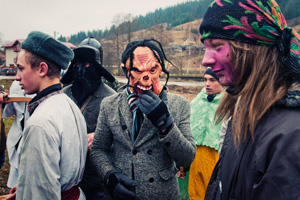
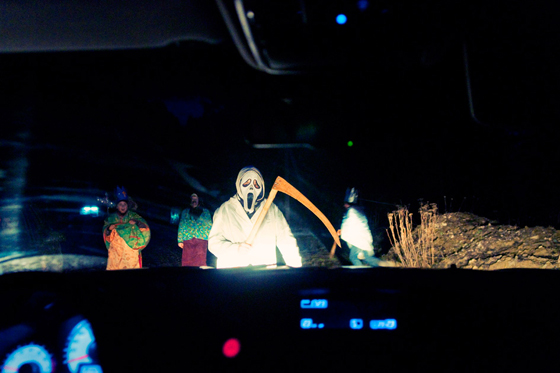
— Нет, так нельзя говорить, — отвечает он. — В восьмидесятых годах при Советах жизнь была хорошая. Только нам главное не нравилось — угнетение религии, — пан загибает один палец, — мовы… — второй. Но пан не успевает договорить и загнуть следующий палец — из темноты показывается смерть с длинным белым лицом и с косой в руках. За ней семенит черт с бубенцами на поясе. А за ними тянутся прочие ряженые, напевая колядки.
— Пан Роман, может, вы мне все-таки покажете тот дом?!
— Ни-и! — пан трусцой сбегает с моста. — То страшно! — кричит с другого берега. — Страш-шно!
 © Оксана Юшко и Артур Бондарь
В ночь я возвращаюсь к речке и снова перехожу ее, но уже через другой мост — узкий, по которому вдвоем можно идти, только прижавшись друг к другу. Деревня готовится ко сну, на улице — ни души, но в домах горят еще окна. Речка под ногами — совсем черная. Шумит громче. За мостом — липкий от холодной грязи пригорок. Взобравшись на него, я подхожу к темному дому, в котором — ни огонька. Обхожу его со всех сторон. Начинают лаять собаки. Дергаю дверь, она заперта — здесь не живут. Иду дальше, ноги тяжелеют от грязи. Передо мной — другой дом и забор голубого цвета. В доме горит окно.
- Good evening! Есть кто-нибудь?
Слышно, как звякают цепи. Собаки близко. Дергаю калитку. Заперта. Зову. Дом молчит. Нащупав язык замка, я скидываю его с петли, быстро пересекаю двор, оглядываясь — как бы не было собаки. Поднимаюсь на крыльцо. Стучу в дверь. Зову. Открываю дверь и захожу в сени. Теперь мне слышно, как в комнате кто-то поет колядки. Открыв еще одни двери, я прохожу в коридор и снова стучу. Дверь открывает полный лысый старик с оплывшими глазами, в которых сильно вывернуты края нижних век. Увидев меня, дед вздрагивает. За его спиной показывается полная пожилая женщина с толстой косой.
— Простите, — говорю я. — Я ищу женщину, которая колдует.
Дед отступает обратно за порог. А женщина подходит ко мне близко и смотрит в лицо широко расставленными карими глазами.
— О ком она? — тихо спрашивает дед из комнаты.
— О той, которая ворует у коров молоко, — громко говорю, заглядывая в комнату. — Носит под мышкой вороньи яйца. Заговаривает собачьи укусы и укусы змей. Она может навести порчу, а может снять. Может сделать любовный приворот. Я такую женщину ищу.
— Дiвчина, — хватает меня за руку женщина, — да ты що?! Не ходи ты к ней…
— Покажете, в какой стороне она живет?
Вцепившись сильнее в мою руку и прижав ее к своему мягкому животу, женщина выводит меня во двор. Потянувшись другой рукой, включает свет на веранде.
— Это свет тебе, — говорит она. — Как пойдешь, так вправо. Собаки там — на цепи. Ты тихонько иди, к заборчику прижимайся, они до тебя не дотянются тогда. Вон видишь, там дом, — она показывает на темный домик, в котором слабо мерцает желтое окно, и от этого тусклого света вокруг становится еще темнее.
— Глянь… — она прикладывает руку к губам, словно закрывая свой рот на замок, — она уже знает, что ты идешь… Почикать тебя не можу, боюся, — она выпускает мою руку. — Боюся. Сама иди.
Женщина быстро исчезает в темноте, а я, как она и советовала, иду близко к забору. Собака ходит совсем рядом. Рычит не зло. Но тут по всем темным холмам и оврагам прокатывается многослойный лай потревоженных собак. Забор заканчивается. Передо мной дом. У калитки с той стороны виднеется темная фигура.
— Здравствуйте, — обращаюсь к ней. Но все, что я вижу, — это то, что передо мной женщина, что лицо ее бело, а одежда черная. — Я ищу женщину, — говорю я.
— Яку женщину? — тихо спрашивает она.
— Ту, которая живет в вашем доме.
— Ты про що, дiвчина? She asks.
— Она снимает порчу. Она наводит порчу.
— Тут нема таких.
— Она ворует у коров молоко.
— У мене четыре корови, их молоко на мiсцi.
— Она заговаривает укусы змей. Она носит под мышкой вороньи яйца.
— Та що ты говоришь таке?!
— Одним словом, я знаю, что она живет в этом доме, и я хочу ее видеть.
— Ти точно хочешь зайти?
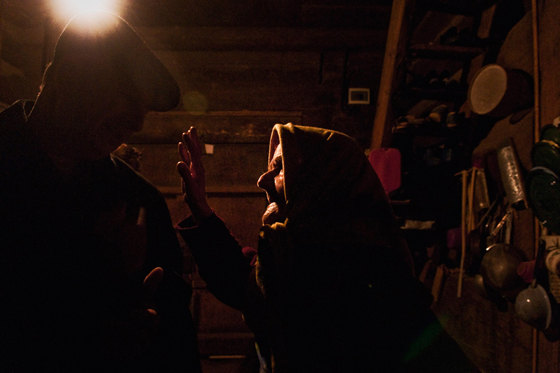
Она ведет меня к дому. Привыкшие к темноте глаза различают, что женщина одета в черную кофту и черную юбку, на голове у нее черный платок. Заходим в темные сени, она закладывает дверь, и не успеваю я оглянуться, как она исчезает. Ничего не видно, здесь сплошная темнота и ни одной щели, из которой я могла бы увидеть свет. Жду минуту, две, три. Наконец и к этой темноте глаза привыкают, я начинаю видеть очертания предметов. Оборачиваюсь и, подскочив на месте, вскрикиваю — прямо у меня за спиной стоит седая старуха. Все это время она была там, в двадцати сантиметрах от меня, и смотрела мне в затылок.
— Простите, — говорю ей. — Это я от неожиданности.
Дверь открывается. Мы заходим в темную комнату, где по стенам висят черные лицами иконы. По полу разбросана солома. Я прохожу по ней и усаживаюсь в ветхое кресло. Старуха усаживается в такое же напротив меня, и долго мы смотрим друг на друга. На ней черный жакет и черный платок в голубую крапинку. На высохшей груди — крест. Крупный нос, он словно стягивает на себя все ее лицо, делая узким. Лицо у нее грубое, наверное, к концу жизни приобретшее мужские очертания. Глаза большие, неподвижные. Она была бы похожа на ворону, если бы не цвет глаз. Они — голубые и подсвечены мутным светом изнутри. Мерцает тусклая лампа, отчего кажется, что полутьма клубится под ногами.
— Кому ты хочешь сделать плохое? — наконец спрашивает она.
— Никому.
— Ты хочешь навести порчу?
- No.
— Зачем пришла?
— Я просто хотела спросить, почему вас все в деревне боятся.
— Святки, — она поворачивается к иконам. — Единственный день в году, когда я не могу ничего сделать. Бог меня покарает, если буду делать сегодня. Страшно покарает.
— Я видела тебя утром в церкви, — говорит ее дочь — та, которая впустила меня. — Я долго стояла прямо за твоей спиной. Ты меня не заметила.
— А вас я в церкви вообще не видела, — обращаюсь к старухе.
— Если б я пришла, все б ушли. Дай ей чай, — говорит старуха дочери, — и сладкое. У меня было шестеро детей, — продолжает она. — Они умирали, когда им исполнялся год.
— От чего? Они болели?
— Нет… От злобы людской.
— Разве только злоба без дела может убить?
- Maybe. Ты кого-то любишь? Хочешь, чтобы он по твоим стопам ходил?
- No. Don't want.
Старуха плачет. «Святки… Святки…» — повторяет она, глядя на иконы, пока я пью чай.
— Приди еще, девица, — обнимая меня на прощание, старуха шепчет в ухо.
— Я приду.
Ее дочь выходит меня проводить. Шикает на собак. Движемся к скользкому пригорку. Она подставляет мне локоть — не уверенная, что я за него возьмусь. Но я берусь и так, держась за нее, ступаю на мост, по которому мы уже проходим бок о бок.
— Я уборщицей работаю, — говорит она. — Моя зарплата — тысяча гривен.
«Нет дыма без огня, — говорили про старуху гости пана Романа. — Если б не было за ней черных дел, не обходила бы ее вся деревня стороной». Но в чем правда — только лишь в том, что не может задымиться без огня, или в том, что мы окружаем других людей своими собственными страхами и суевериями? А если источник дыма — все же зло, то нужно ли отвечать на зло злом, преумножая его? Да и что сильнее — само зло или злоба, которая копится вокруг него?
Мы идем по мостику, и я знаю, что деревня не спит, подглядывает за нами и наутро все будут знать, что я ходила через речку с дочкой колдуньи. И, может быть, если я покажусь в чьем-то доме, то у коров сразу пропадет молоко. Даже у таких выносливых, как коровы добряка пана Романа — стоически переносящие его песнопения. Но это будет завтра, когда снова взойдет солнце и Святки закончатся, а пока черная речка шумит, напоминая о словах деревенского священника — благодать как вода, Бог льет ее на вас, но умыться вы должны сами.