Date
Author
Source

Preserved copy
Translated material
Because of the Olympics in Europe, they learned about SORM
In society
 Because of the Olympics in Europe, they learned about SORM
February 6, 2014 Andrey Soldatov, Irina Borogan
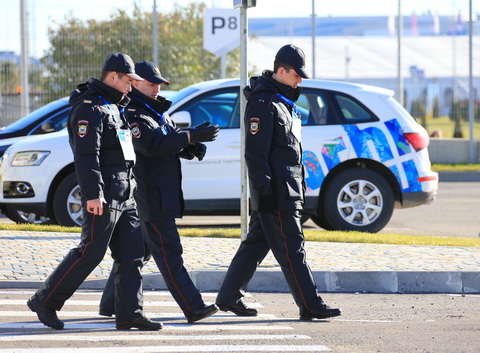
Thanks to the Olympics in Sochi, the Russian special services managed to almost impossible. In world debate around electronic surveillance, which began thanks to the revelations of Edward Snowden, it was only about surveillance from the American agency NSA and the British GCHQ. Particularly advanced also talked about electronic espionage from the side of the “five eyes” (the Anglo -Saxon alliance of electronic intelligence services, which unites Great Britain, USA, Canada, New Zealand and Australia, notorious since the global wiretap “Echelon”). A month after a month, the discussion was spinning around the operations and spy programs of the special services of these countries, but now a new object for study has appeared among them - the Russian Federal Security Service and the Russian electronic interception system.
The only reason that the Russian special services have the forefront is a total electronic surveillance system installed by the Russian special services at the Olympics. Moreover, a special merit belongs to the demonstrative nature of the measures taken by the FSB.
When we published in The Guardian our first investigation about the monitoring system in Sochi, the Kremlin’s reaction was quite amazing. It was best expressed in the heading on the Voice of Russia website, addressed to the English-language audience: “Do not be afraid of wiretapping during Sochi-2014, this is for your own safety” (Dont wrote of the Phone Tapping During Sochi-2014, It's For Your Own Safety). That is, no one tried to deny the results of our investigation. It even seemed that the Russian authorities flaunt their capabilities in the field of interception and wiretaps.
A month later, our suspicions were finally confirmed when the Rossiyskaya Gazeta was published in the Russian Government Decree signed by Medvedev, which actually announced the collection of metadata for participants in the Olympiad, including athletes, judges and journalists. And again - no attempt to hide the fact of creating a special metadata base, which, incidentally, will be stored three years after games, with round -the -clock access of the FSB officers.
Apparently, the calculation was made that, having heard about all these surveillance programs, a record number of video cameras (11 thousand), airships and drones, activists will think twice before organizing any shares in Sochi, and journalists will think three times, whether they should cover these shares. Now they will have to consider that all their contacts will be inevitably intercepted, and there will be more than enough time to decipher them (otherwise why still keep metadata after games for three years).
It is not known how effective this FSB tactics at the Olympics will be, but these measures have already led to one result. A week after the publication of our investigation in The Guardian, three deputies of the European Parliament sent a written request for surveillance of European citizens at the Olympics in Sochi to the European Commission and the Council of Europe. Meanwhile, in the European parliament, there was already an investigation into mass surveillance for citizens of the European Union, begun due to Snowden's revelations. Until January of this year, the investigation concerned exclusively the actions of the American and British special services. However, on January 22, at a special meeting of the Committee on Civil Freedoms of the European Parliament, the Russian electronic surveillance system SORM was already discussed.
Only a very lazy television channel did not remove the plot about electronic surveillance in Sochi. In the coverage of preparation for the Olympiad, the theme of surveillance on equal terms competes with the topic of safety, almost ahead of the topic of corruption during the construction of Olympic facilities. And often security and surveillance are already little separated from each other. In the spring, the US State Department issued a warning to US citizens who want to visit the Olympics to forget about the priest during the games, and advise to leave their smartphones and laptops at home.
The newly presenting NBC correspondent Richard Engel made a loud story that the three devices he brought to Moscow - a smartphone and two laptops - were hacked by hackers almost immediately after he took advantage of the public WiFi in Russia. (Engel even attracted a computer security specialist who specially came to Moscow to check the safety of electronic communications in Russian conditions.)
You can, of course, recall the professionalism of Russian hackers. And it can be recalled that at the request of the FSB since April 2011, Western suppliers of equipment for public WiFi networks began to import specially adapted wireless networks to Russia, because according to the rules for importing cryptocurrencies, they must be disconnected by data encryption, sent to the wire segments of the network.
Russian electronic surveillance systems, including SORM (special community complex for operational-search measures at all types of communication), of course, will not be compared in scale to American programs, which became known thanks to Edward Snowden. Not due to the lack of desire for the FSB. Due to the technological lag in the world, it is customary to use American services-such as Google, Twitter and Facebook-and on American Apple devices. While VKontakte is used by citizens of the countries of the former Soviet Union, and the queues for Russian -made smartphones are not observed even in Moscow. Sorm provides access for the FSB only to services that physically hung up in Russian territory.
Actually, this allowed many activists and human rights activists to say that it is necessary to focus on criticizing the American special services as more evil, threatening everything, compared to the espionage programs of Russian or Chinese intelligence services, which are of local importance.
However, for those who arrive in Sochi, this argument is unlikely to look quite convincing.