
Translated material
Ethics of chiaroscuro
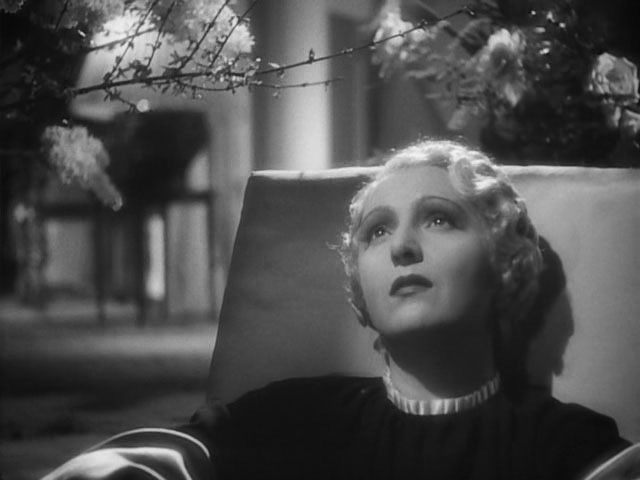
Freedom of choice is not in choosing between trifles, it should be a choice between paradise and hell if you can catch the shades of everyone in the gray world.
Flannery O'Connor
Last year, the American-Japanese film cinema Daisuke Miyao, a professor of Oregon University, wrote a scientific work called “Aesthetics of Shadow. Lighting and Japanese cinema. " In it, the author compared lighting styles in Japanese and Western classic cinema and investigated the influence that the second exerted on the first, falling into the Japanese rental. This work fell into the hands of Rainer Rother, the art director of the German cinema, and I liked it extremely. I liked it so much that he initiated a separate large retrospective under the name “Aesthetics of Juperity. Lighting styles 1915-1950 ”, built on the basis of the work of Miyao and combined with the presentation of the German edition ... So far, everything looks good. Solid. Thoroughly. For those who understand, even tempting. So far, those who understand, do not begin to peer in more detail. At least in one list of films retrospective.
There were two options for configuration. Actually, there are always two of them: historical and theoretical. In other words, films can be shown, the connections between which (towards borrowing or repulsion, no matter) are documented and proved, but you can, those whose comparison is especially indicative and instructive. That is, for example, if we talk about the Japanese cinema of the 20s, then you can compare it with the films of the French film award, who were in the Japanese box office (if they were at all that they were extremely doubtful), but it is possible-with those of them that were shot in a similar manner (which is why only the differences are more visible), saying that these two were related to indirectly (for example, through literature) or generally developed) or generally developed) or generally developed) In parallel and independently, kinship is due to the general attitude, similar factors or thin, before the rollings of any attitudes in the mentality of two nations. Both options are good, both have their own in advance well -known pros and cons (historical sinning boring, theoretical - voluntarism), both hundred times are tested and crowded.
The current Berlin version is apparently some third. The “historical” version can be discarded immediately: the chances of seeing the “Games of Reflections and Speeds” by Henri Shomett or “Emac Bakia” by Japanese filmmakers were unlikely to see them-not all Parisians saw them, the avant-garde was “for their own” and beyond the limits of the bohemian establishment almost did not go out. Not to mention the “citizen of Kane”, who was released on American screens in May 1941, six months before Pearl Harbor, on Japanese-exactly a quarter century later. And where did he come from then in this retrospect?
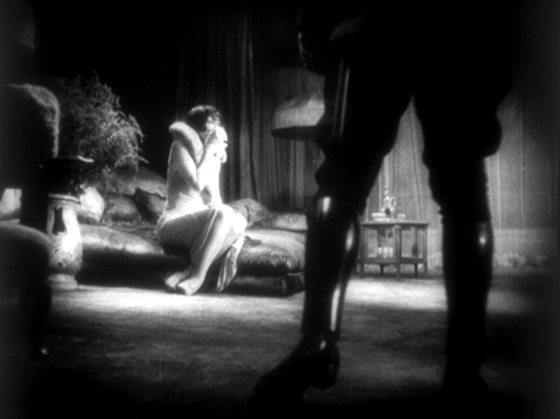 Frame from the movie "Asphalt" (dir. J. May, 1929)
The Japanese trace of the transformation of Professor Miyao into a retrospective of Mr. Roter, however, was slightly wiped: the names are completely cleaned, and in official releases the touching transfer “Lighting styles in the movie of Japan, the USA and Europe” (just so, in one breath and invariably in this order). Well, therefore, the method is selected “theoretical”, and the goal is simply to present representative examples of different light styles, and then “Citizen Kane” with his light partner is quite appropriate, like Shometta and Ray's films. But just here the questions are just beginning.
Of course, any list is vulnerable. You can always come from the street and ask angrily-why not such and such and why is there something to him instead. And the wider the topic, the more vulnerable the choice-and the topic is wider than “Aesthetics of the Shadow” and it is difficult to imagine, the classic movie was engaged in this aesthetics all the time of its existence, in other periods-it simply came down to it, and wherever you flut up-you will get into the model. Everything is so. And if we were talking about several annoying (annoying! Inappropriate!) Obtainations or excessive - or, on the contrary, insufficient - whimsical selection, it would not be worth the conversation. But, unfortunately, filming is strict discipline. With borders and typologies. They are not unshakable, but they are. And from the point of view of this discipline, the composition of the current Berlin retrospective is not “whimsical” or “bizarre” there. He is simply incompetent.
Say, neither the “anthraquet” by Rene Cleer, nor the “stagecoach” John Ford has nothing to do here. Beautiful films, wonderful, classic, but only the “Aesthetics of the Shadow” - almost the most unimportant in them. The “informant” of the same Ford would be much more accurate, but the funerals of the chiaroscuro at all have little attained. “Anthrak” is just the first name that comes to the mind of the profane-synephil at the word “Kinoanward”, and it seems to be “he-long-and-be-and-so-how-it-biz”, but the topic, on all its scale, has been formulated clearly, and “Anthract” has nothing to do with it. From the fact that he is mentioned in the work that inspired Rainer, it should not yet be that he is appropriate as a separate point of retrospective.
The same applies to the "zorro sign" Alan Duon. Last summer, a large retrospective of Duon was held in the Bologna chinette, and my colleagues and I remember, quietly made fun of the enthusiasm of the organizers, whose strong artisan Duon came out almost with a light of Hollywood directing, but it did not even occur to them to read it as a master of chiaroscuro. He was not too obvious to them. “Zorro sign” here because Fairbenks was superpopulsed in Japan and films with it, according to Miyao's work, greatly influenced the evolution of the Jidaigack genre (more precisely, his backing tambara), i.e. All kinds of fencing cinema. But, firstly, this is again the “historical” method of design (and then, start first, and the “Kane”), and secondly, it is unlikely that the light solution of the “Zorro sign” (very banal by the standards of 1920) inspired Japanese masters. Just because there is nothing to inspire there.
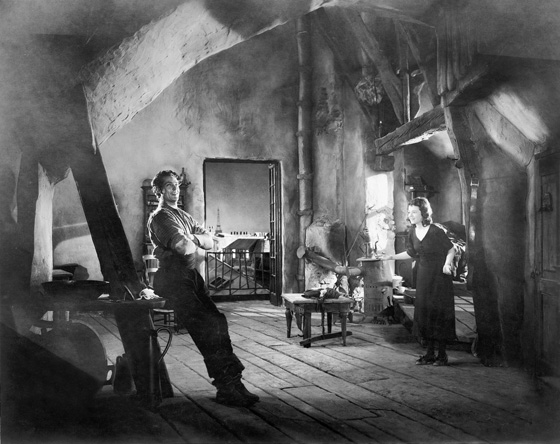 Frame from the movie "Seventh Sky" (dir. F. Borzedge, 1927)
Well and so on. If we are talking about presenting the diversity of classic light kinnia, then where is Holger-Madsen (who invented a control light as an aesthetic technique), and Dreyer (interpreted light as a religious substance), and L'Erbier (which defined the measure of illusory of visible)-and generally Pabst, without which the conversation about light in the cinema is in principle deeply pointless? If you still become attached to the history of Western influences on the Japanese film process-then (the devil with him, with Kane) where is the “daughter of the samurai”, shot in Japan, the great German master of light Arnold Fanku, and triumphantly walking in the Japanese rolling of the late 1920s “The Seventh Sky” of the Borzedge and “Asphalt” Joe May (both-both-Clean masterpieces Lighting solution) And why is the “embankment of fogs”, if from French cinema of the late 1930s, the Japanese honored Duvivier films-which “are responsible” for the same style, the light is used, to put it mildly, no worse, and lose to the film Carnna because he, like the “Anthraquet”, comes to Profan to the mind first? And, in the end, what kind of mythical professor did all this behind the highly reverent professor Miyao and Mr. Roter, who, by the position of this paragraph, is supposed to know the nazubok?
... The point is actually this. The topic chosen by Daisuke Miyao is not only very important for his work, but also very difficult because the very idea of the light in Western and Japanese cultures varies in the root. And cinema, with all the versatility of his language, being black and white, that is, in fact, specifically light, reflected this difference so fully that it took a complex, even painful, and very long process to develop at least any general ideas about which laws are distributed in the frame and why. Behind the Western culture, of course, there was the right of championship, the cinema is generally a French little thing, and therefore this process of adaptation was not mutual, it passed exclusively “there”, under the influence of Western filmmakers, and the regime of cultural Autarchy in the Japanese empire also significantly slowed down. He walked unnecessarily, selectively, some samples were accepted and took root better, some worse (and for the reasons unpredictable and incomprehensible to Western consciousness)-and, in general, it is difficult to be sure that by the end of the black and white era he managed to end; Lighting decisions in Japanese films, for example, the 70s-especially in those that were intended exclusively for internal rental-are often simply unusable in Western cinema. And no forced post -war wisternization of Japanese society has changed almost nothing here.
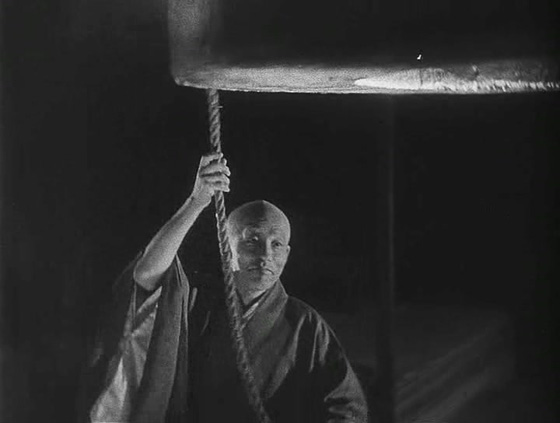 Frame from the film "Daughter of the Samurai" (dir. A. Funk and M. Itam, 1937)
Perhaps no one studied this issue better than the great Junytiro Tanizaki in his essay “Praise of the Shadow”. He, in particular, is very surprised at the addiction of Europeans to the light in houses and shreds on objects - while in Japanese there is, for example, the special word “nare”, meaning “noble greasy of time”, when objects finally get rid of the faceless novelty and fade, gaining biography and individuality. Well, how to read the classic Japanese frame (and Japanese - Western), if the struggle of nobility with evil is given there as a spore of light and shadows - only on the contrary in relation to each other? What any, even a beginner knows about: a classic black and white cinema by definition is necessary morally. Our understanding of light and darkness is instinctively, naturally repelled from the phrase “and has become light” with all the sacred connotations. And in Japanese culture of this phrase - as the main one for attitude - no. And the light there means completely different things. About which there is no place to write about here, because they, seriously speaking, are indistinguishable.
The true problem of the Berlin retrospective is not the presence of some films and the absence of others. And in a short phrase, not nothing hesitation included in the releases: "Light kuniyahi Japan, the USA and Europe." The branded, long -term attitude of Berlinale for political correctness is so carefully trying to level the differences between cultures, which meaning these cultures themselves and the subject of conversation. Between the Japanese and the European - here the political correctness of law - the differences are really superficial: skin color, the structure of the skull, the proportion of blood cells; Between Japanese and European cultures, the differences are so essential that the phrase “light kinnia of Japan and Europe” simply does not have practical meaning. There is nothing more erroneous than representing the black and white era of cinema as a single, general context, thanks to the quirks of individual artists and the historical process branching in different styles, which, however, are complacently and conflictly coexist with each other. This means not to understand that the style is not a “surplus value” mixed for effectiveness, but the essence of the work, the only source of its meaning. Prosperous in the United era The Berlin festival, it seems, simply forgot that black and white cinema belongs to a different era (no matter how much it relate to it)-the era of world wars and aesthetic triumphs, the Montmartra and Auschwitz era, demanding and intolerant, where issues were not posed about the shades of color diversity, but about black and white, and required a choice. The only reasonable format for such a retrospective as the current Berlin is a clash of two contexts and the emphasizing the difference between them. A retrospective dedicated to the essence of black and white cinema cannot but be black and white. But this, of course, is an extremely untimely formulation of the issue.