
Translated material
Knight of a fireplace rug
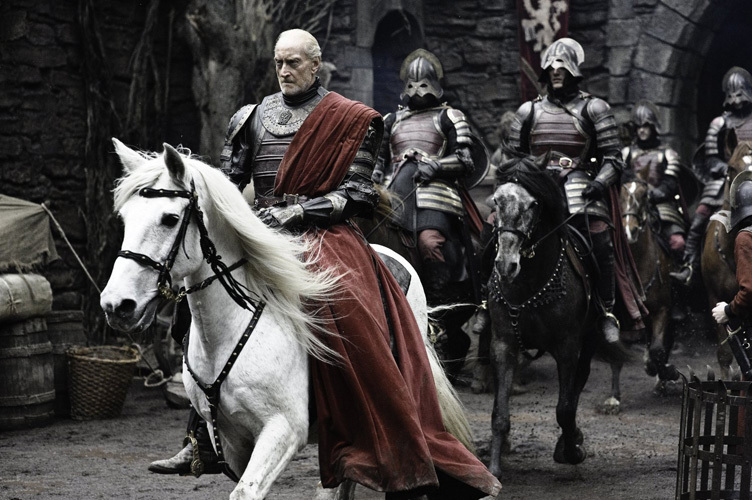
The lack of swords and cloaks on the screens does not threaten us. After a month and a half, the fourth season of “Game of Thrones” will begin, on February 27 the second season of the Canadian-Irish series “Vikings” will start, and on the same day the last film by Alexei German Sr. will be released in Russian rental. The author’s speakers, blogs and statuses in social networks are again crammed with phrases about the “deaf Middle Ages”, “gloomy dark eyelids” and other - certainly with allusions for the current Russian reality.
What, in fact, the Middle Ages is returning? Of course, no - new Russian laws and new cinema are products of a completely different era and other society. But the very attempts to find the features of the Middle Ages in the unpleasant aspects of modern life is a characteristic example of the perception of the Middle Ages, dating back to the eras of the Renaissance and Enlightenment. We owe them an indestructible idea of the times of “dark” - wild, cruel and infringing human rights - and “medium”, inevitable, but sad gap between the golden age of antiquity and its revival.
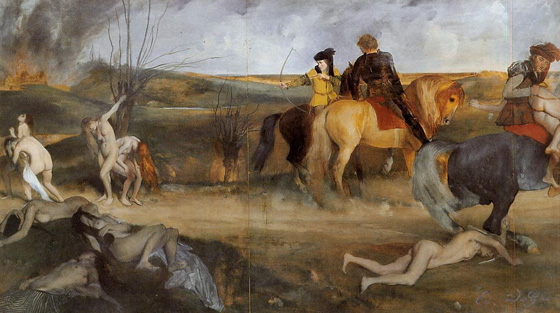 RMN-Grand Palais (Musee d'Orsay) Edgar Degas. "Scene de Guerre au Moyen Age"
This is a simplification and flattening of the Western European Middle Ages, its reduction to one large allegory of ignorance and violence can easily illustrate Edgar Deg and the Scene of War in the Middle Ages (1865). They interpret it in different ways-at first they considered the artist’s reaction to the Civil War in the United States, now perceived as a general symbol of female suffering. This picture of Degas, it seems, could become the poster of the film “It is difficult to be a god” - however, there is no blood, dirt and feces on it.
If Dumas used the story as a nail for the picture, then Martin kneads paints based on history.
Wonderful Medievist P.Yu. In 2012, in 2012, in the report “ De Differentiis SoupParum: Reviews about mediawalists and mediawists, Cum Commento ” noted that the Middle Ages, invented by humanists, educators and romantics, university professor, are quite viable today. Conventionally, if you greatly simplify the current state of affairs, mass ideas about the Middle Ages are now fluctuating between two poles. One is the world of generous kings, noble knights, beautiful ladies and opera villains, which, of course, does not do without passion and betrayal, but the armor still sparkle, the locks proudly re -rush over the green fields, the pious monks can withstand the ideals of knights withstand all the trials. Another option is that the knights are unprincipled, cruel and alcohol, the monks behave like tartuf, ladies are lustful or fanatical tantrums, their teeth are yellow, their hair is unwashed, under the nails - lovingly abandoned crust of mud, it is cold in the castles from the need, in every self -respecting village, the witches, in a word, the world of “Yankees from the Kolonkita. Court of King Arthur. "
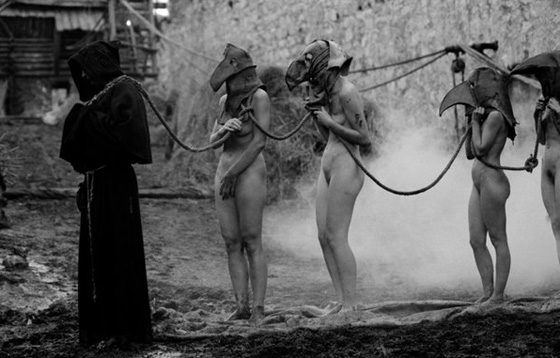 © Lenfilm/Studio "North" Frame from the movie "It is difficult to be a god"
Between these poles are countless variations that combine the features of the “beautiful” and “terrible” Middle Ages, including the cozy world of conservative escapism with spiritual scrapers and traditional values or the fantastic constructions of the creators of alternative history. But what about the "real" Middle Ages?
To recreate the “real” Middle Ages, “what it was” is an entertaining task, but, alas, it’s hardly fulfilling: even the scientist projects his views on the studied era, and his main efforts, if this is a conscientious scientist, leave to exclude himself from his own study. You can’t do without interpretation, even when publishing texts of medieval manuscripts. Therefore, any reconstruction in a certain sense is all the same fantasy, simply with a greater or lesser degree of historicity. Not to mention that it is still not entirely clear when exactly the Middle Ages ended - because there are supporters of the “long Middle Ages” who include its completion only to the era of the Great French Revolution.
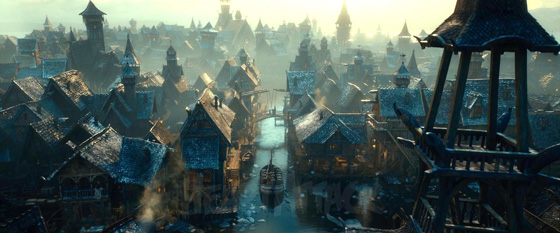 © Warner Bros. Frame from the movie "Hobbit: Mustard Smauga"
Watching attempts to build your Middle Ages from the chosen bricks, what is happening with different images of the Middle Ages in mass culture is always exciting. The whole complex of ideas about the Middle Ages is usually called mediawalism ; Umberto Eco 40 years ago proposed to designate this with the term "neophydration".
The gap between the science of the Middle Ages and the modern ideas about the Middle Ages, mediavicism and mediavalism is not as great as it might seem at first glance. Far from mediastics, people with amazing zeal collect information on the plots of interest to them and post in blogs and on the forums many carefully scanned and reset scientific monographs on the most boring historical topics. At the same time, historical experts are able to pore in their free time over modifications of computer games to make them more historical.
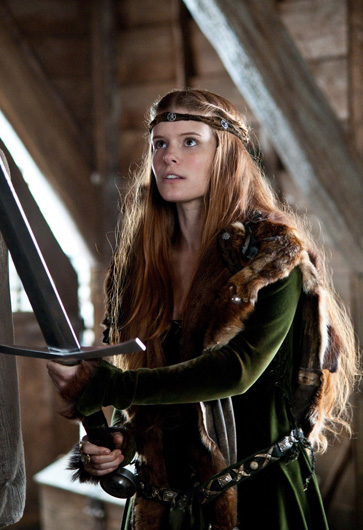 © Warner Bros/Arc Entertainment Hard from the movie "Ironclad"
In the fabulous Middle Ages, attracting a modern person, there is enough violence and sex with excess-it was no coincidence that after the release of the first season the “Game of Thrones” was accused of an unscrupulous Sexploitation due to the presence of candid scenes in each series. Does this mean that the series is intended for publishers of puberty? Of course, they are among the audience, but they are unlikely to make up a large part of it. Just the Middle Ages are perceived as a riot of flesh and blood in the spirit of Verkhoven, as well as the nostalgic world of Old America in Mad Men and Boardwalk Empire , among other things, is a reflection for the smoker being dedicated to modern laws.
The genealogical tree of the noble genera of Westeros with their emblems and motto is written out with manic thoroughness worthy of the compiler of tournament books of the 15th century.
The new pseudo -medium -medium hero can be different, but most often a tricster comes to the place of the paladin, the knightly epic is mixed with a rogue novel. They can be successful quite successfully - for example, in the film “Ironclad” (2011), the next variation on the topic “Seven Samurai”, among the heaps of rebels defending the Rochester castle from the army of the mercenaries of King John the Land, there are no knightly and impeccable characters. However, all of them - and the Templar who violated their vows, and the rude baron, and the neopar of the squire, and the daring yomens - eventually turn out to be quite heroes.
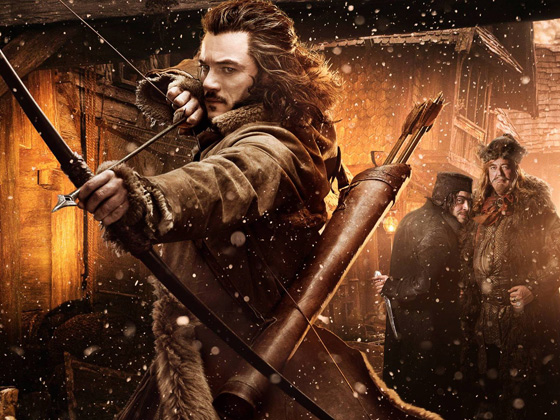 © Warner Bros.
Anyone who is too worn with ideas about honor and nobility, usually dies in this world faster. It is no accident that instead of the phrase “One for all and all for one” in the freshly baked series BBC “Musketeers” sounds: “The motto of the musketeers is each for himself.” True, the XVII century is not entirely the Middle Ages, except for the "long Middle Ages"; However, in the case of this “brutal fairy tale” with corpses in the snow and cowboy hats on musketeers, in principle, there is no need to speak about historicality.
In George Martin’s novels and the series shot by them, the heroes are honest, fair and strictly the following code of honor or call of the heart usually die like flies, while the characters are not so scrupulous to survive in the most difficult situations. In the second film from the new trilogy of Peter Jackson based on the Hobbit Bard, Bard, the future savior of a lake city from a dragon, from a gloomy guard becomes a disidue smuggling. Esgarita himself is shown as a medieval Scandinavian city, the city guard combines in its appearance the features of European soldiers of the 16th century and Russian combatants, the burgomaster generally wears lace and camisoles of the 16th -XVII centuries - Medianism as it is. However, in this, Tolkien’s native language of the townspeople is related to the Language of Rochirimov, created on the basis of the Anglo -Saxon, that is, it is approximately similar to the ancient Neskandinavian.
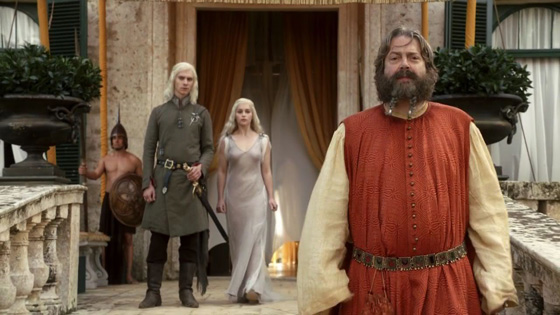 HBO frame from the series "Game of Thrones"
The clothes and weapons of the heroes of TV shows and computer games are a separate occasion to get gray for historians of the costume and specialists in arms - if they do not have enough composure to just sincerely have fun. In the “Game of Thrones”, the voluminous waist of the merchant Ilrio Mopatis covers a belt from Afghan jewelry-“heaps”, which actually put on the neck or placed on a horse harness, of which bracelets and bandages of the captains of the mercenaries were made. The warriors of the Baratheons wear burginots - the "Burgundian helmets" of the beginning of the 16th century. Lord Walder Frey drinks a feast of a cup, similar to a score for participles, helmets of the unpleasant warriors, which could wear Indian warriors from Heydarabad at the end of the 17th century, are on the heads of the warriors-jackets.
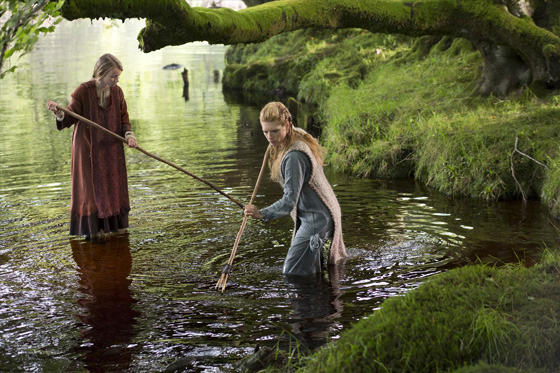 Frame from the series "Vikings"
Does this have any meaning for spectators or players? Not the slightest. The costumes in the “Game of Thrones” are wonderful, and the eclecticism and mixing of signs of various eras in the fantasy series are quite acceptable, and not in fantasy, too. I would like to thank the creators of the Vikings series for the fact that it did without winged and horned helmets. In general, if in the product of mass culture there are no horsemen who shoot at a horse from a long bow and jumping into an attack with two -handed swords at the ready, the heroes do not wear sheep skins from IKEA and fireplaces - that's fine, it’s good, this should be rejoiced. If you want to be horrified, admire the costumes of higher society in the series “Dracula” - this is where the riot of colors and a variety of styles that turn unmarried girls into a coconut.
The image of the pseudo-medieval, severe and rogue at the same time, sometimes a pious, but not completely subordinate religion, not forgetting about sex and physical departures, but sometimes even making an excessive accent on them, but at the same time not devoid of chivalry, honesty and human dignity, was formed largely due to literature in the fantasy genre, and, above all, the “ice of ice and flame”. George Martin in his cycle of novels creates one of the most convincing uncertain worlds. If Dumas used the story as a nail for the picture, then Martin kneads paints based on history.
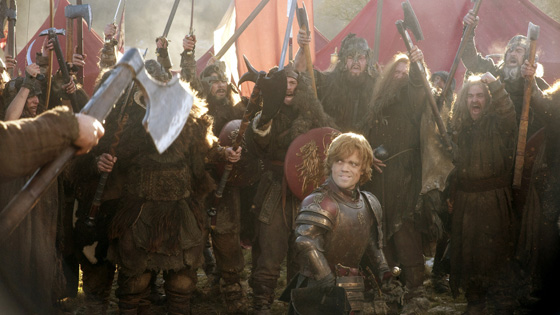 © Mgm Television. HBO frame from the series "Game of Thrones"
Everything falls into his palette. The war of Lannisters and Starkov reminds of Lancasters and Yorki from the war of roses, the “red wedding” is a twin of the “black dinner” in medieval Scotland, the wall is the heiress of Adriana Val, the military-monastic orders are disengaged into black robes of the night watch and the white cloaks of the royal guard, the comets foresee menacing changes, the bustard is struggling for Your place in the hard hierarchy. The colossal genealogical tree of the noble genera of Westeros with their emblems and motto is written out with manic thoroughness, worthy of the compiler of tournament books of the 15th century. This, in fact, is the total conversion of the Middle Ages into the fantastic world - where there are not so many fiction, magic and magic itself. In the series, the scale of this conversion is inevitably lost, but the atmosphere of a living pseudo -medium world with non -stamped characters remains on the screen.