
Translated material
The death of man
In the mid-90s, I fell into my hands somewhat wrapped with tape video cassettes-a documentary series BBC . It was called "human life." All his series were colorful and very cognitive: there was a computer graphics and a 3D model of the baby, there was about the subtleties of education, and about susceptibility to microbes in a dirty African puddle, then on the marble royal floor, there was about hormones of love and just hormones, about career and birth, birth in old age, old age. In general, there was a lot of things there - a whole life. Up to death. The ninth series was called the "death of man."
It was twenty years ago. Nobody was dying in my arms yet. Death sneaked somewhere on the sidelines of my memory: my grandfather died when I was not even five, but they informed me about this six months later. A classmate who left for exile crashed on a scooter-but the common acquaintances told about this two years after his death, I didn’t even remember the faces. Of course, people died in our yard. But we, children, were driven into the house for a while of funeral-proper manipulations. In general, death was somewhere, but rather figuratively, and not as part of life: without smell, without sensations, without their own experiences. And now - the series BBC . The ninth series. "The death of man."
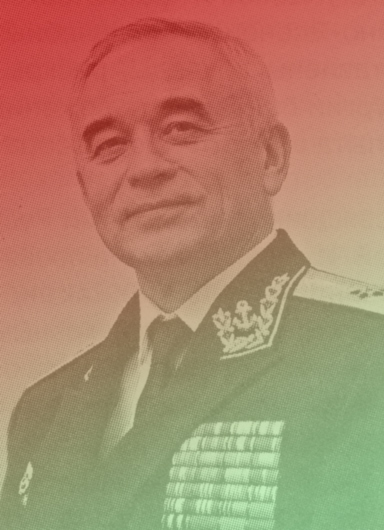 © colta.ru Vyacheslav Apanasenko
At first, everything is simple: a veteran submariner, an officer, and now a pensioner from Germany Hans moves with his wife to Blooming England. It seems Devonshire. Living in England is the dream of his whole life: Devonshire buns, Devonshire roses. Yes, he is fond of roses. The pensioner and his wife are happy. The first frames of the “death of man”: an elderly couple shows the correspondent his cozy house, pink bushes, photographs of children who have scattered to live all over the world ... their new acquaintances in the Devonshire village smile at the camera. Then, trying to understand everything about this film, I will find out: the correspondent shoots Hans under the contract. The fact is that six months after moving to England, Hans found himself with an oncologist who diagnosed him with stomach cancer. The forecast is three months. It was then that a BBC correspondent appeared in the life of Hans, who concluded an agreement on behalf of the television company, according to which the correspondent removes Hans’s life until the very last breath. Participation in the shooting is paid. The Germans, of course, are stubborn people. Contrary to the forecast of Dr. Hans will live for three years, during which the BBC correspondent will remove it, and the television company will pay the agreed rent. I will find out about this years later. In the meantime, in the yard is the middle of the nineties. And, opening my mouth, I look at the life of a person who is about to die.
Hans, judging by his flowering appearance, is not going to die. Well, the stomach has increased slightly. Forces somewhere, you have to relax more often. The appetite is lost. Yes. “And it became difficult to walk,” he complains to some kind of aunt with a tonometer that suddenly arose after the editing gluing. She is a sister-siege from a neighboring hospice. At first, she often calls, and then increasingly comes to our Hans to "understand in time when we begin to take measures so that it does not hurt." (To be honest, I first realized that it could be painful from cancer. It seemed to me that they just die from cancer immediately.) Hans was still holding well, all the time tells the nurse about roses and his friends, with whom it exchanges by mail (sic!) Pink seedlings. Auntka patiently listens, strokes Hans on a yellowed hand and, by the twentieth minute of the film, appears in the frame almost more often than the Hans's wife. At some point, Auntka makes Hans subcutaneous injection. The ampoules and syringes leaves the Gansova wife, instructing: “Do not wait for him to be unbearably painful. Make an injection as soon as you feel that at the next moment he will cease to be comfortable. ” The words are incomprehensible. I'm not sure that during the first viewing I understood something at all. But it is quite obvious that the rapidly losing weight, with an inflating belly, Hans will never look suffering or unhappy in the film. On the contrary, in the next frame, a very thin retirement submarine is put on a kind of deathbed (a tall bed with a bunch of pillows) surrounded by newfound friends from the Devonshire village, suddenly flying children, grandchildren and even great-grandchildren. All of them vigorously congratulate Hans on Merry Christmas, which, apparently, in his life, and then the “Yellow Submarine” by The Beatles in chorus. Hans is connected to a dropper with an analgesic, the intensity of which he or his wife can be adjusted to the body or his wife. A simple turn of the wheel. After 7 or 8 minutes of screen time, Hans leaves. He inhales deeply, and then stops breathing. His wife gives an interview. At first, she cries: "It hurts me that he is no longer there." And then he smiles through tears: “He will now look at me from above. He became an angel. He is good. I was with him until the last breath. And we were happy every minute of our lives. ”
In the final of the film, Hans's wife sprinkles his beloved Devonshire roses to her husband’s ashes. A veteran submariner, an officer smiles broadly with black and white photography on a chest of drawers. Delicate music sounds. Titras.
I saw this quiet and calm story about the death of a person on a video camera twenty years ago.
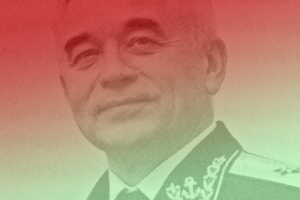
Twenty years later, on February 7, 2014, the former head of the department of missile-artillery weapons of the Russian Navy, a veteran submarine, officer, 66-year-old Rear Admiral Vyacheslav Apanasenko will have to kill himself from the award pistol so that in Russia the second decades of the 21st century will finally be publicly spoke of a person who was painful for painkillers.
Russia in Europe occupies 38th (out of 42 possible) places in terms of accessibility of pain relief.
The disease and the pain associated with it, which, as far as one can judge, was experienced by Rear Admiral Apanasenko, were not yet intolerable. Doctors say that Rear Admiral's gaze was far from extinct, forces-a lot, behind his back-a strong family rear. That is, he could also tolerate, and live ... who knows, maybe deciding on suicide, the veteran submarine accomplished a feat: maybe he caused a fire of public attention to himself. In a suicide note, he asked not to blame anyone but the Ministry of Health and the Government. The point of no return, according to the relatives of Rear Admiral, was the next campaign of his wife for painkillers. These circles of hell are familiar to everyone who has ever encountered in our country with pain. At first, to the oncologist, to confirm that yes, you have cancer and you may need painkillers, then to the local doctor to write the recipe, then to the head physician of the hospital to put a round seal, then again to the oncologist, then to the pharmacy, in which the desired painkiller may not be. Or maybe it turns out, but it will no longer cope with the pain. The pain is different. And she does not report to anyone about her plans to become unbearable. Each circle of hell by doctors and in the pharmacy is anesthesia for five days. Then all over. Now about this, thanks to Rear Admiral Apanasenko, the whole country knows: they wrote in detail in blogs and newspapers, told on radio and television. At the cost of the life of Vyacheslav Apanasenko, the right to anesthesia, or rather, his absence became the number one news.
Deputy Prime Minister Olga Golodets instructed the Ministry of Health to check why the deceased Rear Admiral Vyacheslav Apanasenko did not give painkillers. This is probably right. But if the audit is carried out by people as honest and fearless as the deceased Rear Admiral, then the result should be a much wider and more monstrous question: why in Russia it is so difficult for dying people to achieve their right to decent and painless death.
If you try, you can find the answer to this question. You can formulate it denounced and briskly: because everyone does not care and human life, like human death, in our country, from the point of view of officials, has no value. But such, albeit exhaustive, the answer is not suitable as a key to solving the problem. Therefore, you will have to go into details.
To date, Russia in Europe occupies 38th (out of 42 possible) places in terms of affordability of pain relief. There is no one specifically guilty of this.
On the one hand, our Federal Law No. 3 “On drugs and psychotropic substances” is based on the International Convention about them. This Convention, although it recognizes the need to ensure the presence of narcotic drugs for medical purposes, is generally aimed at restricting the spread of drugs, at control over them. And this is understandable, drug addiction is a terrible evil. On the other hand, drugs are evil not only in Russia, but throughout the world. So, throughout the world, twenty years ago (approximately when the “death of a person” on the BBC came out) they realized that those for whom these very drugs are the only way to defeat pain should not suffer in the fight against drug addicts. And they began to change the legal framework and practice in such a way that, taking away from criminals the opportunity to steal and sell medical drugs, make anesthetic drugs based on them as accessible to needy patients. The drug addicts from this in the world, it should be noted, did not increase. And the death is painful, painful, terrible - it ceased to be such.
For Russia, by the way, which had not defeated drug addiction and drug addicts, these twenty years turned out to be lost. In the Federal Law “On narcotic drugs and psychotropic substances” of the 98th year, among the principles of state policy in the field of drug trafficking, there was not a single one that declares their presence and accessibility for medical purposes. And the duration of the prescription on painkillers (apparently in order to avoid abuse) is 5 days. For comparison: in the UK and France, the recipe for potent pain relief is valid for 28 days, in Poland - 14 days, in the USA - 60 days.
We have illegal drug trafficking - 80 tons per year. Only 0.4% of this figure are drugs that are at least somehow used in medicine. At the same time, 60 percent of the cases related to drug trafficking in the country are the cases of health workers, including such as the loud cause of the Krasnoyarsk doctor Alevtina Khorinyak, who, contrary to the instructions, but according to life tests, wrote out a potent drug painkillers from unbearable pains and was in the bench. Did anyone specifically want it to happen? Rather, no. So it happened. They wanted, of course, the best. Everyone always wants the best, even when it happens to break firewood ...
Two years ago, doctors, philanthropists, various caring wrestlers with pain reached President Medvedev. And he instructed the Ministry of Health to figure out the issue. The result was order No. 1175n. There are various, albeit not revolutionary, useful innovations (in some cases, anesthetic doctor can write out independently, do not have a whole commission; you can give out a five -day reserve of narcotic painkillers into the hands of the patient or his relatives; the patient must not be attached to one specific pharmacy). These innovations could, if they wanted to use health -keepers in the regions, to facilitate access to pain relief. But so far it is used only in Moscow. And then through a stump-column. To be used to be used, a serious impulse is needed from above: a decree, order, a clear description of what the president would like in this matter, in the end. But we do not have state policy in the field of accessibility of narcotic anesthesia. The priority in the field of healthcare are, obviously, other problems. Also, of course, important, but this is not easier.
While the situation is in such a way that if a person is about to hurt, he should immediately be, say, in the First Moscow Hospice. And then it will be anesthetized even before the onset of pain (as it is customary throughout the world). But in the first Moscow Hospice of 30 beds. And for all of Moscow there are 250 of them. And about four million oncological patients in the country. When one of them hurts, they or their relatives will go to receive painkillers according to a standard scheme that resembles the circles of hell.
Unless, of course, the death of Rear Admiral Apanasenko can change at least something in the system that in twenty years has not been able to actually change dozens of caring (living) people and several charitable funds ... If the death of a person can change the lives of living people ... And if not, then everything will remain the same. And the death of a person will, as before, mean only that this person is no longer.
The author is the trustee of the Life Foundation, a member of the Board of the Children's Hospice