
Translated material
Black, burning, passionate
The science of the eyes was taught in Nizhin
The eyes look at the eyes, the eyes of speech speak. What are the speeches? The cornea, anti -aircraft gun, apple, iris, lens - how many expressive, tangible words surround the word "eye". But this word itself, it seems, is not so fragile, not so juicy, not so bright. In the Old Russian language, it meant a "ball": glass eyes - glass balls. Still, you see, glass is not crystal. There are enough poetic rhymes to the eyes, but not all of them delight. Beauty is cold. Thunderstorm is dangerous. The vine, like the eyes themselves, with an institute, but the rhyme "goat" lies to Loza. And the goat has a lean, the goat has a goiter, the base. The fatal is still "z". The Gogol witch in VII - "eyes", but if the witch is turning around with a panel, as they look at the reader "eyes". These eyes in the south are stored in a black velvet case of night. And by the night the rhyme "divochi" lies.
Viveged Kari Ochi,
Zori Sereda Knight ...
You will say that these Shevchenkovsky lines are on the verge of kich. Yes, on the verge. But how shines how this line plays! In the Little Russian poem, Pushkin "Poltava" I counted only two pairs of eyes. But with the eyes the poem is dotted, like a Ukrainian night with stars.
Quiet Ukrainian night.
Transparent sky. Stars shine.
Grind your naps
The air does not want.
How much eroticism is in this “overcome” how they intertwined in this word “eyes” and “night”!
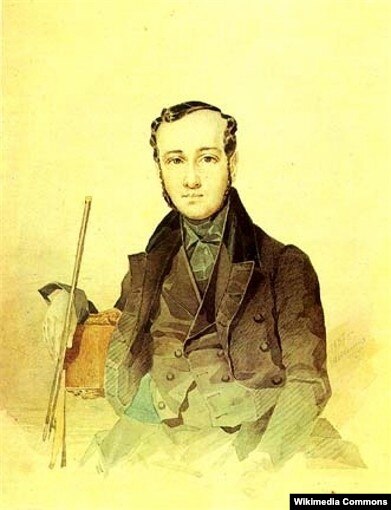
It seems that the science of eyes was best taught in Nizhyn, in the Nezhin gymnasium. Gogol studied there. Evgen Grebenka (Grebik), the Little Russian translator of the Pushkinskaya Poltava and the author of the text of the most famous Russian romance, "Black Eye, Passion Eyes", also studied there. This is a Ukrainian gift! This is Ukrainian generosity!