
Translated material
Olympiad for their own and strangers
As special services do not allow political opponents of the authorities to competitions in Sochi
Whatever scandals surround the construction in Sochi, the 2014 Olympics were waiting. They waited because it was a holiday, and there are few holidays in our life. And the holiday happened. But not for everyone. Games in the Charter of which are written: “Any form of discrimination against the state or a person based on race, religion, political beliefs, gender or something is not yet compatible with belonging to the Olympic movement”, in the Russian version were closed to political opponents of the authorities 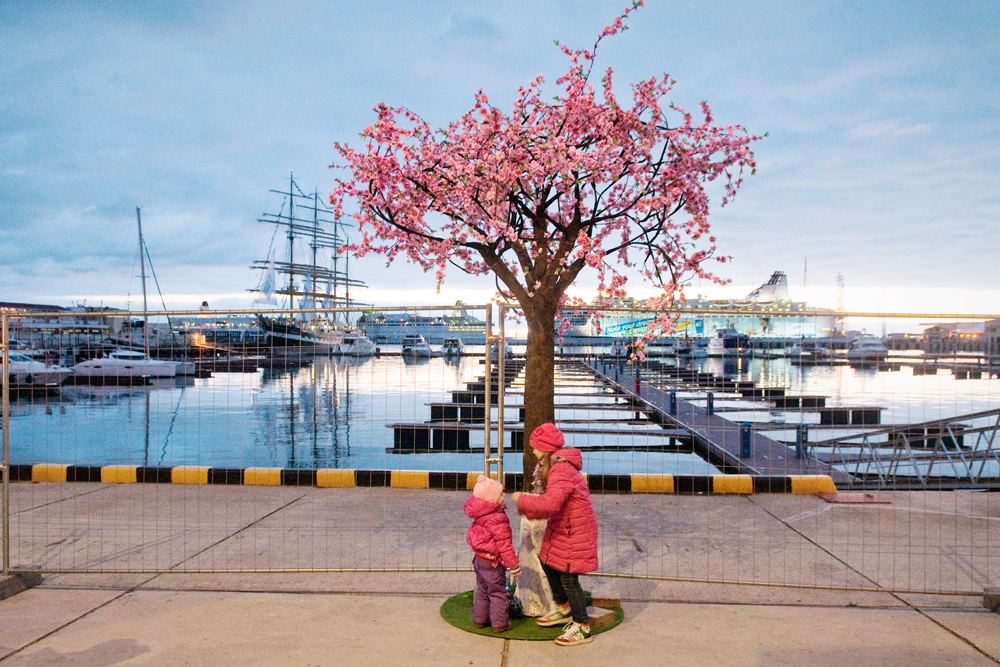
“I came to Lubyanka, talked there with an officer on duty. I explain to him: if you have any questions for me, you ask them, let's clarify the situation. He answered me: “There are no complaints about you, and if we appear, we will inform you about it ourselves,” says Maxim Katz, a deputy of the municipal assembly of the Moscow region of Schukino, who on February 13, despite the reserved hotel and purchased tickets for a biathlon relay and a short track, refused to receive a passport of a fan, which is absolutely necessary. To attend the Olympic competitions in Sochi. Cause? “I requested paper in the center of registration of fans,” says Katz, “but they answered me that such documents are not issued, that the organizing committee (Olympic Games) refuses without explaining reasons.” Maxim Katz, of course, “inherited” a lot: he was a member of the opposition council, worked at the headquarters of Alexei Navalny, when he was elected to the mayors of Moscow, heads “city projects”, which are concerned about the ennolation of Russian cities, but there was no administrative or criminal cases against him either. Then why was he deprived of a holiday in Sochi? The hotline telephone of the main ticket center also did not give an answer. All that he managed to find out is the FSB is engaged in checking the fans. Therefore, he went to the Lubyanka.
“I also called the International Olympic Committee, sent a fax there, sent several letters - including the name of the chairman of the Russian organizing committee Dmitry Chernyshenko,” Katz lists the measures taken. “Well, I’m waiting for what will happen now.” On February 15, Maxim Katz reported on his blog that his application for receiving a fan passport was still approved: he found out about this by going to the Sochi-2014 website to check the status of the application. 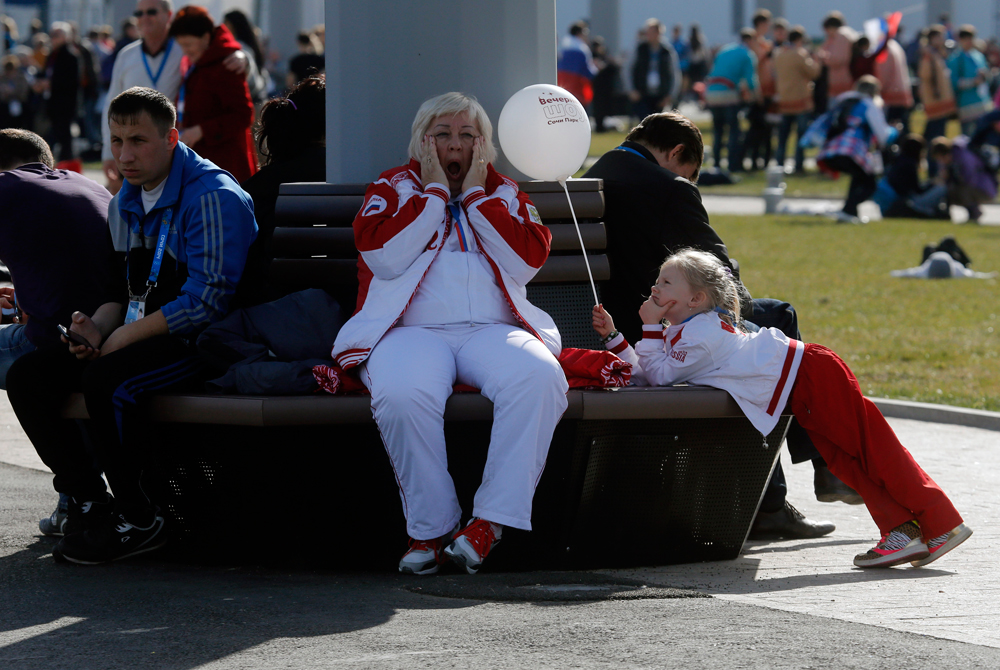
The exact number of people who were denied the right to visit the Olympic Games in Sochi is unknown, but at least the stories. So, the editor -in -chief of the opposition newspaper Kaluga Vespers, Sergei Fadeev bought tickets for a series of hockey matches in Sochi at the end of last summer, received a fan’s passport on September 21, specially went to Moscow and his wife for this. There was no problem, Sergey bought flights with a calm soul. However, on January 28, he received the SSMES, and then a letter to e -mail: "Your application for a fan's passport was rejected." Everything is like Katz. Sergei immediately called the ticket center, but there he was offered to send a complaint through the center’s website on the Internet. Not a single answer came to 11 of his letters. “I have never been convicted, there’s no administrative for me,” said Sergey The New Times, “I have never been delayed at any rallies, so there are simply no formal reasons for refusing. As I understand it, the special services at the last moment sent requests to the regions, and the local authorities included all their oppositionists there. The Kaluga authorities do not love me very much, so it is not surprising that I got into such a stop list. ”
To hand over tickets for matches, Sergey had to go to Moscow again and write a statement in the main ticket center of the Olympic Games, but the journalist managed to sell them over the Internet. There were no financial losses, however, there were no flights with a fine of 5 thousand rubles. 
The journalist turned to the Human Rights Association "Agora". The lawyers drew up a lawsuit and filed him to the Adler District Court on February 13. “It was possible to serve in Moscow, but we decided that it was better in Sochi,” says Sochi lawyer Alexander Popkov, who collaborates with Agora and took part in this matter. And suddenly on February 14, in the evening, right during the preparation of this material, Fadeeva comes to the phone another message - from the Olympic Organizing Committee: "Your application is approved." “It is difficult to say what they were scared: the claim that we filed is hype or something else,” the lawyer Popkov is perplexed. Fadeev himself was not happy with this sudden mercy: “I already missed all the matches that I wanted to get to and sold tickets. I think the organizing committee understood that I would not go anywhere now, and therefore they were allowed. ” "
“If you have any questions for me, you ask them, let's clarify the situation.” He answered me: "There are no complaints about you, and if we appear, we will inform you about it ourselves"
"Another" refuser " - Semen Simonov, the Sochi coordinator of the Memorial human rights center, who has been fighting for the rights of workers at the Sochi construction sites for a year and a half. He sent an application through the website of the Organizing Committee of the Games and was refused twice to receive the fan passport. The New Times - since the Organizing Committee does not explain the reasons for the refusal, and, in my opinion, has no right to introduce such restrictions, I went to court. ” And in this case - the usual Russian mess. For example, an official from the administration of the Krasnodar Territory, a member of United Russia, addressed me. He was also refused without explanation. But when he found out that I was taking all the affairs into the public, he refused my services. Then there was still my friend - the former commander of the special forces, served in Chechnya. He was refused. When asked why, the volunteer at the registration center replied: “Perhaps the whole thing is in your dark past.” And two days later he suddenly came a message that his application was satisfied. Finally, there was another guy - he worked as an engineer in the construction of Olympic facilities, he had admission to them. So he was not allowed at the Olympics: he is a civil activist, participated in protest rallies. He did not want to sue. "
The lawsuit is also prepared by Nikolai Levshits, a civil activist, a volunteer who was engaged in the elimination of the consequences of floods in Krymsk, he was refused one of the first: “I understand that the ban also applies to the Paralympic Games. This is already at all dishonest - I helped disabled people so many times, ”Levshits is indignant. 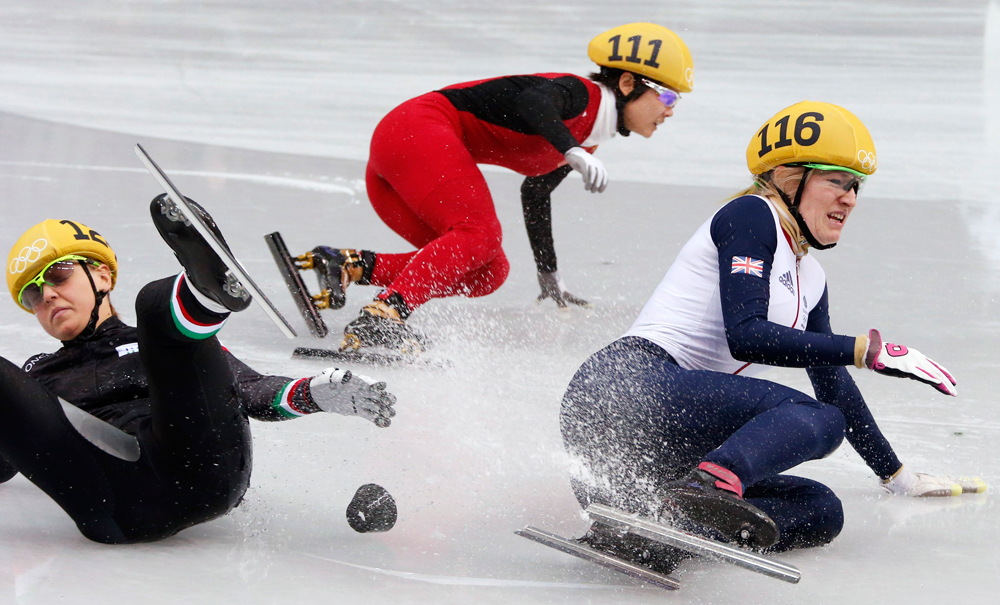
The law is not written
The New Times has carefully studied the documents governing access to the Olympic Games. On the one hand, by decree of the President of the Russian Federation No. 686 dated 08/19/2013 Sochi and the surrounding territories were declared a special zone in which, in particular, rallies and pickets were prohibited, and the movement of vehicles was seriously limited. The registration card is also mentioned here, according to which visitors should be allowed to sports facilities, even when it comes to events not related to the Olympics. But the procedure for issuing this card is regulated by the earlier decree of the Government of the Russian Federation No. 98 of 02.02.2013: it was it that endowed the right to let or not to let the Sochi Organizing Committee-the office, which was entrusted with the organization of the Games in Sochi, headed by Dmitry Chernyshenko, who made such a flame speech at the opening of the Olympics. "
IOC: “Fans' passports are Russian know-how, they were first introduced in Russia”
“But this is curious: neither in the decree of the Government of the Russian Federation, nor the rules of the Sochi-2014 organizing committee itself indicates the grounds for issuing (or non-gum) the fan passport, nor the procedure for making such a decision.“ The Organizing Committee reserves the right to issue a fan’s passport at its own discretion or refuse to issue a fan passport, ”is only said in the rules on the website of the bile The center was about a private disco, and not an international sports event, that it was the Organizing Committee who was given the prerogative to decide who will go to the games and who is not, The New Times confirmed in the temporary press center of the Ministry of Internal Affairs in Sochi, adding that the Organizing Committee has the right not to comment on such decisions. The Ministry of Internal Affairs said that all decisions are made by special services. in Kazan, etc. 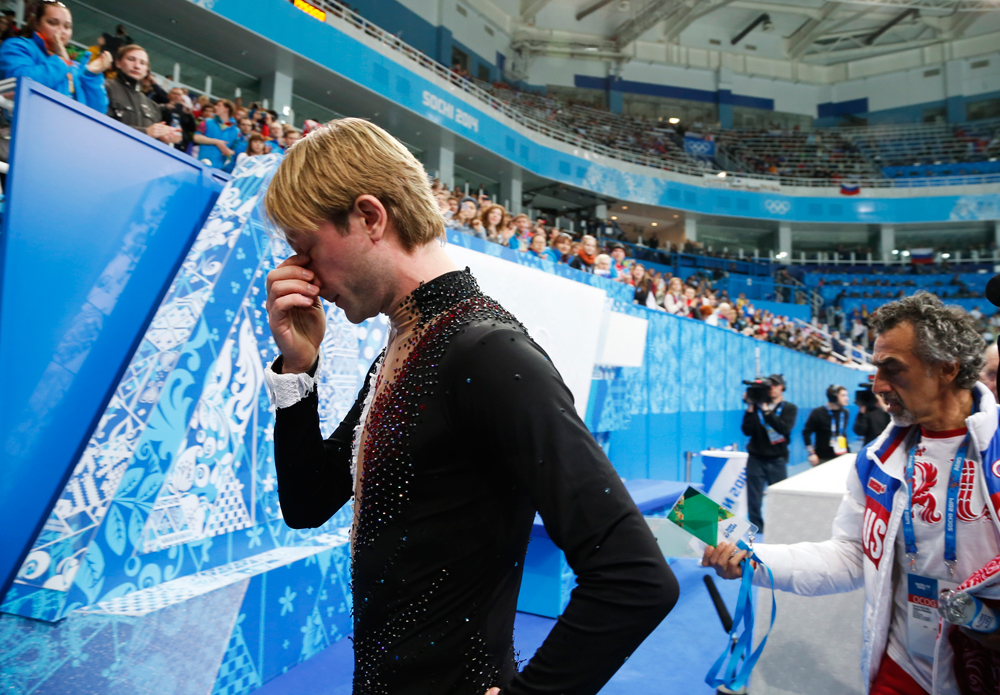
One thing is incomprehensible: most of the fans are received regarding their application for a couple of minutes, a maximum of half an hour, therefore, all applications are processed automatically. From this it follows that the surnames of unreliable - such as Maxim Katz or Nikolai Levshits, are pre -introduced into the computer base. One of the sources of the magazine in protest circles even said that the guys from various organizations checked themselves for the presence in the bases: “Everything is simple, you buy the cheapest ticket for 500 rubles and look whether they will give permission or not.” 
In the Olympic Charter regulating the holding of games, nothing about access to the competition has not been said, but paragraph No. 6 of the fundamental principles of Olympism reads: “Any form of discrimination against the state or to a person based on a race, religion, political beliefs, gender or something is still incompatible with belonging to the Olympic movement.” To the question of The New Times, how the Olympic charter correlates with obvious selectivity when issuing passports of a fan in Russia and discrimination at least on the basis of political views, the press manager of the International Olympic Committee (IOC) Sandrin Tonzh replied that the IOC did not deal with passports at all, and there were no complaints about them, and all the questions were no better Address the Organizing Committee "Sochi-2014". In the organizing committee, the magazine was offered to write a letter, but at the time of the delivery of the number the answer was not followed. However, Sandrin Tonshez confirmed The New Times and another: fans passports are Russian know-how, they were first introduced in Russia. In the same London, where the 2012 summer Olympic Games were held and where a series of terrorist acts occurred during the previous seven years, cases of non-missing fans for competitions, they said The New Times in the IOC, were not recorded. The IOC himself is busy with another scandal: on February 12, the Krasnodar Regional Court approved a three-year term in the colony-settlement to the ecologist Evgeny Vitishko, who in February 2011 participated in the action near the dacha of the Krasnodar Governor Tkachev, however, the governor himself does not recognize his cottage. The IOC, as well as the EU Embassy in the Russian Federation, turned to the Russian authorities with a request to clarify the reasons for such a strict punishment of the Sochi ecologist. 
Court and the case
Most of the lawyers with whom the New Times managed to talk in the very principle of introducing the registration procedure do not see anything criminal: there is responsibility for the safety of games in Russia, and no one canceled the terrorist threat. “In Russia, there are a huge number of territories with special access rules. This is all in context, ”explained Elena Lukyanova, professor of the department of constitutional and municipal law of the constitutional and municipal law of the Higher School. However, the same lawyers note the illegality of selectivity when issuing permits for visiting the Olympics: “When people did not give out a fan passport and they had every reason to believe that it was done for political reasons, a similar situation was completely unacceptable,” said Tatyana Lokshina, deputy head of the Moscow Bureau of Moscow Watch. “Games for everyone - both for Russian citizens and for foreigners who come to support their athletes.” According to Lokshina, it will be difficult to prove political motivation for refusal, but for each case it is necessary to contact the IOC. "
Let the FSB or the Ministry of Internal Affairs give an official motivated refusal: why a specific citizen does not go through security measures
“The most active of the non-passed facies of the fans immediately tried to go to court. According to the lawyer Alexander Popkov, the organizing committee, ignoring the norms of federal legislation,“ actually limits the freedom of movement. ”Popkov is sure: the rules for the sale of tickets adopted by the Sochi Organization. and Law No. 310-ФЗ dated 01.12.2007 on the organization and conduct of the XXII Winter Olympic Games, which states that reinforced security measures can be introduced during the games in Sochi: “The Organizing Committee took on the prohibition on visiting the Olympic Games, although this is not mentioned in any of these documents, says Alexander Popkov. The passports of the fan is illegal and unreasonable, and the rules in this part contradict the requirements of the law. ” - Well, then let the FSB or the Ministry of Internal Affairs give an official motivated refusal: why a specific citizen does not pass through security measures. The citizen will need this paper in order to be able to go to court and appeal it. Everyone has the right to fair trial and the use of legal protection means. In addition, there are open lists of terrorists, extremists, criminals. And here closed lists are used, about which we do not know anything. Lists of objectionable people. " According to the lawyer, the fact that the fans have no motivated refusal, and indeed the role of special services in issuing permits is not officially spelled out anywhere, the claims have to be filed to the organizing committee itself, that is, to a non -profit autonomous organization. 
However, according to Nikolai Levshitsa, it is not the very fact that the fan’s passport should be disputed by the very fact of issuing a passport of the fan - after all, by purchasing tickets, buyers agreed with the rules for their sale - and the decree of government No. 98, which introduced the concept of “registration card” and endowed the organizing committee with the right to issue it: “This resolution is unconstitutional,” Nikolai Levshitz said to the magazine.
Talking about the prospects of claims filed. There is no need to count on the justice of Russian justice, but since the Olympic Games do not know such precedents, some activists plan to bear these proceedings to the international level: “We want to go through all the judicial stages in Russia so that you can file a lawsuit in the ECHR,” says Levshits. “The Olympics, of course, will end by that time, but it is necessary that everyone understands that it was arranged not for everyone at all.”
“All animals are equal, but some more equal than others,” was written in the immortal “cattle yard” by Orwell - a pamphlet on Soviet power. The Russian authorities could not even abandon the Olympic Games.
Photos: Oksana Yushko, Alexander Demianchuk/Reuters, Arnd Wiegmann/Reuters, David Gray/Reuters, Mike Blake/Reuters, Lucy Nicolson/Reuters, Brian Snyder/Reuters, Shamil Zhumatov/Reuters