
Translated material
Afghan trap
25 years ago, Soviet troops left Afghanistan
A quarter of a century ago, on February 15, 1989, the last parts of the 40th Army crossed the Amu Darya on the Friendship bridge near Termez: the USSR completed the withdrawal of its troops from Afghanistan
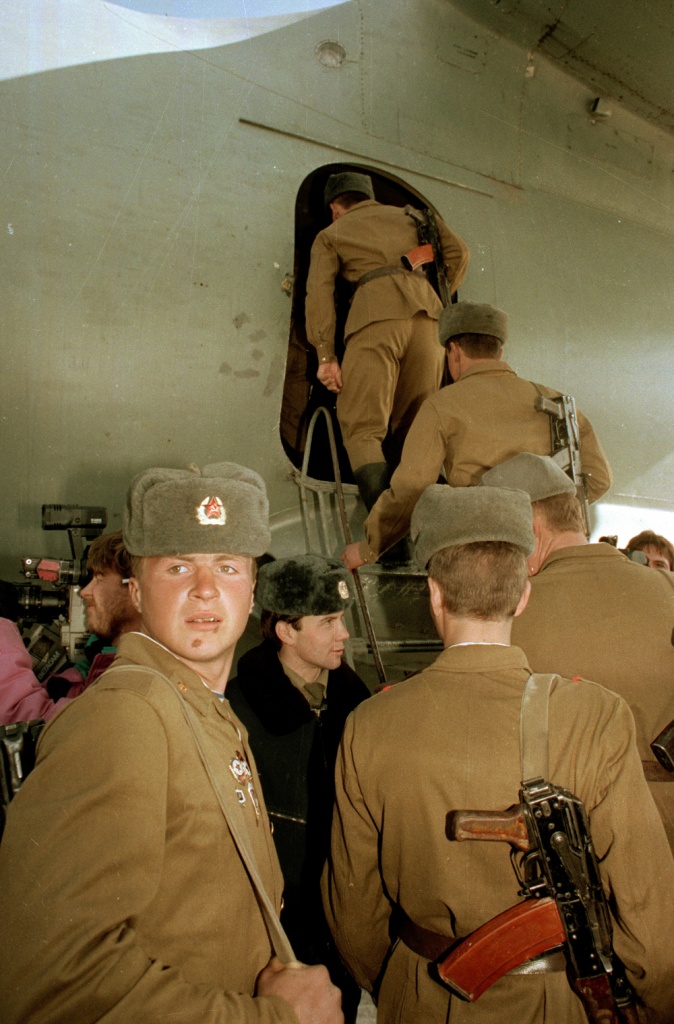 |
| "Home!" Soviet soldiers leave Kabul. February 13, 1989 |
United Russia, Franz Klintsevich, called for revising the political assessment of the war that the Soviet Union waged in Afghanistan. We are talking about the Decree of the II Congress of People's Deputies of the USSR, adopted on December 24, 1989, on the tenth anniversary of the invasion. But what is this said in it? In the evaluative part, in fact, there is only one phrase: "The congress of people's deputies of the USSR believes that this decision (on the introduction of Soviet troops into Afghanistan) deserves moral and political condemnation."
So what now, tell me, you need to change the word "condemnation"? OK? Forgiveness? Understanding? Oblivion? Admiration, finally? The latter, alas, would be quite in the spirit of time.
A surprise from Kabul
In April 1978, as a result of a military coup, the left-wing, with a raid of adventurism, the People's Democratic Party of Afghanistan (NDPA), which enjoyed very insignificant support in society, came to power in Kabul. But for the CPSU, an ideologically very close, one might say, is almost native. The coup found Moscow by surprise: then, in the spring of the 78th, while still a student of the Institute of Asia and Africa at Moscow State University, I underwent undergraduate practice in neighboring Iran, working as a translator of Farsi's language, and I remember very well how our diplomats in Tehran were discouraged with unexpected news from Kabul.
Soon in Moscow, euphoria replaced the amazement: this is luck! A new socialist state, almost the future sixteenth Republic of the USSR - in the heart of the Middle East, next to Iran (then there was a stronghold of American influence in the region, no one assumed that the Shah regime would collapse in less than a year). A stone's throw to the Indian Ocean, soon - how much later this hidden dream of all domestic imperialists Vladimir Zhirinovsky will voiced - our soldiers will wash his boots in it. You can’t miss such a chance!
And Soviet aid flowed to Afghanistan, flew from Moscow to Kabul Special Rows, stuffed with all conceivable and inconceivable advisers: party, Soviet, Komsomol, trade union, miles, specialists in the creation of female and even - you will laugh for a long time - pioneering organizations. The score was for tens of thousands. Their forces were abandoned for construction in Afghanistan - a shock pace! - a new political regime - in the exact image and likeness of the USSR. But Afghanistan then, as, by the way, now, was one of the poorest and backward countries of the world, which still stood in feudalism, which largely retained the tribal structure of society. Finally, which is almost the most important - an orthodox Muslim country.
It was not necessary to wait for the people of such a country against the construction of socialism for a long time. By the spring of 1979, a full-scale civil war was already blazing in Afghanistan. It became clear to Moscow: without large -scale military assistance, a staggered Kabul regime cannot be dispensed with. And then thousands of Soviet military advisers poured into Afghanistan. And the advisers needed translators. So, in the summer of 1979, the author of these lines also went to Kabul. Like all my comrades, graduates of that year and the next ten years. Some did not return from there. Their names are on a mournful board in the lobby of our institute ...
The Afghan army hastily rebuilt through Soviet patterns. In the Kabul military school, Soviet teachers read Afghan cadets - mainly semi -literate village guys - scientific socialism, political economy, philosophy. Of course, Marxist, although this word was carefully avoided ... ""
Soviet teachers in Kabul read scientific socialism to Afghan cadets
”Idiocy was at every step. In the summer of the 79th, flying to Kabul, we were in amazement that in the country covered by the Civil War, the main thing that our advisers to all stripes worked on, this is the draft of the new basic law of Afghanistan. Of course, again, in the form of tracing paper from ours, the“ Brezhnev ”Constitution of the 1977 Constitution.
Then, in Kabul, the local “Samizdat” went in the hands - a witty parody entitled “as Vladimir Mayakovsky would write a poetic report on a business trip to Afghanistan”. It's a pity, I have not been preserved for this text, I quote from memory:
There is no light. Water is bad. We walk wretched and thoughts of kutsy. But remember, comrade! This country is now omnavalized by the Constitution!
/.../
What are the little things for us - here and there?! Continuous unnecessary liberalism. For the first time in the history of executioners, we will help to build socialism!
With the latter, of course, you can argue today, but not about that now. The seditious rhyme was read to me by one, in appearance, an inconspicuous employee of our embassy, to whom I brought from Moscow a parcel from my relatives with the most inaccessible in the distant Afghan regions with Moscow delicacies - a bottle of vodka, a smoked sausage loaf and a loaf of black bread. Behind the same bottle we felt the location to each other and talked. I had reason to believe that my new acquaintance serves not in the Ministry of Foreign Affairs, but in another department, although this low bald man in thick-sheep glasses was not at all like Stirlitz. Very confidentially juggling with numbers and facts, demonstrating outstanding knowledge of Afghanistan, he painted that in reality it happens in the country and how really everything is bad. Poems were as an illustration.
At the end of the conversation, slyly looking at me from under the glasses with his short-sighted eyes, he said: “You know, here some are joking: there is only one way to put things in order in this country-to send here the Tula airborne division and bring the Babrak Karmal in the power of the same plane.” Then I first heard this name. My interlocutor explained that Karmal is one of the leaders of the 1978 revolution, which fell into disgrace and expelled from the country. But he is actually the most intelligent of all, only with him and with his associates and you can, as they say, cook porridge.
In the yard was July 1979. 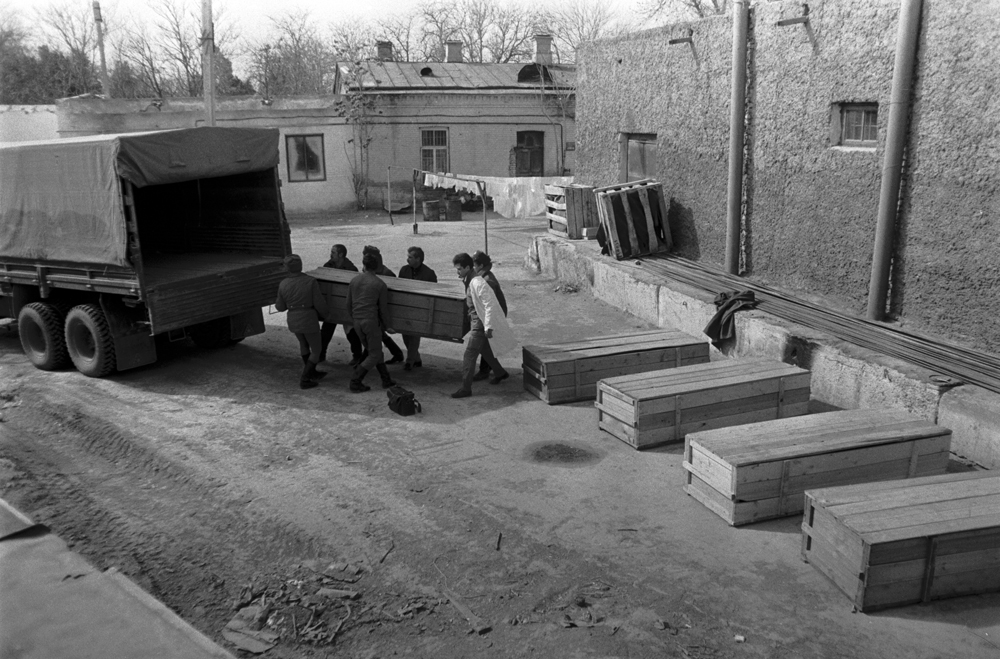
President with "dignity" 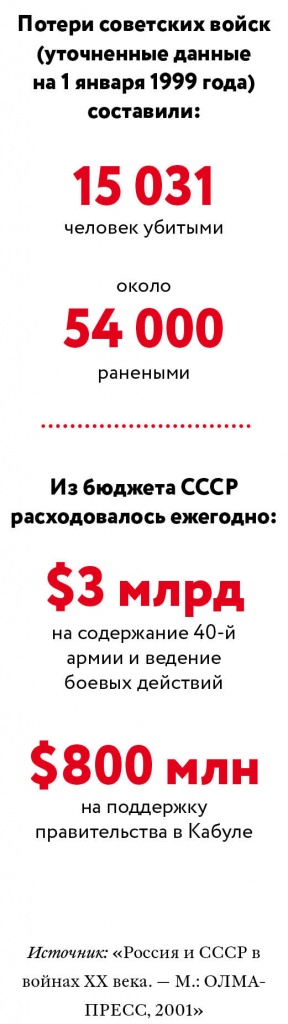
And soon I found out that a pretty person in thick glasses was one of those who prepared and planned this operation ahead of time. At the mention of his last name, my embassy acquaintances internally pulled themselves up, as if ready to get up at the rack.
On the Internet today you can find a lot of evidence of the participants in that operation: how they stormed the palace of Amina, how his households and even called to him before the assault on the Soviet doctor were shot with him, how they squinted under the feet of the special forces in the palace - so they were saturated with blood. And today this is all - let's think about the initiative of Klintsevich - is it proposed not to be condemned?
In fact, Babrak Karmal, by the way, turned out to be a weak, boundless politician, frank demagogue, moreover, a strongly drinking person, to whom the Soviet “assistant” was specially assigned, either a doctor, or a guard, or one and the other in one person who made sure that the president of democratic Afghanistan does not break into an hour. But in the eyes of the Soviet leadership, and above all, the then head of the KGB, Yuri Andropov, who was unofficially considered to be the main responsible for Afghanistan in the Politburo of the CPSU, he had one great dignity, which was no longer a secret: Karmal worked with Soviet intelligence for many years. It is not known exactly in what capacity is an informant, an agent of influence or someone else. By the way, most of his closest associates had the same “dignity”. "
"There is only one way to put things in order here - to send the Tula Division of the Airborne Forces"
"The closest and most trusted man of the Karmal, almost a member of the family, who was almost relentlessly with him, even spent the night in the palace-I also saw it with his own eyes-was a former KGB resident in Kabul Colonel Vilior Osadchiy, a very smart and educated person, a subtle specialist in Afghanistan. I heard that it was he who once long turned his attention to the young Karmal and I think with him for many years, Osadchiy perfectly understood everything about his ward, but he had a different task - when in early 1986, the Osadchi suddenly died from a sharp heart attack, the Soviet leadership, having lost the opportunity to follow the Karmala A new leader came - Najibullah, the head of the Afghan security agencies, of course, also closely associated with the KGB.
Perhaps the United Russia suggest us today to be proud of our valiant special services, which were so strong that they could turn on business as a whole to a foreign state, to manage the politicians of the first size and to rearrange them like figures on a chessboard? But the trouble is - as a result, neither they nor the Armad of Soviet advisers in all areas, nor tens of thousands of soldiers and officers of the “limited contingent” helped the pro -Soviet regime to win. And when the cargo of 200 from Afghanistan went to thousands of Afghanistan, it became clear: an unpopular war should be completed.
However, Yuri Andropov, we will be fair, I understood this much earlier than others. Back in the early summer of 1981, familiar children from the KGB residency, in a terrible secret, told me: the “committee” authorities on the team from Moscow set young subordinates to prepare analytical notes with possible scenarios for the departure of our troops.
The troops really left eight years later, and the regime very soon collapsed.
In the dry residue
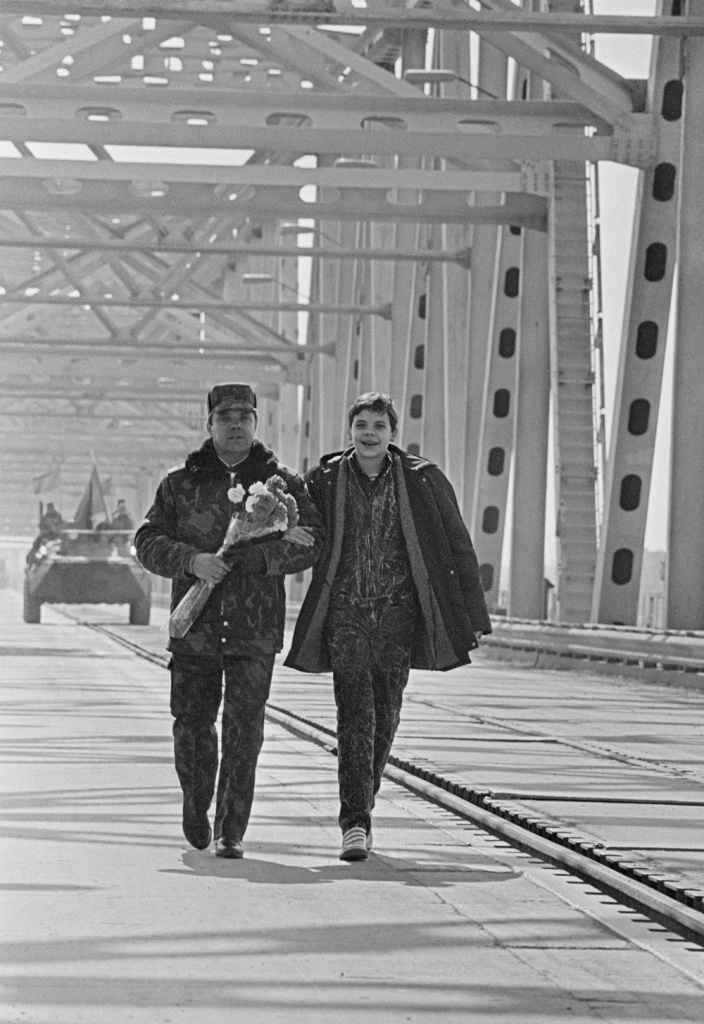 |
| The commander leaves the last. Lieutenant General Boris Gromov and his son Maxim on the bridge over Amuudary. Termez, February 15, 1989 |
What do we have, as they say, in the dry remnant as a result of the decision made almost 35 years ago to introduce troops into Afghanistan, which, according to the deputy Klintsevich, should be overestimated? It's not even about our losses now - this is all a story. Let's talk about today.
In Afghanistan, we have an ongoing civil war, which is 12 years old - already two years more than ours - Americans can not cope with their much greater opportunities, a professional army, high -precision weapons, unmanned drones, intelligence satellites and other ultra -modern technical resources. And this war is one of the main foci of instability in the modern world.
We have the movement of the Taliban, feeding Islamic radicals, fundamentalists, international terrorists across the planet: Al-Qaeda, Ben Laden, our militants in the North Caucasus-all from the Afghan root.
We have a country - the largest drug production center, where they spread around the world.
The list can be continued.
And all this-because of one fatal decision of the Soviet leadership. At one time, this decision was enough to condemn. Now we are offered to become proud of this. It seems to me that those who do this simply finally lost their minds.
Photos: Laurent Rebours/Ap Photo, Anvar Galeev/ITAR-TASS, I. Khojaev and B. Yusupov/TASS photo chronic