
Translated material
"Litvinenko case": Interim success
On February 11, the high court of London recognized the need for an open investigation into the death of the ex-officer of the FSB Alexander Litvinenko 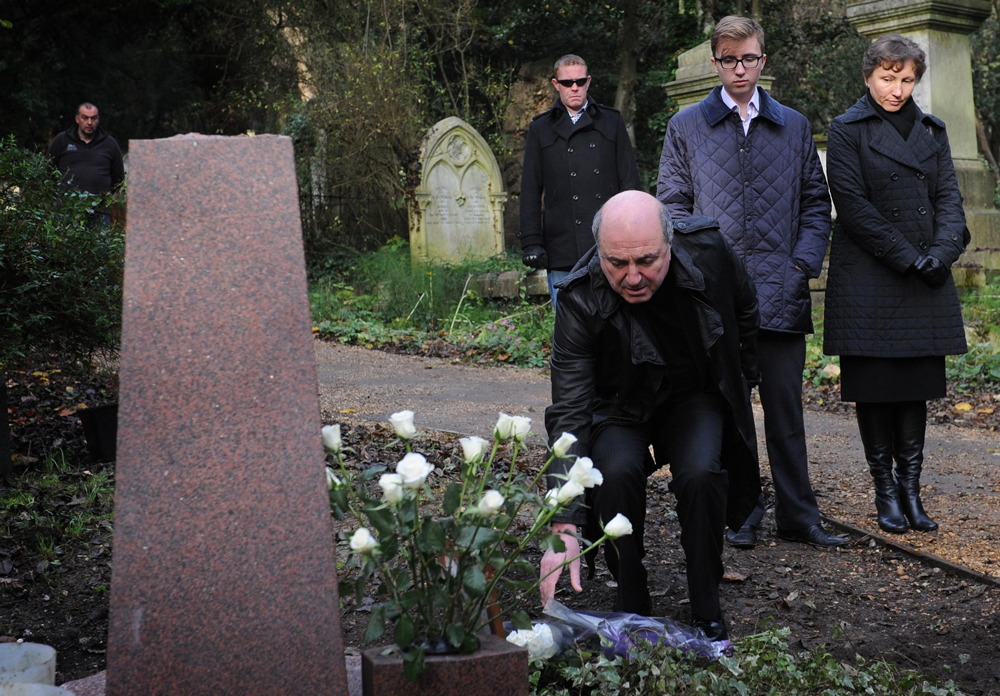
A year and a half ago, the British court, one might say, officially confirmed: in the documents in the case of the murder of my husband there is a trace of the Russian state. What kind of trace - I can’t say, I have not seen materials. But immediately after that, some strange gestures from the English government began, orders for the classification of documents went. The coroner Robert Owen, who was conducting our business, began his own judicial lawsuit with the head of Forin Office William Heig: Owen tried to get the right to use at least those documents that he had already seen. He was refused this.
| *Public investigation (Public Inquiry) is a form of inquiry in which lawyers and judges who have admission to secret documents can use them in the debate and when making a final decision. |
Then I began to seek an open public investigation* of my husband’s death. In July 2013, a refusal followed my supervisory complaint-already on behalf of the head of the British Ministry of Internal Affairs Teresa May. She then referred to a list of six points, including “damage to the international relations of the United Kingdom” (with which country - it was not indicated, but everyone understood - it was about Russia). The coroner Robert Owen invited me to challenge this decision. Before taking such a step, I consulted with lawyers (by the way, they work for free). If we lost, I would have to pay 50 thousand pounds of legal costs. I didn’t have such money either then or now, so I would have to think about how to get out of this situation. Nevertheless, we decided to take a chance.
And now - three judges of the high court decided in my favor. The arguments of the Ministry of Internal Affairs, which, they say, should not be conducted by a public investigation, the court recognized the court insufficient.
For me, this is a great moral success. Although success, of course, is intermediate.
"
We all once again became convinced: England is not the country where telephone right decides everything
"We all once again became convinced: England is not the country where everything is solved by telephone right. Of course, sometimes everything looks like a government can somehow lead the court. But it is useless to try to push the judges here. All participants in the process use exactly those levers that exist in English legislation. And those journalists who were whispering me, as if my husband’s business was given to a good relationship with good relations with good relations with a good relationship with a good relationship with good relations Russia, all kinds of business interests, I can say now: no, guys, you were mistaken.
By the way, last year, when Boris Berezovsky died, various conversations about a possible denouement went. Vladimir Zhirinovsky said that he, they say, met with Berezovsky and he promised him to stop the investigation of the Litvinenko case. It was funny to hear it. In England, only the judge has the right to stop the investigation. And even if, for example, I wish to get out of the process as an interested party, the investigation itself will not stop.
And today, sometimes completely unfamiliar British come to me and say: "Hold on, you are doing a big job." It is important for them to receive evidence that politicians cannot influence the court.
What next? It is difficult for me to name the exact dates when the investigation will begin. However, the procedure itself will pass behind closed doors. The police have already called Andrei Lugovoi and Dmitry Kovtun as the main suspects, and during the investigation, specific arguments in favor of this conclusion may be presented.
Photo: Stefan Rousseau/Pa Photos