
Translated material
Natalia Solzhenitsyna as Pope Francis, or about the ways of holiness
In society
 Natalia Solzhenitsyna as Pope Francis, or about the ways of holiness
February 18, 2014 Svetlana Solodovnik
Last week, a round table dedicated to the release of the book “Modern Ways of Holy of Holy. Our teachers. " Surely many are grunting now: I found a topic, what is the holiness here, when the elementary rules of personal moral hygiene are not observed ... And it’s hard to disagree with it, but an amazing thing: a book published in two languages, Russian and Italian, jointly Transfiguration of small brotherhoods and the association of Italian workers (ACLI, or Akeli), despite its own, despite its own, despite its own The irrevocable name, extremely distinctly tells us precisely about today's day. Already one to those who are chosen in teachers by Russian Orthodox and Italian Catholics.
But first, a few words about the organizations that have conceived this publishing project. The Preobrazhensk Commonwealth of Small Brotherhoods is well known among believers, it has existed since the early 70s of the twentieth century, has communities in many cities of Russia and in some places in abroad and is mainly engaged in educational activities, supporting, say, the Holy Filaret-Christian Institute and the Cultural and Educational Fund of Transformation.
The Association of Italian workers-Christian workers in our country knows units (the word “workers” does not need to be understood literally, it is rather working people in general, although many movements of the movement left working families). This laying movement arose in Italy in 1945 with the aim of establishing closer ties between people within Italian society - through educational programs for the poor, for example, or helping enterprises that work in the social sphere, non -profit organizations. The movement began with modest circles, and in the postwar years, help was sometimes expressed in a pack of spaghetti, and today it includes about 950 thousand members and 8000 territorial structures. The movement has departments in many countries of the world and annually provides assistance to more than 3.5 million people. According to representatives of Akley, this may be the most different help: from registration of a pension (numerous bureaucratic obstacles make this process in Italy complex) and the organization of food in schools to the support of migrants and assistance to victims of military operations in Kosovo, Saraev, Iraq, etc.
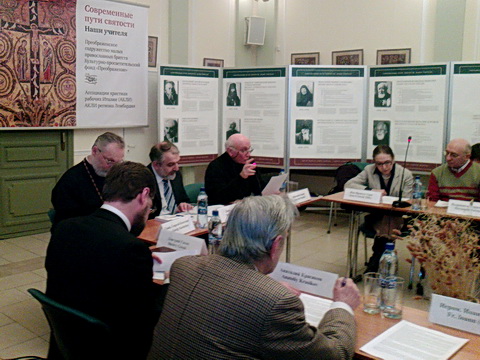
Speaking on a round table at the Pokrovsky Gate, Giovanni Bianca, ex-president Akley and a deputy of the Italy parliament until 2006, emphasized that "our Christianity unfolds in the present." Therefore, the Italian side chose as a guideline of teachers, in which she first saw the manifestation of the "theology of responsibility." This is not only Pope John XXIII and Pavel VI, the initiator of the II Vatican Council and its main “foreman”, striving to update the internal life of the Church and its open dialogue with the world, but also an anti -fascist, a politician, later monk and priest, the father of Giuseppe Dossetti. In 1946, he became one of the organizers of the Association of Human Rights. In 1956, he founded a monastic community, which defends the principle of "silence, prayer, work and poverty." At the II Vatican Cathedral, he appears to become a “Church of the Bears”, and already at the end of his life, in 1994, he ardently confronts the media attempts to change the Republican Constitution of Italy (at one time he was in a subcommission, which was developing the section “Rights and obligations of citizens”), on which certain circles were actively encroaching.
Or the “holy mayor” of Florence (from 1951 to 1965 with a short break) Georgio La Pira - a monk in the world (the so -called Tertziean, they have the right to wear outwear, but with a sign of distinction, and adhere to a special, adapted to worldly life, charter), also one of the authors of the current Italian constitution, the president of the first Florentine organization of Akley. In Florence, he built the area of inseparable for the low -income and generally supported the construction of municipal "folk houses" with a low apartment fee. “Our common program ...: give peace to the peoples, build houses, fertilize fields, open factories, schools and hospitals ...”, said La Pira. In 2005, Pope John Paul II was considered blessed.
Or Giuseppe Laztzati is one of the most authoritative figures among the Catholics-Miryan of the twentieth century-an antique literature specialist who, eventually, became the rector of the Milan Catholic University. Returning in the fall of 1945 to Italy, after a two -year stay in the German concentration camp, Lacchaty is immediately involved in the restoration of civil society and the education of laity. He speaks of the need to educate a civil position, so that each in its place, to the best of his abilities, is the “builder of the city of man”. In the early 80s, the initiative develops into the Association “The City of Man”, gradually turning into a political project: politics as an action for the sake of the general benefit of the policy, he believed Laztsati, should become an obligatory concern of Christians, contributing to the “humanization of man”. Giuseppe Laztzati died in 1986, in 1991 the process of its Beatification began.
These are Italians, but what about the Russian side? The Preobrazhensky Brotherhood, of course, was much more difficult to look for teachers-shooters in the recent past. It was in Europe both public and church life experienced after the Second World War. A bitter lesson in surrender before fascist regimes forced people, including church regimes, to look for new ways. In Russia, the revolution unleashed a long -term terror against the Church, leaving the active believers of an extremely meager choice: a deaf underground, supporting a frankly godless regime or martyrdom. The Soviet government crushed the civil impulses of everyone else. The victory in the war only strengthened the cast -iron power of the totalitarian state. The short-term period of the “thaw” slightly shook the secular society, but it was during the Khrushchev freedoms that the next, and very cruel, attack on the Church began, when more than half of the temples that opened after 1941 was closed-communism (which is about to be built) and faith in God is incompatible, the leadership thought.
And in the Synodal period, the “Orthodox Confession” department existed in a close adhesion with the state and also got more about “scrapers” than the awakening of “Orthodox action”. Nevertheless, in Russia there were those who raised the question of combining the Christian faith with real life. The Preobrazhensky fraternity considers the landowner Nikolai Neplyuev one of his teachers. In 1881, he took up 10 peasant children from the poorest families and took up their education, laying the beginning of an agricultural school. Eight years later, part of the school graduates, along with Neplyuev, founded the Holy Cross -Council Orthodox Brotherhood, which women - graduates of the school opened in 1891 for girls for girls, also joined. By 1900, there were already 11 communities in the fraternity, they were shared by the family of classes, called “families”, each lived in its house (married in separate rooms, idle in common people). Faith, love and labor - that was the credo of the brotherhood, adhering to the same principle of "neat, healthy, cheap and elegant simplicity." The enrichment was not an end in itself, although when Neplyuev wrote to his brother part of his lands, the economy began to bring significant income.
Talking detail: former fraternal agronomist Semen Chernenko, who, after the defeat of the fraternity of the Soviet government, sheltered Michurin, received the Stalin Prize in 1947 for the removal of new varieties of fruit trees and gave it to the family of another, repressed, member of the fraternity of Andrei Furssey.
Did the Russian church intend to somehow glorify the landowner Neplyuev for his asceticism? It is not known how events would unfold with the normal course of things, but during his lifetime (Neplyuev died suddenly in 1908), he had to face a misunderstanding and public criticism.
Among its teachers, the Preobrazhensky fraternity also numbers the bishop of the Tauride Mikhail (Gribanovsky), who wrote a lot about the need to introduce the gospel principle into various aspects of life: into his thoughts, into family relations, in social activities, which, according to him, is only a multi -resultal feat of love for neighboring Christ. ” “We are considered Orthodox and we know the least about Orthodoxy. We study everything, looking for the truth everywhere, except for ourselves, except for our church, ”he wrote. However, having lived only 42 years (he died in 1896 from the consumption), the bishop only began to put his ideas into practice: he opened schools and evening courses for adults, organized warehouses for free distribution of books, and in every possible way encouraged the extravactions of priests with the flock.
However, both Neplyuev and the Bishop of Tauride settled closer to the end of the list of teachers, and in the first place - Sergey Averintsev, Nikolai Berdyaev, prot. Sergiy Bulgakov, people are more likely not about, but thoughts. And although, probably, for the educational brotherhood, it is only natural to choose the main mentors of thinkers and philosophers, but this, in my opinion, is also a rather accurate characteristic of the current state of our church community. It, after 70 years of violent atheism, is still at the stage of accumulation of knowledge, mastering the palette of creeds and groping the things that are important for each specific person. And this, of course, is a significant reason why the “Orthodox action” in the world is so catastrophically behind the “Catholic action”. But not the only one.
We will now leave aside the church and laity charitable and social work of the Orthodox, without which it is already impossible to imagine our society, although its scale is still incomparable with the efforts of, let’s say, the secular sector. Take "Politics as an action for the sake of a common good."
Here, for example, is the Duma inter -fractional group to protect Christian values. Already her memorandum of intent is frightening. The goal of the initiative, according to one of the creators of the group of Sergei Gavrilov (communist, by the way!), Use legislative possibilities for the joint with the Holy of the Russian Church Countering “totalitarian and sectarian ideologies, aggressive liberalism, secularism, and nothing limited in the sermon of hedonism, violence, and the consumption of drugs and alcohol, and playground”.
Everything is indicative here-and the desire to lean against the Holy Principles (many active Catholics, by the way, often had friction with the Holy Principle; Juzeppe Dossetti’s father even had to leave the II Vatican Cathedral due to the discontent of some hierarchs), and his readiness to fight “against”, instead of doing something “for” and “for”.
The result is evident: a bunch of prohibitive laws was adopted, one way or another, narrowing the space of freedom, a member of the inter-fractional group Irina Yarovaya found the “moral principle” even in the “Law of Dima Yakovlev”, but for some reason none of the defenders of “Christian values” stood up for orphans , which the new law “On Education” deprived of privileges upon admission to universities. We have to draw a disappointing conclusion: the interfacing group was not created for the “common good”, but to lobby for the interests of the church that may suffer, the deputies are suddenly affected about the common good ...
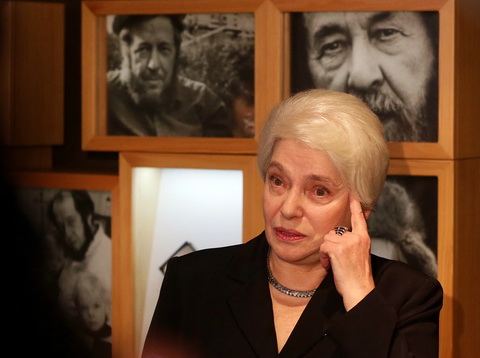
An increasing close bow between the official church and the authorities creates the danger of the growth of anti -church moods. In recent years, Italy has also encountered an increase in anti -church moods, however, for other reasons: corruption scandals around the Vatican bank, accusations of priests of sexual harassment. Catholics who performed on a round table at the Pokrovsky Gate admit that two years ago no one in Italy had a doubt that the Catholic Church was in decline. “Christianity ceased to seem pretty to people,” said Alessandro Salacon, a representative of the Holy Egdius community in Russia. - But Pope Francis came and revived sympathy - to God and therefore to people. “Live as you preach,” he says. “The gospel may be a joy ''." “Well, our Pope Francis is Natalya Dmitrievna Solzhenitsyn,” the rector of the St. Philretov Institute and the representative of the Preobrazhensky Brotherhood Fr. George Kochetkov. - Speaking in the Federal Assembly during Christmas readings, she very accurately expressed in what language the church should speak in order to become pretty. ”
It turns out that some signs of today's Russian life cause “acute anxiety” among the widow of Solzhenitsyn. In particular, she believes that “the Russian Orthodox Church, which experienced persecution of the Bolsheviks no less cruel than in the early Christian centuries, cannot support false cheers-patriotic tendencies that, in our trouble, increase in contrast to sighted, creative love for their country.”
“The life of a Christian should not be either radicalism or compromise,” as if continuing the thought of Natalia Zhenitsyna, said Giovanni Bianca at the round table. And he repeated the words of the Lutheran theologian Bonhaffer, executed by the Nazis for participating in a conspiracy against Hitler: God is with people, and if religion loses humanity, God will leave it and will be with people. ”
Photo by ITAR-TASS/ Pavel Smertin