
Translated material
The story of their death
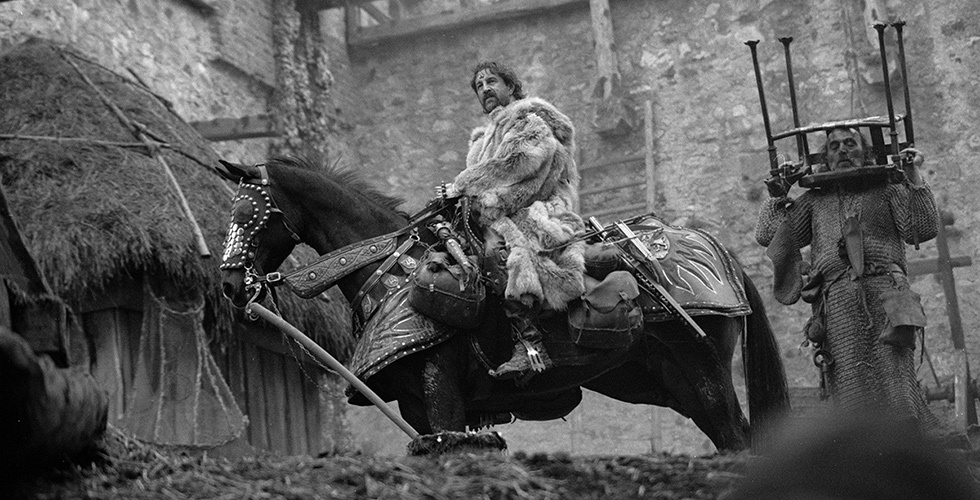
On the head of Don Rumata - a phallic type of video camera. It is through her Steampankovsky “fish eye” that we should observe the three -hour chronicle of the Arkanar massacre. But it is boring to sit in place - and it breaks down, rushes in an incorporeal eye on the stuffy communal apartment of the castle, the dog curls with the dirty boots, attracting the attention of court dwarfs and idiots. Who is this subjective observer, who shoots his medievist cinema.doc, is a rumat, a divine essence, an alien mosquito, an operator from Lenfilm? Why is he trying to make his gaze to mine, why is he approaching the fake walls, why is he falling into the dirt, peering into the props, why pulls the air? The smell will still not remain on the film, no matter how many times I will be on the stench in front of the camera.
Smell. It seems that to recreate with visual means there is a stench of needs, corpses and rotten fish was the main task of the entire crew of Herman. Well, yes - the power of German films has always been their hypertrophied naturalism, the exact detail of the screen world, manifested not only in numerous household items, textures and small sounds inhabiting, but also in bodies, their plastic, their voices. True, those films - “Lapshin”, “Twenty Days”, “Khrustalev” - was a specific truth of Soviet life - double, split between utopia and a nightmare, and it was perfectly read even by those spectators who did not find the thirties, forty, fifties. This, in general, is not surprising - the memory of that time always lurked in exactly the same details: in pictures from old books and shots from other films, in the voices of archival radio shows, in a trophy service, in a leather coat of closet. Herman’s cinema simply produced spirits from all these cozy lamps with a green lampshade, it spoke the same language of interjections, poses, gestures. And this language was definitely Russian - precisely because of this circumstance, the iconic system of the most complex and non -verbal film by Herman, Khrustalev, was not read by foreigners.
 © Lenfilm
“It is difficult to be a god”, a medieval POV version of the same “Khrustalev”, turns out to be unreadable already for us. The point here is not at all in an blended narrative, fragmentary, dialogs, which are mumbling to muttering and general demonstrative contempt for the fictionalism of the Strugatsky prose. This is all clear and justified: “it’s hard to be a god” fights with logocentricity and - much stronger than “Khrustalev” - seeks not to spewing the language prescribed in the script of replicas, but by the very body of the film. But it is the language of the bodies here that does not work. Yes, it is difficult to be a god who is naturalistic of all the previous films of Herman-but not at all realistic, his nature, from the base, invented and built by button artists, is alien and dead for the viewer. This Rabelaisian world of dirt, stinks, phalluses, lice and tar is unpleasant and Dick - and at the same time not at all nightmare. He is invention, science fiction, fantasy - and fantasy becomes a nightmare, only incarnated in reality. It is difficult to be a god with all his camisols, caps, carved chairs and other knightly forsights in a fantasy field, and the more artists try, erecting fabulous fortifications and coating them with shit, the more confidently, the wall of the elimination between the auditorium and the Don Rumata.
Some scraps of memory of the USSR, however, nevertheless fly to us with Arkanar-this is the orders of the science fiction text with an intonation that is more suitable for rustic prose (or the prologue of Lapshin); Here is a surreal exit of progressors in the armor for barbecue, a vaguely familiar melody sounds in the fog - either “wait, steam locomotive”, or “forest sun”, here is a rumat reads aloud Pasternak (“Who wrote it? - I!”). How to interpret these episodes? It is incomprehensible - and they remain strange, surreal moments, punctures, creating a sense of wild, discouraging deja vu.
 © Lenfilm
These single moments fall out of the general array of the picture with the same ease with which guts from the enemies of Don Rumata are pouring in the film itself. This means that the totality of this film-installation turns out to be insolvent-the world of Arkanar remains a thing in itself, which cannot be felt, which cannot be horrified. It can only be tried to evaluate a cold mind, analyzed, comparison, classification and other deadly dead cinema procedures. But it seems that this is the way to understand the real meaning of the film, hidden from the enthusiastic public behind the spell “Blacks always come behind the gray” (namely, as a terrible prophecy about the attack of the Evil Empire - and it is difficult to “be a god” of the progressive public). However, the film by Herman is not fantasy at all, and therefore not a prophecy. Horses, armor, castles, bonfires and the Inquisition are, excuse me, not the future, but the past. The past of a costume-historical film, which in Russian cinema always had two hypostases-children's cinema and shot by Stalin Bayopics of “strong personalities”. It is not necessary to recall the most important film of this genre for a long time-“Ivan the Terrible” by Eisenstein, in which historical entourage was also extremely decorative. Eisenstein’s tragedy is the most famous cinema foregoing about the sad fate of the volitional ruler in Russia, but experts will also recall Peter the Great, according to Petrov, according to the script of Alexei Tolstoy. In the original version of the Tolstoy script there was the same tragedy of the progressive king, demoralized by the non -rights of the nature of the Russian man. At first, the Iron will of Peter is in widespread integration, theft and betrayal, and the tsar conducts the entire second part of the dilogy in a semi -crawling daze. Everything is useless - reforms and repressions.
 © Lenfilm
The German Rumata is exactly the same all -powerful Don, disappointed in both the word and in the sword, in progress and in humanity, letting everything on its own and humbly wandering with his bunks in the ice desert. And this campaign is not at all the ascent of Faust on the glacier. This is the exact final of Khrustalev, in which General Klensky in the friendly company Bl*de and Urkaganov rushes on the Zhelordorplatform in Siberian snow. In short, the point here is not in the sequence of white and red, black and gray, but in the fact that they are replacing all of them once a senior researcher with a tank - and everything continues to go as before.
This eternal Russian problems, which dates back to the well -known scene of trying on a hat in Boris Godunov, seems absolutely the Old Testament in today's global political context (we will not dwell in detail on its clarification - you can read about it, for example, here ). It is desperate to be “hard” to be a god before his release, he seems to be fossilized by the colossus, unnecessary and inappropriate in our today, a huge self -propelled ruin of greatness - the greatness of German, the greatness of Soviet cinema, and the greatness of Russian culture of the 20th century. He was alive while his shooting was going on, and immediately fossilled at their end. In essence, all that we see on the screen is the only accessible documentation for the great performance of “shooting the last film by Alexei Yuryevich German” (due to the passive resistance of the family, we are unlikely to see the second document in the near future-the film of Antoine Kattin, shot on the TBB site).
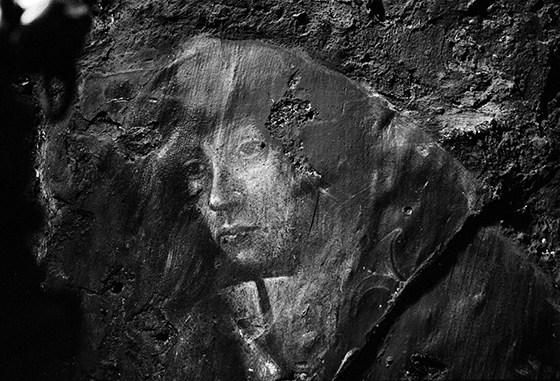 © Lenfilm
However, it is precisely this triumph of entropy, the decay of everything-the text, matter, the personality of the hero-and not at all some kind of coming and leaving, like an ebb, sociopolitical relevance and makes TBB a film, not subject to time. Melodies, names, contexts will be forgotten - but the destructive course of a refine, rinsing everything, forever. Russian Suprematists planned to enter eternity, becoming accomplices of time, they thought their squares and triangles like scars, like obelisks erected at the place of the death of an artistic image, rightly believing that a grave plate could last longer than any living phenomenon, that the dead are always a majority. You have heard this beautiful expression "Cinema shoots death at work" many times. So, the film German does not make anything, does not represent. He himself is this work.