
Translated material
Norwegian Oslo turned out to be a city with the most expensive public transport in Europe
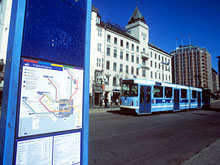
Public transport - buses, trolleybuses, trams and metro - transport a huge number of passengers daily, but in different countries the level of price for using such transport is significantly different. The prices for disposable trips are especially high, while "unified" traveling can save up to 60% of the costs of citizens for movement.
The most expensive public transport systems in Europe are in Germany, Switzerland, Sweden, Denmark, Great Britain, Finland. But the most expensive he is in Norway.
There are six metro lines, six tram lines and eight lines of electric lines - this is enough to ensure a full life of the city. But the price for one -time use of these lines is more than $ 5.
A little less than $ 5 costs a travel in Copenhagen public transport (Denmark). The transport system of this city consists of the main railway line, a suburban train, metro, buses and river transport. The Danish capital in 2013 broke the passenger traffic record, increasing it to 2.2 million, which is 50% more than the average European indicator, Novate reports.
In Zurich, the cost of travel in transport is more than $ 4.5. The population of this largest city in Switzerland is about 2 million people and the public transport system is unusually developed, since it has to cover not only the city. It consists of S -Bahn, trams and buses that can still be called trolleybuses - they are both diesel and electric. In addition, there is river transport and a funicular. More than 70% of the population use rail and bus transport.
About the same amount of a disposable trip in Stockholm transport. The population of the capital of Sweden is 800 thousand people, these are 22% of all residents of the country. The expanded public transport system consists of a metro, two city rail systems called Roslagsbanan and Saltsjobanan, suburban rail transport, three light -rail transport systems (Nockebybanan, Lidinogobanan and Tvarbanan), a tram, bus lines and river transport.
The London transport system is one of the most difficult and loaded in Europe. The London metro serves not only the capital, but also the County of Bakingemshire, Hartfordshire and Essex. In 2012 - 2013, there were 270 stations in London. The weekly passenger flow only of London buses is 6 million people. There is one trip by public transport in London about $ 3.7.
About the same amount will have to be spent on one trip to Geneva. The population of this city is only 200 thousand, but the local transport system is one of the most difficult and rapidly developing in Western Europe. It includes trams, trolleybuses and buses. Since 2008, it has six tram lines, 38 local and international bus routes, 12 night routes. One bus holds up to 150 passengers. By 2015, it is planned to introduce tram routes, and by 2020 - an increase in mobility by 40%. The fare is a little more than $ 3.6.
In the capital of Finland Helsinki, the fare cost is almost $ 3.3. The population of the city is about 610 thousand people, and there is the most branched system of transport, consisting of trams, trains, metro, buses and ferry.
In Germany, the most expensive is the public transport of Munich and Frankfurt - $ 3.3. Munich is the third largest city in Germany. Its transport system consists of suburban trains, suburban trains (S-Bahn), metro and trams. The S-Bahn system daily serves 800 thousand passengers. The U-Bahn system is transporting more than a million people per day. In Frankfurt, the fifth largest city in Germany, the transport system also consists of S-Bahn, U-Bahn and nine tram lines.