Translated material
The ruler on the run
In Ukraine, a tragicomic show is played, familiar from the textbooks of ancient and recent history. The overthrown tyrant is saved from popular anger and revenge on his political enemies, notice traces of crimes, leaves wealth in panic, rapidly loses allies and friends. The shoots of the predecessors of Viktor Yanukovych, bloody and not very, are in our historical review.
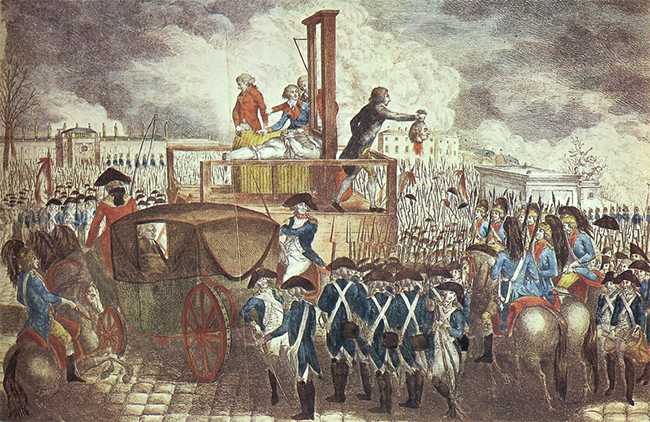
Louis XVI
The King of France Louis XVI and his entire family on the night of June 21, 1791 secretly left, accompanied by three bodyguards from revolutionary Paris. Their carriage was heading to the eastern border of France. The escape was prepared by the Swedish Count Fersen, one of the closest friends of the king and his wife, Maria Antoinette (according to rumors, he was her lover). Fersen led the royal couple to the suburban town of Bondi, and then went another road to knock down a possible chase from the trace. In the town of St. Meli, the postmaster Jean-Batist Drue saw in the window of the King’s carriage, whom he recognized by profile on coins of 50 livres. He jumped on his horse and set off after him.
Meanwhile, a hussar detachment was located in Varennu, who was supposed to meet the king and hold it to the border with the Austrian possessions. But by the time of the arrival of Louis XVI hussar at the entrance to the city from the western side, there was still no. Therefore, the royal carriage, who arrived in Varenn in the evening of June 21, had to stop so that the accompanying people could find out the situation.
Mr. de Prefontin, in whose house the fugitives knocked, said that the hussars are in another part of the city, beyond the river. Meanwhile, Jean-Batist Drue came to Varenn. He warned the local commissar about the king’s flight, after which the bridge was blocked over the river, and the National Guard nominated the guns to him. The commissar forced the king and his companions to leave the carriage and hit the alarm. The local judge, who had been living in Versailles for some time, formally identified the king, and a messenger was sent to Paris with a message for the National Assembly. The king and queen were returned to Paris under the escort, where they were put under house arrest in Tuileries.
Louis was guillotinized on January 21, 1793, and Maria Antoinette on October 16, 1793.
Alexander Fedorovich Kerensky
The head of the Provisional Government, Alexander Kerensky, until October 25, 1917, invariably replied that the Provisional Government under control and troops in Petrograd is enough to suppress the Bolshevik uprising. And only when it was too late, at 2 hours. 20 min. Nights on October 25, he sent a telegram to General Nikolai Dukhonin to the headquarters to send Cossack units to Petrograd.
You have to hear that Kerensky escaped from the Winter Palace, changing around the nurse or maid, but this version is unlikely to correspond to the truth. Kerensky himself claimed that he had left the winter in his usual jacket, in his car, accompanied by the American ambassador with the American flag, proposed by the American diplomats of the American ambassador to him. Oncoming soldiers and Red Guards recognized him and habitually saluted him. David Francis, the then US Ambassador to Petrograd, claimed that the American car was not “offered” by Kerensky, but was captured by its adjutants. The American flag was also forcibly assigned. The secretary of the American embassy even stated the use of the US flag.
Kerensky was worth a lot of efforts to leave Petrograd, since all the stations were already controlled by the Petrograd VRK, and the cars of the government members were either faulty or captured by the rebels. Kerensky arrived at the headquarters of the Northern Front in Pskov and moved to Petrograd the 3rd Cavalry Corps of General Krasnov. On October 30, the Cossacks were stopped near Pulkovo by detachments of the Red Guards and sailors under the command of Leo Trotsky. Then the Bolshevik detachments entered the Tsarskoye Selo and disarmed the Cossacks. When the head of the Centralbalt Pavel Dybenko jokingly suggested the Cossacks “exchange Kerensky for Lenin,” Kerensky fled from Tsarskoye Selo. On the 20th of November, he arrived in Novocherkassk, but ataman Alexei Kaledin refused to cooperate with Kerensky.
In January 1918, the former head of the Provisional Government secretly arrived in Petrograd, about to unexpectedly perform at a meeting of the Constituent Assembly, where he was elected from the Saratov Electoral District. But the Central Committee of the Socialist -Revolutionary Party forbade him to do this, fearing the negative reaction of delegates. The failure ended with Kerensky’s attempts to join the Moscow branch of the Socialist -Revolutionary Union of the Renaissance of Russia, and after the uprising of the Czechoslovak corps - to the Komuch government in Samara. In June 1918, Kerensky, under the guise of a Serbian officer, accompanied by a British intelligence officer Sydney Reilly through the north of Russia, occupied by the Anglo-French interventionists, forever went beyond the borders of the former Russian Empire.
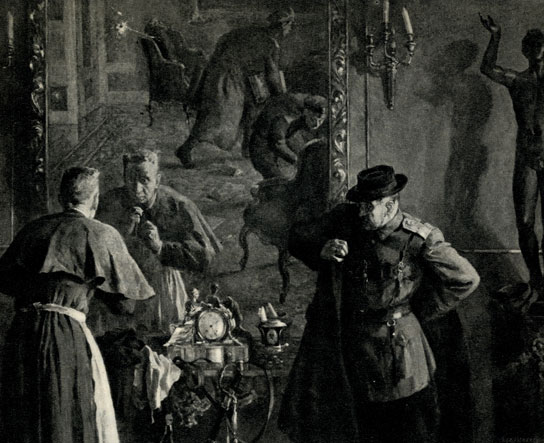
Kukryniks. Kerensky's last exit. 1957
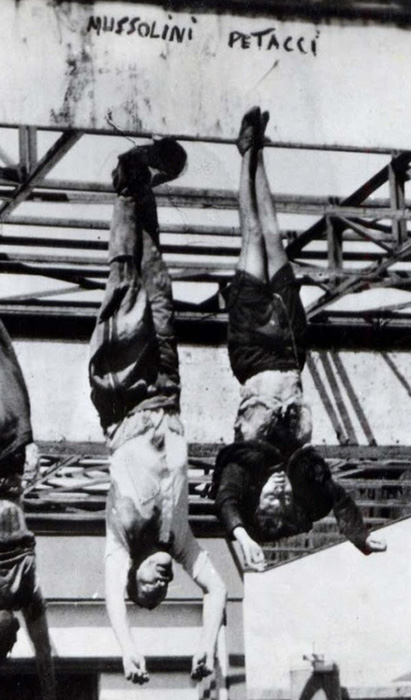
Benito Mussolini
The leader of the Fascist Party of Italy and the head of the Italian Social Republic Benito Mussolini in the second half of April 1945, when the surrender of the German troops in Italy and on other fronts became inevitable, decided to try to hide in Switzerland. On April 17, he arrived in Milan. On April 25, the Italian partisan liberation committee announced the beginning of an uprising in the north of Italy, still occupied by German troops, and on the same day the last offensive began the Anglo-American troops in Italy. Mussolini and his associates at about 9 pm arrived in the city of Komo, where they occupied the building of the local prefecture. Here, Mussolini was joined by his wife Rakele Mussolini, but the next morning, the duche said goodbye to her and sent her back home.
The Mussolini group was heading along Lake Como to Menajo, from where the road went to Switzerland. Military Minister Marshal Rodolfo Graziani, fearing to get into the hands of the partisans, separated from the group and surrendered to the allies. On the night of April 26-27, the fugitives joined the detachment of 200 Germans, retreating to the Swiss border. On the afternoon of April 27, the general secretary of the fascist party Alessandro Pavolini and the mistress of Duche Clara Petacci joined Mussolini. At a small village, Musso stopped a detachment of partisan communists and agreed to skip only the Germans further. Mussolini changed into German uniform and hid in the back of the truck, but when examining the cars, the partisans found and identified it. Mussolini spent the night from 27th to 28th April in a peasant house in the village of Dongo.
By order of the leadership of the Promunistic Corps of Volunteers of Freedom, a small detachment, headed by Colonel Valerio (Communist Walter Audiisio), took Mussolini and Clara Petacci from Dongo and on April 28 at 16 hours 10 minutes shot them on the outskirts of the village of Mezzra. The bodies of Duche and his mistresses, like the bodies of six other fascist hierarchs, were transported to Milan, where they hung a gas station on Loreto Square by the legs of the ceiling, where 15 partisans were executed on August 10, 1944. The face of the former dictator was disfigured beyond recognition. Then the ropes were cut, and the bodies lay in a guttled ditch for some time.
On May 1, Mussolini and Petacci were buried in the Milan cemetery of Mukovko. In Easter 1946, the body of Mussolini was exhumed and stolen by three Nazis under the leadership of Domenico Lechchizi. The body was found in August of the same year, but it remained incorporated for 10 years due to the lack of political consensus. Currently, Mussolini's body rests in the family crypt in the hometown of Mussolini Eli -ippio.
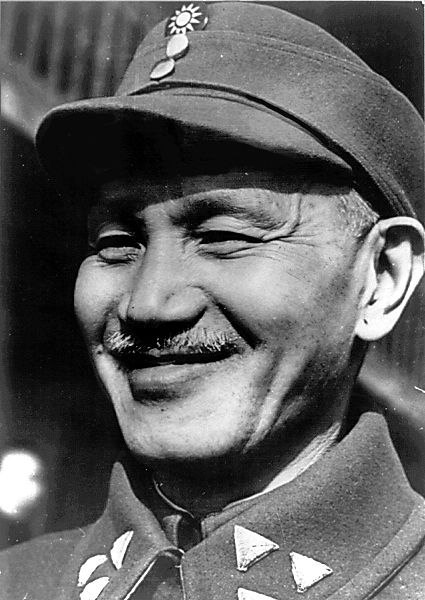
Chan Kayshi
Generalissimo Chan Kayshi, the leader of the Gomintan party and the president of the Chinese Republic, lost the civil war to the Communists, led by Mao Zedong. On November 14, 1949, Chan Kayshi flew to Chunzin, where he was located until November 30, when the city was captured by the People's Liberation Army of China. On December 10, 1949, Chan Kayshi left continental China, flying on a personal plane from the province of Sichuan to Taiwan Island, along with his son Jiang Jingo and his wife Song Maylin.
During the year, Chan Kayshi prepared the evacuation of aviation, the Navy and units of the troops faithful to him in Taiwan, no longer hoping for the victory in the civil war. In the last decree, the manager of the Central Chinese bank in April 1949, Chan Kayshi ordered: "To relocate the remaining gold fund in Taibei." On December 7, 1949, Chan Kaisha faithful troops and members of the Gomintan Party and their families were evacuated to the island of Taiwan and the nearby coastal islands of Zuemou, Dachen and Matsu. Washington officially announced that in the event of a communist invasion of Taiwan, the American 7th fleet would protect the island.
Chan Kayshi died on April 5, 1975 in Taiwan, where he spent the last 26 years of his life. In his political testament, Chan Kaisha called his compatriots to continue to carry out three folk principles of Sun Yatsen: to achieve healing and returning to the life of the continental part of China, to revive national culture and resolutely protect democracy. He was buried in the mausoleum. Before his death, he bequeathed to transfer his remains to Nanjing for constant burial on Mount Zinzinshan, where the coffin with the body of Sun Yatsen rests.
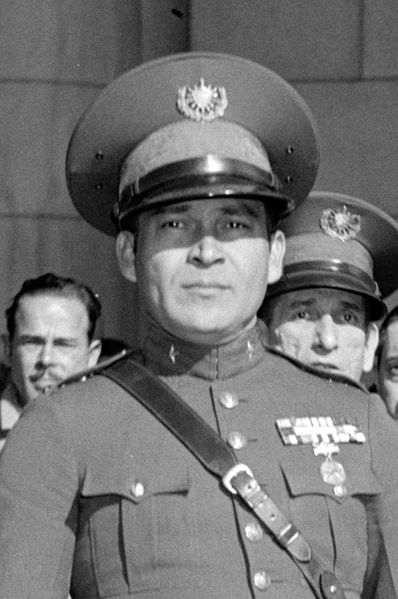
Fullyhensio Batista
The Kubinsky dictator Fullyhensio Batista, a former army sergeant, became president of Cuba as a result of a military coup. He was closely connected with the American mafia and took millionth bribes, and as bribes, among other things, he was awarded a telephone of gold and a night pot of silver. When the detachments of the Marxist rebels, led by Fidel Castro, approached Havana, the batist on January 1, 1959, together with his family and closest associates, fled from Cuba, flying away from Camp-Kolombia into Syudad-Trukhillo (now Santo-Domingo, the Dominican Republic). On the same day, a few hours later, Cuba was left by Batista Batista Francisco “Panchin” Batista, Governor Gavana, as well as Meir Lanski, one of the leaders of the Koza Nostra and a personal friend of the dictator.
More Fullyhensio Batista did not return to Cuba. Later, the batiste moved from the Dominican Republic to Portugal, where he first lived in Madeira, then in Estoril. Subsequently, the former Cuban dictator settled in Spain, where he died on August 6, 1973, the town of Guadalmin near Marbelia from a heart attack and was buried in Madrid.
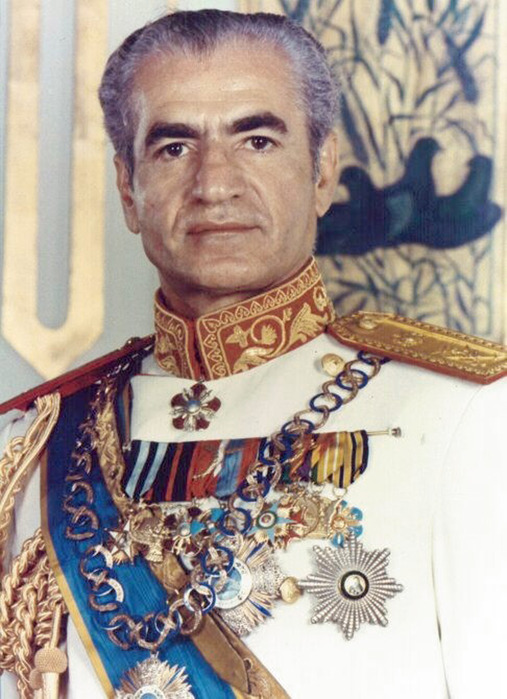
Mohammed Reza Pahlavi
Shah Iran Mohammed Reza Pekhlevi was forced to flee during the Islamic Revolution of 1979, when it became clear that the army no longer supported him. On January 16, 1979, he, along with Shahin Farah Pahlavi, with two sons and two daughters, fled on an airplane from Tehran to Egypt. Then the Shah family lived for a short time in exile in Morocco at the invitation of King Hassan II, and then moved to Bagama and Mexico. Shah hoped to find political asylum in London, but the government of Margaret Thatcher, not wanting to complicate relations with the new Iranian authorities and fearing for the security of the British embassy in Tehran, told him through his emissar that arrival in England was undesirable.
Mohammed Reza found a malignant tumor. The arrival of Shah for treatment in the United States caused in November 1979 the capture of the Muslim extremists of the American embassy in Iran. He was forced to leave the States and move to Panama, and then again to Egypt, where he died on July 27, 1980 at the age of 60. Egyptian President Anvar Sadat announced a national mourning and arranged for Shah state funerals in the Cairo Mosque Ar-Rifai.
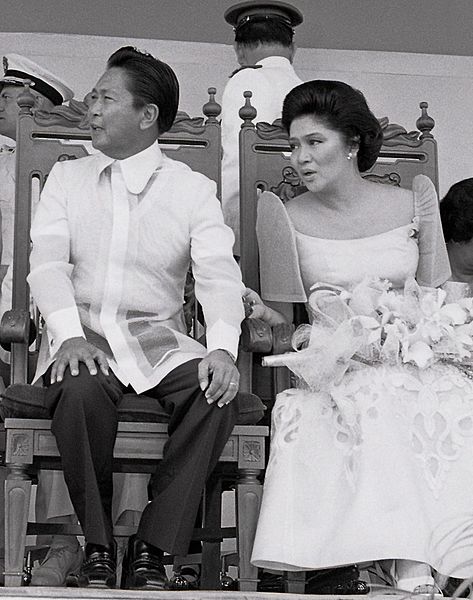
Ferdinand and Imelda Romualdes Markos
The widow of the 10th President of the Philippines Dictator Ferdinand Markos Nameldes Marcos during the reign of her husband was the governor of Manila and held a number of ministerial posts. When Marcos was seriously ill in the 1980s, rumors crawled that the country was actually governed by Imelda.
The victory of Markos in the early presidential elections on February 7, 1986 was not recognized by his opponents who accused the Markosov couple of the election harness. In manila, popular unrest began. Marcos ordered the troops loyal to him to suppress the rebellion, but the opposition urged citizens to resist the troops with a non -violent way. On February 23, the column of armored vehicles, directed against the crowd, stuck in a “living barricade”, which she could not overcome. The army leadership passed to the side of the rebels. On February 25, Marcos held the inauguration ceremony on the balcony of his palace. However, foreign ambassadors ignored the inauguration, and the US government recommended Markos to resign. In the evening of the same day, the couple Markosov left the palace and on an American helicopter headed for the American military base of Clark, and from there to the US island belonging to the United States.
Ferdinand Marcos died on September 28, 1989 and was buried in Hawaii. In 1991, the Philippines government lifted the ban on the return of Namelda Marcos to his homeland and she returned to the political life of the Philippines. Attempts by various governments of the Philippines to gain access to the Swiss accounts of Markosov, frozen after their overthrow and exile from the country, have still unsuccessful. In 1990, the Swiss court ruled that these funds would be able to be returned to Manila only if the Filipino court proves the accusations against Nichelda Marcos during honest and fair hearings. On September 14, 2010, the Filipino court ordered Nameld Marcos to return the state 12 million pesos ($ 280,000), which her husband illegally appropriated 27 years earlier.
Nikolai Chausko
The head of the Romanian Communist Party and the dictator of Romania Nikolai Chaushescu fled from Bucharest on December 22, 1989, when the army refused to suppress the began revolution. On this day, the rebels along with the troops occupied the television center in Bucharest and announced the fall of the communist regime. Chausko, along with his wife Elena, who was a member of the Politburo Communist Party, fled by helicopter from the roof of the building of the Central Committee of the RCP, surrounded by a crowd of demonstrators. Together with him, two more ministers and two agents of the Securitate Secret Police fled.
The helicopter initially landed at the dacha of Chausko on Lake Snagov, 40 km north of Bucharest, where there was a spare command post. Already from the cottage, Chausko called the commander of the military districts. From the city of Pitesti came a message with the assumption of support, and the deposed leader went there. But the new Minister of Defense, General Stankulescu, ordered to close the country's airspace and knock down a chauscu helicopter. The pilot, who was notified of this order, put the car in the field at Tyrgovishta and ran. Chauseru, along with his wife and guard, continued to escape towards Pitesti on one of the cars captured on the road.
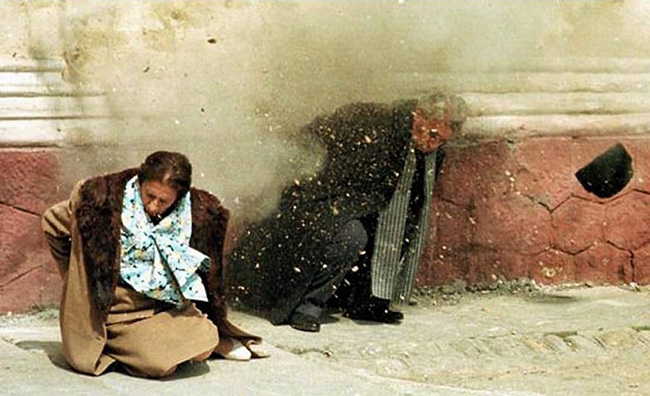
The driver said that Elena suggested hiding in the forest, and Nikolai wanted to resort to the help of workers. However, during the stop at the first enterprise, the workers threw the car with stones, shouting: "Death to criminals!" In Tyrgovishta, they tried to find shelter in the building of the local committee of the RCP, but they were not allowed there. After an inexpensive search for the refuge, the couple Chausko stopped at one of the administrative buildings. At first, people did not believe that in front of them, a person who was an omnipotent dictator yesterday, and then called the military. Two days, the spouses of Chausko spent in the cell of the military police department. On December 25, Nikolai and Elena Chausko were shot according to the verdict of the military tribunal. He was charged with murder 325 and injury 628 demonstrators.
Saddam Hussein
The dictator of Iraq Saddam Hussein, after the beginning of the second invasion of the coalition forces in Iraq on April 7, 2003, changed his place every three hours. On April 9, the coalition troops without a fight entered Baghdad. On April 17, the remnants of the Medina division near Baghdad were surrendered.
Hussein was arrested on December 13, 2003 in the basement of a village house 15 kilometers from Tikrit. With him, 750 thousand dollars were found, two Kalashnikov assault rifles and a gun; Two more people were arrested with him. Answering the question of journalists in what condition was the former dictator, the commander of the US armed forces in Iraq Ricaceco said: "He made the impression of a tired man who was fully humbled with his fate." According to the official version, a person (relative or closest assistant) issued information about his whereabouts. The former Iraqi ruler was hiding at a depth of about 2 meters underground in the hole, where there was barely enough space to lie. He did not resist.
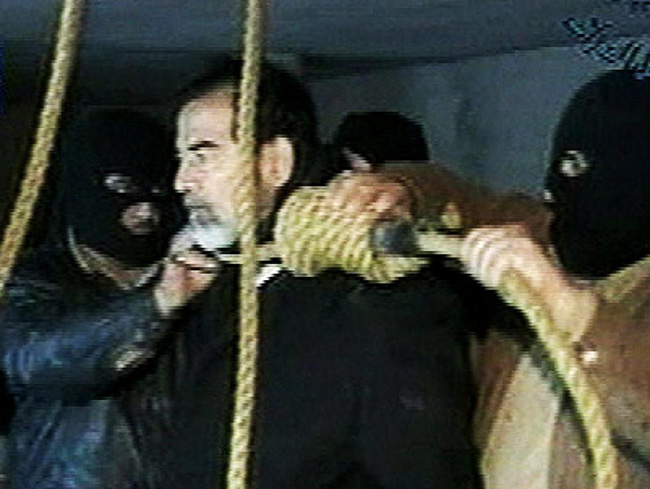
On December 30, 2006, Saddam Hussein was hanged in Baghdad by the verdict of a special tribunal.
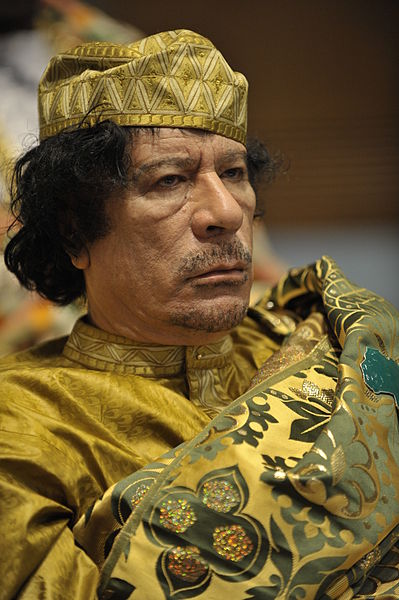
Muammar Gaddafi
The dictator of Libya Muammar Gaddafi, having been defeated in the civil war, took refuge in his hometown of Sirte. On the morning of October 20, 2011, the detachments of the National Transition Council captured the city. Cadaffi and his close associates tried to break out of the city as part of a column of 75 cars, which quickly moved along the road in the suburbs of Sirte. The former head of the internal security service, General Mansur Tao, captured: “We decided to get out after we were surrounded and the place ceased to be safe. We wanted to break into the neighboring district of Jarif. However, when leaving the city, we were subjected to powerful shelling and were surrounded again. All our cars were destroyed. We had to divide into groups. We walked towards Jariff. I was with Gaddafi and the Minister of Defense. There was a small security group with us. Then I hurt me, and I lost consciousness. What happened next, I do not know. "
Те машины, где находился Каддафи и его свита, подверглись ударам с воздуха. Они были вычислены благодаря перехвату переговоров Кадаффи. Находившийся до конца с Каддафи его личный водитель Хунейш Наср рассказал: «Революционеры шли за нами. Он не был напуган, но, кажется, он не знал, что делать. Это был первый и последний раз, когда я его видел в таком состоянии».
Раненый ливийский лидер был захвачен в плен. Толпа повстанцев стала издеваться над ним. Люди с криками «Аллах акбар!» принялись стрелять в воздух и тыкать в полковника автоматами. Каддафи с залитым кровью лицом поместили в машину скорой помощи и отправили в госпиталь. По дороге он был убит выстрелом в голову.