
Translated material
The former Duma
What will be remembered by residents of the capital of the Mosgordum of the fifth convocation
What will be remembered by residents of the capital of the Mosgordum of the fifth convocation
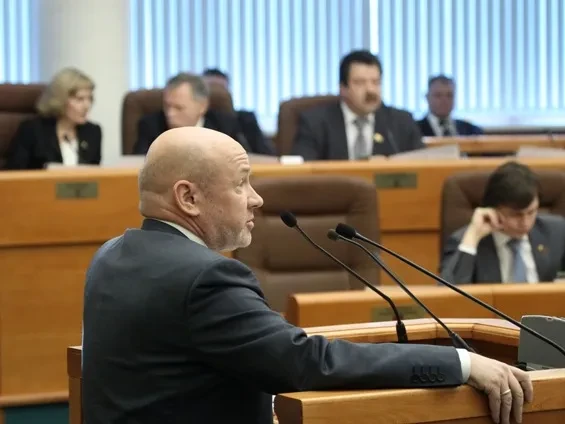
Chairman of the Moscow City Duma Vladimir Platonov. Photo - RIA Novosti
In September of this year, Muscovites will choose a new Moscow City Duma. The current one was formed in 2009 in the course - maybe the most dirty Moscow elections. The total use by the Moscow authorities of the administrative resource and direct falsifications then led to the fact that out of 35 mandates- *32 were in the hands of representatives of United Russia, and only three deputies-communists fell the role of the opposition. Which became an obvious distortion of the real political preferences of Muscovites and detained several democratic parties from the Moscow legislative power, for which many Muscovites have traditionally voted. *
It's time to pay the bills. After all, these four and a half years were engaged in something. They met, adopted laws, and not only by laws they were “noted” for the reporting period.
1. The most high -profile bills adopted (or never accepted) by the Moscow City Duma
General Plan of Moscow until 2025 - "Death sentence to the city"
The Moscow City Duma with its overwhelming unicorn majority adopted the general plan on May 5, 2010 - despite the violent protests, as well as the request of the Public Chamber, which called it the “death sentence” of the city, send the document for refinement. Deputies from the Communist Party then voted against. The general plan was criticized by many transporters and architects: for not solving the environmental and transport problems of the city, and also prevents the preservation of part of cultural and historical objects.
However, God will not have to live according to these rules until 2025. Due to the annexation in 2012, the capital of 148 thousand hectares of the new territory had the need for another general plan. Deputies promise that it will be adopted in 2015. But these will be the deputies of the new Duma. So while there is a hope that the “sentence” will be canceled.
The number of Moscow City Duma - as few deputies as possible
The federal law adopted in the spring of 2010, according to which the size of the regional legislative body, depended on the number of voters, caused violent discussions within the Duma itself and abroad: where there are over 2 million, the number of deputies should be from 45 to 110 people.
The Moscow City Duma, acting in a megalopolis, comparable in the population with not the smallest European state, decided to establish the bar at the minimum height - 45 people will be elected in the new convocation. United Russia, as always, explained this by concern for the population - they say, the money of voters will be saved in this way: the party calculated that each taxpayer and spend 10 rubles a year for one deputy.
The rest of the parties remained unhappy - they believe that the Party of power is booking their places, because they can put up 45 strong candidates, but a hundred bright representatives capable of going to the Duma would not have found in its ranks.
Want to protest-please, in the guide park! In other places there are more and more restrictions
On December 26, 2012, the Moscow City Duma adopted amendments to the law on meetings, rallies, processions, demonstrations and pickets proposed by Mayor Sobyanin. The indignation of the opposition was unanimous and loud: the Duma was accused of, in fact, it cancels the freedom of assembly, which is already limited by the actually permissive nature of their holding, contrary to the constitution.
According to the law, the places specially designated for mass shares appeared in Moscow (later the Moscow government allocated the sites in Gorky Park and Sokolniki for these purposes), where it can be collected without a preliminary application. True, if you install any designs, the application still needs to be submitted.
Both sites opened on May 1, 2013, but did not become popular.
In addition, in the amendments accepted by the Moscow City Duma - a ban on a car weapons on a garden ring and within its limits, as well as new rules of single pickets: now, if several people plan to stand at the established distance from each other with posters on one topic, they must notify the capital's authorities in advance.
However, in prohibitive practice there is no limit to perfection. Just the other day, the Moskvin-Turkhanov deputy Moskvin-Tarkhanov made a new initiative-to ban any rallies within the Boulevard Ring. And the chairman of the Moscow City Duma, Vladimir Platonov, called for limiting deputies in the right to choose a place for meetings with voters so that they do not use their right “for subsequent provocations”.
An attempt to cancel public hearings
In December 2012, the Moscow City Duma in the first reading abolished public hearings on the GPZU (urban planning plans for land development), natural territories and zones of cultural heritage protection. In fact, this would mean that citizens can no longer dispute the construction of facilities in their areas, as well as the development of parks. The author of the amendments-all the same Moskvin-Tarkhanov-explained that this "helps to preserve investors." The initiative caused violent protests by municipal deputies, who recalled that thanks to public hearings it was possible to cancel the construction of a paid multi -level garage in a boss or supermarket at the site of the playground in a warm camp, to send the Izmailovsky forest park for processing.
The mayor of Moscow Sergey Sobyanin, who asked the Moscow City Duma to take into account the opinions of citizens, stood up for a public hearing - as a result, the amendments did not pass in the second reading in January 2013.
Testing of schoolchildren for drugs
Back in February 2013, the Moscow City Duma approved the voluntary testing of schoolchildren for drugs, supporting the initiative with which Dmitry Medvedev came up in 2011. Now, schoolchildren should give out questionnaires for voluntary filling - those who are at risk after testing are proposed to take tests. Children over 15 years old decide for themselves, their parents decide for the rest.
In November 2013, several deputies decided to go further - and offered to test all children for drugs without fail. Such an initiative was made by the head of the health commission, Lyudmila Stebenkova, she was supported by the chairman of the Moscow City Duma Vladimir Platonov. So far, the initiative has not received the continuation. The Commissioner for Human Rights Vladimir Lukin called the idea of unconstitutional - it, in fact, cancels the presumption of innocence.
Building Bitsevsky Park
On June 26, 2013, in three readings, the Moscow City Duma adopted a bill that changes the descriptions of the borders of the Yasenevo regions, Chertanovo North, Chertanovo Central and Chertanovo South. As a result, the territory of Bitsevsky Park was reduced. The change in the territory of the park occurred contrary to the protests of the residents of the district. According to the municipal deputies, one of the reasons for the bill was the desire to legalize the construction of a private sports club "Dina" on the lands of the natural-historical park.
Referendum on housing and communal services
On December 25, 2013, the Moscow City Duma supported the initiative of the Communists to hold a referendum in the capital, to which three questions were planned to bear: do Muscovites agree that the prices for housing and communal services should not rise until 2014? Do they agree that the priority of the repair of houses be determined regardless of the method of management of the house? Should I cancel the law on a universal electronic card?
The referendum did not take place: the Communists themselves recalled the application from the Moscow City Warrics. The Moscow City Duma responded to their proposal in the affirmative, but somewhat late - the proposal was made back in 2011 and, according to the deputies from the Communist Party, by the time of approval, it had lost its relevance.
Elections on elections to the Moscow City Duma
In January of this year, the Moscow City Duma introduced new rules by which it will now be formed - the law passed the third reading on January 22. As usual, the United Russia voted for the "pros", the Communists were against it. According to the new rules, in the formation of the capital's government, party lists are canceled - all deputies are elected in single -mandate districts.
United Russia once again explained that such a system was better (before with the same convincing they proved the opposite). Like, voters know their candidate in person - and no “steam locomotives” at the head of party lists, since the lists themselves are canceled. Some political scientists agreed: in the future, such a system will teach both candidates and voters are more responsible to relate and prepare for the elections.
Nevertheless, many experts and opposition politicians were dissatisfied with the fact that electoral legislation began to redraw less than a year before the election. In addition, this means a new cutting of the districts, which has not yet been prepared in the Moscow City Warring Committee. In addition, deputies from the party in power, who have catastrophically lost their popularity in Moscow, were quite reasonably suspected of getting rid of their own party brand and hiding behind the status of “independent candidates” in the districts.
2. What else distinguished the Duma, except for legislative activity
Elections
Some still argue that the laws adopted by the capital's Duma of the current convocation are illegitimate - because the Duma itself is illegitimate. The question of her dissolution was repeatedly raised at opposition rallies and in the programs of some politicians: for example, the leader of Yabloko Sergey Mitrokhin, who lasted the post of mayor of Moscow last summer, promised in case of his election to hold early elections. In 2009, even a systemic opposition was indignant: the day after the election, three factions (Fair Russia, the Communist Party and LDPR) left the meeting room in the State Duma in protest.
Recall that in 2009, only “United Russia” (32 seats) and the Communist Party (3 seats) were able to overcome the barracking seven percent barrier. During the campaign, the authorities actively “squeezed out” the opposition-all candidates-one-mandate people from “solidarity” (Lyaskin, Yashin, Dobrokhotov and others) refused to register, citing allegedly defective or invalid signature sheets.
The elections themselves were remembered by massive violations - sometimes completely shameless. So, on the site where Sergei Mitrokhin and his family voted, they “did not find” a single ballot in support of Yabloko. When, by decision of the court, the ballots were counted, they found as many as 16 in favor of the "Yablons".
Moving to a new building
In February last year, several different media wrote that the Moscow City Duma would allegedly move to a new building-to the territory of the former Novo-Yekaterininsky hospital on a passionate boulevard. The main reason is the expansion: the new composition (45 people instead of 35) in the old building will be crowded.
In the Duma itself, the move was not commented, referring to the executive power. The city hall then replied that the city Duma really needed a new building-but there are no possible addresses in the list of possible addresses.
Now in the Novo-Yekaterininsky hospital restoration is in full swing. The Department of Cultural Heritage has not yet reported that the building awaits after restoration, but they say that it can still move away to the Moscow City Duma.
Architecture defenders are actively protesting against work and against the Duma is settled in the hospital building. In particular, the Archnadzor movement monitors the progress of work. Its participants note that the demolition of several buildings that have begun this winter, the dug pit and the work of heavy equipment violate the legislation, since the complex of the Novo-Yekaterinsky hospital is a united security zone of cultural heritage objects, where only regeneration work is possible.
Illegal fines for parking
In June last year, the Supreme Court recognized some provisions of the Moscow Code of Administrative Offenses contradicting the current legislation. We are talking about new punishments for violators of parking rules initiated by the Moscow City Duma. So, the Supreme Court decided to leave a fine of 2500 rubles for non -payment of parking and cancel fines for violation of parking rules (for example, parking in places for disabled people) at 1,500 and a fine for hidden numbers of 5,000 rubles.
The Supreme Court gave Mosgordum for six months (until December 26) to remove these amendments from the Code. Since there were no decisions from the Duma for six months, in January the members of the Blue Bucket movement sent an appeal to Sergey Sobyanin with a request to dissolve the Duma. Indeed, according to the charter of Moscow, the mayor has the right to dissolve the metropolitan parliament if he made a decision that does not comply with the Constitution or federal law and did not eliminate the violation within six months.
Activists did not receive an answer to the appeal. However, on January 29, the Moscow City Duma nevertheless fulfilled the decision of the Supreme Court and canceled fines.
"Golden Krendel" of the Moscow City Duma
In November 2012, Moscow municipal deputies decided to continue the campaign that had begun in the State Duma in the State Duma Dmitry Gudkov and Ilya Ponomarev - and also began to look for lawmakers who combine basic activities with entrepreneurial. As a result, several deputies of business were found. So, the authors of the report entitled “Closed Joint -Stock Company“ Moscow City Duma ”found out that:
- Alexey Ryabinin owns shares in several construction companies (including the largest Stroyfininvest LLC);
- Evgeny Gerasimov is the founder of 13 funds and organizations (mainly in the field of cinema), and many are funded from the city budget;
-Sergey Tutra owns the company for outdoor advertising CJSC Capital-M, and Peter Ivanovsky is a co-owner of her “daughter”, the company “Unified City-1”;
- Andrei Metelsky , according to the report, already as a deputy, acquired from his mother East Baths LLC - he himself says that he received the company in the form of a gift.
However, neither the prosecutor’s office nor the Investigative Committee, where the municipal deputies sent the results of their investigations and the request to figure out this information.