
Translated material
Extreme experience in personal autonomy
“In the days of the celebrations and troubles of the people” the vote of the minority, which did not join the overwhelming - literally - the majority, who retains their own view of what is happening. It can often be judged by it that tomorrow the majority will think, now has no opinion. That is why stories about dissidents are so important. We have the right to assume that they are the future. The fact that today is said in the kitchens in an undertone, tomorrow it can sound both in squares and through central television channels. The XX century brought two important innovations.
The first is the creation of technologies and even enterprises for the mass extermination of people (concentration camps), allowing the lead to uniformity through the complete destruction of dissenters - first moral and then physical. The second is the emergence of philosophical concepts, which, appealing to the achievements of science, denied the existence of an autonomous human “I” and free will. The latter, in the best case, was proclaimed an illusion that incomprehensibly arising from a machine gun, whose subjective reality can actually be completely explained by a set of laws that formulate natural sciences.
Of course, in our time with such a philosophy, one can argue - for example, to say that at each new level of self -organization of matter, new patterns arise, irreducible to the properties of the level of the underlying. Human consciousness is an extremely complex thing, very far from being completely predictable.
However, those counterarguments against reductionism and determinism that arose in concentration camps are much more interesting for us. For example, few prisoners like Viktor Francla (the author of the book “Say Life“ Yes! ”: A psychologist in a concentration camp”), who, abandoning the strategy to survive at all costs, tried to practice moral autonomy in a concentration camp. Of course, their survival is the result of a successful combination of circumstances. It is difficult to disagree with Kant and not to admit that the morality in this and in any other case is not a guarantee of happiness, but only a condition that makes a person worthy of happiness. Moreover, obviously not every person. Many do without her.
Nevertheless, the fact attested to Viktor Franklo is that morally not broken prisoners transferred the hardships of conclusion a little easier. Anyone who took responsibility for his own actions in these conditions felt free and proved by his example that to some extent our survival depends on our ideas about his needs, and not on the degree of satisfaction of certain “objective” needs. And if we consider ourselves more free, we are really more free. At least for some time.
The latest history of Russia had its own examples of resistance to suppression of personality - from independent art expression in a totally regulated society to attempts to establish their own orders even in places not so remote. Three books represent three forms of such a confrontation.
Without hope and signs of weakness
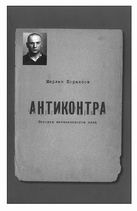
Marlene Corallov. Anti -Cult. The story of the "Stalin" prisoner. - M.: Logos Publishing House, 2014. - 648 p.
Before us, the elected works of Marlene Koralov (1925-2012), the author, the general public, the little -known (according to his own will), however at a certain moment personally affected many people, now famous and public - writers, actors, journalists, etc.
The specificity of this book determines the presence of texts of a very unusual genre in it, which can be called analytical memoirs. Some of their chapters are published for the first time, and by nature they are such that they could hardly be made public during life. But in the structure of the book, they play an unusually important role, creating the necessary context for previously published essays and stories about the Stalinist prisoners and members of their families, critical analysis of camp prose and camp memoirs. All this, of course, is also presented in the reviewed publication.
Marlene Corallov is the son of the Hero of the Civil War, repressed and shot in 1937, Mikhail Corallov. After the arrest of the mother, it was brought up by a aunt. He graduated from the Faculty of History of Moscow State University. He was arrested in 1949 for a frank conversation about Stalin with a friend, in which, in his youth, he did not recognize the informer. He was released in 1956. After returning from the camp, he became a theatrical and literary critic, then he worked on the study and preparation for printing the works of German communists in aesthetics. In the spring of 1966, together with the international journalist, Ernst Henry gathered among the creative intelligentsia a signature for “Letter 25” in order to prevent Stalin's rehabilitation. After perestroika, one of the founders of the Memorial Society, a camp historian.
In the memoirs, the author warns the reader that he has neither his own philosophical position nor ideology. It recalls that there are no absolutely reliable memoirs in principle: no one is interested in complete and final self -disclosure, and the memory fails. Nevertheless, the memoirist still has a goal that not only justifies the existence of his text for the reader, but makes it invaluable.
Marlene Mikhailovich approaches the events of his youth as a historian, trying to understand every person significant in his fate as a product of circumstances. For example, he interprets his own arrest as part of the collection of incriminating evidence on the aircraft designer Pavel Sukhoi, whose daughter Corallov was married to the camp. The father of the peoples sought from his immediate environment of absolute obedience, arresting, that is, actually turning into hostages, their relatives.
Before us is a kind of social anthropology of not only the Stalinist camp, but also the Stalinist USSR (in prison, Korallov, on the bottom, spoke with the university professors and the generals) as a whole with a deep, so to speak, immersion in the material, and at the same time holding the internal distances necessary for the thinker from the object. That is, a study conducted by the observation method and backed by archival searches. There were units of such experts.
 The fact is that Marlene Corallov got into the camp as a young man, full of strength and health. It was there that he formed both as a person and as a thinker. Once in a prison camera, an athletically built but naive young man-Ochkarik (Marlene Mikhailovich’s glasses throughout his life were a source of harmful illusions for many attackers) on the very first day beat the six, whom the criminals sent to restore the rebellious. The interpersonal conflict, which Corallov entered, turned out to be class. At night, when the criminals were supposed to cut the sleeping Marlene in all layouts, he explained the situation, and most importantly-he undertook to guard in a dream, a captured Ukrainian. So the newly made ZEK joined the struggle of criminals with political on the side of the latter. This course of the Corals was further. As a result, he mastered the role of the informal leader of the camp community (political in those years formed his own hierarchy, different from the classical thieves). It is the leader, not the victim. In the power of the graduate, the Estabricial of Moscow State University was the opportunity to save the intellectuals who fell into the camp. From them he received a ticket to life after liberation.
It is not so difficult to find a definition for the style of thinking of Marlene Corallov, having already read the first chapter of his camp Odyssey. He is a Marxist, wider and, possibly, more precisely, a conflictologist. For him, in history, the struggle between classes, social groups, etc. is primary. It is also the practice that the Soviet Marxist should serve as a criterion of truth. If B, Marlene Mikhailovich, in his practical conflictology, was mistaken, he would not have survived ...
Corallov more than once resembled both friends and his readers that he was not saints. Counseliness with criminals did not just require an understanding of how they think, and the ability to speak their language. An accurate political calculation and violence were needed, the details of which the corals do not apply, because it does not consider the experience that the youth needs to be transferred.
Despite all this, the personal case of the prisoner Corallov can be compared with the history of Victor Frankl. According to the verdict, Corallov received 25 years, that is, the maximum (Solzhenitsyn had less period). Having no hope of returning from the camp alive, Corallov and long -term plans did not make, and related strategies - for example, avoid conflicts with other prisoners and camp administration, etc. - did not adhere to. Nevertheless, the Coral Love managed to hold out seven years before the liberation.
From the text, we clearly see that violence was a necessary, but not sufficient condition for survival. You cannot win alone. The return of Corallov became possible thanks to a correctly built relationship with others - the ability to quickly find his own, to trust them within reasonable limits and, of course, not to let them down.
In other words, we see that Corallov survived, among other things, thanks to the follow -up of a certain morality. It is noteworthy that this morality is absolutely alien to the resentimal - nothing reminds of the insult of the weak on the strong, a slave on the master in the book of Corallov will not be found. He was completely different by the character of a man.
A direct confirmation of how the morality in practical terms was important in those conditions is the desire to denigrate the Zekov leaders and replace them with their agents.
This topic remained as relevant as possible for the free life of Korallov after liberation. People who are close in beliefs, but did not visit the barbed wire, respectively, and the method for separating sheep from the goats did not own. And the informants did not disappear, including the one who planted Marlene Mikhailovich. And at the first random meeting, he tried to immediately denigrate his unexpectedly, nonely risen victim in the eyes of a narrow circle of common acquaintances.
The need for constant clarification that for critically thinking people of generation (not to mention the life experience) of Corallov was the alphabetical truth, day by day it only grows. The new generation of readers has gained access to camp literature, which began to be widely published since the beginning of the 1990s, but reading these books in our time already requires special training. People who formed in the new Russia simply have no experience, and the knowledge of the realities of the life that gave rise to this literature. And therefore it is difficult to overestimate the value of those analysis of camp prose and memoirs that are included in this book.
A connoisseur of camp life and hidden springs of the politics there, Corallov in detail the novels about the camp, separating the plausible from unlikely or even incredible. For example, the author enters into a polemic with Solzhenitsyn, who considered the leader of the Kengir uprising of Kapiton Kuznetsov, who, according to the assumptions of the Campaurnik Korallov, could not be any other than the informer, which was subsequently fully confirmed by archival data. He convicts the classics of camp memoirism in exaggeration, when they, without any reason, claim to be heroic roles. The explanation finds this: the need to compensate for the surviving humiliation.
Concluding the reading of this, which is generally not very edifying by the author of the book, we cannot but feel its strange educational effect. Corallov teaches us not only to compassion for the victims of the Gulag, but also to respect them. Handing out camp debts, he approves the rights and dignity of the person, and also pays tribute to the ideal of the common good, so expensive for many of those whom Stalin destroyed.
Contrary to prison and civil service
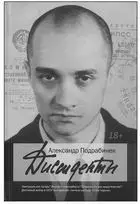
Alexander Podrabinek. Dissidents. - Moscow: AST, 2014. - 477 p.
The memoirs of Alexander Podrabinek (born 1953), the dissident, human rights activist, journalist and policy of democratic orientation, belong to another, closer era, Brezhnevskaya. The author describes his life in detail in the context of the history of the dissident and human rights movement of the 70s of the XX century, from school years and before leaving prison in 1983.
The personal plot of the suburban is closely intertwined with the events of the late 70s-early 80s. After graduating from the Feldsher School in 1974, the Podrabinek began to collect materials about the use of psychiatry in the USSR in the fight against dissenters, in 1977 he ends the book “Punishment Medicine” (published in the United States in 1979), becomes a co-founder of the Workers' Commission for the investigation of the use of psychiatry for political purposes under the Moscow Helsinki group. It achieves the release of some prisoners of special psychics. In 1978, he was sentenced to 5 years of exile to Eastern Siberia. In 1980, he was sentenced to three and a half years of imprisonment.
 The book is divided into two parts. The first is about the will, the second is about the prison. Comparing the story of a suburban man with the memoirs of the Stalinist years of prisoners, first of all, you pay attention to sharp differences, and only then - to unexpected moments of similarity. The first part is most different, where the author describes his human rights activity.
Using the example of Corallov, we see that the Stalinist regime himself created fierce opponents. However, the surviving victims of preventive terror, although they understood the true state of affairs in the country, for the most part it was not considered possible to change something in its life by organizing the mass movement or participation in it. The suburban belongs to the generation of the grandchildren of the victims of great terror (grandfather was shot in 1938) - the continuity here is evident, but the life position is completely different.
Resistance to the Soviet regime in the dissident movement took open non -violent, and most importantly organized forms. The dissidents demand from the authorities that it complies with the laws of the USSR, which is why their main event - a rally at the monument to Pushkin in Moscow was held on December 5, on the day of the Soviet Constitution. The idea of universal good worries little human rights defenders, or rather, the Soviet government is responsible for him, nominally promising to take care of him. Dissants protect the rights of an individual.
All this is carried out in the conditions of the existence of a certain, even intelligence and imperfect, but infrastructure, a certain environment. There are comrades. There are dissident houses where you can exchange news; addresses where you can take refuge for a while. There are programs of Western radio, the journal of Chronicle of current events, Samizdat and Tamizdat, where, albeit under the threat of prison, but you can still write about the arbitrariness of the KGB. Thanks to the Media, the suburban are, his father and brother become a global media fihura.
Moreover, in an amazing way, they are even in the KGB, starting with ordinary employees who ask for dissent literature from objects of surveillance, and then, having read, honestly returning to the protocol, and ending with Captain Viktor Orekhov, who informed the dissidents about the investigation and warned the nipple about the bottom and time of his arrest, for which he himself received 9 years prison.
A young suburban woman wants a feat, which at first understands somewhat in advance, inspired not only by Solzhenitsyn’s books, but also by memoirs of pre-revolutionary sub-fighters. However, he imagines his future clearly: after 2-3 years of active human rights activity - emigration or prison.
Having abandoned the KGB proposal to stop the fight against punitive psychiatry and go to the west, the suburban eventually goes to the east. In the village of Bolshaya Markh (now the suburbs of Yakutsk), the prison authorities invites the new arrived political prisoner to reconsider the attitude to his own business and begin cooperation. But, not meeting understanding from the prisoner, he begins to break him, as tools using cold, hunger and loneliness.
This final episode, which is very important for the general plot of the book, the reader may well interpret as a kind of moral and philosophical experiment, which puts a scum. Of course, to judge the correctness of its holding not to us, but to specialists - to other prisoners and doctors. However, the overall idea of the experiment is undoubtedly worthy of attention. Like Viktor Frankl, Podrabink is a doctor. He can professionally assess the state of his own organism, but here is the case when the knowledge of the natural factors on which the body's life depends is used not to save his life, but in order to extend the resistance. Because you can win in the confrontation with the prison administration only by abandoning the hope of surviving. Well, thanks to luck, of course.
Once in a lobge chamber, the dubbin invents all kinds of ways to maintain the ability to think and communicate in himself-he mentally writes letters, composes poetry, teaches English, etc. There are no glasses in the windows of the lone chamber. Pearberry has to gut his mattress, make a semblance of a curtain out of cotton wool, which the ice intends. However, ahead is spring with plus temperature, when it is no longer possible to do this.
Finally, the span is kept on a reduced diet. And with all measures to save energy, he understands that before irreversible changes in the body did not remain long. Голодающего заключенного спасает один из надзирателей, прапорщик Владимир Сурель, который тайно начинает его подкармливать хлебом. Его мотивация заслуживает внимания: брат прапорщика приговорен к смертной казни и тоже находится в тюрьме, но — в другой. Сурель надеется, что если он так будет себя вести, то, возможно, и с его братом поступят по-человечески.
Мы видим, что в условиях, которые, казалось бы, навсегда должны были лишить человеческого облика всех вовлеченных в ситуацию, во взаимоотношениях ее участников стихийно срабатывает основополагающий принцип кантовской этики: поступай так, как ты хочешь, чтобы все поступали по отношению ко всем.
Мы бы скорее всего не узнали этой истории, если бы не стечение обстоятельств: у Подрабинека начался туберкулез. С этим диагнозом он попадает в тюремную больницу, где ему удается, нет, не выздороветь, а получить такое питание, которое позволило полностью восстановиться после длительного недоедания и дожить до конца срока.
Благодаря этому случаю нам и удается узнать о том, что «автономный индивид» мог оставаться или стать таковым и в условиях якутской тюрьмы, и на службе в КГБ, и в тюремной охране. И это подтверждает, что каждый человек — отнюдь не стопроцентный раб исторических обстоятельств, и даже в ситуации полной безнадежности способен определять свою судьбу и отвечать за свои поступки. Будем считать, что если личная автономия возможна, то и идеал прав человека не пустой звук.
ТАЙНАЯ СВОБОДА ТВОРЦА
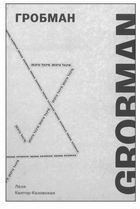
Лёля Кантор-Казовская. Гробман. — М.: Новое литературное обозрение, 2014. — 264 с.
Главный герой книги Лёли Кантор-Казовской — одна из ярчайших фигур культурной элиты Москвы 60-х годов прошлого века. Это художник-авангардист Михаил Гробман (р. 1939), оставивший след как в искусстве России, так и Израиля. Работа Кантор-Казовской интересна и своим главным героем (в книге помимо авторского текста вы найдете репродукции работ Гробмана, тексты его статей и манифестов, стихи), и системой координат, в которой она рассматривает его творчество и философию искусства.
Гробман не просто художник, он один из теоретиков Второго русского авангарда и хранителей его артефактов: он консультировал художественных критиков, которые брались за эту тему, хранил в своей коллекции работы товарищей, некоторые из которых, не будь Гробмана, могли бы быть просто забыты.
Благодаря Гробману мы знаем о маленькой группе художников, которые, увидев в конце 50-х годов на московских выставках абстрактные работы европейских и американских художников, не впали в подражание, а стали разрабатывать собственные изобразительные языки и эстетические теории. В своей книге Лёля Кантор-Казовская описывает и глобальный контекст, в котором существовала эта группа.
 Реконструируя события в искусстве середины XX века, автор пользуется метафорой проводящей мембраны. Так Кантор-Казовская понимает устройство пресловутого железного занавеса, которым США и СССР отгородились друг от друга. Демонстрируя работы своих художников на территории потенциального противника, политическое руководство обеих сверхдержав рассматривало это как пропаганду своих ценностей. В этом раскладе полотна американских абстракционистов толковались организаторами выставок из США как символы демократии и либеральных ценностей. Коммунистическая партия СССР отвечала на это искусством реалистическим.
Одним из последствий демонстрации западного искусства в СССР в конце 50-х было возникновение левого советского искусства, нового соцреализма, построенного на импрессионизме, экспрессионизме и кубизме, однако все равно нацеленном на отражение правильной в идеологическом смысле действительности, пусть и в авангардном стиле.
В случае Гробмана и его коллег речь шла о принципиальном отказе что-то копировать. Москвичи отталкивались от абстрактной манеры западного авангарда, однако творчество американских художников, хотя и повлияло на их художественный язык, оказалось принципиально иным по содержанию. Американцев питал экзистенциализм. В СССР об этом ничего не знали и наполняли «новые формы» собственным содержанием. Искусство Гробмана и его друзей противостояло советской власти и ее эстетике и номинально «левой» (социальное и гендерное равенство, секуляризация, интернационализм и т. д.) идеологии, но в каком-то смысле оно оказалось «правее» и своего западного аналога.
Для Гробмана оперирование геометрическими и органическими формами (художник часто изображал фантастических животных) было способом уподобиться Творцу, непрерывно создающему мир, и уподобить ему своего зрителя.
Иными словами, по советским меркам искусство Гробмана было недопустимо национальным и спиритуалистическим, хотя и крайне далеким от знакомых нам по нынешним временам изводам религиозного фундаментализма.
Оно не было для московского авангардиста средством самопрезентации и прославления собственного «я». Скорее — этапом на пути мистического восхождения к Абсолюту, в ходе которого «я» художника если не растворяется полностью в единении с неким сверхличным началом, то по крайней мере кардинально преображается, отказавшись от замкнутости в себе, поощряемой, как считает художник, искусством фигуративным.
В 1971 году московский период в творчестве Гробмана заканчивается. Он эмигрирует в Израиль, где пытается создать «современное еврейское искусство», фактически продолжая свои московские эксперименты.
Философские искания и художественные эксперименты Гробмана израильского постмодернистского периода (80-е и 90-е) сложны. Продолжая создавать изображения и тексты, он то отказывается от религиозной составляющей в них, то заявляет, что его личный мистический опыт привел его к отказу от искусства в принципе. Дать исчерпывающую интерпретацию творчеству художника той поры трудно. Еще труднее предсказать, что вынесут из него потомки и что окажется ценным не только в израильском, но и в глобальном контексте.
Тем не менее мы рискнем выделить из книги Кантор-Казовской один момент как важный и поучительный для нас итог художественных исканий Гробмана.
Массы склонны подхватывать взгляды недавних изгоев, а вчерашние одиночки-диссиденты — без остатка в этих «общенародных порывах» растворяться. «Традиционные ценности» (национальная самобытность, религия, семья и т. д.), которые были для художников Второго авангарда сокровенным, глубоко интимным источником подлинной реальности, в другую эпоху превращаются в поверхностные ярлыки стадного единения, боевые знамена для отмобилизованных вожаками агрессивных толп.
Как показывает Кантор-Казовская, в своем весьма вольном традиционализме Гробман держится того, что можно было бы обозначить как общечеловеческое ядро традиционных ценностей. И его претензии к западной толерантности конца XX века связаны прежде всего с тем, что она уничтожает сама себя, распространяя свою защиту и на убийц.
Мы не можем вообразить Гробмана шагающим в строю. И объяснение этому — его опыт автономного — в высшей степени плодотворного в творческом и интеллектуальном плане — существования в советском социуме. Возрождая традиции своего народа в порядке личной, если не сказать подпольной инициативы, Гробман навсегда усвоил принцип личной моральной ответственности.