
Translated material
History and memory in 2004, 2008 and 2014
Twice over the past decade, “domestic notes” turned to the topic of history and memory: the theme of number 5 (20) for 2004 was the “appropriation of the past”, and two issues in 2008 (43) and 5 (44)) were dedicated to the “memory meaning”.
Both ten and six years ago, the authors of the magazine felt that the past was increasingly becoming a field of discursive battles and that the state was trying not only to become an influential participant in these battles, but also to dictate their rules. However, at that moment much was perceived only as a hidden threat or potential. It is all the more interesting to look at the then observations, analysis and conclusions from the standpoint of today, when the lines of the split are clearly visible, the state set the goal of creating an official version of memory, created institutions for this and appointed responsible ones.
Today, the historical community is preoccupied with increasing the pressure of the state, expressed primarily in the work on the “single textbook” and the publication of “memorial laws”, limiting the freedom of study of the Second World War, the state of Russian-Ukrainian relations, as well as the state of the historical workshop itself. It is curious to evaluate the path traveled by the country in just a few years in each of these areas.
Let's start with the state.
The editors of the “domestic notes” in 2004 welcomed the refusal of history “from the claims of infallibility and from the desire to create an inspiring national myth” [1] . However, already in 2008, Boris Dubin noted an increase in a dangerous tendency towards “monopolization of memory by the state” [2] . Today we observe how, despite the reluctance of professional historians in Russia, to write a new “state -owned” narrative, the state is trying to force them to implement the program of the century before last [3] .
If the first attempts to restore control over history textbooks made at the turn of the century went “from below”, from the regional authorities and veteran organizations, then in 2004 there were signs that the state intends to intervene in the process of creating and spreading educational literature. By this time, the phrase “Sorosovsky textbook” was already used to designate “hostile” products, unacceptable for use in Russian schools. However, at that moment the most famous historian A. Ya. Gurevich in his interview still gave them praise and thanked George Soros himself for the competition he held. Moreover, Gurevich compared the Sorosov competition and the process of writing a school textbook in Soviet times (which today is considered some critics close to the ideal): “Previously, historians who would like to tell the truth were deprived of the opportunity to create textbooks for high school. As for universities, these textbooks were written by a group of authors who were clothed with special trust-such as Nechchkina, Rybakov could write textbooks, and some other historians who might have known more and were more honest, the textbooks did not order ” [4] . The story has made a circle, and we are present when trying (and someone participates in it) the creation of a “single textbook” of history (no matter how now the initiators of the venture are denied from this phrase, replacing it, for example, “a single concept” or “unified ruler of textbooks”).
Hopes for the possibility of further liberalization of school historical education are also noticeable in another article of the same issue dedicated to school textbooks. “In order to remember that there were good“ we ”and bad“ they ”in history, you don’t have to work much,” wrote Tamara Eidelman. “So, maybe, let our children remember fewer facts, but they will learn to build their relationships with others better?” [5] This proposal has become even more relevant over the past years and, alas, even more far from practice.
In his article on the “Ice Latrar”, Igor Danilevsky warned readers against “combining two heroic traditions -“ Orthodox ”and“ geopolitical ”, showing that the school course of the history of the USSR consolidated the tough confrontation of the rest of the world in the minds of Soviet people. An important observation of the author associated this confrontation not only with hostile relations with neighbors, but also with the internal instability of his own society [6] . The same disputes returned to Russia in 2013, when, by order of the state, the development of a “historical and cultural standard” of teaching history at school began.
In number 44 (5) for 2008, a conversation of the editor of Mark Greenberg magazine with historian Alexei Miller was published. During the discussion of “historical policy” in Poland, Ukraine and Russia, they also touched on the topic of the textbook. A. Miller so described the position of the already manifested supporters of the “single textbook” (in his interview this is Leonid Polyakov): “The youth does not know at all ... Therefore, give at least one“ civilian-patriotic version of “now we will have through”. The historian considered an example of historical politics an administrative promotion of Alexander Filippov’s textbook schools, which many spoke about in 2007-2008 as a probable “one”. Another example of “Historical Policy” Miller called the television movie “Byzantine lesson” - and this was the result of his list. Poland (with its institute of national memory) and even Ukraine (with the organization of the same name) looked much more steps in the development of historical policy [7] . We can see how much the picture has changed over the past time.
The rapid development of historical policy in Russia was just during the period after the publication of this issue of “domestic notes”. In May 2009, a commission was created to counteract attempts to falsify history to the detriment of the interests of Russia, in the summer of 2012-the Russian historical society, and the next winter-the Russian military-historical society and the task of creating a “unified textbook of history” was proclaimed; An author’s team was formed to prepare a base of such a textbook-the “Historical and Cultural Standard”. In April 2014, the Russian State Duma took another step - she introduced an article “On the rehabilitation of Nazism” to the Criminal Code, which limits the freedom of studying the Second World War. Russia caught up with and overtook its Western neighbors in the desire to control the historical narrative. It would be possible to speculate that such a desire is a sign that the elites feel their weakness in the task of rallying the nation, but let it remain a hypothesis. It is important, however, for understanding the emergency that the story plays in the modern Russian society, and the observation of Alexander Etkind: “Focus on historical memory is a characteristic feature of the post -traumatic time,” he wrote in his article, explaining that the centennial revolution in Russia has not yet ended [8] .
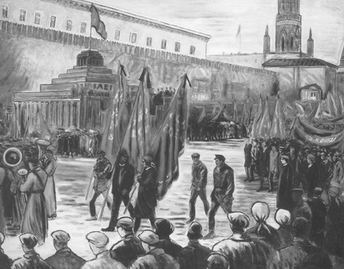
Remembering the Second World War, we have already moved to the substantial part of the Russian historical narrative, in which the war plays a crucial role. The articles of Boris Dubin (both in 2004 and in 2008) are well demonstrated that the Great Patriotic War has already become the “axial time” of the Russian history of the last century, restoring the foundations of the “Brezhnev” historical narrative. Today, when incorrect interpretations are equal to the “rehabilitation of Nazism”, a warning from 2004 is even more relevant: “Heroization of war, monumentalization of its collective image is not a testimony of memory, but an indication of the place of oblivion, an amnesical trace or“ scar ”<...> before us, one might say, a kind of kenotaf, a tombstone over the lack of consciousness in this“ place ”of consciousness is not over not The fact of understanding: a monument, but not a memory. And this means that the traumatic event of the Second World War in Russia - unlike, for example, from Germany, is not really experienced ” [9] . In fact, the actual ban on studying the Second World War introduced by the new law in 2014 makes a “blind spot” from the most important event of the 20th century, leads it from the field of living memory to the sphere of sacred, not subject to discussion, and therefore dead. This "blind spot" on the site of the most important event of Russian history is dangerous for society. The intensive interest in the war, which the authors of the bill hoped to stop, means the desire to comprehend its results in all their fullness, which is not reduced to a glorious victory. Four years later, in another article, Boris Dubin called the state that the Russian society is now striving to lead to the “maladualization of the past”, expressed in the “loss of social ability (and above all, from the advanced groups of intellectuals) to“ ask ”him again and re -interpret the“ answers ”, which turns the culture into“ respectable but poorly used museums ” [10] .
In the 2008 article, the same Boris Dubin anxiously notes that “the Brezhnev version of the war and victory is largely reanimated”, and directly indicates the practices of the “resistance” of state memory, developed in the Soviet period as a possible model for preserving memory in modern Russia. The spectrum listed by the author to preserve the alternative versions of the history of the war actually sounds extremely relevant: “The ultimate concretization of memory, opposed by state-paenoramic abstraction, <...> Dramatization of memory, opposed to the official optimistic picture and the current requirement of the so-called“ positive ”, <.> <.> The instruction, ironization of memory, or at least, at least, at least, at least, at least The problematization of the meaning and procedures for the reconstruction of the past ... multiplying the subjectivity of the reconstruction of the past, the multiplication of the subjects of memory. "
The same article by B. Dubin contains the observation of the central role of veterans in the Russian memory of the war. This is not the only possible case, the author notes. “If in our Russian case the“ figure ”, conveying the memory of the past and the significance of what happened, the veteran became, then outside Russia there are other ways to represent those who are able to keep and transfer memory. This, for example, is a “witness” in the understanding of Georgio Agamben ” [11] . During the time, which has passed since the publication, the departure of the latest generation of veterans led to the fact that now, in 2014, we can no longer say that veterans continue to play a key role in the transfer of memory or even in victory communities. In the latter case, their place was taken by reconstructors, before our eyes, in every sense, turning into new veterans [12] .
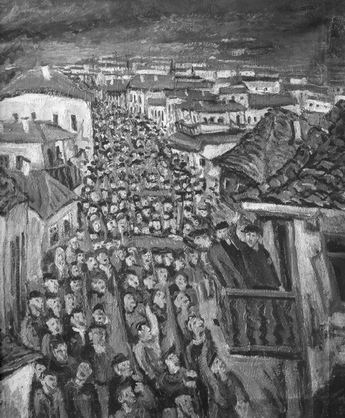
8 articles of the authors of the middle of the last decade can also find other hints of what will later develop into the historical "quasi -eology" of the Russian state. So, for example, in mid-May 2014, as they say, to the Kremlin, the Institute of Social, Economic and Political Research conducted the “first Berdyaev readings” dedicated to Russian conservatism [13] . Ten years before the first readings, the author of “domestic notes” Alexei Peskov showed how Nikolai Berdyaev “refracted” Russian historiosophy: “The antagonist of Christianity - Soviet communism - turned out to be substantially homogeneous of the Orthodox faith of the Russian people” [14] . This designed “continuity” of all eras and ideologies of Russian history is one of the basic characteristics of a modern historical narrative.
The numbers of “domestic notes” dedicated to history and memory were published after the “Orange Revolution” in Ukraine and in the midst of the first “war of historical interpretations” between our countries; The authors and editors, of course, could not ignore this plot. It is unlikely, of course, then it was possible to assume how the situation in 2014 would change - the more important is the testimony of the direction that was taken by Russian propaganda at that time. Here, for example, is an article by Vera Zvereva, in which the construction of history in television programs is understood; In the section on Ukraine of 2004, we will find all the main points of the modern “Russian” version of the history of a neighboring country: “that Ukraine has no experience, that its successes, as well as territories, is obliged to the USSR”, “for the sake of statehood that part of the Ukrainian people was ready to conclude a alliance with the Nazis and later was cruelly punished for this,“ audiences make it clear that they also make it clear that in The 1940s, and in the 2000s of the country's population equally split, "" just as fascist Germany allowed Bandera to proclaim an independent Ukrainian state, the West supports the forces of the opposition, the leading people of Ukraine to split " [15] . But in 2008, the Ukrainian historian Andrei Portnov, having analyzed the monuments erected in different regions of the country, concluded that “the lack of a consistent state policy of memory in Ukraine largely contributes to the preservation of social stability”, and this “situational pluralism <...> is born from the interaction of the images of the past, each of which, taken separately, is quite monologue and even authoritarian” [16] .
Many magazine materials affect the state of the historical community. This is primarily an interview with A. Ya. Gurevich, in which the famous historian spoke about the problems that remains the subject of violent discussions today: about the expert assessment of historical works (“The historian never creates alone, he has colleagues, not only predecessors and followers, but also contemporaries, those who work next to him <...> so this is not only about the self -reference, which is carried out by the historian working alone, but also about checking his work by the workshop to which he belongs ”), about the mechanisms of collective memory (“ the needs of a modern person, his hardships, worries become the sieve through which some memories pass, while others are discarded or rethought ”), finally, about the freedom of creativity (“ we are already accustomed to the fact that we have freedom of creativity. With all reservations, we know that with this freedom of freedom They do, but, remembering our youth, I must admit that we are now living in another world, and it is no longer possible to return to that shameless total lies ”) [17] . In the characterization of the state of historical creativity as a relatively free one with Gurevich, Alexander Etkind was jointly jointly: “The directors continue to make films showing the suffering of the previous generation. Historians continue to rewrite history. The state does not help and does not prevent all this to find its reader and viewer ” [18] . It seems that it was in this area, in the territory of freedom, the most alarming changes have occurred. The introduction of criminal punishment by willy-nilly will force many to include the “internal censor”-the situation familiar to Soviet intellectuals, like nothing other harmful research freedom.
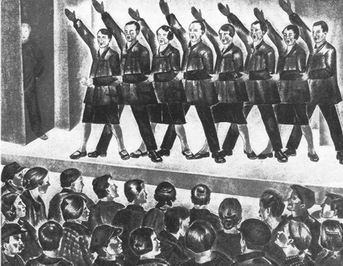
In the spring of 2014, such a crime has appeared in the Criminal Code of Russia as "the spread of the explicit disrespect for the society about the days of military glory and memorable dates of Russia." I hope that this article does not fall asleep the question of Vladislav Nazarov: “How to explain to schoolchildren, students, to everyone who is not indifferent to Russian history, what kind of act of folk unity was in 1612 (either on the first day of November in a new style) and why, after the“ end ”, Russian people continued to fight each other and fight with each other and fighting with each other and fighting with each other invaders? " [19]
The authors of the “domestic notes” of the first decade of our century saw and described many processes that determine our today's attitude to history and memory. But there was something that they did not predict or did not think about.
So, you can see how the center of “living social memory” changes. The Great Patriotic War moves from the memory of living generations to a historical narrative, which contributes to the sacralization of its presentations. But the memory of the late Soviet time, the “golden century” of the USSR, the period of the reign of L. I. Brezhnev, was updated. The obvious reason for this shift is the natural change of generations. It would be more interesting to analyze the consequences of these changes for the historical consciousness of society.
It seems to me that more attention can be paid to the diversity of historical narratives that formed in the post -Soviet society: both regional versions of history and the history of individual social groups, the history of social movements or the history of ideas. It is this variety that is at risk in the case of the establishment of a monopoly on a historical story; In the event of the victory of this monopoly, I would like this variety to be fixed somewhere, in case of defeat, you need to understand what was based on it.
They deserve additional analysis and practice of “public history”, which were affected by the authors of “domestic notes”, but, with an increase in the intensity of “using history”, require reflection and, obviously, special training. Nearby is the problem of mass ideas about domestic and worldwide history, and nearby - various kinds of conspiracy and reductionist theories that “explain” the entire human history with one large conspiracy. Популярность подобных идей ставит, в свою очередь, проблему исторического просвещения, опирающуюся на восстановление историками репутации собственной науки.
С момента публикации тематических выпусков, авторы которых в лучшем случае констатировали недопонимание между чиновниками и историками, в отношениях государства и общества — в том числе в отношениях государства и исторического сообщества — сформировался и обострился открытый конфликт. Государство начало проводить активную политику памяти, сужать поле возможных исторических интерпретаций, ограничивая преподавание «единым учебником» и вводя уголовное преследование за неверную трактовку действий Советского Союза во Второй мировой войне. Были созданы Российское историческое и Российское военно-историческое общества, в которых руководящую роль играют чиновники. Это «наступление», в свою очередь, заставило мобилизоваться профессиональный цех. С моей точки зрения, самое важное из нашей сегодняшней жизни, что невозможно было предсказать или рассмотреть несколько лет назад, это активизация самих историков (и, шире, ученых) в защите профессионального отношения к прошлому. Ничто не говорило о появлении «Диссернета» или о создании Вольного исторического общества, о «научно-образовательной колонне» и инициативах по независимой экспертизе научных трудов. Все эти явления, возникшие совсем недавно, внушают надежду, что историков России ожидает не медленное сползание в бездумную бездну, а сложная, но интересная борьба за историю.
[1] От редакции // Отечественные записки. 2004. № 5 (20).
[2] Борис Дубин. Память, война, память о войне. Конструирование прошлого в социальной практике последних десятилетий // Отечественные записки. 2008. № 4 (43). Смысл памяти: места и свидетели.
[3] И, добавим, не найдя достаточного числа историков, прибегает к услугам специалистов по пиару вроде Владимира Мединского, сумевшего стать для многих профессиональных историков олицетворением чиновничьего «руководства историей».
[4] Арон Гуревич. Историк у верстака. Интервью // Отечественные записки. 2004. № 5 (20).
[5] Тамара Эйдельман. Как мы разбили Хазарский каганат. Заметки учителя // Отечественные записки. 2004. № 5 (20).
[6] Игорь Данилевский. Ледовое побоище: смена образа // Отечественные записки. 2004. № 5 (20).
[7] Алексей Миллер. Историческая политика и ее особенности в Польше, Украине и России. Интервью // Отечественные записки. 2008. № 5 (44). С. 70—71.
[8] Александр Эткинд. Столетняя революция: юбилей начала и начало конца // Отечественные записки. 2004. № 5 (20).
[9] Борис Дубин «Кровавая» война и «великая» победа // Отечественные записки. 2004. № 5 (20).
[10] Борис Дубин. Память, война, память о войне. Конструирование прошлого в социальной практике последних десятилетий // Отечественные записки. 2008. № 4 (43). Смысл памяти: места и свидетели.
[11] Ibid.
[12] Во многих городах России реконструкторы принимают участие в празднованиях Дня Победы, переодеваясь в военную форму времен Великой Отечественной, заполняя «пустоты» в церемониях, ранее заполнявшиеся ветеранами. Тут можно вспомнить и о российских «реконструкторах», весной 2014 года перешедших грань между игрой и реальными боевыми действиями и оказавшимися в украинском Славянске. См.: А. Гришин. В бой за Донбасс идет господин реконструктор! // Комсомольская правда. 29 апреля 2014 г.
http://www.kp.ru/daily/26225/3108701/
[13] Петров В. Реабилитация консерватизма идет быстрыми темпами // Российская газета. 16 мая 2014 г. URL: http://www.rg.ru/2014/05/16/konseratizm-site.html
[14] Алексей Песков. Коммунизм — «неотвратимая судьба России». Историософская логика Н. А. Бердяева // Отечественные записки. 2004. № 5 (20).
[15] Вера Зверева. История на ТВ: конструирование прошлого // Отечественные записки. 2004. № 5 (20).
[16] Андрей Портнов. Родина-мать vs Степан Бандера: Экскурсия по избранным памятникам Второй мировой войны в современной Украине // Отечественные записки. 2008. № 5 (44). В 2014 году, после публичных оговорок про «бендеровцев» вместо «бандеровцев», с дополнительными оттенками иронии читается сравнение автором памятников С. Бандере с памятниками О. Бендеру (автор считал первые более «советскими» по духу, чем вторые, несмотря на «антисоветскость» содержания).
[17] Арон Гуревич. Историк у верстака. Интервью // Отечественные записки. 2004. № 5 (20).
[18] Александр Эткинд. Столетняя революция: юбилей начала и начало конца // Отечественные записки. 2004. № 5 (20).
[19] Владислав Назаров. Что будут праздновать в России 4 ноября 2005 года? // Отечественные записки. 2004. № 5 (20).