
Translated material
Without war, or a short course in the history of selfishness
The world order does not change in five years, but about once every five -year period, what makes you peer into its forever blurry contours with the hope that this time it will definitely be possible to fix its changes. 25 years ago, at the UN General Assembly, Gorbachev proclaimed the USSR intention to join the universal rules of the game, and this has already become their global change. “Further world progress,” he said, “is now possible only through the search for a universal consensus in moving to a new world order ...” Three years later the power will disappear, the world will enter the era of close observation of how the new order should be born, and, on the one hand, everything changed, and on the other hand, the world seemed to try to revive the former tribal features in its new structure.
Five years ago, the war in South Ossetia could still be explained by a combination of circumstances, the side storyline. Today, watching the Ukrainian crisis, it is almost impossible to be an optimist. The reversibility of what is happening can no longer be believed. And if everything is irreversible, then the world order has ended, and whether the current generation will live to the next one is not yet known.
The polemic between the exposures protruding in defense of what seemed to be a centuries -old order, and suspects of its destruction, who may not think about the manual of what is changing before our eyes is the main polemic of a couple of decades experienced.
Although everything happened much earlier. And by no means in Ukraine.
My neighbor is my enemy
The story, which from its very first times developed in the genre of compromise between conquest and the contract, has already been declared several times finished.
The conquest as the expansion of the boundaries of dominion, the respectable synonym for which over time became a sovereignty, was a branded sign of any power. The contract appears where another force is located on this force, the dialectical unity developed from the next war to the next world, which was only to prepare for the next war, which, with some evolutionary nuances, was a world order.
The essence did not change whether it was a question of the confrontation between Catholics with Protestants or deeds of sales markets. The structure of the political machinery went to its Westphalian harmony, in the framework of which the terminology of world order was enriched with nationalism and patriotism. The state now considered itself national so convinced, as if it were created for that. Rousseau has not yet written utopia about the contract. As everyone in nature strives for the minimum resource of energy, so the state should get rich and grow stronger, it was an axiom of world order, there was no other embodiment of power, except to capture, not thought. Napoleonic Maxim, that it is necessary to be friends not with a neighbor, but with a neighbor’s neighbor who can help a neighbor to annoy, very answered the spirit of the time in which there was no greater misfortune than to have in the neighbors of some next Napoleon, Kaiser or the Russian Tsar.
The system in which the force was limited only by another force continued to hone both the institution of international law and the possibility of violating it, which was the dialectic that seemed eternal. The world confidently moved along the historical three -hundred -year path from Westphalia to Helsinki.
And only retroactively and many centuries later it will be possible to guess that even then to those who have been living, it was as clear as the descendants, that the more satisfying life became, the sorry it became to part in the mass deed of markets and ambitions. And if the history of progress is the history of the world order formula, then it has always been approximately unchanged. Question in proportions. Of course, nationalism and sovereignty that have always been. Of course, globalization, which is also part of the eternal dynamics of equilibrium. And the winning consumerism.
In defense of the classics
It is impossible to calculate how much time passes between the beginning of the underlying changes and the moment when they become the object of understanding. And no one will dare to date the start of a series of events inspired by Fukuyama and Huntington to proclaim a universal intermediate, but global finish.
The contradiction that was noticed by them was evident: the meaning of the struggle, which became familiar, as a change of seasons, disappeared somewhere, and the struggle continued with new fierce. At the same time, the mores and habits remained the same, the Christian world suddenly decided to feel like yesterday and did not know about the sacrament of participle or the life -giving cross. Oriana Fallachi, at the head of the informal, but countless order, called for a crusader to Muslim culture, and its book with the unequivocal name “Rage and Pride” became a bestseller, and Muslim street rejoiced after each explosion in Europe, and everything seemed to converge.
And in fact, it was seductive to take this for a new principle of world order. Yesterday it was determined, as they say, with confrontation stability and mutual deterrence. Today it turned out that at least one side, much more organized and close-knit than the disappeared socialist camp, was not going to restrain himself, because, not being formal and responsible for something, she was not risked, and also with demonstrative fanaticism was not afraid of death. The other side could only represent this plot with a confrontation between wildness and enlightenment and complain about its historical prying as a continuation of progress.
In this pampiness, as in the egg of Koshchei, the unraveling of the coma of the Westphalian system lurked. It turned out that the state is not sacred. Not holy sovereignty. The boundaries are not on the castle, and even anti -globalists behave as if they are in advance that they themselves are a symptom of globalization. And that the story is actually the battle of two great egoisms.
Metaphysics of cannon fodder
The state in his Westphalian understanding was the triumph of the egoism of the elites, which fought with each other, this was the basis of the foundations in which there was no place for the egoism of a specific commoner. The commoner was not taken into account at all, no one called it cannon meat simply because of the absolute banality and generally accepted this approach.
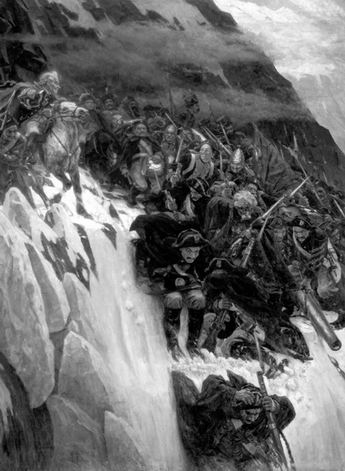
In other words, the hypothesis that his, a prostrate, personal egoism can somehow affect the story, sounded an inappropriate joke. The thirty -year war ended forever as a legalized right of elites not to go into its strategic constructions into the metaphysics of an individual, and at that time this was an undoubted progress in the world order.
Meanwhile, on the eve of the First World War, judging by the archives and memories, society reached the level of internal contentment, in which it could not have occurred to anyone that someone would risk fighting. So the order gave Slabin partly even then. But for its final design it took a lot of large and small wars, historical crashes that could arouse historical recognition: the world order has changed.
Which is also not really accurate. The confrontation continues. Only not between the poor and the rich, globalists and anti -globalists or Christians and Muslims. It goes between those who defend order from those who want to change it, and those who, agreeing that he is not the same, is trying to exhort: fighting for his preservation is the same as competing with global warming.
But this is still the same old as the world, but only recently become a clear conflict - between egoism of elites and egoism of personality.
The last war
Simplified, this conflict is sometimes, depending on ideological preferences, it is interpreted as a confrontation between liberal values to traditional values, which is precisely the human right to paternalism. Therefore, the confrontation does not have clearly expressed geographical boundaries, although in many ways it corresponds to the outlines of the world that, as it seemed twenty years ago, went into history.
What is happening at our latitudes is interesting in studying the world order not only because we and these are neighbors. Unlike other local confrontations, our collision of the described genre, and the fact that the twilight zone of the transitional states of post -Soviet Europe is becoming an extremely expressive and illustrative field of the battlefield.
The First World War was the last war of the order in which the Vestfal egoism of the elites was the unconditional dominant. The Second World War was partly erupted based on the previous Westphal laws. But, as it turned out, many of its participants in the former Westphalian desire to fight in the previous prosperity. “Munich Conspiracy”, of course, may like “Munich Conspiracy”. But from the point of view of historical, he was undoubtedly a milestone, because, perhaps, for the first time, veterans of universal battal history tried, albeit unsuccessfully and indecent price, to avoid a war that already looked like a serious risk of reigning well -being.
Mutual expansion ceased to be a motive for activity, free economic development became more profitable. This could already see the victory of the egoism of the victorious personality, but it was still implicit and not unconditional. This egoism has now largely dictated to states that recognized his right to this dictatorship, a ban on destruction, to war in their territories, which, of course, did not mean a ban on war in other not so advanced places.
Then all this will be mistakenly called the “success of liberal values”, although in fact it was rather a triumph of consumerism, which had already turned into one of the main components of the world order. The state, within the framework of this order, objectively ceased to be a sacred toy to quench elite egoism and at the same time suppress the personality egoism.
Liberalism as a life position - the destiny of personality. Liberalism as a doctrine is only the guide of the user of the consumerist world. Consumerism proved its right to recognize the natural human state, the rest, including freedom and democracy, is a tools, the need for which the consumer has the same full right not to think.
History endlessly
If you afford some exaggeration, then to the extent that the state is adapted to the needs and motives of simple human well -being, become the conventions of the category that it was customary to worship yesterday. Borders and sovereignty - maybe the most pompous, but not the most important on this list. The consequences are more interesting.
The part of the world, for which the war on its territory became nonsense, found that borders are needed only to restrict the annoyance of representatives of another part of the world. The end of the Cold War helped to realize this given. Mobilization has lost its relevance, the enemy was no longer at the gate, and not even in the zone of direct sight. The end of the story looked logical and almost a happy end.
But in the postmodern age and the world order, he largely turned out to be a monument of historical postmodernism. Any value is relative, nothing is completely poisoned, there is only a reference point, any reality is virtual, which is beautiful, there is no unity in anything other than, of course, consumption. The world order was important not in its own, in its objective representation, but only in subjective perception. Those who did not like the latest metamorphoses did not even object to the world order itself, which, in their opinion, changed dramatically. They rebelled against those who, according to their representation, took upon themselves the sole right to change him, as if in fact believing that he could be changed man -made.
What at the moment looks like a global order is actually an instant photograph of an object with blurry outlines, moreover, located in the eternal and pulsating movement - but, like a clockwise movement, too slow to fix the change of milestones in accordance with the indefatigable research temptation.
In a word, the end of history did not happen. On the opposite sides of the front line, the same forces were the same as before, the agenda simply changed. The system of political freedoms against the authoritarian style, or socialism against capitalism - but in fact it is all the same question about who owes to whom: the state is a citizen or vice versa.
A chance that is always lost
The state, which considers itself primary, requires, as a row, sovereignty, on the one hand, and the previous right to expansion - on the other. International law proceeds from this logic.
This state, as before, exists exclusively in terms of coexistence and deterrence. Its expansion is always a pyramid. This state does not economically withstand the load of its greatness, greatness is replaced by entropy, it again narrows to a more or less organic territory to get a chance for alternative development, but after a break is a self -processed and starts the cycle at first, having lost this chance. This does not mean that it will expand again. As the practice of the last five -year plan shows, we really live in a postmodern age, where the reality of the fact is no more holy than sovereignty.
Therefore, where the state dominates, all categories of universal state sacredness are still sacred. The Westphal-Helsinki world order with the inviolability of sovereignty should not be violated along with the international law that protects it. And there is nothing to object, because formally no one really canceled him, as no one, in fact, was the impeachment of Yanukovych. Like no one has canceled the resolution of 1244 Security Councils of the UN, fixing the territorial integrity of Yugoslavia along with Kosovo and Montenegro.
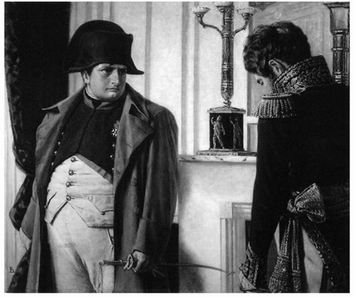
But it is necessary to live in conditions of impossibility to observe this resolution, which is not so much a problem as an inexhaustible fuel resource to continue the endless conflict.
Ideal Ukraine
The romance of historical changes is overshadowed by the prose of overhead costs. If there are no boundaries and everyone is free to choose, then why is Karabakh or Crimea denied this right? If sovereignty is a real convention, then territorial integrity is an exhibit from the museum of the history of state and law. If there are no borders, why is Catalonia refused to live separately, and why not the state-country of Kurdistan with its 20 million potential citizens?
But there are no revolutions without Makhnovism. And the art of politics is to force everyone to confuse the objective with the subjective, to write off on a change in the climate the reluctance to spend money on the Kyoto protocol, on the war-impoverishment and on someone’s dream of state and freedom-the desire to annoy the neighbor. The rules are no longer nothing, each is right either formally, as with a resolution of 1244, or semi -formally, with the principle of self -determination of peoples at the ready, or not at all formally, but in full accordance with unrecognized reality.
And permeating any local situation and contradictions, still the same darkness and darkness, players are mostly the same. The Ukrainian crisis happened to be specifically in order to illustrate all this colorfully.
... the collapse of the power placed on one sixth of the earth land, and the creation of new states on its territory gave rise to the phenomenon of the appearance of a feeling of new statehood. Having left the Great Power, which was not particularly road, citizens began to get used to the new given. And since the given did not look anywhere successful, the citizens agreed to consider it to be their new homeland with obvious reluctance and with a share of doom, which in some way correlated with global processes, only a little inside out.
The erosion of sovereignty has changed the essence of patriotism itself in principle. With him, in general, everything is pretty vicious. Once upon a time, patriotism was nowhere to come from, since the territorial community, for which it was necessary to pull the soldier's strap for years, had nothing to do with the personality. She was a priori was considered obliged to the power that was currently available, and no sentiments were required.
Now everything seems to be just the opposite: the already changed state under pressure from personality is at least partially forced to agree to the contract genre of relations. For a good execution of the contract, some hang out flags, others even report to a neighbor, incorrectly parking or not noisy, but also in this unpleasant manifestation - a sign of respect for an effective state and disrespect for someone who intends to undermine this saving effectiveness. If this is patriotism, then the patriotism is consumerist, not binding to anything, personal and comfortable.
The new patriotism of our new neighboring states is different - it is annoyed and unquenchable. It can be found on the Maidan, where it all started with the feeling of a chance to change the endless walking field to a normal state, which is so unrelenting. It is possible, on the contrary, to fall to a reliable and inexhaustible source of a simple, sincere and fierce feeling. You can talk to the sovereign patriotism, just from the habit of having at least something. But neither those nor others have a feeling of that Ukraine that took place as an object of at least some feeling. Некоторые проявляют его авансом, опережая время, и, может быть, это тоже нормально — никто не знает пока, сколько времени и, возможно, поколений требуется для того, чтобы чувство стало естественным. Но жить приходится именно сейчас. И, главное, здесь — на пересечении двух доктрин доминирования эгоизма.
Украина будто создана для такого сопоставления. Она, как известно, раздвоена. Но это раздвоение отнюдь не географическое, как принято считать, и не историческое, как его называют те, кто верит в непреходящие идеалы Переяславской рады. Каждая украинская власть, которая была итогом вечного самовоспроизведения элиты — то из секретаря республиканского ЦК по идеологии, то из парторга индустриального гиганта, то из заведующего провинциальным отделением государственного банка, то из человека субкультуры, — привычно пыталась создать на Украине государство, тяготеющее к его вестфальскому виду. И отнюдь не только западенцы раз за разом восставали против этого проекта. Отсутствие государства многими на Украине всегда воспринималось как шанс создать на этой вечной стройплощадке что-то более модернизированное. И, кстати, динамика изменения взглядов на востоке в пользу модернизации, не слишком впечатляющая в абсолютных показателях, была достаточно выразительной в относительных, а главное — в возрастных измерениях: чем моложе, тем динамичнее.
И отнюдь не только на востоке имеются в достаточном числе люди, выступающие за традиционное понимание государства, ведь одним из наиболее консервативных городов страны по праву считается Львов.
Пораженчество — не порок
Украина — самый разрекламированный и самый известный проект постсоветья, но схожие процессы наблюдаются на просторах всей бывшей большой страны. И поэтому любой кризис обнажает одну непреложную подробность: любой кандидат в агрессоры обречен на сочувствие части населения, которое безо всякого желания предать не видит в своем государстве тех ценностей, которые она готова защищать исключительно исходя из системы опознавания «свой — чужой».
Новые государства, едва по историческим меркам появившись, включаются в общий мейнстрим глобального самоопределения: либо они государства по-старому, и тогда патриотизм безусловен, как само это государство, либо патриотизм — это услуга, которую гражданин оказывает государству при условии исполнения им ряда условий. Посередине, как показывает Украина, — значит никак.
Но там, где государство больше не может жить по-вестфальски, пораженчество перестает быть родом измены, идет ли речь о юго-востоке Украины, грузинской реакции на сближение новых властей, сменивших пламенного Саакашвили, с Москвой. Или, кстати, каких-нибудь немецких деятелей культуры, пишущих одобрительное письмо в Кремль. Если у гражданина нет желания защищать или уважать свое государство, это не его аморальность, а проблема самого государства. Пораженчество становится политическим фактором и этической позицией, которая уже не подвергается прежнему остракизму даже там, где консенсус по-прежнему сугубо и безусловно патриотический. «Армяно-азербайджанский конфликт уйдет тогда, когда азербайджанцы поймут, что собственная власть больше им враг, чем армяне, и наоборот» — заметил один азербайджанский политолог, понимая, что это случится еще очень не скоро.
Там, где нет привычки к взаимной ненависти (которую, кстати, не стоит путать с самой ненавистью) и привычки иметь врага вообще, территориальная целостность перестала быть фетишем. Поэтому все так неоднозначно с Украиной. С одной стороны, за Крым она вовсе не собиралась мобилизовываться, вполне модернизированно соглашаясь в глубине души с тем, что, несмотря на спекулятивность ситуации, препятствовать сепаратизму глупо и нелогично. С другой стороны, приличия требовали шевельнуть хотя бы пальцем для защиты юго-востока, который в отличие от Крыма реальной сепаратистской страсти никогда не испытывал. Однако и это отличие не сыграло существенной роли, потому что граждане Восточной Украины, совершенно не горя желанием влиться в россияне, не выказали и никакого желания партизанить и сопротивляться — просто потому, что государство Украина им пока никак не доказало той своей ценности, которую стоило бы отстаивать.
Простительность пораженчества становится частью общей либерализации нравов и неотъемлемым элементом того, что продолжает называться «мировым порядком». Но и паритет действия и противодействия никто не отменял, к тому же представление о сущности государства отнюдь не абсолютно зависит от географии. Ответом на стирание границ и забвение традиций становится национализм и традиционализм, Марин ле Пен — свой человек в Москве, и это так же органично, как новая волна либеральной эмиграции из России. Утверждение консьюмеризма пробуждает к новой жизни всевозможных левых, и так по спирали. Глобализация, национализм, консьюмеризм.
И постмодернизм, как и было сказано.
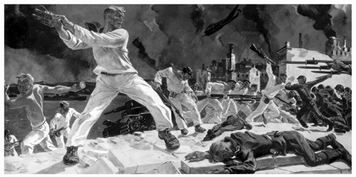
Дивный старый мир
Ничто не досказано, все сомнительно, грех не запутаться, и, как выясняется, чем больше прошлое кажется счастливо изжитым, тем уязвимее перед ним настоящее.
И тем эсхатологичнее исторические аллюзии, которые и становятся постмодернистской основой мифа о мировом порядке.
Крым был взят без единого выстрела. В соответствии со сравнениями, чистый аншлюс Австрии. Дефицит героизма в обороне Украины даже для украинцев выглядит немного трагикомично, но долго ли сопротивлялись чехи в 1938-м? Может показаться, что Россия специально пробуждает эти воспоминания, будто ставя перед миром вопрос: а что в нем изменилось к лучшему за последние почти 80 лет? Будто специально создавая себе репутацию государства, которое уже ничем и никого не сможет удивить. Даже неприятным и назойливым сходством.
Государству даже не обязательно расширяться, расширяться достаточно представлению о границах возможного. Разрыв шаблона, одним словом.
На самом деле разрывание шаблона — уже стиль. И справедливости ради надо сказать, что с формальной точки зрения Россия лишь продолжила процесс, выведя его, как положено, на новый виток. Как и предписывала неумолимая логика вечного конфликта.
Первым актом этого действа, несомненно, была «Буря в пустыне», своей январской датой 1991 года доказывающая, что распад СССР в глобальном пересмотре правил игры ни при чем. Теоретическое представление о том, что есть вещи важнее суверенитета, получило свое первое практическое подтверждение. Безусловно, у всех, кто согласился на тогдашнюю операцию, имелись свои вполне конкретные и вполне прагматические интересы, но впервые международная интервенция была обоснована вполне идеалистическими аргументами, что тоже не было неправдой.
Потом была Югославия. И ревизия была окончательно оформлена решительным нарушением всех имеющихся формальных и неписаных правил. На этот раз уже не было ни решений Совбеза ООН, ни хотя бы минимального компромисса с Москвой, которого прежде все-таки было принято достигать. Логика метаморфозы государственной сути, пройдя через причудливый каскад инверсий и развилок, выдала результат, ничем не напоминавший изначальную посылку. Правда, был проведен не очень пока удачный, но в буквальном смысле эксперимент по сотворению нового мира в косовской пробирке, из ничего и общими усилиями сообщества.
Запад сломал систему стереотипов первым, обозначив девиз стиля: мир никогда не будет прежним. Сравнивать Косово и Абхазию бессмысленно и некорректно. Запад не менял порядок, и даже не пользовался тем, что он менялся — в отличие от России в Абхазии и Крыму. Запад лишь обреченно следовал за ними — так же, кстати, как следовали за ходом вещей в Беловежской пуще, признав неизбежное. Запад, так и не осознав до конца свою Югославию, лишь констатировал, что мир уже никогда не будет прежним, что его оппонентами было воспринято как попытка оправдаться. И с тем большим задором теперь они возразили: прежним ему ничто быть не мешает, пусть даже по новым правилам.
И предъявили доказательство.
Хельсинки-2
Элиты меняются быстрее, чем ценности. Поэтому элиты воспроизводятся, полагаясь на эти ценности, делая в свою очередь все, чтобы они по-прежнему не менялись. Элит, которые во имя исторического прогресса пошли бы на революцию ценностей, давно не видели.
Мировой порядок, для виртуальности которого наступили лучшие времена, меняется в деталях, но не в сути. Конфликт между эгоизмом государства и эгоизмом консьюмеристской личности продолжается. Возможно, сегодня мы переживаем на самом деле исторический момент: постсоветская элита обнаружила, что двадцатилетний ресурс сближения с Западом для ее элитного эгоизма иссякает. Достигнут предел, и все, что можно было интегрировать себе на пользу, интегрировано. Больше не нарастишь объемов сырья, которые можно продать. Экономическая экспансия состоялась, и насыщение наступило. Дальше только спад и, как показывают санкции, личные риски. Пришло время просто фиксировать прибыль и уходить в кэш.
Что выглядит совершенно логичной развязкой в истории 20-летних иллюзий. И едва ли российская власть всерьез проникнута постмодернистскими идеями, всерьез выстраивает систему аллюзий на тему 30—40-х прошлого века. Просто технология в этой отрасли не слишком разнообразна, все операции запрограммированы. Австрийский аншлюс, гданьский коридор, героическая польская оборона складов Вестерплатте, ничего личного, только технология. Важно не это, важно то, что это снова признается возможным. И нет ничего такого, что можно было бы со вчерашней уверенностью счесть невозможным.
Будет ли продолжаться расширение по мотивам былого, неизвестно. Но подходы базируются именно на этой логике, и уже этого достаточно, чтобы экспансию вестфальского/дохельсинкского государства считать частью того самого нового порядка.
Противостоящая сторона не в растерянности, как принято считать. Просто ровно с той объективностью он со своей стороны не готов к воспроизведению той логики, в рамках которой возобновляется конфликт, и это вторая часть порядка. Двадцать лет после «конца истории» и «столкновения цивилизаций» он счел, что можно, не отвлекаясь, привыкать к миру, который уже не будет прежним.
Потому Россия явно захватила инициативу. Но прежним уже не будет и стиль прежнего противостояния. Санкции не работают — если считать их способом умиротворения. Но у них в рамках нового жанра, возможно, другое назначение: это способ как-то пережить время, которое инициативой будет владеть Россия. Да и время это, скорее всего, потребуется не для того, чтобы перейти в контрнаступление — нет, о нем речи, скорее всего, не идет. Только о том, зафиксировать, набравшись, наконец, сил, в какой-то момент линию фронта и считать ее тем ограничением, с которым снова, как когда-то, придется считаться в своем дальнейшем освоении нового порядка.
Восток, все, что восточнее Донецка, а может быть Киева, по мере возможности будет предоставлен в очередной раз сам себе — после соответствующей ревизии новых глобальных рисков противостояния с ним. И каналов сотрудничества, которых на сей раз, в силу достигнутого за двадцатилетие перемирия, будет намного больше, чем во времена программ «газ в обмен на трубы». Нужно просто в очередной раз дождаться момента, когда что-то все-таки снова станет невозможным. И снова сесть за стол. То ли в Женеве, то ли в Хельсинки.
На этот раз, скорее всего, обойдется без излишеств и крайностей. There will be no war. Других хороших прогнозов, похоже, нет.
