
Translated material
Lukin called the dispersal of protest stakes illegal
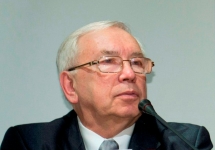
The Commissioner for Human Rights Vladimir Lukin called the dispersal of protest shares illegal. "According to the positions of the Constitutional Court, the disagreement of a public action in itself or its spontaneity does not mean its illegality and does not entail the consequences in the form of acceleration," the statement published on the Lukin website said.
As an example, the Ombudsman gives an inconsistent action on March 2 on Manezhnaya Square. "Given that the area was fenced and the movement on it was not carried out, the protesters did not create any obstacles to citizens. Nevertheless, the police took measures to detain most participants and their power acceleration," Lukin emphasizes.
In addition, Lukin noted that the installation of fences around the alleged places of inconsistent shares is practiced. “Since in this case, legally and in fact, we are talking about restricting the freedom of movement of citizens, arbitrariness in this matter is unacceptable. At the same time, obstacles are created in large squares and streets by the police with a clear order for the free passage of citizens, then, then, the participants and organizers of public actions are accused,” the Ombudsman notes.
Lukin drew attention to five more basic violations that the police commit during detention. This is the anonymity of the police, the arbitrary nature of the detentions, distorted data in reports, inappropriate attitude to the detainees in the police departments and an arbitrary change in the qualification of an administrative offense.
"This situation must be changed, because it is incompatible with the practice of the rule of law," Lukin says.
On Tuesday in Moscow, dozens of anti -war gathering participants were again detained near the Ministry of Defense ( 
According to the ATS-Info, 43 people were detained. In the Mitino police department, the head of the criminal investigation department told the detainees that "in connection with the international situation," police officers allegedly have the right to leave them in the department and take fingerprints. Later, all the detainees were released from this department, except Stroganov. In the South Tushino police department, almost all the detainees were left for the night. It is charged with Articles 20.2 and 19.3 of the Code of Administrative Offenses (violation of the rules of the rally and disobedience to the requirements of the police). Participants in the gathering are facing fines and arrests for up to 15 days.
On the eve of the Presnensky district court of Moscow, a citizen of Belarus Vladislav Dronov and a citizen of Ukraine Roman Nevchinsky, by 5 days of arrest under Part 1 of Article 19.3, sentenced a citizen of Belarus. They were detained on Sunday near the Building of the Ministry of Defense. Most of the detainees on anti -war shares were awarded fines. About 70 people left the police at night after Sundays. Most of them were charged with arresting article 19.3 Code of Administrative Offenses.
On March 2, at least 362 people were detained at the anti -war actions at the Ministry of Defense and near the Kremlin. ( 
After acceleration on Znamenka, the protesters went on foot towards Manezhnaya Square. There, protests and detention continued. During the detentions, many gross violations were recorded. The detainees were kept in unheated auto -zats for several hours, then forced dactyloscopy.
In St. Petersburg on Isaacievskaya Square, about 30 participants in the anti -war gathering were detained (