
Translated material
There are also acquittals

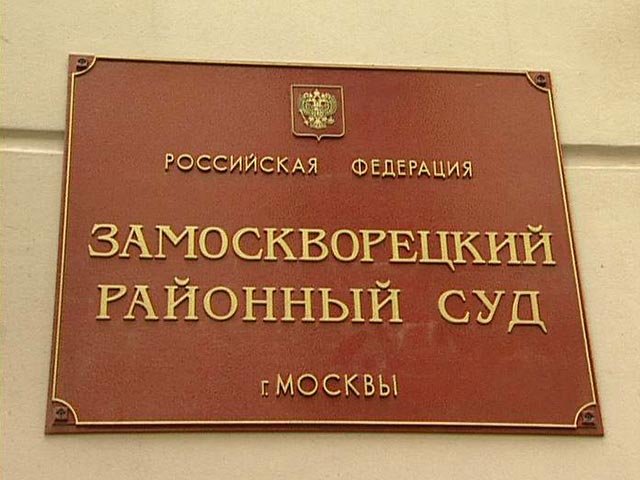
An employee of the Memorial International Society Alexei Makarov was detained on February 21 near the building of the Zamoskvoretsky court. In the Department of Internal Affairs, he was charged with a violation of the rules of mass events (Article 20.2 of Part 5 of the Code of Administrative Offenses). On March 5, in the Zamoskvoretsky court, while everyone around them was given fines of 10 thousand rubles, Makarov was unexpectedly acquitted. We give the story of Makarov and his recommendations to those who are still going to go to court in the case of administrative detention.
My interests were represented by a wonderful defender from the Public Verdict Elena Pershakova. After two hours of consideration, judge Elena Sergeevna Korobchenko issued an acquittal - for the lack of an event of a crime! In general, they say that this is a unique case - it happens that they justify the second instance in court, it happens that the protocols are so monstrous that the judge returns them to the police and the case is fading about it (or maybe not to return it - an example of a lattkin before my eyes).
So far I have not received a copy of the judge’s decision, so I can’t say what exactly caused my excuse.
Nevertheless, I will describe how everything happened and what strategies can be. As an archivist, a person working with pieces of paper, I can say the following: read carefully the case materials. Their mistakes are your salvation. After the detention, you are tired, police officers are crushing you, but then you go to court, get acquainted with the case and make copies. So, you have time (several days to read the materials).
What to pay attention to:
Whether all signatures are in their places. For example, I have no police officer in a key document - a protocol on an administrative offense. In theory, this is all - the case goes back to the police. There is no signature in the protocol on delivery.
The inconsistencies of the time of detention and delivery - they can be different from what you remember (the time of detention, delivery in the ATS is better to remember and record) and among themselves. So, it was written in my report that I was detained at 13.30 (although in fact at 13.00), and the administrative detention protocol indicates 13.10.
Forms, samples of documents - part of the documents was written on the forms for criminal cases (links to the articles of the Code of Criminal Procedure, not the Code of Administrative Offenses).
It is necessary to check whether the police signed in the points that they know about responsibility for the dacha of false testimony.
In court itself. The order of the meeting for those who do not know.
1) The sides of the process are announced - that is, the judge calls himself, calls you and looks at your passport (sets a personality).
2) asks if there are petitions (see in the ATS-info memo ).
2.0. The exclusion of such materials of the case, because they contain unleasable contradictions, and since the case is accepted for the production of a judge, in such cases it is possible to stop the case and justify.
2.1. The first petition is about a public defender (do not forget that the petitions are read out, and then give to the judge). In principle, such a petition is satisfied, even if he does not have a power of attorney from you.
2.2. Among the usual petitions - about the introduction of photo/video materials, as well as about witnesses. NB: Witnesses of your detention and stay in Avtosak (look in advance by the OMD-Info lists in advance who was in your car carrier) should be in the court building, but not in the room itself, but in the corridor.
2.3. Subtle moment. Police witnesses (who wrote reports, etc.)-if they are in the courtroom-it is better not to call, if not in court-you can call, but the judge will reject your petition, because it will consider that you are delaying the process (you will need to postpone the court session ...).
2.4. In addition to ordinary applications, it is worth bringing the characteristic from the place of work and information about the salary (to say that the fine will be too large and ask to be sentenced (if it is) below the lower.
3) your explanations on the merits of the case. ATTENTION! You write them in advance, read out and submit a motion to introduce the case to the case file. Thus, your speech will come to the matter that you will be very useful at the stage of appeal.
4) the position of the case. Thesis:
4.1. General position - you came to the process in the “swamp case”, focusing on Article 241 of the Code of Criminal Procedure of the Russian Federation on the publicity of legal proceedings (do not be afraid in the text directly to quote this article, like other codes). Police officers did not give you the opportunity to visit the court, because everything was blocked.
4.2. You remained at the court of the court to express your opinion, focusing on Article 31 of the Constitution of the Russian Federation (freedom of assembly), as well as Article 10 and 11 of the European Convention on Human Rights (freedom of opinion and freedom of assembly). In this paragraph, it does not matter if you considered yourself a participant in a public event. You had the right to get together. You are going.
4.3. Was there a public event? You consider both options and carry them to fluff. So:
4.3.1. There was no public event! Proof? In my case - a request from the Department of Internal Affairs to the Department of Regional Security of Moscow (all the same Mayorov) with the question - was there a public event? And the answer - no, was not him.
4.3.2. There was a public event. OK. Where is the evidence that you are the organizer? Where? You are a participant, which means you are not obliged to submit notifications to the authorities and are not obliged to look for the organizer in this crowd and ask whether the event is agreed or not?
4.4. Have you violated the "established procedure"? But let me, all questions for the organizer, you are a participant, and in addition, the inconsistency of the event does not mean that it can be dispersed. There should be a real danger to citizens, arson (and other “mass riots”) to disperse.
4.5. And remember that you should talk about violations by the police - without breast signs, did not introduce you, did not present documents, did not explain anything.
5) Further - interrogation of witnesses. Think about questions in advance.
6) making a decision.
Good luck!