
Translated material
"I always wanted to understand my emotions"
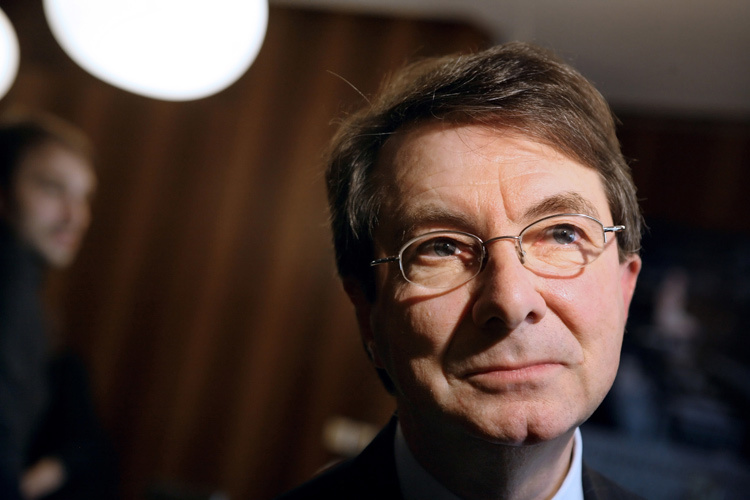
In the 71st year of his life, Gerard Mortier died-the legend of the modern opera Theater, the former Cloine Dress of the Brussels La Monnaie, the Salzburg festival, the Paris Opera, the Madrid Teatro Real. It was he who was grateful to fans of modern directing and for the discovery of new directorial names, and for the fact that many theatrical guru, such as Marthalian, Stein, Wilson, Bond, began to constantly work in the opera. With the same force, fans of the traditional opera performance curse him for the fact that now on European scenes it is almost impossible to see the good old opera with written locks and richly draped primadones, who are not concerned with nothing but singing.
During the work of Gerard Mortier in Teatro Real, Ilya Kukharenko talked a lot with him and asked about the very beginning of his career as an quartermaster and producer.
- Your official biographies begin with Brussels and quickly move to Salzburg, but everything is interesting to me from the very beginning. After all, no one at the age of 14 thinks about himself as the future of the La quartermaster Monnaie or Salzburger Festspiele . What did you think?
- There was still Dusseldorf to Brussels, then I worked with Donanya for five years (the famous conductor, the soprano husband of Anya Siley. - Ed. ) First in Frankfurt, then in Hamburg, and then there were years with Rolf Liberman (composer and opera quartermaster. - Ed. ) In Paris. Then I wanted to become an opera director, and these years were very important for me. Now young directors come to the opera, having no idea about how the theater mechanism works, how it works. And I participated in everything - I went to castings, rehearsals, planning, was a playwright.
However, even before I was an assistant on Flandres Festival - it was a small festival, but that is why I was doing everything there to the point that I printed the addresses, sealed the envelopes and sent it myself; Sometimes it was even necessary to clean the shoes for someone ... And it was the best school in my youth-if it, of course, is interesting to the Russian reader ...
- That is what is interesting.
- It's just that we are all a little romanticizing our youth when we become much older. Undoubtedly, it all started with me at the age of 11, I got with my grandmother on a “magic flute”. I must say that before that I constantly asked my mother: “Please, please - I want to go to the opera!” Father held the bakery, my mother also worked a lot, but my parents were very educated people. And once my mother said that today I will go with my grandmother to the daytime performance “Flutes”. And since then I fell in love with the opera. I wanted to be a singer because I sang in a children's choir. But at the age of 15-16, I realized that I want to lead, manage the process, and therefore gradually decided that it was better to be a conductor. However, it turned out that starting at 16 too late. And, despite the firm decision to work in the musical sphere, I still went to study at the university ...
- Learn what?
- Jurisprudence. And at the same time, I was going to do everything to popularize the opera. After all, then in Belgium there was no high opera culture. And since the age of 17, I began to create a large youth opera organization - in order to visit the opera in the Gaulus, a small town. We soon had several thousand people in 17-19 years. Then we expanded geography and began to travel beyond Belgium.
- What circle and social status were these young people?
- Different. Students mainly, of course. But there were, as they say, representatives of the working class. By the way, I had many friends from the working class, since we lived with my family in a crowded and not at all expensive area, next to the port.
This organization helped me meet many people from the opera world, primarily from Germany. Even then, I dreamed of visiting the Salzburg festival. I was 19, and it was quite difficult to do. I worked, of course, but Salzburg is an expensive pleasure. And then I began to write reviews in newspapers. Now I am a little ashamed of those of my articles, but I am calm about what young critics write. One way or another, it was a way to get free press tickets. So from the age of 19, I began to visit Salzburg every year, at the age of 21 I got to Bayroit.
But, strictly speaking, the decision to work in the musical sphere (and above all in the opera) was already made at the age of 14. And so, when I began to seriously think about some kind of career in the opera, I began to listen to the notes to get acquainted with the world repertoire. And in those years, many operas simply did not exist in the record. Say, there was not a single studio “Nibelung ring”.
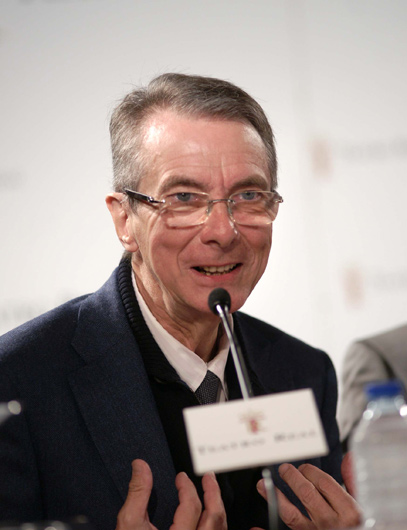 © Javier del Real
- Of course. The first notes appeared in the mid-60s-this was the first studio “ring” with George Sholti, except for the “living” records from Bayroit and La Scala, which were rare ...
- Yes, you are right, but it was also terribly expensive, because it was necessary to buy the whole set, and it cost a frantic money. However, the records of modern music that attracted me since childhood were even more a problem. You know, my mother, who threw school at 14, was never interested only in the "traviats." She led me, for example, on the tour of the famous concertgebau - he came from Amsterdam with Oigen Yokhum, and for the first time I heard Brookner's first and fifth symphony.
And I heard the first “ring” when I was in the army.
- Did you serve?
- Well, if I may say so. Since these were, as they say, "cultural units." I went to the army in the early 70s, and I was sent to a foreign legion, which was then located in Germany. We were lucky, there was a Cologne opera nearby. And the commander, who also loved the opera, turned out to be an excellent companion for campaigns there. And later we had to go to Stuttgart on the weekend to listen to the “ring” there in the production of Viland Wagner.
I want to say that in those days in order to hear this or that opera, it was necessary to look for the theater in which she was walking. There were no records, and the theater repertoire was not rich. Let's say to hear Mozart's operas in Belgium was a problem, as probably now in Russia. Gradually, the situation changes, but Mozart still sounds rare.
- Yes, I remember how “Mithridates” or “Mercy of Titus” with Livine in Salzburg were described as a kind of cultural shock ...
- Undoubtedly. In general, when I could not find the name on the posters in Belgium, I went to Germany. And in fact, he mastered the opera repertoire thanks to two troupes - in Dusseldorf and Cologne. In the 70s in both theaters there was an incredible repertoire. For example, in Dusseldorf, all the operas of Janachek were set and went in the season. And a lot more. Already in the 70s, one could listen to the “Moses and Aaron” by Schenberg or the “soldier” of Zimmerman.
In general, my addiction to modern music was formed then. Now that someone tells me that he cannot learn something modern, I answer that this is a question of the ability to read. Indeed, in order to penetrate the beauty, say, Pushkin or Kitsa’s poems, you need to read it several times. So it is with music. At first I listened several times the first act of Votzeck, then several times the second, until this music turned out in my head and I did not understand how beautiful it is. In fact, beautiful always requires a person to understand him.
I remember that at the age of 17 I first heard about the play of Buchner (it was the basis of the opera “Wotzek” Alban Berg. - Ed. ) From his professor at the Jesuit school. And it was 1960. We passed Nietzsche, read Sartre, Camus, which, of course, was not strictly Catholic education. And at some point it came to Bukhner. Our professor asked if anyone had heard about Wojutzek, I replied that I knew Alban Berg, but did not read Buchner, and the professor said that I must do it. In general, for my education, this Jesuit school was one of the cornerstones. This was not a classic formation of pietists - they wanted to make us intellectuals. From this school, by the way, a huge number of the most acute critics of the church came out. And one more thing: in order to study there, it was not necessary to be an aristocrat - for example, I was rather from a poor family. Of course, they wanted me to become a Jesuit, but I replied that this was not a very good idea. Although in those days I was very religious.
- And now?
- Now I am a convinced anticleric. One way or another, the Jesuit school plus the opportunity to be abroad gave me the necessary background. Then I met the director of Flandres Festival and became an assistant. And then a fateful meeting was held with Christoph von Donanya, with whom we are friends to this day. He is 82 now. When we met, I was 24, and he was probably 47, and he became my teacher for many years. He and Anya Silia, with whom they were already together. As a result, he invited me to work with him in Frankfurt. We had dinner together three times a week, and the benefits of these evening discussions were incredible to me.
And in many ways it is precisely thanks to those times that now I certainly want to work with young. As Thomas Mann said - "You must give your knowledge to the next generation." And if you look at the story, then, for example, the Commonwealth of Verdi and Boyto was similar - there were 25 years between them. Wagner and Nietzsche are the same. It is very important for me to work surrounded by young. For example, now this is theodore Krentzis - it belongs to those several young talents that I discovered for myself and for the public. But he is quite special, and through the prism of his special look at the score, I also begin to comprehend those things that I have not seen before.
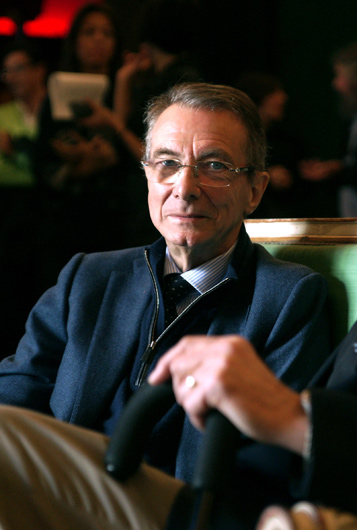 © Javier del Real
- with overcoming Generation GAP is more or less clear, but peers?
- Of the musicians, I will name primarily Silven Kamblena, whom we met in Paris and with whom we have been cooperating for more than a dozen years. He was the one who formed me musically. My theatrical mentor-heaver was Peter Sellar. When I was 37 and I was already in Brussels La Monnaie , it was Cambane and Sellars that became my main allies and very close friends.
I am convinced, by the way, that Diaghilev had something similar because like -minded people worked there.
Of course, over time, my contacts have expanded, and it so happened that I happened to know almost all the great composers of our time.
In Brussels, I was inspired by the work of the directors of my generation or older - Peter Brook, Ariana Mnushkina, Peter Stein, Patrice Sherro, Karl Ernst and Urtzel Hermann. And already in Salzburg we met and began to work with Bob Wilson.
-All that you talked about your youth is a rather atypical case for the 60s. Indeed, in those days the opera was not the territory of intellectuals. Rather, on the contrary, it was personified by something bourgeois and haggard.
- Initially, my hobby was purely emotional. I loved Verdi for his melodism. He never loved Puccini and did not really complain to the French opera. I loved Mozart. In Belgium, they almost did not put him, and this love for Mozart came thanks to Salzburg. The first impression of the overture of the “magic flute” played there by the Viennese Philharmonics was stunning. And there was also a “gentleman of the rose” with Karayan, and, of course, it was an acoustic impression for life ...
Without a classic education, I wanted to understand my emotions. It generally seems to me that no great love is impossible if you do not try to understand how you feel and why. Then passion develops into love. And I began to read ... not only musicological books, but also modern criticism. The modern theater has become my parallel hobby, interest in modern choreography came later.
But I must say that the first half of my intensity in Brussels was not so intellectual. I did not immediately start making plans for the season, based on some kind of theatrical and drama line. But from the very beginning I felt that I was repelled by the very idea of pure Belcanto, when everything was concentrated only on singing. In 1959, when Kallas reigned on stage, I was 16 years old, I bought my first entry, and it was Verdi's “Fate power”. With Callas and Taker. And since then I still adore it. Now it is rather an old -fashioned taste, but in those days not everyone recognized her genius. Most of my colleagues in the opera world preferred Renata Tebaldi.
But even in Madame Butterfly, in the opera that I hate with all my heart and which Callas sang only for recording, and Tebaldi - all my life, I give preference to Mary. Since Tebaldi sings his words “ va , joca , joca ” in the farewell monologue (“go play, play”), addressed to the little son, and sobs with a picture (imitates and laughs), and Callas sings both gently, sadly, and almost without accent, but this is much stronger and more dramatic.
And when I began to study this issue, I discovered for myself that my beloved Mozart constantly said the same thing. For example, in the letters to his diva aliasi Weber, he wrote: "Aloisia, please take care of expressiveness more than about beauty."
One way or another, it was my path, I always wanted to understand my emotions, and not instinctively follow it. Perhaps it is this particular feature that makes many people talk about me as a cold and distanced person. I'm not cold, I just always need a pause first to analyze my emotions.
- Not so long ago you said that at the moment it is most important to search for new conductor. Hearing this from Gerara Mordier is quite unexpected. After all, it is traditionally believed that Mordier’s recipe in Brussels and Salzburg has always been primarily attracting new directors.
- In Salzburg, it was very logical to look for directors, because with the great conductors it was more and more in order - at the moment I started (unfortunately, when I left my post, I could no longer say that there were great conductors in Salzburg). Karayan, of course, was a great conductor, but he invited to Salzburg such maestro as meta, Muti, Abbado. So in many ways, work to attract great conductor has already been done. However, I approached this issue very seriously, and if you look at the programs of those years, you will see that this list was expanded - Sholti, Donanya plus such a value in the baroque music as Arnoncur. Then the younger maestro - Salonen, Gergiev appeared.
But now the moment has come when an acute lack of large opera conductors, thoroughly knowing the scores with which they conduct them conduct. Few people remember that the same great Karayan began the pianist-concertmaster in the tiny Ulma. And, as it seems to me, he became primarily a great opera conductor. In the opera, he was much larger than, for example, in Brookaner.
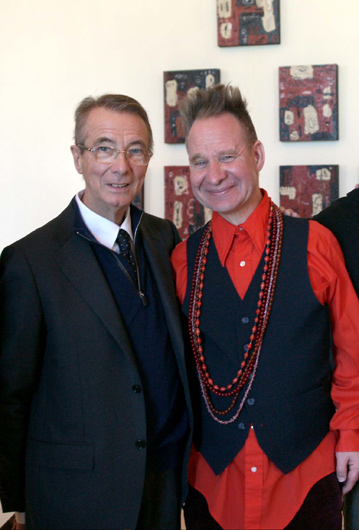 © Javier del Real with Peter Sellar at a press conference to the Queen of the Indians
- Okay, what about the director's crisis? Does it not seem to you that the type of directing, which, say, is professed by Willer and Moralito, or Chernyakov, or Marthal, - this path of the smallest psychological motivation has come to a dead end?
- Undoubtedly. Therefore, it seems to me that the only path that you can move along is the path where the director and conductor work with the very beginning. In fact, in Madrid I am now doing this. Say, when Peter Sellars and Theodore Krentzis rehearse together and together invent both musical and theatrical moves in Iolanta/Persephone. Or when Silven Kambepryn invents everything together with Christoph Martaler or Krzyshtof Varlikovsky. And even Peter, who now began to move in the direction in which I can’t follow him ... Those performances that he did along with the conductor Ingo Metzmacher, were always favorably different from those that arose without this tandem.
Therefore, I will never agree to resume to “Iolanta” without Theodore Custezis, since these products are the fruit of joint efforts. Krentzis plays so far from the general ideas about Tchaikovsky that it is simply impossible to imagine that in his place it will be another conductor in this performance.
- It turns out that now the main task of the quartermaster was the work of an intermediary, a medium between the conductor and the director? And the production of an opera performance becomes a kind of film production when it is impossible to change the composition of the participants?
- Yes, rather so.
- But then management becomes different, because if everything is concentrated on finding the only and irreplaceable, the production can withstand only a few performances, and then either dies or waits for several years?
- Yes. But I began to work like that in my youth. In Frankfurt, we put a wonderful “Duke of the Blue Boyard Castle” Bartok with Christoph von Donanya and Claus Michael Gruber, in which Ingvar Vixel and Anya Silia sang. And I never planned this performance for those terms when I could not get the original composition.
In extreme cases, you need to do all the work from the very beginning with two compositions. It’s impossible for me differently. I am not a person of a repertoire theater.