
Translated material
No linguist will guess ...
Having talked about some terms in astronomy (see the “ Zone of Life ” in the Trv-Hunus No. 146 of January 28, 2014), we will now turn to the mistakes that are found when translating mathematical terms. With a request to speak out on the topic of translation incidents, we turned to the leading Russian mathematicians.
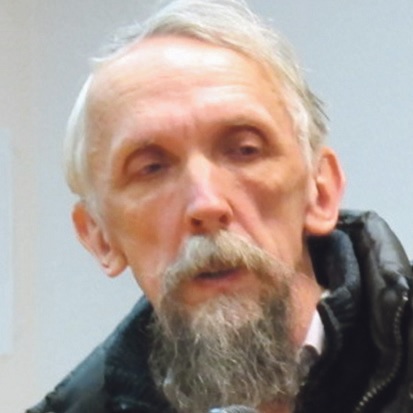 Victor Vasiliev ,
Academician of the Russian Academy of Sciences, Professor of the Faculty of Mathematics NIU-SHE:
The theme of scientific translation incidents is very popular, since we all constantly stumble on this.
For example, in Russian topological terminology there are such names of two completely different properties of topological spaces: sepaable and separation. In English, in the first case, Separable is written, and in the second-named the inventor-Hausdorff (however, in Russian this property is also increasingly remembered as a hausdorphism). Naturally, when translated from Russian into English, they often separately translate as Separable, and it turns out nonsense.
And in Algebra there is an object, in English called Loops (literally loops), which our algebraists translated as lups. Maybe this is for the better, because the loops in a completely different sense are found in topology and the theory of representations, but there is no magnifying glass anywhere else, and you will not confuse.
The term Jet split the Russian mathematicians used approximately equally: jets speak in the theory of features, and specialists in geometric theory of differential equations fundamentally call them jets and even embodied their rejection of the word in the last name of their chief writer http://cyclowiki.org/wiki/wiki_
Since the 1960s, the main Soviet mathematical magazines have been completely translated into English, and the features of these translations of the first about twenty years have become a popular topic for jokes. In the now classical article by D. B. Fuchs “Corology of the Kos Cos”, the mathematical term of the braid was unexpectedly understood as a designation of the cosine function and translated as Cosine Group, after which Dmitry Borisovich received many sympathetic-ironic issues, for example, what is the Sine group.
Now I am with other students of V.I. Arnold is engaged in the editing of a multi -volume collection of his works, published by Springer. In the second volume, I was responsible for eight articles translated in those years. After some torment, I realized that five of these translations were not given to the form, for which I will not be ashamed for the end of the days, and transferred them again from beginning to end.
These kind people translate stratification as Stratification, the same braids this time were translated as Fibration, and for some reason the word scythe (in combination) for some reason as Piecewise. At first, the Springer publishers did not believe that everything was incorrigible, but when they saw that the classic of German mathematics Carl-Ludwig Siegel was mentioned in this translation as KL Zigel '(and many times quoted in this way), they still agreed to completely replace these translations.
Of course, with the translation of the name a separate song. At one time, we translated Lere (J. LEY) as Lerey, Whitney (H. Whitney) as a Whitnie, and even Pierre Deligne called Delig. But all this somehow settled over time, and only A. Floer is translated as a flora, although the Diftong OE in his German name sounds the same as in Moebius or Goethe.
A special conversation about the Japanese. I do not know general rules, but a systematic mistake is to translate the SH combination in the Latin entry named after In fact, there should be almost exactly C, as in Honshu or Fukushima.
And still, not a single linguist guesses that Borel-Moore Homology is translated into one of the Russian languages as a homology of Stinrod-Sitnikova , and the fundamental group in English is simply called Fundamental Group , and in French- Poincare Group ...
 Mikhail Tsfasman,
Vice -Rector for scientific work and professor of independent Moscow University:
I will give a few examples:
1. Absolutely competent phrase: an important component of evidence is the consideration of the ignorant component of the surface under consideration. The fact is that in mathematics a component of a feminine, and in Russian the component is male.
2. In one of my first works, an unknown translator translated the exceptional curve of the first kind as Exceptional Curve of Genus One. However, the trouble is that the clan (Genus) of the exceptional curve of the first kind (of the first kind) is zero.
3. I noticed that the youth, who studied abroad, systematically puts the name of a person in front of a noun. For example, Drinfelda is a modular curve instead of the Drinfeld's modular curve. I correct, but to no avail.
 Lev Beklemishev,
Correct member. RAS, G. N. With. Department of Mathematical Logic Mian:
Most often it is necessary to discuss the issue of how to better translate a new term into Russian and at the same time fight a careless attitude to the native language (it is now very customary to borrow English terms directly or even in a distorted form, but this sometimes contradicts the spirit of the Russian language).
But if we talk about false friends in the spirit of V.A. Vasilieva, then such cases are enough. For example, one of the main concepts of the theory of algorithms is the concept of a listed set. Previously, they were also called recursively listed. The corresponding English term is Recursively Enumerable Set . Recently, it is more and more replaced by Computably Enumerable Set , and even in Russian sometimes it had to hear about computable listening sets (in my opinion, this last is a mockery of the Russian language).
When translating one of my first works, which was done in that era when the author of the Russian article had no influence on the process of its translation into English, the term of the listed set was simply translated as a Countable set. The latter means actually completely different, namely all mathematicians, a well -known counting set. I’m still worried about this, since the prints of that work had to always be given with some kind of apology due to the wrong formulations of theorems.
Prepared by Natalia Demina
In the next issue, also read the interviews of the wonderful mathematics and translator A.B. Sosinsky, who perfectly speak French and English, and his colleagues from Mian N.G. Kruzhilina.