
Translated material
Hackers arranged an attack on Russian government sites
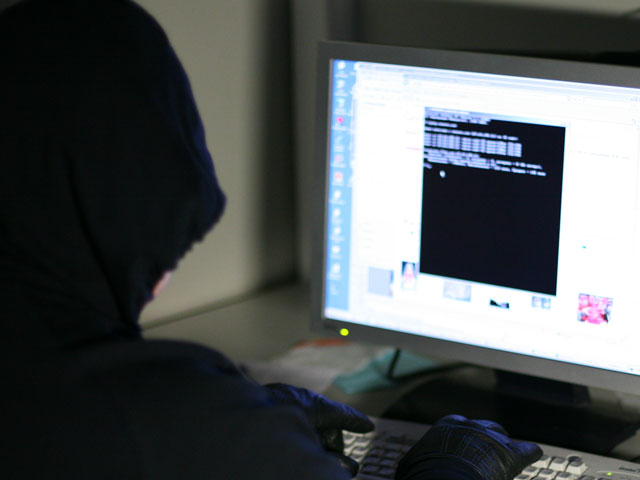
So far, in the UN Security Council, recent attempts to prevent the Crimean referendum are making, large -scale “combat” actions have already unfolded in cyberspace. Two days before the popular vote, the website of the President of Russia and the Central Bank were subjected to attacks. The conditional opponent also carries losses - the work of a number of Internet media is disturbed.
“There is a powerful attack on the site . Due to the fact that the attack continues, interruptions in its work are possible. All measures are taken to organize normal operation of the resource in order for the site to be available,” the Kremlin press service quotes RIA Novosti .
A number of other sites were also subjected to a hacker attack. In particular, the website of the Central Bank of the Russian Federation on Friday in the morning was not available within an hour, then he worked with interruptions for some more time. By 15:00 Moscow time, as the bank’s press service reported, the site’s work was completely restored. Following the problems also arose at the website of the Russian Foreign Ministry (the department compensated for this with activity on Facebook ) and the inter-parliamentary assembly of the CIS member states .
- Roskomnadzor began to exclude previously blocked media sites from the Black List
- Foreign press: "While the West looks at the Crimea, Putin is conducting" general cleaning "in Moscow
The Kremlin hastened to assure that all measures were taken to protect the presidential website. “The attack began this morning, very massive, partially it continues now, so all the necessary measures have been taken in order to protect the president’s Internet resource,” said the head of the Kremlin press service Dmitry Peskov Interfax . Answering the question whether the investigation is being conducted in order to identify who and from the territory of which countries, perhaps this action was organized, Peskov noted that in this case the investigation is useless. He explained that attacks can be conducted from the territory of some countries, but this does not mean at all that these countries are involved in the organization of DDOS attacks.
“Similar spam messages occur constantly, but with varying degrees of activity. And it is wrong to associate it with the events in Ukraine,” the ITAR -TASS Peskov’s opinion quotes. “The Kremlin’s website is open to everyone, and such situations are explained.”
Hackers attacked Crimea
In this regard, the attack on the official sites of the Supreme Council of Crimea and other authorities of the peninsula must probably be considered a coincidence. On Friday the afternoon, the parliamentary portal Rada.crimea.ua ceased to open, the sites of the ministries of the republic also began to work with serious interruptions. “Indeed, massaged DDOS attacks have begun today. However, this will not affect the activities of the authorities,” the ITAR-TASS of the Minister of Information and Mass Communications of Crimea Dmitry Polonsky quotes. According to him, experts are engaged in the restoration of portals
Earlier, the attackers of the hackers were subjected to sites of large Russian media, which often accuse of "pro -Kremlin" ideology. On March 7, the responsibility for the collapse of the Rossiy newspaper website was taken by the group of Ukrainian hackers "Kibersnynya". On the hacked site, images were posted that criticize the policy of the Russian authorities in relation to Crimea.
The Channel One website was attacked twice a day, it was not available on March 13. Representatives of the channel confirmed that there was a DDOS-Atak organized, according to television journalists, from abroad. Not only cyber -terrorists, but also the new authorities of Ukraine, organized the termination of the broadcast of Russian television channels in national cable networks, took part in the information war against Moscow.
On Friday morning, the Internet-atak was subjected to Lenta.ru, which this week lost her previous leadership and half of the editorial office due to the disagreement of journalists to work with the new boss appointed, as it is believed, from the Kremlin. It turned out that behind this is the Russian department of the Anonymous movement. Hackers explained to TJournal that the attack was undertaken in protest against the dismissal of the publication and the appointment of "Pro -Putin's editors" in their place. Moreover, representatives of Anonymous claim that the collapse of the sites of the Kremlin and the Central Bank is also their business.
It is worth noting that anonymous cyberboxes are also available in the “other side” - if you share the participants in the current information confrontation into only two camps. For example, at the end of January, the site of the Vedomosti newspaper, sometimes criticized for opposition , was attacked.
This year cybercommunications should appear in Russia
In connection with what is happening, it can be recalled that the Russian authorities have long been talking about the need to create special units in the country under the management of the Ministry of Defense, which would fight with cyber attacks that threaten the country's security. Last fall, it became known that a new family of troops should appear in Russia in 2014. We are talking about cybercards, which will deal with opposition to virtual threats in peacetime and wartime.
However, in this case, it was more about the fight against massive cyber attacks on strategic objects in the event of warfare than with enthusiasts who were trying to take revenge on their ideological opponents. Vice-Prime Minister Dmitry Rogozin, who oversees the military-industrial complex, then spoke about the need to create cybercommunications in the Russian army, bringing the Pentagon as an example, where more than a thousand people have been engaged in virtual wars for five years.
Hacker attacks are still a new type of information war for Russia, just starting to "gain popularity." But in the country, as it might seem, the art of classical information confrontation has already been well mastered: when the media compete of convincing the audience of fidelity of their point of view, and the authorities use the elements of pressure against those of them whose point of view does not coincide with the state.
Recently, "repressions" against journalists have recently been talking quite often in the light of the last scandals. Recall that at the end of January a survey of “rain” about whether it was worth passing the Nazis to the besieged Leningrad to save its inhabitants, put the channel actually on the brink of death . Against this background, episodes with the CNN TV channel and the EURONEWS page on the social network were almost unnoticed.
Last environment, the most discussed news in the media space was unexpected for many, the dismissal of the editor-in-chief of the Lenta.ru publication, owned by the Afisha-Rabler-Sup company, Galina Timchenko, which some observers associated the possible discontent of the publication in the Kremlin. However, no official reasons for Timchenko’s shift to Alexei Goreslavsky were named. But after on Thursday, the Kommersant Publishing House announced the closure of its Ukrainian newspaper, it became clear to many that, most likely, both of these events were associated with the non -consuming course of the Russian government by covering the situation in Ukraine.
The sites of the Echo of Moscow and the daily magazine who fell on the “black list” of Roskomnadzor had previously become the heroes of discussions and risked repeating the fate of the Rain television channel due to the broadcast of the opinions of a number of oppositionists.