
Translated material
Baltic precedent
On March 12, the European Union agreed on a package of sanctions against Russian officials involved in aggression against Ukraine - an additional chance of promoting the "Law of Magnitsky"
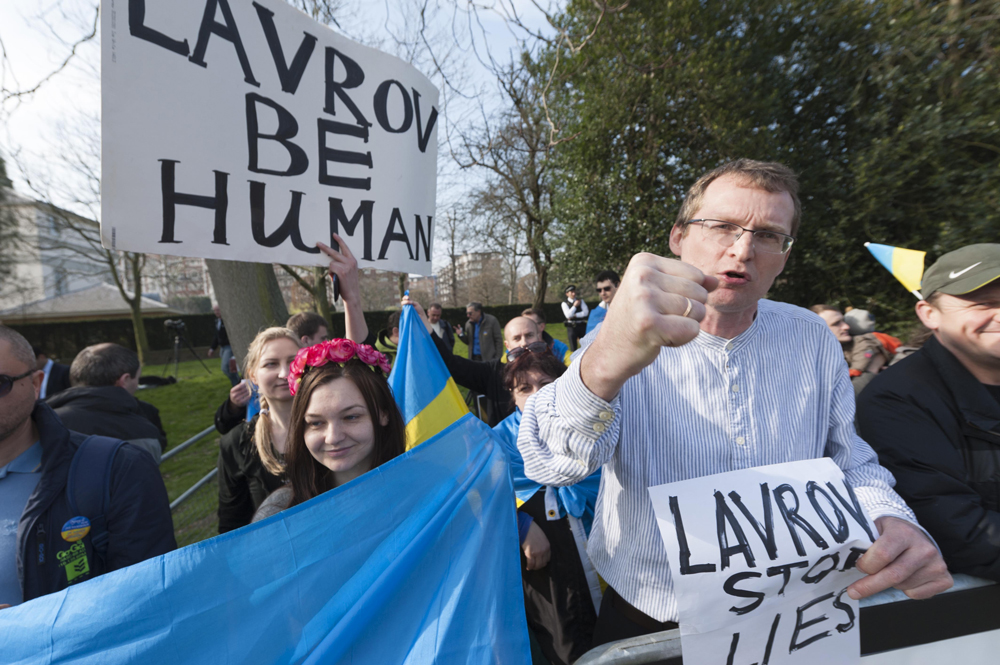
“Lavrov, be a man” - written on a poster. When the Minister of Foreign Affairs of the Russian Federation Lavrov met with US Secretary of State on the situation in the Crimea, a protest rally was held in London. March 14, 2014
Initiatives to introduce sanctions in certain EU countries were put forward even before Ukrainian events. Not so long ago, the Latvian parliament held a hearing about the possibility of adopting the "law of Sergei Magnitsky", which will prohibit entering Latvia - and, accordingly, in all Schengen countries - Russian government officials involved in the Magnitic Tax and persecution, death and sowing "condemnation" of the lawyer. By the way, the “Magnitsky case” is directly related to Latvia: according to the lawyers of the Hermitage Capital Foundation, about $ 20 million out of $ 230 million stolen by apherists from Russian taxpayers through Latvian banks.
One of these banks (which one is still unknown) was even fined by the Latvian government for participating in money laundering.
However, Latvian parliamentarians, as in the US Congress, discuss sanctions not only against the defendants in a particular case, but also against other violators of human rights and corrupt officials from among Russian officials. It is on such an extensively interpretation that the Russian opposition insists and this was the author of these lines at the hearing in the Latvian Sejm.
"
“Nurses” reacted with humor, but laughed until Estonia joined the Schengen zone
"
By the way, the Baltic Precedent is already available in this regard. In the spring of 2007, the Prochrevskoye movement “Ours” organized the grass of the Estonian ambassador in Moscow by Marina Calyrand. The diplomat was persecuted on the heels, tore off the press conferences, and threw the residence with feces. The “nurses” considered this a “worthy answer” to transfer the monument to the “bronze soldier” from the center of Tallinn to the military cemetery. The Russian authorities, obliged under the Vienna Convention, to protect the diplomats accredited in the country, behaved indicatively: in the same 2007, the leader of the “Nurses” was appointed to the government - to manage the Federal Agency for Youth Affairs.
However, the high position of the provocateur did not confuse Estonian officials - they brought Yakemenko to the blacklist, forbidding him to enter the country for ten years. The “nurses” reacted with humor - they say, the threat was small - but they laughed exactly until Estonia joined the Schengen zone, and visa sanctions against Yakemenko were spread to all the countries included in it. Since then (now the former), the official has been trying to delete his name from the list - even “heavy artillery” was involved in the form of the head of the Ministry of Foreign Affairs Sergey Lavrov, but to no avail. But the gross provocations against foreign diplomats in the Russian Federation have not yet been noticed since then.
Photo: Lee Thomas/Zuma Press/ITAR-TASS