
Translated material
Cake "Prague"
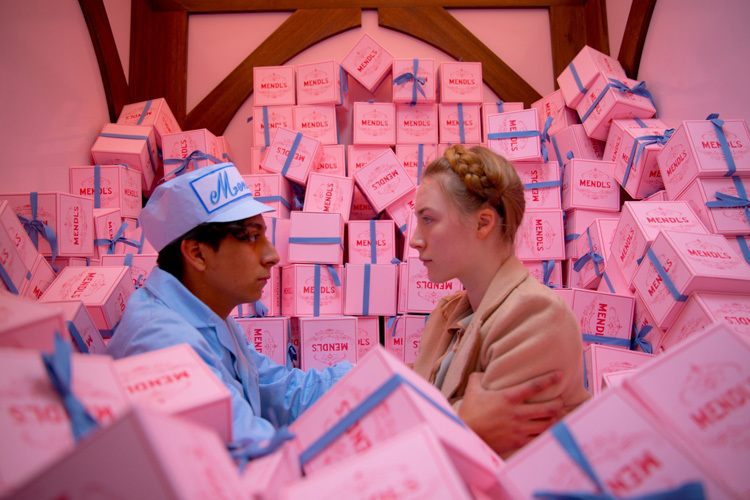
The story within the story inside the story - and add one more instead of a gift wrapper. In 1932, in a fictional central European country, a couple of employees of the luxurious alpine hotel “Grand Budapest” arranges life and fate against the backdrop of the planned occupation-with a cheerful mother, poor poetry, dashing chases on sleigh and sparkling cartoons for humanity. In 1968, one of them-already in the status of the owner of the same establishment-retells his adventures to the visiting writer. In 1985, the same writer, not taking his eyes off the camera and fighting off the rabid grandson, explains what at one time brought him to this hotel, which gave the author material for a better work. On our days, the Grand Budapest Hotel is no longer a memory of a random guest, but only a watercolor on the cover of a book, which peers, as if in search of secret knowledge, a young girl who has come to the grave of the writer.
Oh, this is a promise of secret knowledge - as if leaning in a nesting doll, which fits in another nesting doll, which, in turn ... Well, you understand. How much critical poison was and will be spilled on Wes Anderson under the pretext that inside his naval films, painted as exquisite as no other nesting diligents dreamed, hides emptiness. And how many words have already been spoken about the fact that at the Grand Budapest Hotel, Anderson suddenly matured - only because the bribery of his biscuit world finally stood on the pavement of his biscuit world. Yes, the “hotel” is easy to read as a story that black always comes behind the gray (in the literal sense of the word - the gray Kaiser uniforms of law enforcement officers of the tough will change black leather coats on the invaders). This, however, will be superficiality, not very different from the one in which it is customary to blame the director.
 © Indian Paintbrush
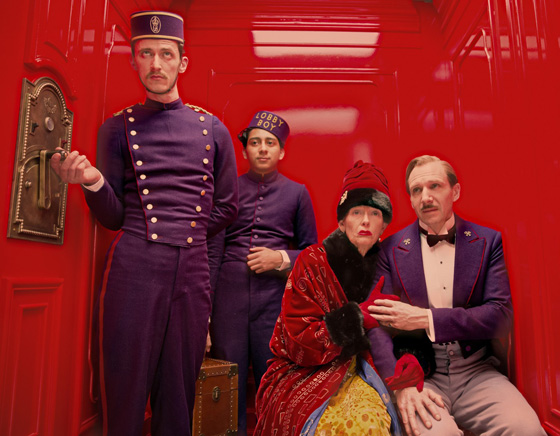
No, if someone here needs to grow up here, then not to Anderson-but rather his viewers. The great Richard Brody in New Yorker has already managed to call the Grand Budapest Hotel an embodied director of the director. In the sense that the constants of his creative method are style, manners, the unspoken set of rules of good human tone (and the film, in essence, is about this - nobility translated from generation to generation in a variety of but equally suitable ways) - they themselves carry the desired secret knowledge. The form and serves here the only content, no other is needed. In fact, Anderson blows out historical signs, exaggerates them, forcing us to feel the breath of time in an atmosphere of numbers, costumes and upholstery of the seats.
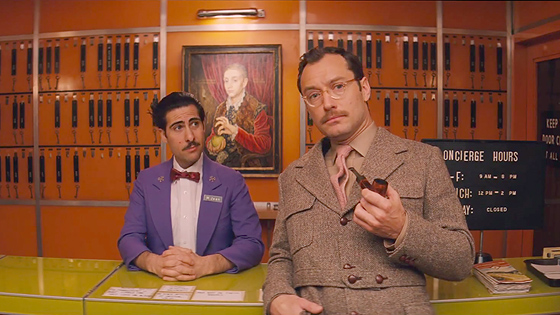
“Grand Budapest” in the conditional 1930s stands on its alpine grief with a puff cake of pastel pink color, and the disasters impending on it are more about the advanced war, and the decorative scope of what is happening inside its walls. When a box full of sweets is revealed to your eyes, it is logical to expect that someone else will pose on them. The same hotel in Pseudo-1968, the same paradox-the heroes over and over mention the arrival of the new authoritarian power, but in the frame are quiet and surface, but the despondency of the socialist system is perfectly felt in typical tiles on the walls and empty stuffy seats familiar to each visitor to Soviet institutions. Dialogs can be impenetrable functional, but in the interiors it smells of curling and rot.
 © Indian Paintbrush
However, it would be unfair to reduce the “hotel” to the Prostov sketch of the lost. Otherwise, there would have been nothing to nothing-no, a thread of the promise, restrained by one of the heroes in 1932, reaches for a young reader in 2013, and from her to all the spectators of Anderson, infecting his nostalgia for never seen. And the “hotel”, like other large films for which this nostalgia is not a technique, is not a reason, but the essence, of course, talks not about the past, but about the present, about the time that creates and determines this nostalgia. The puppet director like Anderson would most likely be unclaimed in the large eras described by him in the “hotel”. But in our puppet time, where any tragedies unfold in the glow of screens of different sizes, reducing the war to the clashes of tiny, almost toy, soldiers, and the disaster - to the scenery of puppet houses on the screen, its creative method lies perfectly. The occupation of the stiffness in the plushevo-confectionery of 1932 is no closer to the viewer than any modern conflict-but no further. The heroes of the “hotel” are about the whole film in the cheerful Kuterma of a private detective intrigue only, in order to suddenly notice in the finale that toy soldiers began to shoot combat. Sooner or later, the viewer will also have to admit the fact that the blood, which was spraying on his laptop screen, is already outside the window. However, the most important talent of Anderson - both as a director and as a concierge, is that his film is not warning the effect, but comforting. As the Grand Budapest Hotel shows us, the main thing is not to lose dignity in any situation.