
Translated material
"Gergiev - a perfect maniac"
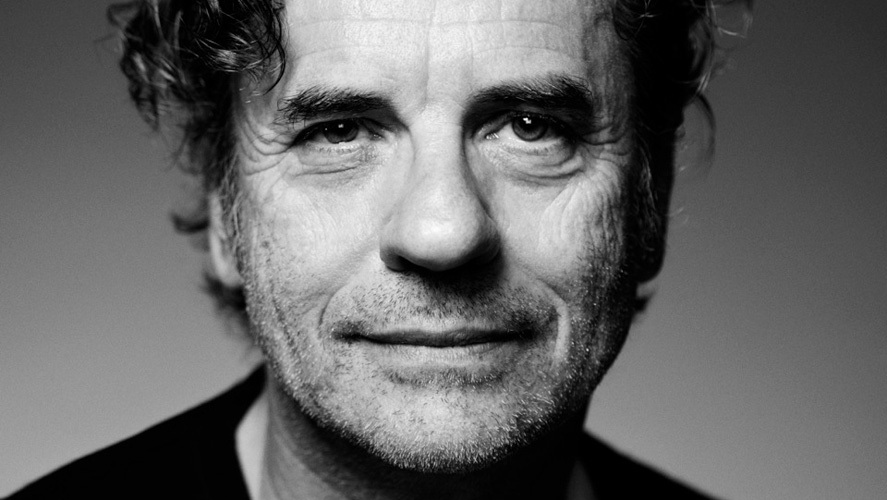
At the Swissdocs festival in the documentary cinema center showed Alberto Venzago’s tape “Hergiev: a kind of madness”.
- Where did you get the idea to make a film about Gergiev? I know that you have already made a tape about Simon Rattla, why now - such a candidate, and not, say, Maris Jansons?
-I am actually from a musical family-my brother is a conductor, and we were all engaged in music as a child. But the brother continued, but I quit - not quite of my own free will, but still, did not return. He left for completely different steppes-photographed, shot documentary cinema, some concerts sometimes. Mostly Rolling Stones , all sorts of such stadium pieces. And then he suddenly felt that I was tired of it and that somehow passed the time of these heroes with a guitar at the ready, and began to think that it would still be removed. Well, at the same time, I got a full -time photographer in one orchestra - it turned out that I could take concerts and rehearsals well and I like it. And once, Gergiev came to Switzerland and the Mariinsky Theater orchestra. I was at this concert and was amazed at how much this did not look like how all the conductors that I saw worked. And I saw very, very many. This is something fundamentally different-in the manner, energy, style, sound. This is a perfect maniac, you can’t say otherwise. And I began to seek the opportunity to simply remove Gergiev - I was extremely interested in how he did it. What is it at all - where such an image comes from, why the music sounds like this and not otherwise. And he sought for a long time - until he finally got the opportunity to go with Gergiev on a tour of Russia. By train. And then everything came together - Gergiev, topic, music, heroes.
The train that travels through the forests for 160 hours is no hotels at all. Only endless, constant work.
- That tape, about Rattla, was built on the journey of the Berlin Philharmonic in Asia. “A kind of madness” is also such a documentary routine, only about how Gergiev and the orchestra travel around Russia. Why do you choose this method?
-Firstly, I am not right to choose: they let me in, my business is just to turn on the camera. But there was, of course, the choice of such a format or genre - so simply interesting. People at home, on the couch, and on the road are always different. The road is an extreme situation one way or another. Here you have no personal space, everything is in sight. Problems in order to take a shower. Constant movement, fatigue. In general, it was more interesting for me as a director to observe the heroes in such a situation. But still there is a fundamental difference between the journey of Gergiev and any other musician. Actually, this struck me-after all, when the orchestras go on tour, they stop in the best hotels, in presidential rooms. Fly with a business class. And here is a train that travels through the forests for 160 hours, no hotels at all. Only endless, constant work, rehearsals 24 hours a day and two concerts per day. This is such an incredible stress that I could not recover for a long time.
-At the same time, you got a film not so much about Gergiev as about Russia in general-there, along with Gergiev and musicians, there are spectators and just people at stations and in some remarkable places.
- This is already explained by a cultural shock. Here is the same as with the orchestra: I am somehow used to the fact that music is a thing for rich or at least wealthy people. Only they can afford luxury to go to concerts of world -famous orchestras. And here the audience is generally different. These are ordinary, most ordinary people who are clearly not so much money. And concerts are often generally free. This is some kind of amazing life, to understand which I tried in vain all the time of filming. I do not know the Russian language, even at some primitive level, and I was shocked how much in Russia everything turned out to be impressed on emotions and intuition. That is, you can perfectly exist without knowing the language - only focusing on the expression of the face, intonation, and the movement of the lips. Some fine motor skills. And for the documentary, this communication at a non -verbal level is a find, an ideal model for shooting.
- And what in the end turned out to be the main thing for you - Gergiev and the orchestra or their listeners?
- I would not share them radically - for me everything was one. I felt the same in the train, and in the hall, and at stops, and in cities ... as a child - this is more accurate to say. In the best sense of the word - I trusted instincts myself and recorded on faces, in the behavior of others. And the truth is very much as a documentary with the heroes. But the center was always Gergiev, and this film is about him. He is a protagonist, master. And through musicians and listeners, I made my way to understand this person. Which, of course, turned out to be impossible.
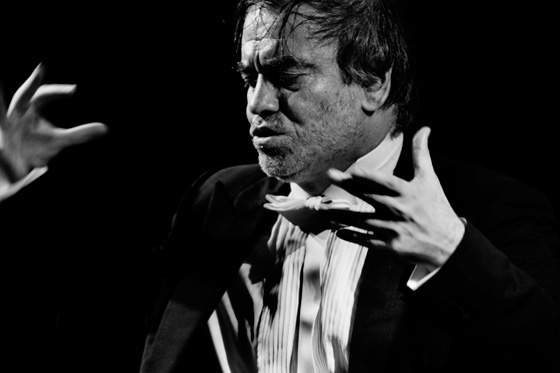 © Alberto Venzago
- And how much did it have a choice - that they travel in Russia, that Shchedrin, Tchaikovsky and Shostakovich play, that it is the orchestra, and not the theater with soloists? Or just followed and everything came?
- Well, what choice, what are you talking about. No, of course, - I just, like a dog, curled around Gergiev and took it off from all sides.
- By the way, he is very closed - his presence in the public space, so to speak, is a specific one. It does not give an interview, it is generally difficult to say something about him as a person.
- That's right, it's hard. But this is normal-while we traveled, someone came to him endlessly with some questions, requests. How is it not to be closed. He makes decisions, determines the life of an orchestra and theater. Such Gergiev, which he is at the moment, simply cannot be an open person - he also unites the manager, artistic director, musician. This is all a load that does not allow to open. So, by and large, I did not reach what I was striving for. Gergiev did not understand, did not penetrate the soul. If you compare it with Rattle - they, of course, are complete opposites. One is verified, each of its steps is calculated. Another ... I don't know how to say.
- And in the sense of relations with the orchestra - was the difference also felt? Gergiev is quite a dictator.
- This is not him a dictator. This is a conductor - a dictatorial profession. There are simply different orchestras with different relationships. Here the Berlin Philharmonic is very democratic, where everything is actually decided by voting. Rattl repels from musicians, from their abilities and desires. Gergiev is different. He cannot be democratic by definition, he was born. At the same time, this almost does not affect the result - just the conductor here is authority, he firmly knows what he does and what he wants. In such a dictatorship, unlike political, in my opinion, there is nothing wrong.
What choice, what are you talking about. No, of course, - I just, like a dog, curled around Gergiev and took it off from all sides.
- I live in St. Petersburg, so Gergiev for me is such a part of the general landscape. And, I must say, not always causing pride - for example, he participated in an ugly story with an attempt to destroy an art history scientific center ...
- Yes? I have not heard anything about this story ... Well, I will answer this way: I wanted to shoot Gergiev, understand it, but took it off, even if I did not understand, Russia. It turned out that they are very similar.
- Many musical critics say that Gergiev is the last starry star: with whims, dental conducting ...
-Yes, Gergiev, of course, the real rock star is his style. From the appearance, this bristles and so on to the manner of conducting and managing the theater - he is such a Freddie Mercury, or something. No, well, really - SuperStar ! Communication with politicians, oligarchs. Even the fact that he participated in the opening of the Olympic Games is also from this kind. He is so alone on Earth.
-Well, yes, it’s scary to imagine how, for example, at the opening of the Olympics somewhere in Germany, Daniel Barenboy would carry a flag.
- (For a long time and chuckles, sorry, I just imagined how the Barenboy carries the flag, this is insanely ridiculous. Well, yes, yes, he is a real rock star. Gergiev.
-Well, the rock star also does not do that either-in London, the flag was not taken out by David Bowie or, God forbid, Paul McCartney.
- (even louder laughs.) Damn, stop, now I will dream at night, like a sheep and McCartney carry the flag.
- By the way, returning to the beginning of our conversation: you, I know, were a military correspondent? That is, you do not have the first time to shoot people in extreme situations.
- I would not compare - these are too different things. Yes, I worked in Magnum, shot many hot spots. But if you want to ask me why I ended my career in this capacity, you see, this is a very difficult thing. From some point, the feeling that everything you are doing is pestering is in vain. You worry, sometimes you risk life, emotionally it is insanely difficult for you. But the meaning is to convey all this horror. And you pass it. However, people at your work still look at the pictures. They do not change from this, do not stop killing. Everything remains in their places, just a certificate of horror one more. And why is it all in this case? So I went back to the music. And now I feel much more comfortable. There is no feeling of uselessness of effort.