
Translated material
Anna Sakoyan: Sanctic language
Anna Sakoyan 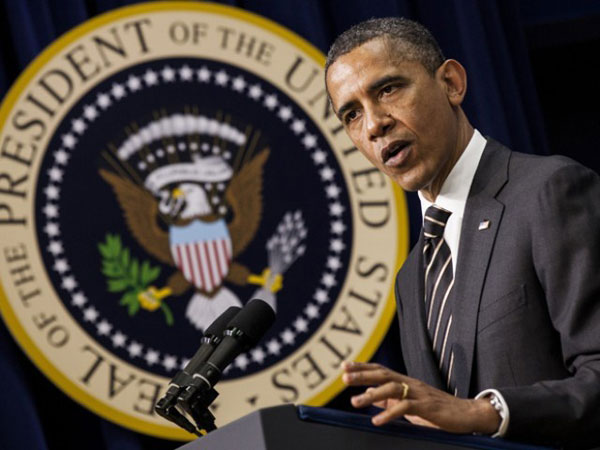 Barack Obama Photo: Whatculture.com
 Barack Obama Photo: Whatculture.com
Sanctions as a method of regulating interstate relations appear at a variety of stages of history. For example, in 432 BC Economic sanctions were introduced by Athens policy against the Megara policy (Megarsky merchants were blocked by access to the ports of the Athenian Naval Union), which served as one of the reasons for the beginning of the Peloponis War. In the XX century. Sanctions as an instrument of pressure on states were used with increasing regularity. In 1945, the UN adopted the method of imposing sanctions as one of the legitimate tools for regulating international relations.
Among the sanctions, types such as: diplomatic, economic, military and sports are distinguished. Diplomatic sanctions are a reduction in diplomatic relations in relation to the state to which they are applied. Economic involves an interruption of trade relations - completely or in application to certain sectors - arrests of accounts, rejection of financial interaction, etc. Military sanctions may be reduced to the embargo for the supply of weapons, but they may also believe the intervention. Finally, sports sanctions are usually banned from participating teams from a particular state in an international sports event.
Although the UN and many states separately resort to sanctions, in the USA this method is especially popular.
In 1919, US President Woodro Wilson acted as a great champion of sanctions in the form of a total boycott of the aggressor by the countries of the League of Nations. In 1935-1936 This method of mass boycott was applied by the League of Nations to fascist Italy, although Britain and France refused to participate in this. The goal was that Mussolini withdrew troops from Abyssinia, but the boycott was unsuccessful.
In 1940-1941 The United States imposed trade sanctions on Japan, which contributed to its entry into the Second World War.
Since 1960, the United States imposed sanctions against Cuba. This was expressed in the form of an economic, commercial and financial embargo, and such a state of affairs, with small modifications, continues to remain in force until now. The sanctions followed two years after the revolution in Cuba, which led to the overthrow of the Fulhensio Batista regime. The reason for them was that the new government expropriated the property of American citizens and corporations in the territory of the state. In a wider context, this was another step in the confrontation of superpower. In practice, in particular, the economic blockade is that American companies, as well as their subsidiaries in other countries, are prohibited from entering into any trade or financial relations. US citizens are also prohibited from buying something from Cubans.
There are many criticism at the international level to these sanctions. In particular, the UN annually urges the United States to lift sanctions, motivating this by the fact that, due to their economic dysfunction, the entire population of Cuba suffers, and first of all, the most vulnerable social groups. The United States refuses to do this, referring to the fact that at first Cuba should take measures to democratize the regime and improve the situation in compliance with human rights.
Since the late 1970s. The United States regularly applied sanctions to Iran. In 1979, after the Islamic Revolution, when the United States adopted an expelled shah, an American embassy was captured in Iran. In response, the United States froze Iranian assets in the amount of $ 12 billion. In the 1980s, during the war between Iran and Iraq, the United States strengthened sanctions. In particular, an embargo for the supply of weapons to Iran from the USA was introduced. There was also pressure on international financial institutions so that they did not give Iran loans. Reagan later signed a decree prohibiting the export and import of goods and services in relations with Iran.
Hard sanctions were during the reign of President Rafsanjani in Iran. President Bill Clinton in 1995 signed a decree on the termination of trade relations with Iran, in particular in the oil industry. In addition, the country was denied lending and other financial relations with the United States. In the early 2000s. The government of the presidential reformist Hatam managed to achieve a significant weakening of sanctions.
The President Mahmad Ahmadinejad, elected in 2005, resumed a suspended program of enrichment of Uranus. In response, the United States began to persistently call for the commissioning of international sanctions against the Iranian nuclear program. In the same year, the US accounts were frozen in the United States related to the program. In addition, individual states began the boycott of companies that maintain trade relations with Iran. In 2010, Obama signed a decree according to which economic sanctions against Iran were repeatedly tightened.
In the 1980s. The United States also participated in international sanctions against apartheid.
Also, according to the results of the USSR invasion, Afghanistan Jimmy Carter in 1980 introduced a wheat trade embargo. In 1982, the United States tried to impose sanctions against Poland as a participants in the social unit in response to the introduction of martial law in the country in December 1981, which was a reaction to the opposition movement. This initiative did not enjoy great support, and the sanctions were lifted six months later.
In the first half of the 1990s. On the initiative of Washington, the UN Security Council imposed financial sanctions against participants in the military dictatorship in Haiti. This was one of the first cases of the point application of sanctions not to the whole state, but only to its individual representatives. In 1996, some US economic sanctions applied to some countries, in particular Colombia, Japan, Italy, Mexico and Venezuela as a gesture expressing the disapproval of “ atrocities against whales and dolphins”.
In 2001, after the attack on September 9, the UN introduced counter-terrorism obligations for the participating countries. According to these obligations, in particular, states were required to freeze the accounts of terrorists and their supporters. The Bush Jr. at the same time threatened foreign banks that if they violate the obligations, then their activities in the United States will be prohibited.
In 2011, during the revolution in Libya, a volley of international (including) sanctions against Muammar Gaddafi and his environment followed. In particular, their foreign accounts were frozen. In the same year, in accordance with the President’s Decree, the accounts of representatives of the Syria government were frozen. The ban on the import of Syrian petroleum products and any transactions with the participation of the Syrian authorities also followed.
In 2006, the traditionally anonymous author in the journal Economist commented : “Suppose, according to the sensation, sanctions are better than nothing: they are more sensitive than just abuse of the ambassador and less bloody than the entry of troops. They can bring moral satisfaction. And sometimes they even work ... The threat of sanctions by city or civilian authorities in America in 1998 forced a group of Swiss banks to pay $ 1.25 billion. Some victims of the Holocaust. The return of Libya to the dialogue with the international community at one time, probably, was also partially owed to sanctions. The sanctions played a role in the cessation of white domination in South Africa.
However, failures are much more noticeable. Sanctions by the League of Nations did not protect Abyssinia from fascist Italy. The UN did not achieve anything in relations with Iraq under Saddam Hussein. The tough regime still reigns in Iran (under American blockade since 1979), in Myanmar (sanctions since 1997), Sudan (since 1996), not to mention Cuba (since 1962) ... From a moral point of view, sanctions are doubtful, since punishment extends to a poor population living in autocracy. The introduction of sanctions can lead to the fact that the regime becomes more popular or more powerful within the country. Hussein easily made so that the superior sanctions hit, first of all, on innocent citizens. The deficit becomes a convenient reason for normalizing and special resolutions, which exacerbates corruption, gives rise to kumes and develops a black market controlled by the regime. In Yugoslavia, under Slobodan Miloshevich, sanctions literally filled the state with crime. ”
See also: Russia will respond to US sanctions mirror and asymmetrically McKaine urged the sanctions against Russia Obama imposed sanctions against 11 high -ranking Russians and Ukrainians